

We celebrate the 50th anniversary of the holiday classic with a gallery of rare artwork from the film.
The post ‘How The Grinch Stole Christmas!’ is 50 Years Old Today—And It’s Still Great appeared first on Cartoon Brew.
Add a Comment
 By: Jerry Beck,
on 12/18/2016
By: Jerry Beck,
on 12/18/2016
We celebrate the 50th anniversary of the holiday classic with a gallery of rare artwork from the film.
The post ‘How The Grinch Stole Christmas!’ is 50 Years Old Today—And It’s Still Great appeared first on Cartoon Brew.
Add a Comment

Tish Rabe is the author behind the latest generation of Dr. Seuss books. When the beloved author of classics including The Cat In the Hat and What Pet Should I Get? passed away, Rabe was tasked with keeping his legacy alive through his rhyming picture books. Rabe has been writing Cat in the Hat books for 20 years!
Tish Rabe is a masterful rhymer which is evident as she makes learning about subjects including space, health, and biology seem beyond fun! She writes the spin-off books based on the daily PBS Kids series, “The Cat In the Hat Knows A Lot About That!” It takes over two years for Rabe and her team — including illustrators Aristides Ruiz and Joe Mathieu — to create each book. The silly rhyming facts are vetted by scientists; down to the color of planets!
Stay tuned to find out Tish Rabe’s Three Rs, how she writes her rhymes, where she got her break in children’s television, and to learn more about how the books and television series go hand-in-hand. Also, Rabe has some great advice for your little authors!
We’re giving away three (3) bundles of books for this episode of StoryMakers. Each bundle includes a of copy of Tish Rabe’s picture books, LOVE YOU, HUG YOU, READ TO YOU; ¡TE AMO, TE ABRAZO, LEO CONTIGO!; OH, BABY, THE PLACES YOU’LL GO!; CLAM-I-AM; THERE’S NO PLACE LIKE SPACE; and THE I BELIEVE BUNNY. The giveaway ends at 11:59 PM on June 14, 2016. ENTER NOW!

Click the image below to enter PBS’ The Cat in the Hat Knows a Lot About That website. Play games, download printables, and get literacy tips for parents.

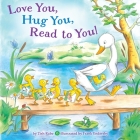 Love You, Hug You, Read to You!
Written by Tish Rabe, illustrated by Frank Enderby
Published by Random House Books for Young Readers, Board Books
There are three things I’ll always do … love you, hug you, read to you. The simple promise of togetherness offered in this board book is enhanced by interactive prompts throughout, encouraging parents to engage with their child while reading. Studies show that asking questions, like the ones in this book, helps children learn to read faster than if they just listen to a story. Love and literacy are gifts we can give to our children every day Also available as bilingual (Spanish and English) edition entitled ¡Te amo, te abrazo, leo contigo!
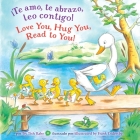 Te amo, te Abrazo, leo contigo!/Love You, Hug You, Read to You!
Written by Tish Rabe, illustrated by Frank Enderby
Published by Random House Books for Young Readers, Board Books
¡Te amo, te Abrazo, Leo Contigo!/Love You, Hug You, Read to You! is a bi-lingual book written in both Spanish and English. Studies have shown that asking children’s questions about what’s happening in a book helps them learn to read faster than if they just sit and listen to a story so this book features interactive questions in both languages. It also offers the opportunity for Spanish speakers to learn English and English speakers to learn Spanish!
Oh, Baby, the Places You’ll Go!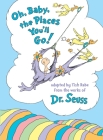
Written by Tish Rabe, illustrated by Dr. Seuss
Published by Random House Books for Young Readers, Board Books
Artfully adapted almost entirely from Ted Geisel’s work, this introduction to the world of Dr. Seuss is a must for expectant parents and new babies In simple rhymed verse, author Tish Rabe extolls the joys awaiting newborns when they meet the Cat in the Hat, Horton the Elephant, Yertle the Turtle, the Great Birthday Bird, the Grinch, and twenty-five other beloved Seuss characters. Written to be read aloud to babies and babies-to-be (“yes,” babies in utero ), the book includes a brief introduction by “Mrs.” Dr. Seuss Audrey Geisel revealing how she and Ted were fascinated by the idea that babies could hear sounds while still in the womb and might actually respond to the voices of their parents. A perfect gift for baby showers and newborns, Oh, Baby, the Places You’ll Go is the ideal way to nurture a love of reading and Dr. Seuss in the very youngest children.
 The I Believe Bunny
Written by Tish Rabe, illustrated by Frank Enderby
Published by Thomas Nelson
Introducing the I Believe Bunny—a delightful new series that helps kids learn about believing, sharing, and putting their faith into action.
Children will identify with Bunny and learn along with him that God is always there to help. Prayer works! Little Mouse is in trouble and Bunny is the only one nearby to help her. But, Bunny is too small. He has to set aside his own fear and trust in God. By putting his faith into action, Bunny is able to help Little Mouse and save the day.
Not only does this precious book teach the importance of calling on God for our every need, it helps children remember to be thankful for God’s work in their lives.
Clam-I-Am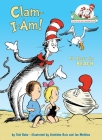
Written by Tish Rabe, illustrated by Aristides Ruiz and Joe Mathieu
Published by Random House Books for Young Readers
Normal the Fish is hosting a seaside talkshow for the Fish Channel and the Cat in the Hat and Thing One and Thing Two are cameracat and crew. Among Norval’s special guests are his old friend Clam-I-Am (a shy gal who lives in the sand and likes to spit), along with horseshoe and hermit crabs, jellyfish, sand fleas, starfish, seagulls, and miscellaneous mollusks. Seaweed, seaglass, tides, tidal pools, dunes, driftwood, and waves make cameo appearances, too. “Warning: Beginning readers are apt to be swept away.”
There’s No Place Like Space: All About Our Solar System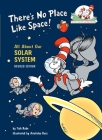
Written by Tish Rabe, illustrated by Dr. Seuss and Aristides Ruiz
Published by Random House Books for Young Readers
“Au revoir,” Pluto In this newly revised, bestselling backlist title, beginning readers and budding astronomers are launched on a wild trip to visit the now “eight “planets in our solar system (per the International Astronomical Union’s 2006 decision to downgrade Pluto from a planet to a dwarf planet), along with the Cat in the Hat, Thing One, Thing Two, Dick, and Sally. It’s a reading adventure that’s out of this world.
Wish Rabe has written over 160 children’s books for Sesame Street, Disney, Blue’s Clues, Curious George, Huff and Puff and many others. In 1996 — five years after the death of Dr. Seuss — she was selected by Dr. Seuss Enterprises to create The Cat in the Hat’s Learning Library, a new line of rhyming science books for early readers. A television series based on these books, The Cat in the Hat Knows a Lot About That, airs daily on PBS Kids.
Ms. Rabe also wrote the popular Dr. Seuss book for parents-to-be Oh the Places You’ll Go to be read in Utero! and created her own character, The I Believe Bunny, which won a Mom’s Choice Award for Best Picture Book – Gold. She also wrote scripts for children’s television series including “Clifford”, “Clifford’s Puppy Days” and was the Head Writer for “I Spy!” for Scholastic Entertainment and HBO family.
In 1982, she traveled to China with Jim Henson’s Muppets to produce “Big Bird in China”, which won the Emmy for Best Children’s Special for NBC. Later that year, she became Senior Producer of a new science series for kids on PBS called “3-2-1 Contact”. During the five seasons of the show, Ms. Rabe wrote scripts as well as lyrics for songs including “What Does Your Garbage Say?”, “Electricity is the Power” and “People are Mammals Too”.
Read more, here.
CONNECT WITH TISH RABE
Website | Facebook | Twitter | YouTube
CONNECT WITH KidLit TV
Facebook Group | Facebook Page | Instagram | Newsletter | Pinterest | Twitter | YouTube
StoryMakers
Host: Rocco Staino | Executive Producer: Julie Gribble | Producer: Kassia Graham
This post contains affiliate links.
All Rafflecopter entrants must reside in the United States and be at least 13 years old.
The post StoryMakers | Tish Rabe appeared first on KidLit.TV.
Author Sue Fliess selects "Five Family Favorites" to share with readers ... Read the rest of this post
Add a CommentWith the recent event of Dr Seuss's birthday, our list "5 Reasons to Love Dr. Seuss" is trending this month on The Children's Book Review. Other trending articles include hot new books and bestsellers.
Add a Comment By: Betsy Bird,
on 3/5/2016
By: Betsy Bird,
on 3/5/2016
Ack! Too many good videos, too little time! We’ve an embarrassment of riches today. The only question really is where to start. And the only natural answer is with Obama’s nominee for the Librarian of Congress. Not much of a question there, really.
Next up, there is beginning to be a bit of a tradition of authors and illustrators recording videos of how they got “the call” when they won the Caldecott or Newbery (I almost wrote and/or Newbery, which is an interesting near flub). Last year we had Dan Santat’s video. This year, Sophie Blackall’s:
At this rate it may behoove us to just give the medals to people who are good at making videos. And the Newbery Medal goes to . . . Tyler Oakley!
Now let’s get down to brass tacks. People, there are awards out there that go beyond the mere borders of this great nation of ours. And the Hans Christian Andersen Award is the greatest of these (though the Astrid Lindgren Award gives it a run for its money). Now they’ve made a video for us that goes through the 2016 nominees. I adore this. I just want to meet all these people. Suzy Lee!!! Now, weirdly, I want her to adopt me. And Iran! How cool is that?
This next book trailer seemingly has an international flavor to it, but is homegrown Americana through and through. It may also be the most beautiful trailer of 2016 thus far.
Thanks to educating alice for the link.
Earlier this week, Phil Nel posted a killer post called Seuss on Film. The piece is “a brief (but far from complete) collection of Seuss on film!” Turns out, it was somewhat tricky getting Mr. Geisel on the old camera. Phil’s a trooper, though. He found newsreel after newsreel and has posted them on YouTube for our collective enjoyment. You should really read his posting yourself. In fact, I insist upon it. And just to whet your whistle, here’s a jaw-dropping 1964 discussion with Seuss in New Zealand where he improvises answers to kids’ questions.
As for our Off-Topic Video of the week, I give this to you because I love you. Really, truly, deeply love you.

By: Jerry Beck,
on 2/8/2016
If you want to learn a new job in 3 months that'll make you lots of money, this self-help author recommends animation.
The post Self-Help Author: Robots Are Taking Over So Learn Animation Before It’s Too Late appeared first on Cartoon Brew.
Add a Comment By: Becky Laney,
on 1/20/2016
By: Becky Laney,
on 1/20/2016
I spent all of 2015 reading and rereading Dr. Seuss. I meant to write a top ten list the last week of December. But. Life happened...dramatically...as a few of you know! So here it is a few weeks late.





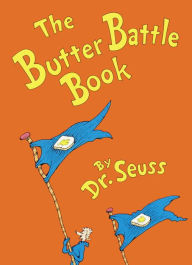
When tweetle beetles fight,
it's called
a tweetle beetle battle.
And when they
battle in a puddle,
it's a tweetle
beetle puddle battle.
AND when tweetle beetles
battle with paddles in a puddle,
they call it a tweetle
beetle puddle paddle battle.
AND...

 By: Liz,
on 1/20/2016
By: Liz,
on 1/20/2016
Guess that famous turtle named Yertle hasn’t heard that there is a turtle soup shortage! Or maybe he has!
Yertle who longs to be King of the Turtles uses underling turtles to put himself above the rest. Higher and higher Yertle stacks these poor things, with Mack the turtle in the basement, so to speak. Imagine the pain and hunger imposed on the bottom rung turtles of this turtle tower?
I was recently listening to a news report while on vacation that mentioned a dearth of turtle soup on store shelves.
And why has this happened? Turtles are in short order, rare supply, and scarcely to be found. At least since they have been put on the endangered list, they can no longer be hunted, captured and cooked. Coastal developments, fisheries, pollution and climate change, all have a played a part in the depletion of the numbers of turtles. Turtle protection habitats for helping and recovery of these terrapins are in the news if you look for them. And that is good news for the Yertles and Macks of the world. Well, maybe just the Macks of the turtle tribe deserve the good news. Yertle has a ways to go in his redemption as this picture book tale reveals. As the adage goes, “Pride goeth before the fall.”
As an interesting sidebar, did you know that during the Great Depression, turtles were consumed, and referred to as “Hoover’s Chickens” in the south? Wonder how President Herbert Hoover felt about that appellation? They must have been plentiful and tasty in a time of food lines across a country reeling from its economic woes.
But, back to Dr. Seuss’s Yertle, as the classic picture tale reveals rebellion rearing its head in the turtle tower among the ranks of those squished at the bottom of the heap. Will Yertle continue his ascent? Will Mack and the other terrapin tower partners rebel?
When finally “the moon dares to be higher than Yertle the King,” something has got to give, and Yertle’s collapsing tower is quick and calamitous, as he soon devolves into “King of the Mud.”
It’s a classic picture book read for young ones. For some it could be seen as a morality tale of building ones ascent on the literal “backs” of others. Or maybe a scientifically gentle reminder that “what goes up must come down.”
But my bet is on kids that may intuit from this classic read that how we ascend, or do better in the world, is just as, or much more important than, where we rise to.
Add a Comment
 By: Maryann Yin,
on 12/28/2015
By: Maryann Yin,
on 12/28/2015
Don’t want to let go of the Christmas magic just yet? Listen to Ja Rule as he recites How the Grinch Stole Christmas! for BBC Radio 1.
The video embedded above features the hip hop star’s reading. Follow this link if you prefer a more traditional interpretation of this Dr. Seuss picture book.
Here’s more from Jezebel: “Everyone knows Ja Rule is a wonderful storyteller, as evidenced by classics like ‘Put It On Me’ and ‘Always on Time,’ a song about always being on time. Well, Ja Rule is also for the kids. Or is it Ja Yule?” (via Entertainment Weekly)
Add a Comment
By: Becky Laney,
on 12/26/2015

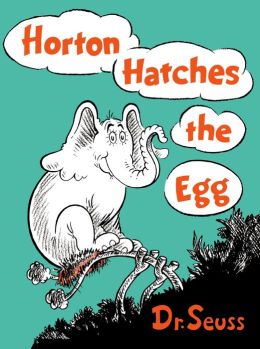
It happened last May, on a very nice dayPremise/plot: Horton makes a deal with the Kwuggerbug, but, it's a deal that he comes to regret making because the Kwuggerbug isn't exactly honest and fair. The deal is this: The Kwuggerbug will give Horton half the nuts off the Beezelenut tree, if Horton will carry him to the tree on his trunk. But a deal is a deal, right? Will justice be done?
While the Elephant Horton was walking they say,
Just minding his business...just going his way...
When a Kwuggerbug dropped from a tree with a plunk
And landed on Horton the Elephant's trunk!
"Young man!" said Miss Block. "It's eleven o'clock! This school begins promptly at eight-forty-five. Why this is a terrible time to arrive!"Premise/plot: Marco Comes Late is the sequel to And To Think That I Saw It On Mulberry Street. "Something" is happening on Mulberry Street once again, and this time it's on his way TO school.
The job of an Officer of the PolicePremise/plot: This little story is all about TROUBLE and how it can start out small but grows and grows. That's what the "moral" of it is, I suppose. But it is GREAT fun in the telling. And it's set on Mulberry Street.
Is watching for trouble and keeping the peace.
He has to be sharp and he has to be smart
And try to stop trouble before it can start.
The trouble with trouble is...trouble will spread. The yowl of that cat will wake Tom, Tim, and Ted, Those terrible triplets of Mrs. McGown. Then they'll yowl a yowl that'll wake this whole town. When trouble gets started, it always starts more! Those kids with their racket and ruckus and roar will frighten the bird, and the birds will come flapping down Mulberry Street with a yipping and yapping!The Hoobub and the Grinch
The Hoobub was lying outdoors in the sun,Premise/plot: The Grinch is trying to sell the Hoobub a piece of string....will the Hoobub be deceived by the Grinch's clever use of words?
The wonderful, wonderful warm summer sun.
"There's nothing," he said, "quite as good as the sun!"
Then up walked a Grinch with a piece of green string.
"How much," asked the Grinch, "will you pay for this thing?"

We want a pet.Premise/plot: Siblings--a boy and a girl--have trouble deciding which pet to get. Their parents said, "yes" to one pet, but, not to two, or, three, or four. The problem? The kids have only to see an animal in the pet store, and, then they WANT it. This book is all about having to make up your mind...
We want a pet.
What kind of pet
should we get?
Dr. Seuss's first "pet" was a brown stuffed toy dog given to him by his mother. Ted--whose real name was Theodore Seuss Geisel--named it Theophrastus. Ted would keep Theophrastus for the rest of his life. The dog was often perched near his drawing board. In 1991, just days before his death at the age of eighty-seven, Ted gave Theophrastus to his stepdaughter Lea Grey. "You will take care of the dog, won't you?" he asked her.Have you read What Pet Should I Get? Did you like it? love it? hate it? I'd love to know what you thought of it!
By: Maryann Yin,
on 12/22/2015
Did you know that reality TV star Donald Trump wants to write a children’s book? Late night talk show host Jimmy Kimmel the took the liberty of ghost writing one for him.
In the video embedded above, Kimmel reads aloud from the Dr. Seuss-style verse story, entitled Winners Aren’t Losers, during a conversation with the GOP presidential candidate. Throughout his lifetime, Trump has been credited with authoring more than a dozen books.
Add a Comment
By: Maryann Yin,
on 12/21/2015
Have you been following the United States presidential race? The team at CollegeHumor drew inspiration from the political race and a Dr. Seuss picture book for a parody called “You’re a Mean One, Mr. Trump.”
The video embedded above features Republican presidential candidate Donald Trump in the role of The Grinch. Follow this link to listen to watch the antics of the original Grinch.
Add a Comment
By: Becky Laney,
on 12/19/2015
I've always lived in Dinkerville,Premise/plot: Diffendoofer School is different from other schools. The teachers teach their students to think. And the teachers are all unique and have their own way of teaching and celebrating knowledge. But one day, the school is threatened by a TEST. If their students don't do well on the test, then, the students will have to go to other schools. Will the students do well on the test? Even if they haven't spent time especially preparing for it?
My friends all live here too.
We go to Diffendoofer School--
We're happy that we do.
One bright sunny day, a young duck named McKluckPremise/plot: A duck finds a magical bippolo seed, but, unfortunately is led astray by a cat. The bippolo seed grants wishes when planted, but, the cat is strongly encouraging the duck to wish for more and more and more. Nothing good ever comes from such greediness, and such is the case here...
Had a wonderful, wonderful piece of good luck.
He was walking along when he spied on the ground
A marvelous thing that is quite seldom found.
Once of upon of a time, way down south,Premise/plot: Can a rabbit outsmart a bear?
Lived a very big bear with a very big mouth
And very big teeth in his very big jaws
And very big claws in his very big paws.
The man who sold Gustav the Goldfish to usPremise/plot: What do you think might happen if you feed a fish too much?!
Had warned us, "Take care! When you feed this small cuss
Just feed him a spot. If you feed him a lot,
Then something might happen! It's hard to say what."
One twin was named TaddPremise/plot: Do both twins like being "as two peas in a pod"? Maybe. Maybe not.
And one twin was named Todd.
And they were alike
As two peas in a pod.
When I'm all by myself and there isn't a crowd,Premise/plot: Do you know the consequences of bragging? Read Steak for Supper and find out!
I guess that I sometimes get thinking-out-loud.
My mother had warned me:
"Stay out of the dirt."
But there, there I was
With a spot on my shirt!"
By: Becky Laney,
on 12/12/2015
 By: Becky Laney,
on 12/5/2015
By: Becky Laney,
on 12/5/2015
Wherever you fly, you'll be best of the best. Wherever you go, you will top all the rest. Except when you don't. Because, sometimes you won't. I'm sorry to say so but, sadly, it's true that Bang-ups and Hang-ups can happen to you. You can get all hung up in a prickle-ly perch.Have you read Oh, The Places You'll Go! Did you like it? love it? hate it? I'd love to know what you thought of it!
Ooh, the weather outside is ... perfect for snuggling inside with one of these best selling picture books. Snow, by Cynthia Rylant, is this month's best selling picture book from our affiliate store—it's a beautiful book.
Add a Comment
By: Becky Laney,
on 11/28/2015
 By: Becky Laney,
on 11/21/2015
By: Becky Laney,
on 11/21/2015
HAVE YOU ANY IDEAHere's another favorite part:
HOW MUCH MONEY
THESE TESTS ARE
COSTING
YOU?
Dietician Von Eiffel controls the Wuff-Whiffer, our Diet-Devising Computerized Sniffer, on which you just simply lie down in repose and sniff at good food as it goes past your nose....And when that guy finds out what you like, you can bet it won't be on your diet. From here on, forget it!Have you read You're Only Old Once! Did you like it? love it? hate it? I'd love to know what you thought of it!
By: Becky Laney,
on 11/14/2015
 By: Maryann Yin,
on 11/10/2015
By: Maryann Yin,
on 11/10/2015
 The American Writers Museum will soon open in the downtown Chicago area.
The New York Times reports that a space has been leased on North Michigan Avenue. The opening will take place in early 2017. The team behind this venture plan to install themed galleries, organize interactive exhibitions, host education programs, and put on special events.
Here’s more from the press release: “Showcasing the personal stories and literary works of diverse American writers, from Mark Twain to Dr. Seuss, the interactive, high-tech museum is expected to draw up to 120,000 visitors annually. The museum’s esteemed curating team and National Advisory Council are working closely with internationally renowned museum and exhibit companies in the museum’s development. AWM is also collaborating with 50 authors’ homes and museums around the U.S. – now AWM Affiliates – that will support its mission with author-specific knowledge and expertise and foster an exchange of ideas and experiences.”
Add a Comment
By: Becky Laney,
on 11/7/2015
Autumn is a beautiful time for reading. Award-winning Nana in the City, by Lauren Castillo, is this month's best selling picture book from our affiliate store—it's a delightful selection for fall.
Add a Comment
By: Becky Laney,
on 10/31/2015
 By: Maryann Yin,
on 10/28/2015
By: Maryann Yin,
on 10/28/2015
 Cathy Goldsmith has been named president and publisher of the Beginner Books line and the Dr. Seuss publishing program at Random House. She will report to publishing director Mallory Loehr.
Goldsmith has been with the company for nearly four decades. Prior to this appointment, she served as the vice president, associate publishing director, and art director of the Golden Books and Doubleday Young Readers imprints.
Here’s more from the press release: “Cathy follows the path forged by Theodor Seuss Geisel (a.k.a Dr. Seuss) himself, who was President of Beginner Books at Random House from 1957 until his death in 1991. Cathy fondly recalls the days when Ted, as everyone called him, would hand-deliver his completed books to the Random House office and read them aloud to staff gathered together in a conference room.”
Add a Comment
By: Becky Laney,
on 10/24/2015

Oh, that someone would make that movie!
I so want 1.21 Gigawatts to be a real movie. Can anybody out there make it happen?
Omigosh, those Anderson finalists are so inspiring. I did look online and couldn’t find out if personal fave Marc Boutavant has ever been nominated or won. If not, get ON THAT.
Also agree The Secret Subway is the most beautiful and imaginative trailer I’ve seen.
It would be lovely if many of these nominees’ work could be translated into English, or at least available here. Certainly a high spot of the weekend!
Denis
He’s probably too old these days, but technology being what it is I think we can conjure it up from scratch.
Christopher Lloyd is a mere 12 years older than I am. Just saying’, Betsy, as you yourself would say.
Ah, but you, Jeanne, appear to somehow elude time itself. Mr. Lloyd, if he is human, could not possibly be so blessed.
Just sayin’.