Login or Register for free to create your own customized page of blog posts from your favorite blogs. You can also add blogs by clicking the "Add to MyJacketFlap" links next to the blog name in each post.
Blog Posts by Tag
In the past 7 days
Blog Posts by Date
Click days in this calendar to see posts by day or month
Viewing: Blog Posts Tagged with: Author Promotion, Most Recent at Top [Help]
Results 1 - 25 of 30
How to use this Page
You are viewing the most recent posts tagged with the words: Author Promotion in the JacketFlap blog reader. What is a tag? Think of a tag as a keyword or category label. Tags can both help you find posts on JacketFlap.com as well as provide an easy way for you to "remember" and classify posts for later recall. Try adding a tag yourself by clicking "Add a tag" below a post's header. Scroll down through the list of Recent Posts in the left column and click on a post title that sounds interesting. You can view all posts from a specific blog by clicking the Blog name in the right column, or you can click a 'More Posts from this Blog' link in any individual post.
Editor/Author/Publicist Writes Ultimate Guide on Getting, Writing, and Using Reviews
“I think Getting Great Book Reviews Frugally and Ethically will sell like hot cakes. It’s a chicken and egg situation. When you get reviews you get noticed and more people notice you from that. But how to get reviews without paying sometimes hundreds of dollars with no guarantee and how to ask without being a nuisance puts authors in a quandary. I will be first in line when it comes out! Please keep me posted!!!!” ~ Fiona Ingram, award winning children’s author of The Chronicles of the Stone middle grade adventure series, http://www.chroniclesofthestone.com.
How To Get Great Book Reviews Frugally and Ethically:
The ins and outs of using free reviews to build and sustain a writing career
Los Angeles, CA - - The Web—more explicitly Amazon and other online bookstores—have changed the face and nature of reviews in the last couple of decades. Carolyn Howard-Johnson, known for her author advocacy and how-to books for writers—has released a new book (the 3rd) in her multi award-winning and bestselling (at many different levels) HowToDoItFrugally series of books for writers.
With the release of Howard-Johnson’s How To Get Great Book Reviews Frugally and Ethically: The ins and outs of using free reviews to build and sustain a writing career authors—both traditionally published and self-published—can now approach the daunting task of the whole spectrum of reviews from getting and using reviews online and in prestigious review journals efficiently. She also shows in the 340 page book, how to writing reviews as part of an author’s overall campaign and authors can use review of their own books and the ones they write toward building both a market for their book and building their own writing career.
This new how-to book is third in Howard-Johnson’s multi award-winning How To Do It Frugally Series. The first book in the series, The Frugal Book Promoter: How to Do What Your Publisher Won’t, was named USA Book News “Best Professional Book 2004," and Book Publicists of Southern California honored it with their Irwin Award. Now in its second edition, Bookbaby.com calls it a “classic” and it has helped more than 40,000 authors since its release. The second in the series, The Frugal Editor, is her most award-winning of the series including honors from Day Poynter’s Global E-Book Award, USA Book News, Reader Views Literary Award, Next Generation Indie Book Award, and won a special Marketing Award from New Millennium Book Awards. It is now available at http://bit.ly/GreatBkReviews.
In the works are books like The Frugal Self-Publisher: The Quick, Down and Dirty Guide for Publishing Anything for Any Reason—Personal Professional or Poetic.
The author says, "This series is the result of a combination of experience gained through trial and error in promoting my own literary works and my professional experience in marketing, PR, journalism, editing and publishing in general."
Howard-Johnson was an instructor for UCLA Extension's Writers' Program for nearly a decade, was named Woman of the Year in Arts and Entertainment by members of the California legislature, and was given her community’s Diamond Award and honored for her work with tolerance by her city's Ethics Committee. In addition to dozens of literary awards and honors, she was also featured by Pasadena Weekly in their “Pasadena Women Who Make Life Happen” for her advocacy in the publishing industry.
A Sandy Grave ~ January 2014 ~ Guardian Angel Publishing, Inc. ~ 2014 Purple Dragonfly 1st Place Picture Books 6+, Story Monster Approved, Beach Book Festival Honorable Mention 2014, Reader's Favorite Five Star Review
Powder Monkey ~ May 2013 ~ Guardian Angel Publishing, Inc. ~ 2015 Purple Dragonfly Book Award Historical Fiction 1st Place, Story Monster Approved and Reader's Favorite Five Star Review
Hockey Agony ~ January 2013 ~ Guardian Angel Publishing, Inc. ~ 2015 Purple Dragonfly Book Award Honorable Mention Picture Books 6+, New England Book Festival Honorable Mention 2014, Story Monster Approved and Reader's Favorite Five Star Review
The Golden Pathway ~ August 2010 ~ Guardian Angel Publishing, Inc. ~ Literary Classics Silver Award and Seal of Approval, Readers Favorite 2012 International Book Awards Honorable Mention and Dan Poynter's Global e-Book Awards Finalist
0 Comments on A Must Have for Every Author... "How to Get Great Book Reviews Frugally and Ethically" by Carolyn Howard Johnson as of 1/1/1900
The perfect book cover can mean the difference between mediocre sales to hitting the top 100 bestseller lists on Amazon.
Quote: "Book covers are EXTREMELY important. The original cover of Elemental came off as very paranormal romance-y. And, unfortunately, it attracted readers who were avid paranormal romance fans. Many of them responded negatively to being surprised with a space opera with very little romance. A cover is a form of communication. It has to pique the interest of your target audience. If you pique the interest of someone who isn’t going to like what’s inside the book, you’ve just wasted your time." - bestselling Author, Emily White(LOVE her cover on the left-side)
As a writer, your job is tell a great story, but I find that when it comes to fiction marketing or book cover design, some authors don't take the same time to study it, the same as they would if they were researching aspects of their latest book.
Frustrated with low book sales?
It could a number of things, including your current cover design.
The cover should instantly let readers identify the genre, and if it catches their attention, then they will most likely read the back jacket copy and reviews, and buy the book.
But if your design is misleading, or doesn’t represent the genre, or looks unprofessional, it will almost certainly have readers skipping your book and clicking on someone else’s novel.
I know what you’re thinking…the book design shouldn’t matter. It’s what inside that counts. And maybe that’s true...
However, as an indie author the odds are stacked against you. Self-published writers do not have huge marketing departments backing them, so please consider giving your book the best chance of piquing a reader’s interest by having a design that “fits” the genre.
Sales for my own YA paranormal romance series, Spellboundhad drastically declined. Each of the covers in my series had a different image and design, and it was confusing readers. I couldn't afford to hire another designer, so I decided to create my own covers and see if new branding would help boost sales. Within three weeks, my sales tripled. Then I redid the designs on all of my book covers, and again my sales jumped.
I honestly believe that book covers do help sell books!
It is NOT cliché to have acover that represents your genre. It is an savvy marketing choice to allow readers to instantly recognize the genre of your amazing story. Many self-published authors believe a false assumption that coversshould be unusual and distinctive, which is extremely risky. Misinformed self-published writers who don’t understand the purpose of the design will make fatal mistakes in cover art selections. I'm not saying your book has to be identical, but a design should be similar to others in the same genre.
(*The covers on the left-side are published novels and I created similar designs to match the genre and as an example of design trends.)
Whatevergenre you write in, I suggest studying the book covers of the bestsellers. There are trends in designs for a reason because a reader can tell at a glance what type of book it is, so I recommend having a cover similar to what is popular. It is a smart marketing strategy and guaranteed to get you results.
If your goal is to sell more novels, market your work, and appear professional—with an amazing book cover you can attain all three objectives!
The majority of self-published bestsellers all have great cover designs that correspond with the genre that they write in, and you should do the same.
For example if your book is a thriller, then study the cover art of the bestsellers in that genre.
Did you notice that all the bestsellers in "mystery / thriller" have a similar look to them?
Really look at the fonts. They are all huge and bold and eye-catching. Study the colors used. These designs all share a washed-out look.
(*The covers on the left-side are published novels and I created similar designs to match the genre and as an example of design trends.)
Again, I know what you're thinking (because I used to think the same thing) that you want your design to "stand-out" or be unique. But professional book designers will all agree that it is better to have a cover that fits the genre than be different.
If your book is a New AdultRomance, browse the most popular books on places like goodreads.
Do you notice how all the covers appear to follow the same design "look"?
Readers of New Adult fiction can tell at a glance that these books are in the same genre. I recommend using the same types of fonts and colors that match the bestselling designs for whatever genre you write in, or if you're buying premade covers.
Even my own New Adult College Romance cover below matches the trend in NA designs.
If your genre is paranormal romance, I suggest you take a good look at the designs of the bestsellers:
Did you see how all of these PNR covers have a similar design?
Take a good long look. All of these awesome book covers below convey the genre at a glance.
(*The covers on the left-side are published novels and I created similar designs to match the genre and as an example of design trends.)
The book cover I designed below fits the PNR genre with a moon, blue color, and a spooky vibe.
So choose a design that fits the genre, and the book cover will easily and effortlessly do some of the marketing for you. Having a design that doesn’t match the genre will not only impede sales, it’s essential for success. And that is your goal, right? RIGHT!
Also, it is a general advertising principle that having a face and/or people on a product (the cover) will generate more sales. The model on your cover doesn't need to look exactly like your hero or heroine, but just enough so the reader can form their own image of your characters in their mind.
(*The covers on the left-side are published novels and I created similar designs to match the genre and as an example of design trends.)
As always, I wish everyone much success on their writing journey!
Today it is my honor to have the talented author, Marilyn Vix on the blog today to share her savvy advice on author branding and marketing a fiction novel.
What genre(s) do you write? Paranormal and Erotic Romance
How are you currently marketing your book(s)? They are available on Amazon, and distributed through Smashwords to Barnes and Noble, Kobo, and iTunes.
Which social media do you use the most and why? I promote a lot on Facebook and Twitter. I’ve done blog tours and release parties on Facebook.
How much time each day or week do you spend marketing your work? 1-2 hours daily
What do you think are the best ways for a writer to promote themselves? Finding ways to reach out to your readers. I’ve found that blog tours and Facebook events help generate a lot of traffic. Plus, I organize a multi-author blog tour annually around Halloween.
How do you obtain book reviews? Blog tours and Facebook parties usually get me a few reviews each time I have one.
Do you read reviews posted on places like Amazon or Goodreads? Yes. I’ve written reviews for books I’ve read on both websites.
How do you react and respond to negative reviews? It’s taken a little while to get over the 1 star reviews. I’ve grown a thick skin. I’ve seen some negative reviews maybe spur people to read some of my erotic shorts. But the most bothersome are the 1 star trolls that do thousands of 1 star ratings on Goodreads. I saw one account with over 14,000 1 star reviews hit all of my erotic shorts with one stars. I know Goodreads is trying to crack down on these trolls, but it still seems silly to have done it in the first place. I just keep thinking, don’t they have better things to do?
Do you participate in blog hops or book blog tours? Yes. Whenever I have a new book release, I try to do one.
Do you ever offer guest posts for book bloggers? Yes, during blog tours most of the time.
Do you ever give your book(s) away for free in giveaways or contests? Did it generate any sales?
Yes. I try it a lot with Kindle Unlimited. It even generates reviews a lot of the time. Have you enrolled any of your titles in Amazon’s KDP select? (What was your experience?) Yes. I was doing well until the switch over to KU2 where you’re paid per page. I’m getting far less money, about 75% less. My stories are shorter, so I need more people to read them to generate the amount of sales. So, I’ve been trying to promote them a lot and write lots more.
Do you think book trailers help promote authors? I think they make better teasers during blog tours and Facebook parties.
How important do you think book covers are in the success of a novel? Very important. I think it is the thing that catches the eye of the reader first. I have my covers done by professional cover designers.
Which media outlets do you think deliver the most power for book promotion? Facebook for interaction.
If you had one piece of advice for an author promoting a book, what would it be?
Don’t give up, and try lots of different things that work for you.
This post is mainly for young adult authors, but whatever genre you write in these tips can help.
If a writer just puts keywords like: "young adult blogger" or "young adult reviews" or "young adult paranormal blogger" into a search engine, they'll find a lot bloggers to contact.
And another way is to search for other authors whose work is similar to yours and find book bloggers that enjoyed those novels and contact them. If these reviewers likes those types of stories and genre, then it’s a safe bet that they’ll love your story, too.
This is going to be a lot of information and a very long post, so you may want to get comfy and also save it on your computer for future reference…
I’ve been doing this self-publishing thing for over six years and I have read a ton of marketing books, and I’ve also researched and studied author promotion extensively, so I think a lot of it is “trial and error” with marketing. Some things worked for me and others haven’t. You need to find your own niche and go from there.
But a few universal truths to success is to publish new books within a 4 month time-frame, and get lots of reviews posted on Amazon and goodreads, and have a professional-looking book cover (also branding), and lastly an engaging “hook” in your book blurb. All those things are easy to do to help your book beat out the competition.
From my own personal experience, those tips listed below will help any author to start making money and have some success with your book promotion.
Doing the following things listed below helped many of my books become Amazon bestsellers.
TIP 1
A "hooky" blurb is the most important thing a writer needs besides an awesome cover. I've continually tweaked my Product Descriptions. I suggest that you study the books in the Top 100 lists on Amazon. (I can help you rework one of your blurbs and give you a html code to upload so it stands out, and offer some more keywords to add, please click HERE for more info.) Tips on blurb writing: http://www.thebookdesigner.com/2014/06/karl-bunker
TIP 2
The right book cover is critical and having a striking image at thumbnail size is important. A sub-title with keywords can help drive sales, too. This is just my opinion, but maybe updating your book covers, revising your blurbs with more of a “hook,” and adding more keywords in KDP might really help boost sales.
The other authors that I have helped do these simple things said they doubled their sales within 6 weeks. I want to help you, so I can offer you one free cover design if you really want to test out a new cover. Please click HERE to browse my selection of premade covers.
And you can also stuff additional keywords into your product description that Amazon’s search engine will pick up on through Author Central.(Email me if you need help.)
TIP 3
On your author Facebook page, marketing studies have proven that posting an image or photo along with EVERY post will get you more “likes” and interest. Make sure your FB page is linked to your Twitter account, too so you can cross-promote on both of these sites.
TIP 4
Join kboards, like right now. Go hang out in the “Writer’s Café” and search through the marketing posts until your eyes bleed. (Well, maybe stop before that.) http://www.kboards.com/index.php?board=60.0There is a wealth of awesome book promotion advice on what works and what doesn’t. Plus, quite a few very generous, bestselling indie authors offer tons of great suggestions on a wide range of marketing topics.
TIP 5
Sign up for BUCK BOOKS: http://buckbooks.net/buck-books-promotionsit is free and reaches a large email readership. In order to run a promotion with them, you don't have to pay anything, but you do have to agree to tell others about their service by either sending out a tweet or FB post and signing up for their affiliate account.
Book bloggers should become your best friends. Start creating a list of bloggers that will host a guest post or review your book(s). But it helps if a writer already has a few reviews posted on places like Amazon and goodreads, which will really help to persuade them to take a chance on an indie author.
You will need a professional letter to request reviews. When you finish writing an email “review request letter,” please send it to me and I’ll double-check it before you send it out. I know for a fact that my books have been bumped up a number of times on a reviewers TBR pile, because reviewers assumed that my book would be as professional as my review request. They'll start reading with the right impression.
You can search for book bloggers on Google and search “book blogger” and include your genre.
To find bloggers in your genre you can go to sites:
Each site has its own review policy. Use a spreadsheet to keep track of each blogger’s name, email, and website URL. And I would make sure to carefully follow the blogger’s instructions.
You must send your request in individual emails and use their names. You might consider collecting all the emails and sending out a giant blast, but this is considered spam. The only way to comply with the federal CAN-SPAM Act is to send your request one email at a time.
TIP 8
Authors usually need more reviews posted on Amazon and goodreads to gain exposure. At least ten reviews on Amazon will help because “two digits” seem to be a magic number and anything less might hurt potential sales.
When I chat with other authors about obtaining reviews, it seems as though most writers struggle to get over twenty and have no idea how to get more posted.
Okay, I know some authors will want to burn me at the stake for this suggestion, but please hear me out…
To start, I suggest using Fiverr to get a few reviews posted straightaway, because you do get honest reviews and they will post them within a week. I know other authors who have done it and they’ve had great results. I’m not against paid book reviews nor do I consider it unethical. The paid reviews are honest and they will eventually be lost among the real ones that get posted with all those new sales you'll get.
Many authors are willing to pay hundreds of dollars for a Kirkus Review, but cringe at $5 for a regular one, which makes no sense. (Kirkus Reviews charges $425 for their basic review package. Personally, I'd rather pay $50.00 for ten honest reviews.) You can either give Fiverr sellers a link to download the book, or ask them for a “custom gig” to include the cost of your book to get an Amazon “verified purchase.”
However, here is my advice:
Only buy 10 reviews at a time for any book. Don’t ask for a positive review or tell them what to write. Make it clear to the person you hire that you want a normal, honest review. Don’t buy hundreds of them, but promoting a book (even to promotional sites like Bookbub that require a certain number of reviews be posted before they’ll accept your work) is much harder if you start with zero reviews on Amazon or goodreads.
Plus, a lot of advertising sites will not promote your book if you don't have any reviews up. Get a couple of them up there right away; it will make it much easier to get more. After you have 50+ regular reviews, then those first 10 reviews won’t matter anymore. (Once I bought seven Fiverr reviews for one of my books that only had two reviews posted at the time, but I asked the sellers notto leave five stars reviews and be honest. Once the reviews were posted, my sales increased a few weeks later and it helped my ranking.)
The goal is to get your books in front of readers and paying for some promotion that actually works is a smart choice.
You could post a few chapters on wattpad to entice readers to try your books with a request at the end of each chapter or placed at the end of the free sample to read the rest of the book. Wattpad is a community of more than 35 million users who are writing, reading, and sharing stories — all for free. Want to share a short story that’s tangential to your novel? Or tempt readers with an excerpt from your upcoming book? This might be the platform for you.
Wattpad marketing (http://wattpad.com is a popular website where people can read free books uploaded chapter by chapter by the authors using apps available on their computers or various mobile devices. Wattpad readers typically like their content in nuggets, and they may follow a book’s posting live, reading a chapter or two per week as it’s slowly uploaded. You can upload your book to sites like this to expand your reach, then include a link at the end of the chapters (or at the end of the larger work) to get the rest of the series.)
TIP 11
You should become an Amazon affiliate and make extra money by using their links for your book(s) on your blog/website, and other social media. You can sign up to be an Amazon Affiliate here: http://affiliate-program.amazon.com
TIP 12
Blog / website advice (Put links to your books EVERYWHERE to make it easy for readers to buy and even images should be labeled with something that drives traffic to your blog.)
Every image on your blog or website or posted on any social media, including book covers should be renamed/labeled with keywords that search engines will pick up on and send traffic to your sites. For example, almost all of my images include: sherry soule - author - young adult paranormal – romance
TIP 13
Again, book bloggers can be helpful in promoting your work because they genuinely love reading and think of authors as rockstars. Having a guest post to offer can often boost sales or create interest in your books.
The problem is that bloggers are flooded with requests, and since there are about 4,000 books published daily, the system is overloaded. And readers generally don’t always review the books that they read.
So what’s an author to do?
Easy! Put together at least five guest posts on topics related to the book that you’re promoting and offer those in place of a review if the blogger is unavailable to review your work. Include your cover, the blurb, and links to buy the book at the end of each post, along with your Bio and social media links.
TIP 14
If you have more than one book, then I suggest that you make one a “loss-leader” by making it either $0.99 or perma free. This will give new readers a chance to read your work and you’ll gain some new fans.
List one of your books with these sites whenever it’s free. Though some of them have minimum review requirements, meaning you have to a minimum number of 4+ star reviews.
Please consider helping me promote my newest novel, SMASH INTO YOU! I am still trying to build a readership, so Word-of-Mouth is the quickest way to reach more readers, but I can't do that on my own.
So this is a great way to pay-it-forward and support one of your favorite Indie authors—Me! So, I am reaching out to you and I'm hoping some of you will be kind enough to offer your help.
I've started a HeadTalker campaign to make things simple.HeadTalker helps me get my message shared on Facebook, Twitter, blogs, Pinterest, and Tumblr.
And all you have to do is click the link below, and then click one of the blue social media buttons to give my book a “shout out” on any of your social media. After you click one of the blue social media buttons, click “Add Support” on the window that pops up. Follow the steps until the blue social media button you clicked turns green.
The campaign is open for signups until June 17, 2015, at which time all of your tweets and tumbles and Facebooks will go live.I cannot tell you how much your support means to me.
Happy reading,
Sherry
0 Comments on Help Support Indie Authors! #IndieAuthor #BookPromo as of 6/12/2015 8:51:00 PM
Today I have the amazingly awesome Alyssa, a book blogger and reviewer from Riverina Romantics, to share her insight and advice on author promotion, book marketing, and how to successfully get book reviews.
How would you describe your blog?
A group of ladies who enjoy the escape of books, the passion of reading, and the sexy hunks involved.
Reading preferences?
I am personally a sucker for paranormal romances, but I enjoy contemporary romance and romantic suspense as well.
What inspired you to start reviewing books? Why do you continue to do it?
I love reading books, but I often had no one to really talk to about them because I didn’t know anyone who enjoyed reading like I did, so I started reviewing books so I could reach other people that enjoy what I do. I continue to review books because I like being able to reach other readers in hopes that they will enjoy what I do and find other authors that they might otherwise never have found.
Have long have you been reviewing books?
Oh gosh, going on 3 years now I believe.
Where do you prefer to buy your books?
I usually buy my books through Amazon or Barnes and Noble.
What do you mostly base your decision on before offering to review a book? (book cover, blurb, or by reading an excerpt online, etc.)
Book covers, for me, play a huge role in how I view a book. I just don’t feel drawn to a book if the cover doesn’t appeal to me. After that, I look at the blurb. That has to draw me in further. If both peak my interest, then I’ll usually offer to review it.
What’s your advice for authors about promoting their book?
First and foremost, if you’re going to a blog, look at their rules. They usually have them for a reason and it does cause problems sometimes if they are not followed. Always be courteous as well. If you have a good experience with the reviewers, they are more likely to help you again in the future. Even if they can’t review the book, they will usually offer other ways they can help.
How many requests do you get on average monthly?
I myself usually get around 10-15 requests a month.
Do you respond to every request?
I do. Sometimes it might take me a while because life tends to get in the way at times. But I always make sure to try to respond to each one.
Do you review Indie or self-pubbed authors? (Why or why not?)
I am careful with Indie / Self-published authors. I will review them, but I have run into some with a few issues. I’ve read some that I didn’t like, and some that were great. So it’s a toss of the coin. If their cover and blurb attract me, I will usually read them.
When an author requests a review, what information do you need?
We at RR usually require all the basics, like Title, Genre, Author, book blurb, etc. Links to information about the book is also helpful. If the author wishes to put other information in there as well, it is usually a bonus.
Do you prefer to read an excerpt before accepting a book for review?
I don’t. As I’ve said, usually a cover and book blurb are enough. But excepts help because they give us a taste of the author’s writing style, and that sometimes can push us to decide to review the book.
What do you do if you’re not enjoying a book or don’t want to finish reading it?
At Riverina Romantics, we will email the author and let them know privately that there was some reason we found that we could not review it. We are either always polite about it or express that it wasn’t to our style, or we could not rate it high enough. We never wish to give a bad review for an author and will not write a review that will in any way damage an author’s sales or reputation.
What do you include in your reviews?
I will usually give an opening opinion, and then go into the hero and heroine as individuals before addressing them as a couple. If there are secondary characters that I enjoy, I will usually do a little thing on them as well. Then I’ll close with an overall view of the book in total.
Where do you post reviews besides your own site?
I usually put my reviews on Goodreads, Amazon, and Barnes and Noble. If another site is requested by an author, I do my best to do that as well.
Do you host book tours, blog hops, or guest posts? (Why or why not?)
Yes. We like to help authors get their work out there. So we do our best to help in any way we can.
Can you tell if an author hasn’t bothered to read your ‘review policy’?
Yes. All of the ladies on the blog have a general group where we communicate everything. If something pops up with two of us at the same time, we usually know right then and there that whoever sent the request did not look at our policy.
On your site, do you clearly state what types of books you review and what genres you don’t?
No. A book does not necessarily need to be romance to be reviewed by us. As long as it is the main theme, we are willing to review it.
Give us an example of the “wrong” way to request a review:
I’ve gotten requests before that went something along the lines of… “Hi! I’m (insert author name here.) I’d like you to review my book! Thanks!” That’s all I would get. Requests like that don’t draw me in and I am a lot less likely to review it if I have to hunt down all the information about it.
Provide us with an example of the “right” way to request a review:
Ones that go like this…
“Hi! I’m (insert author name here.) I’m would be happy if you could read my book, (insert book title). It’s about…(enter small description here.) Below is the blurb and some links in case you would like more. Thank you for taking the time to consider my book.”
Usually the more information that is given, the better.
Any rants?
I’ve had a few dealings with unpleasant authors because I did not share their opinion of their work.
Any additional advice?
Even if you do not agree with what a reviewer has said about your work, please do not retaliate in a negative way. It is only one person’s opinion, one that you may have asked for. Responding to us poorly is the quickest way for us to refuse you in the future.
Some authors might disagree with this, but I think it’s crucial if you’re a self-published or indie author that you have an online media presence. If you’re trying to publicize your novel and you don’t have a website and you’re not active on sites like Twitter, Facebook, or Goodreads, etc., you’re actually sabotaging your own success.
Keep your Bio short and professional and include a link to your blog or website. The reason, I say keep it short and simple is because you want readers to visit your site to learn more about you and your books. Especially, if you have more than one book published, and so that you can drive traffic to your site and other social media links.
I have included my own Amazon profile as an example and I encourage you to visit my page to get an idea of how it should look.
*** EXAMPLE OF PROFESSIONAL AUTHOR BIO:
Sherry Soule is an Amazon bestselling author and lives with her family and one very spoiled black cat in the San Francisco Bay Area. She's always wanted to live in a world where sweatpants are sexy, cupcakes don't make you fat, and she could adopt every homeless animal.
Many of her books have spent time on the 100 Kindle bestseller lists and have been nominated as Top Picks in the "Best Paranormal Romance" categories.
When she's not writing thrilling tales of romance and suspense, often mingled with a dash of the mystical and a splash of trendy fashion, you can find her watching Netflix, reading (often crushing on fictional characters), or hanging with her family.
*** My author Bio is simple yet informative. And it gives potential readers some insight into my writing style and what type of books I write.
Step Two:
Use ONLY head shots as your author photo. Yes, I’ve uploaded some questionable photos of myself and even used “fake” images because at one time I wanted to remain anonymous. Or another option is to use your latest book cover as your profile picture.
Step Three:
I would put up a website or start a blog. Blogs are usually free if you’re on a budget and can look very professional if you hire a designer or use a premade template. If you’re not sure what to add to your site just browse around at other author’s sites to give you some ideas.
Make sure it easy to navigate and that you have links to purchase your novel(s). Basically, you’ll need these page posts: Author Bio Contact Purchase Books
Excerpts
Step Four:
Get a Twitter account and start following other booklovers, but please don’t spam every hour asking people to buy your books. It is tacky and rude. I post funny sayings and converse with other booklovers, and then occasionally, I’ll include a book promo with a link to buy my novel.
A great way to reach readers is to create a Twitter hashtag (searchable word phrase with a # before it) just for your books, your event, or any promos. For example, I use #StarlightSaga for my new YA PNR series.
Step Five:
Connect with bloggers who are not related to writing or book reviews, but blogs that feature a topic close to your novel’s theme or subject matter. Contact them to see if they’ll host a guest post.
For my YA novel, BEAUTIFULLY BROKEN, I contacted several true ghost story websites and horror lover forums and asked to post something pertaining to my series. And I contacted other writers and offered guest posts on writing and/or editing.
Step Six:
Discover new book bloggers in your genre, and then follow their site, and start commenting on the posts and reviews. Make friends with these people. They are often the keys to a book’s success.
Step Seven:
Join Goodreads and offer a giveaway (print only). Connect with other booklovers on Goodreads through groups or discussions.
Step Eight:
Visit the libraries in your area, but don’t try to sell librarians your book. Just make friends with them and offer to do a book signing or reading. (Most library systems have acquisitions managers you can contact about stocking your books.)
Well, there you have it. Quite a few ideas for marketing your novel!
Today it is my honor to have bestselling author, Emily White on the blog to share her advice on author branding and marketing your fiction novel.
Title of your book(s)?
Elemental (book #1 of The Auri Wars), Fae (book #2 of The Auri Wars), Almost Night (book #1 of Tales of Morcah), and To Love or Die in a Steamy-Reamy World.
How are your book(s) published? (Traditional, small Indie press, self-published)
Elemental was originally published through a small indie press, but I later republished it myself, along with the sequel, Fae. Almost Night and To Love or Die are also self-published.
How are you currently marketing your book(s)?
I’ve used blog tours for most of my books, especially for the release, but most of my marketing comes from my newsletter, reviews through sites like Word Viral, etc.
What do you feel is working best for you to generate sales?
Honestly, just talking about it on Facebook seems to get me the most sales. And releasing another book always helps boost the sales of the rest.
What are a few critical mistakes to avoid when promoting your book(s)?
Overspending. It’s so easy to do this. Everybody wants to help you get your book out there, for a price. And they make a million promises. It’s best just to rely on your close fan base. If you treat them well, they’ll do most of the marketing for you.
Which social media do you use the most and why?
Facebook, and twitter I guess, since I’ve got them linked. These are the best places to connect with your fans every day to keep generating interest, not just in your books, but in you.
Do you read reviews posted on places like Amazon or goodreads?
Sometimes. I admit it. I try not to, though.
How do you respond to book reviews?
I’ve only ever responded to one book review, but it was so over-the-top amazing, I couldn’t ignore the reviewer. Plus, it came during a time when I was feeling really down about my writing. So I sent her a message letting her know how much the review meant to me. Just how much I needed to hear her kind words right then.
How do you react and respond to negative reviews?
Usually in eye rolls, done privately in the safety of my home. As much as it is trendy to say, bad reviews are really NOT meant to be helpful. At least not on Goodreads. They’re meant to excite comments from friends and get as many likes as possible. And that’s fine. I really don’t mind bad reviews at all. In fact, many bad reviews have been the clincher that finally convinced me to buy a book. But it’s frustrating when you see someone picking something apart, claiming something was missing, when you could point to the page number and line where you’d included it.
But I never actually respond to them. That’s just author suicide.
Do participate in blog hops or book blog tours?
I like blog tours for releases. It’s a nice way to get the word out about a new book, especially when you’re just starting to build a fan base.
Do you ever offer guest posts for book bloggers?
On occasion. If I have time, which is very hard to come by when you have kids at home.
Have you ever worked with a blog tour company? What was your overall experience?
I’ve worked with two blog tour companies. The first one was a horrible experience in which I got nothing after having paid a very large amount of money. And when I asked for my money back, I was denied. The second one was amazingly better. I did my research that time. I found someone who was extremely visible, had worked with many big names in the industry, and who answered my initial emails quickly. She did wonders for my book releases and I’ve developed several amazing connections because of all her hard work.
Do you ever give your book(s) away for free in giveaways or contests? Did it generate any sales?
I do. I like to do a goodreads giveaway before a release, as well as a giveaway on facebook. I think it does generate sales, eventually. The winners of those books go on to review them on their blog, or elsewhere, and that generates quite a bit of interest and sales. It just requires patience.
What promotional concepts worked best for you?
A newsletter really is the best way to go, I’ve found. Once you establish a fan base, make those connections, you want to keep in contact with them so they know when your books are coming out. Otherwise, it’s like you have to start all over again with each book.
Do you think book trailers help promote authors?
I think that if they’re done well, they can do a great job. It’s always a good idea to get on as many social media sites as possible, to use whatever visual means you can to get the word out about your book. Youtube is a great place to promote a book to people who may, otherwise, have not heard of it.
How important do you think book covers are in the success of a novel?
EXTREMELY important. The original cover of Elemental came off as very paranormal romance-y. And, unfortunately, it attracted readers who were avid paranormal romance fans. Many of them responded negatively to being surprised with a space opera with very little romance. A cover is a form of communication. It has to pique the interest of your target audience. If you pique the interest of someone who isn’t going to like what’s inside the book, you’ve just wasted your time.
Which media outlets do you think deliver the most power for book promotion?
Twitter and Facebook. It’s too easy to share something on those sites, and that’s exactly what you want people to do.
If you had one piece of advice for someone promoting a book, what would it be?
Don’t get lazy! Promoting a book is a lot of hard work and if you don’t keep at it up until the end, you’ll end up wasting your time. I’ve made this mistake countless times because I just get burned out. But all the work I ended up doing initially winds up being for naught. And that’s just frustrating. :)
Today let’s chat about promoting your novel(s). The main hardship about being self-published or an Indie author is that you don’t have a huge marketing department behind your work like most traditional authors do. The most important thing to remember is that, the minute you publish your first novel, you have become an entrepreneur. You have started your own business that revolves around you as the author (your brand) and your novel(s). Most of my friends and family are not very supportive, so I cannot even count on them to buy my books. It’s all up to me. I have become the writer, book editor, marketer, and promoter of all of my novels. Many authors will advise newbies to keep writing books and skip the promoting, but I strongly disagree with that. If you don’t do any marketing or request book reviews, then no one outside your family and friends will even know that you’ve published a book! If you want to turn this into a moneymaking career, then promotion is essential. The day after one of my books is ready to be reviewed, I will spend about two months requesting book reviews and marketing my newest novel on a daily basis. For about four to seven hours each day, I promote my newest novel on Twitter, my other social media sites like Facebook, and contact book bloggers about either featuring a guest post on their site or requesting a review. I have a huge contact list of over two thousand book reviewers that I can email and politely ask them to help market my novel. If you’ve been in this industry for a while or you’ve just published your first book, I’m sure you’ve already realized by now that there is a ton of different ways to build a readership, obtain honest book reviews, and promote your fictional novel. If you want to achieve success, one important factor is getting books reviews. For online retailers like Amazon, getting reviews is crucial to getting your novel recognized by the website’s recommendation algorithm. The best way to start is to contact book review bloggers and send them a request to read and review your novel. Indie and self-pubbed authors need a marketing strategy! ***
Quote: “…Then in June, something truly magical happened. I discovered book bloggers. I had no idea such people existed. They just read books and write about them. And I don’t mean “just.” These people take time out of their busy lives to talk about books, have contests, and connect with followers and writers and other readers. These guys are honestly my heroes. I’m a little in love with all of them. I asked several if they would be interested in reviewing my books, and most of them said yes, even if they didn’t generally review self-published work. Then something surreal started happening. My books were selling…” –Amanda Hocking, bestselling author
*** Let’s start with the basics, requesting someone to read and review your novel. There is a “write” way and a “wrong” way to approach book bloggers and reviewers about reading your work. It might be obvious to some of you, but I’ll go over this step-by-step for those who don’t know where to begin.
Step One: Open up a browser on the Internet and search for book bloggers. Or find a list of possible reviewers separated by genre and listed alphabetically through helpful sites like the Book Blogger Directory. There are thousands of book reviewers, so strive to find the ones that actually read your genre. You’ll also get more positive reviews this way, then if you try to peddle your “science fiction space opera” novel to a book reviewer who only reads and reviews historical romance. Read posts on their site and some of their book reviews, and by doing this alone, you’ll be able to tell if your novel is a good fit for their site. Step Two: Once you have found a site that reviews books in your genre, locate the “review policy” or “about” page on the site. Sometimes their policy is under the “contact” page, so you may have to look around. Read it carefully. Sometimes it’ll state that they are not accepting review requests at this time. Again, I advise you to just move on. Or if they are not accepting review requests, but they are offering to feature guest posts, you can send an email regarding a promo instead if you like. Step Three: Most reviewers will have either an email address or a contact form on their site. Before you contact the reviewer, make sure to double-check the links in your book review request document. Make certain that you spell their name correctly. Include your email contact information, but do not include your home address or phone number. (This is not a job resume.) Step Four:
Today, it is my honor to have Jordan, a book blogger and reviewer from YA Book Madness, on the blog to share her awesome advice on how best to approach book promotion and successfully get book reviews.
How would you describe your blog?
A review blog for YANA books, promos, giveaways, etc., both Indie and non.
Reading preferences?
Anything really but I enjoy YA of all kinds.
What inspired you to start reviewing books?
I’ve always loved to read and don’t plan on stopping anytime soon. I started a review blog as a hobby and way to interact and find others who also enjoy books to chat with. I also started my blog for experience in dealing with publishers, PR, marketing etc. I plan on putting my own book out there some day and wanted to get into the industry in an unconventional way. I’ve met many authors, beta read, done all sorts of social media marketing and even though it’s a hobby, it can go on my resume.
Have long have you been reviewing books?
A few years, I believe.
Where do you prefer to buy your books?
Amazon or at any bookstore.
What factors do you consider when choosing a book to review?
Exposure for Indie authors, the genre, honestly, I’ll review almost anything if someone asks me to. I’m not picky, I don’t read the backs of books, and I actually really don’t even read the blurbs. I like to be surprised by what I’m reading and not knowing what it’s about going into the book helps with that.
What’s your advice for authors about promoting their book?
• Have a combination attack for marketing • If you’re going to post info about your book cross-post on multiple social media sites • Use hashtags, not too many • Don’t compare your book to something hugely popular, everyone will flip or be disappointed because of too much comparing. If a reviewer comes back and says hey this reminded me of (fill in the blank) awesome • Give some copies out to reviewers, there’s no need to be excessive, you just want as much exposure as possible • If any chance to try and get on NetGalley or Edelweiss • Try and get a street team. (Beta readers are always a plus.) • TEASERS. They’re a good way to attract people and give them a taste of writing styles. • Giveaways or swag is nice but not necessary. • Make sure to get reviewers to put up their reviews on Amazon, Goodreads, etc. • Do a Goodreads giveaway. • Work with prominent bloggers that have big followings and some smaller ones whose style you like. • Work with people you trust! If you’re going to give out ARCS, then make them protected and put that background copyright in or put the reviewers name on it so that there’s less danger of piracy.
How many requests do you get on average monthly?
Between 20-50
Do you review Indie or self-pubbed authors? (Why or why not?)
Yes, I’m not selective when it comes to Indie or self-pubbed authors, I’ll read anything, but I try to do more promos for Indie authors just so they can get the marketing exposure that isn’t as easy to access without a big publisher. Self-publishing is not always a fallback, it can be a personal choice. Just because someone is Indie or self-pubbed doesn’t make them substandard or anyway lesser than those who are with a traditional publishing company.
When an author requests a review, what information do you need?
A review by date. I can pretty much figure everything else out if the book is on Goodreads. If an author wants me to include banners or teasers special posts that would be additional info.
Do you prefer to read an excerpt before accepting a book for review?
No
What do you include in your reviews?
It depends. If the review is in a blog tour, it can include the review, excerpts, teasers, guest posts, giveaways, etc. If the review is specifically designed by me, I usually do the cover image, the rating, the series name (if there is one), pros and cons, books similar, quotes if any I like, and the purchase links as well as Goodreads link.
Where do you post reviews besides your own site?
My Facebook (personal and blog FB page), Twitter, Booktropolous Social
Do you get authors emailing you about genres that you don’t read?
Yes, so if I get a request and I’m not sure of the genre, then I typically ask if the book is NA or YA. If it’s an adult novel, I normally decline because my blog was designed based on YA, I recently added in some NA.
What do you do if you’re not enjoying a book or don’t want to finish reading it?
I email the author and tell them it’s not for me and then I’ll put it in my DNF pile. Sometimes I go back to that pile and try those books again later.
Do you host book tours, blog hops, or guest posts? (Why or why not?)
Yes, all the time. I like tours; it’s a way to expose myself and other readers to new books. I get to learn more about the author and there are often giveaways that bring my blog and the author exposure, plus the blog tour company.
Give us an example of the “wrong” way to request a review:
Hi, would you like to review my book. Here’s the purchase link. Please review by (date).
I’m not saying that paying for a book is bad or anything like that because I would certainly purchase a book if I were asked to review something. Sometimes if I read the blurb and was really interested, I always add the book to my TBR, but expecting a blogger to just go out and buy your book immediately and not even asking nicely is rude.
Provide us with an example of the “right” way to request a review:
Hello, I’m (insert name here); I’m releasing a book in a month (etc.) and would love for you to review my work. The book releases on (date), and I would really appreciate a review between (dates). This is what the book is about (maybe a Goodreads link or blurb). If any of those dates work, please respond back and I’ll send you a copy. Etc.
Something along those lines.
Any rants?
Please be nice to your reviewers! If the reviewer writes something and you disagree, don’t bully them or harass them, or leave passive aggressive comments on the blog post. If the reviewer wants to give your book 2 stars and has constructive criticism, please take it to heart, and don’t lash out. Books are subjective. Reviews even more so. Some books have over a hundred 5-star reviews and others only twenty 1-star reviews, there’s a broad range of likes and dislikes.
Once, I had an author message me almost immediately after I rated her book 2 stars on Goodreads, I backed out of the blog tour because I didn’t want to put out negative reviews at such a critical time and she was pissed. She demanded to know why I deigned to give her book so few stars when hundreds of people had given it 5 stars. So I calmly explained to her the many reasons why, and then she said, “Well that’s your opinion, whatever,” and stopped responding to me.
Do not pressure or harass your blogger or reviewer. It’s not appreciated and it’s rude. You’re asking for a favor and while the reviewer does get perks, usually in form of books, it’s like a job.
People often underestimate the amount of time and effort that goes into these book reviews and to attack a reviewer who didn’t adore your book is ridiculous. It’s important to look at constructive opinions and examine them, even take some as constructive to make your work better, but don’t ever attack! This is why so many authors are being blacklisted by blogs and vice versa.
Additional advice?
If you take a quote from a review, please let the blogger or book reviewer know. It’s really cool to find that out and if the book is in print, you better bet the blogger will buy it especially if they’re quoted and tell several people they know about your novel.
These tips should help you promote your novel successfully and gain new readers…
Okay, to start off your book’s marketing campaign, I would browse Fiverr and use a few of the $5 promos offered on book promotion there. A lot of Indies like Bknights on Fiverr who promotes on Facebook to hundreds of followers. I would also start contacting book bloggers who read your genre.
I have used book blog tours in the past, but to me personally, 20 stops is not enough to generate much buzz about your current release. I would aim for at least 50 to 100. I know it sounds like a lot, but once you get your “book review request letter” polished and have a list of bloggers to contact, it will go quickly and smoothly.
I'm sure you've already realized by now that there is a ton of different ways to build a readership, obtain honest book reviews, and promote your novels. If you want to achieve success, one important factor is getting books reviews. For online retailers like Amazon, getting reviews is crucial to getting your novel recognized by the website's recommendation algorithm. The best way to start is to contact book review bloggers and send them a request to read and review your novel.
Let's start with the basics, requesting someone to read and review your novel. There is a "right" way and a "wrong" way to approach book bloggers and reviewers about reading your work. And I would write up at least five guest posts on subjects related to your book to also offer bloggers.
Knowing the genre and sub-genres of your novel is an important part of the first step and it will save you a lot of time. Do you write cozy mysteries? Dark and spooky horror? Light and fluffy contemporary romance?
If you're not sure what your genre or sub-genres are just go online to places like Goodreads, Shelfari, Library Thing, Gnooks, or WhichBook and search for other authors whose writing style is close to your own. Visit the books page and read some of the reviews. (I don't recommend contacting readers or book reviewers through these sites and soliciting your novel or series. It is unprofessional and impolite. These are considered social forums to discuss literature. Instead, join some of the groups and discussions and if you make some new friends, then casually tell them about your novel.)
Here is a few links to bloggers who might be interested in reviewing or hosting a guest post on these sites:
I strongly recommend that you read each blogger's review policy carefully. When requesting a review or promo, ALWAYS use the reviewers first name. (They can be touchy about this.) Put "Book Review Request" in every subject line. In your email request, include the following info that I pasted below.
This first example is from my own personal email letter for one of the books the Spellbound series that you can use as a template.
Book Promo Request email letter one:
I have included another example of my review request form that I used to promote my YA Sci-Fi Romance novel, LOST IN STARLIGHT, and hopefully it will give you some ideas on creating your own. Some reviewers request that you attach the book cover, but in my experience, most email attachments will end up in the reviewer’s Junk Mail Spam folder, but I do suggest that you provide a link to one. Other reviewers expect you to personalize the email request in some way, which you can, but I personally don’t. I think of the request like a “business” transaction and I prefer to remain more professional. There have been occasions where I have mentioned something I read on their site if it pertained to something in my novel, but most times I never even hear back from those bloggers. And I don’t put hyperlinks into my email because some email programs or smartphones will disable them. I prefer to include the entire URL separately, so they can copy and paste it or click on the link. I suggest that you create your own “review request” template and save it on your computer.
Book Review Request email letter two:
One thing that might help narrow down your search for possible book bloggers is to look for book reviews of novels in your genre or other authors whose work is similar to yours. And search with keywords for book reviewers.
For instance, when I was seeking reviews for my adult novel, IMMORTAL ECLIPSE, I Googled "paranormal romance novel reviews." I also searched with keywords like "Gothic," "urban fantasy," and "dark romance." Be creative and use your keywords wisely. Then from that search, I contacted book reviewers who read and enjoyed the PNR (paranormal romance) genre.
It took me about a year and countless hours to create my database of about 2,000 book bloggers that I can contact whenever I release a new book. I suggest that you do the same, so that you have a resource of reviewers to contact.
There is no point in wasting your time or the reviewers by requesting a review from a blog that doesn't even read your genre. Most book bloggers clearly state on the "review policy" page of their site what type of genres they review and don't. Just move on.
If you need help drafting a "book review request" letter, or you just want someone to double-check it before you start emailing reviewers, please feel free to send me an email. I'd be happy to take a look and offer any feedback if needed.
Also, if you’re interested, my handbook "Get Book Reviews the WRITE Way" has TONS of suggestions on great ways to market your novel!
I love helping indie authors and self-published writers to find success. I recently decided to start mentoring other writers to share my experiences and my mistakes. Hence, I decided to do a series of posts this week on book marketing that is cheap and easy!
These tips should help you promote your novel successfully and gain new readers.
One way to promote your novel(s) is to hire a book tour company. But a word of caution…
Nothing against all these book tour companies, but promoting your novel on twenty blogs is not going to get your book much exposure, and they can be expensive. I have used a few in the past and the results were pitiful. Now that’s not to say there aren’t some great tour businesses out there, but from my own personal experience, I would advise against using them unless they can guarantee at least fifty blogs will participate in the tour and at least twenty-five reviews will be posted prior to your launch day. Anything less isn’t worth your money or your time.
In my own personal experience, I did get some exposure through using book blog tour companies, but (and correct me if I'm wrong) you usually only get about 20 to 30 stops for your money, and no guarantee of reviews.
I didn't think it was worth the money, so I decided (by trial and error. Yes, I made a few stupid mistakes!) to do it myself. I drafted (about 5 versions until I had a solid email (book review request) letter to send out (Will post an example of it in my next post). Then I created about 10 to 15 guest posts on topics related to themes or subjects in my book and included it in my email.
So if a book blogger wasn’t interested in reviewing my book or had an overflowing TBR pile, I offered a guest post instead. And 8 out of 10 times, the book blogger said they’d love to host me on their blog.
Readers loved my guest posts and I got a lot of sales from them. I offered fun quizzes to heartfelt posts on my own writing journey. At the bottom of each post, I included my book cover, the blurb, purchase links, and my Bio. (I have seen a LOT of really sloppy posts, and I strongly recommend that you have it edited and polished. These represent you and your writing. So if they look unprofessional, or the post is riddled with typos and misspelled words, then potential readers may think your book is too.)
A word about guest posts. As a former book blogger, I loved helping self-pubbed and indie authors promote their work, but the lack of professional posts made me cringe. Some writers rambled on about nothing in particular or their posts were not even related to their book. Other guest posts were sloppily put together and they were not even spell-checked.
Do you really expect readers to buy your book after reading your poorly written post? If the guest post appears amateurish, then readers will assume the novel does, too.
Book bloggers love working with me. I create fun and interesting guest posts pertaining to my newest novel, and make it super easy for them to publish on their site. I am quick to respond to emails and send everything they need within 24 hours: the guest post in a Word Doc (so they can copy and paste), the book cover, blog banner (I created one myself), and the rafflecopter code if I'm doing a giveaway.
Here is a list of guest posts that I wrote for my last promo for my new novel, LOST IN STARLIGHT to give you some ideas. I sent this list to book bloggers that offered to feature guest spots by indie authors, and I had a wonderful response.
EXAMPLES:
• Starlight Saga Music Playlist • Which Character Would You Be? Quiz • Author Spotlight with Bio • Book Cover Reveal (full-print image) with blurb • Character Interview with heroine • Guest post of my “Dream Cast” with photos • Favorite Character Moments with excerpts • First Chapter excerpt • Why I love the YA Genre guest post
As you can see from my list, I found creative ways to make sure my posts were intriguing, and I wanted to provide bloggers and potential readers with unique and entertaining promotional material to discover more about my books and me. I create different posts for each novel or series depending on the novel’s theme and genre.
• Witty and entertaining quotes from fashionatas • Immortal Quiz with Amazon gift card giveaway • Paranormal Fun Facts about the novel • Supernatural Pet Quiz • Exclusive excerpt from the novel
Hopefully these will give you some ideas of creating fantastic guest posts of your own.
Also, if you’re interested, my handbook "Get Book Reviews the WRITE Way" has TONS of suggestions on great ways to market your novel and it should really help you!
Hope this info helps. Best of luck!
0 Comments on 7 Ways to Promote Your Fiction Novel Like a Pro! Part 1 - #writetip #bookpromotion as of 1/1/1900
Today I want to chat about self-published and Indie author’s web presence, media kit, and author Bio. I like to participate in blog book tours and love supporting self-pub and Indie authors; however, I am constantly astounded by the lack of professional looking websites, blogs, and poorly written author Bios that I come across.
As an author, you are a brand. I will repeat that—you and your name are a BRAND.
If you’re out promoting your work, it's critical that you give the impression of being a professional. Everything you put on your website or blog or any other media outlet about yourself and your books should strive to look professional. Like with any first impression, you need to appear as though you’re a seasoned pro!
Let’s start with the author Bio. Now, you can have both a professional/media Bio and a more casual one. I think it’s always better to have a more simplified, brief Bio, which includes your personal background along with your writing credentials. It should ALWAYS be written in third-person.
Here’s an example below:
Sherry Soule lives with her family and one very spoiled black cat in the San Francisco Bay Area. She's always wanted to live in a world where sweatpants are sexy, cupcakes don't make you fat, and she could adopt every homeless animal.
As an author, her books have been nominated as *Top Picks* in the "Best Paranormal Romance" categories by sites such as The Romance Reviews, Night Owl Reviews, and the Paranormal Romance Guild. Her YA novel, "Lost In Starlight" has been quoted as an unforgettable love story for teens.
When she's not writing thrilling tales of romance and suspense, often mingled with a dash of the mystical and a splash of trendy fashion, you can find her watching Netflix with her cat, reading on her Kindle (often crushing on fictional characters), or hanging with her zany family.
Another example from one of my favorite authors:
Kresley Cole is the #1 New York Times bestselling author of the electrifying Immortals After Dark paranormal series, the young adult Arcana Chronicles series, the erotic Gamemakers Series, and five award-winning historical romances.
A master's grad and former athlete, she has traveled over much of the world and draws from those experiences to create her memorable characters and settings.
Her books have been translated into twenty foreign languages, garnered three RITA awards, and consistently appear on the bestseller lists, in the U.S. and abroad.
Last example from one of my favorite authors of the New Adult genre:
Jamie McGuire was born in Tulsa, OK. She attended the Northern Oklahoma College, the University of Central Oklahoma, and Autry Technology Center where she graduated with a degree in Radiography.
Her most recent novel, Walking Disaster debuted at #1 on the New York Times, USA Today, and Wall Street Journal bestseller lists. She has also written bestselling contemporary romance Beautiful Disaster, and the Providence series.Jamie now lives in Enid, OK with her three children and husband Jeff, who is a real, live cowboy. They share their 30 acres with five horses, three dogs, and Rooster the cat.
So from these examples, you can see how to format your own Bio (all written in third-person POV) and therefore have a more professional online appearance. Check the last page of any book and you’ll usually find the author’s Bio, which will give you some ideas on how to write your own. Now get to work revising yours.
Next onto media/press kits, (it could be considered as your resume) which are great promotional tools. When it comes to impressing book reviewers, interviewers, bookstores, and bloggers the way to do it is through a media kit. Every author should have one to offer book reviewers or any media out concerning your work. These are great to use for local newspapers, writer conferences, magazines, book reviewers, or other social networks. They should be a one-page PDF that includes information about yourself and your books, publication links, as well as all contact information.
Below are two examples, and who wouldn't want to review these books after reading this awesome media kits?
Here are a few great examples of media kits and author Bios:
I might’ve nagged you guys about this before, but I strongly believe its needs to be reinstated. Most self-published and Indie authors are basically online promoters that do the majority of their marketing on the Internet through social networking. This means that you need a professional web presence. Think of your blog or website as your business card. If potential readers come across your site, it should reflect your writing style and appear professional.
Worried that you can’t afford a blog or website design? I know a few wonderfully talented designers that are pretty affordable.
And in closing, I have decided to offer my own low-priced services to my fellow writers. Let me help you to standout in the tough, competitive world of publishing and get you and your books noticed! I can help you create a media/press kit, book review request PDF, and professional Bio. I can also help you write a killer book blurb (backjacket copy) for your novels that will hook readers into buying your book. If you’re interested in my marketing services, you can contact me HERE
I’ve just returned from Edinburgh on a train packed to the gills with rucksacks, sleeping bags, and the odd piece of bin-bag wrapped set. Yes, it’s festival time and the returning festival-goers include, as they have for the last twenty-two years, me.
I’ve also been a participant this year – talking at the Edinburgh Book Festival, just one of seven festivals that completely take over the Scottish capital every August. At the same time as I was talking to 80 children about The Dark Wild yesterday, Alex Salmond was discussing the referendum next door, and had you struck out in almost any direction from Charlotte Square in search of alternative fare, I guarantee you could have found some event to suit your palate.
My audience at the Edinburgh Book Festival 2014
I wasn’t with my partner on this occasion, who was giving a talk on a forgotten Elizabethan play…at another festival, Wilderness, in Oxfordshire. Wilderness is part of a new crop of ‘boutique’ festivals offeringa midsummer’s assortment of revels from hip bands to literary events to Madhatter’s Teaparties. The lakes and Arcadian lawns of Wilderness are a far cry from the cobbles and closes of Edinburgh, although this weekend they shared the same weather.
Earlier this summer we didgo to the same festival, to the brand new Curious Arts – a kind of Voewood-on-Sea, in the charming grounds of Pylewell Park, a Regency mansion with a view from the terrace straight down to the Isle of Wight. You could dance to Ed Harcourt in the evening, listen to Lady Antonia Fraser on the Great Reform Act after breakfast, hunt a Jabberwocky in the Aboretum all afternoon, and finish the day with a gin cocktail leaning over a crumbling balustrade watching ships pass on the Solent.
Pylewell Park, the setting for the Curious Arts Festival
All very charming and civilised. But as I returned for the umpteenth time from the granddaddy of all festivals last night – I found myself meditating on the true attraction of such gatherings. What’s the point of a festival?
Let me first declare an interest in this British summer sport. I began my career programming a large theatre on the Edinburgh Fringe,the Pleasance (of which I am now a Trustee). Each year we have enough shows in enough different rooms to momentarily make us one of the largest arts venues in Europe.
I’ve sat in the sun at Hay and waded through the mud at Latitude. I’ve spoken at a tiny theatre festival that just takes over three floors of one building in Suffolk and a new book festival in Devon which was just a room in a library. Later this year I’ll be leading a wildlife walk at Bath Festival and then dashing off to sit on a panel at Cheltenham. You can festival it up from Port Elliot to Adelaide to Dubai, if you want to.
It would seem that we are at peak Festival, with over 700 events taking place this year classified as one,about 300 of them literary.
As a writer, you will be told many things about festivals, as I know theatre companies, musicians and comedians are told about theirs. You will be told they are essential for profile, that ‘festivals are the new bookshops’ and a great way for connecting with readers.
I don’t wholly dispute those things. Being in a Festival programme, especially an established one, does lift perception of you and your titles. Sales wise I’m less sure – I had a sold out talk at Edinburgh yesterday, in a 75 seat room, and probably sold 20 odd books, which is great - but it’s not the sole reason I went.
You certainly don’t go for the money. Some Festivals, like Bath and Edinburgh offer a token fee, and some like Hay, offer a case of wine and a flower. And as someone involved with the running of a festival venue, I can report that the ever increasing rental, accommodation, promotional, regulatory and staff costs associated with mounting one of these temporary gatherings mean profits are only ever normally found behind the bar rather than the box office.
It’s not cheap for audience members either.Individual events may carry an average ticket price of £8-10 but the travel, accommodation, taxi and food/drink bill means the minimum festival tab comes close to the £100 prices offered by the all inclusive weekend events like Curious Arts, and can be often more - if you visited Edinburgh all week, for example.
Why do we all go and what do we take away?
A dull critic of this pastime might argue that at best audience members take away an empty wallet and often a hangover, and we take away some book sales and inclusion in a programme mailing list.
Of course, all of us are in search of something much more profound.
Festivals may be promoted effectively but I would not place them under the heading of ‘Effective Promotion’ for any artist. There are numerous more sober and less fun ways to do that – just speak to your publisher’s sales and marketing department. But festivals are also fun for them to attend too.
Festivals, especially the summer ones, satisfy a much deeper urge in us to ‘gather.’ Writing, as we all know, can be a damnably lonely business, just you, your ideas and a cold screen all day long. School visits are often hectic and at best your longest conversation with an adult might be five minutes on logistics over a coffee in the staff room.
I think all of us, from writers to actors to comedians to singers to audience members, go to festivals primarily to talk, and to connect. We need our events, sure, we need a reason to gather, our cover story; but the real business of a Festival takes place in the green room, the author’s yurt, the performer’s bar and the pop-up café franchise.
The classic image of a festival is a big tent, and that is the heart of their appeal. Where else can one talk to Archbishop Emeritus Rowan Williams, the Gruffalo and First Minister Salmond all in one room? Even if I chose not to. They are harvest festivals without the back breaking labour (unless perhaps you’re in an acrobatic troupe), weddings for all, and the very best are always tinged with midsummer madness.
The Gruffalo loses his head at all the excitement in the Edinburgh Author's Yurt
We gather, we discover, share ideas, news, worries and gossip like crazy.Twitter handles become three dimensional, books expand to reveal the lives behind them, and readers are no longer scary anonymous Amazon commenters.
We might sell the odd book or register with a bookseller who didn’t know us before. All of which is great and worthwhile. But next time your publisher invites you to a festival, don’t worry too much about the fee or whether the sales will be worth it, just gather in the tent (ideally under a super moon) and enjoy the craic.
Piers Torday
@PiersTorday
www.pierstorday.co.uk
If anyone has any memorable Festival experiences, good or bad, do share them below!
0 Comments on What's the Point of Festivals? as of 8/12/2014 4:32:00 AM
Buried Treasure: The Adventures of Max and Maddie, was recently showcased on Reading Recommendations Blog, created by Susan M. Toy, author, publisher, and overall champion to writers of all genres. So, I decided to do a little promoting for Susan! Here's a little about Susan and her "many hats." About Susan Toy: I have been a bookseller, an award-winning publishing sales representative, a literacy teacher, and a promoter of fellow authors and their books through my company, Alberta Books Canada. I am also an author and publisher, under my imprint, IslandCatEditions. Through Alberta Books Canada, I have represented authors directly, helping them find promotion for themselves and their books, seeking out new readers, and assisting them in making wise career decisions. I champion Alberta authors in particular, singing their praises throughout the province and online to the rest of the world, and I have displayed books for authors and publishers at Alberta library conferences. I created the writing contest, Coffee Shop Author, have sat on the Board of Directors of the Fernie Writers' Conference, served as a member of the Calgary Distinguished Writers Program steering committee, and was a member of the board of directors for the Writers' Guild of Alberta. I have made the decision to temporarily suspend operations of Alberta Books Canada in order to concentrate on my own writing and publishing, but my friends know this is just a cunning plan to spend several months at my home in the Caribbean, avoiding yet another Calgary winter ... I promise to return to Calgary in the spring with even more ideas on how to promote and market Albertabooks. Susan M. Toy
Also visit Susan'sBlog, Books, Publishing, Reading, Writing.
Our in-house team evaluated a number of Facebook fan pages created using the BookBuzzr Facebook AuthorPage Widget technology. This list of fan pages are available in the presentation below. Clicking on the links will take you to the author’s Facebook fan page.
We confess that it was really hard in choosing a winner. Our in-house team of 3 judges made evaluations based on use of the various features in the widget, design and of course the “X-Factor”. We also excluded a few of the authors who had participated in the BookBuzzr beta program since they had received professional help from the in-house BookBuzzr team.
Vikram Narayan is the founder of BookBuzzr Book Marketing Technologies. (Twitter – @bookbuzzrCEO ) Vikram is a graduate from Carnegie Mellon University. Prior to starting BookBuzzr, Vikram founded another software company that has been successfully serving clients from all over the world since 2001. When he is not dreaming up ways to help authors accelerate their earnings and book sales, Vikram spends his time playing the guitar, practicing Aikido and spending time with his family.
Add a Comment
I’ve seen a flurry of comments lately, asking me to “Like” my writer friends’ Amazon Author pages.
Now, I am always happy to support my writer friends. I’ll attend book signings, hop around on blog tours, write book reviews and click on stars. I understand that marketing goes hand-in-hand with writing, and I’ll do whatever I can manage to help an author achieve success with his or her book.
So I clicked all my friends’ “Like” buttons on the Amazon Author pages. But then I began to wonder what clicking that button would accomplish.
I mean, I totally get that clicking a “Like” button on a book is helpful. Reviews drive sales, and that pushes Amazon rankings, right? But will “liking” an author work the same way? I’m not so sure.
I spent a morning reading everything I could about the Amazon Author pages and how they work. I know where to sign up, what information to provide for it, how crucial a pretty picture is. But I have no idea how that “Like” button affects an author.
Next, I zipped around a couple marketing websites and blogs, checking for information. And here’s what I found: Click on “like” buttons. Any “Like” buttons.
The marketing gurus think it’s a good idea, even if the few I came across didn’t mention the Amazon Author page specifically. And the authors feel like it’s important, even if they’re not sure why.
I read something about algorithms that Amazon uses to increase visibility of an author and the author’s books. Honestly, I try not to get too involved with algorithms. That has a definite math sound to it and if I wanted to crunch numbers, I’d be an accountant instead of a writer.
But I know that writers can’t ignore numbers, especially when those numbers are attached to dollar signs and contracts and book sales numbers. Maybe clicking on that “Like” button on the Amazon Author’s page will ultimately push numbers in a positive way.
Maybe it won’t. Do it, anyway. Everyone, including your favorite author, appreciates a “Like” now and then.
I have to admit I don't know exactly what "liking" an author page will do for marketing or sales either. I am just beginning my writing career, and I can vouch for the fact that seeing that I have new "likes" on my Facebook writer's page and my blog, which is brand new (started yesterday, literally) is a huge thrill.
Great post, Cathy! I was just thinking about this very same thing the other day.
I often click on the "Like" buttons that are on an author's Amazon Book Page for a particular book--especially if we're doing a book tour. Then it dawned on me a couple of days ago, this does nothing for the author's book other than making the page look popular. And it can be bad for you if you really don't like the book and are just trying to help an author out. Amazon uses those Likes to gauge how to market to you. They will send you e-mail advertisements with books they *think* you will enjoy that are similar to the book because you clicked on that Like button. They will also send you advertising when that author releases a new book. They will also show you ads of "recommended" books while you are shopping on Amazon. Amazon considers Likes as permission marketing.
So does Liking an Amazon book page or author page really help the author?
No, unless you have bought her book and want Amazon to inform you when she releases another so you can purchase it.
If you have read the author's book, why not leave a review as well as a Like? That is a lot more helpful, and reviews do help sell books. Also fill out appropriate categories for the book in the "tags" section of the page. This helps optimize the author's book page for the web. It's also important that you "Like" the right version of the book (hardcover, paperback, Kindle) if you really want Amazon to target you correctly.
Simply put: Liking does not translate to book sales.
Well, dang, Angela, I was going to write all about the Tags for next time-;-)
But yes, I'm sure a book review carries more weight than the "Like" click. I had a marketing friend say that she always asked people for honest reviews--and if they don't like the book, she still wants the review. Because bad or good, the review will help her rankings!
I'd love to read your post on Tags! I think that will be useful, and we haven't covered it before. :)
Your marketing friend is brave. I know many authors who are seriously bummed out for days about one bad review. I prefer not to spend my time writing bad reviews because I know how much goes into writing a book. I just review a book when I think it's good. I know that may not be completely helpful (and someone has to leave the bad reviews!), but that's what I'm comfortable with.
Thanks for your excellent advice. I always learn something about writing or marketing or publishing or Liking after reading one of your posts.
I have reviewed hundreds of books on various sites--I've made a modest income reviewing books and interviewing authors. But I never realized the impact of clicking on the LIKE button, but I will now.
I didn't even know the amazon author pages could be liked! I thought this was only a Facebook thing. Thanks for the heads up!
When someone asks me to like, I do. But also like you, I wonder what it really does. I've decided that writers are already asked to do a lot, so I' won't ask people to like my pages and whatnot via emails and such. If people feel moved to like, great. :)
I always click the "like" buttons on author pages even though it's nebulous as to what it actually accomplishes. But it does encourage authors. As Angela said, I always write a review if I enjoy a book, and I don't write anything at all if it's not my cup of tea. When I'm purchasing books, I look at the reviews, rather than the "likes." It's much harder to write a good review and shows the person has at least read part of the book. Anyone can "like" a page. As for tags, don't they help in a web search so people can find the books with those tags? That would be more important than likes, I think.
Today we’re pleased to present an interview with best-selling author Judy Powell. Judy came on to our radar when she recently subscribed for a BookBuzzr Author Pro Plus account. We were able to connect with her and request her to do this interview.
Judy Powell is a writer and marketing consultant who lives in Ontario, Canada. Her works are diverse, featuring romance novels set in Jamaica, Chicago and New York, a historical novel focusing on Jamaican culture and history, and non-fiction essays which have appeared in anthologies.
Judy’s Caribbean romance, Hot Summer, placed second in the Toronto Romance Writers Contemporary Romance Competition which had entries from countries around the world. Her literary novel, Coffee, Cream and Curry, was awarded the silver medal in the Jamaica Creative Writing Competition.
But before we go on we want you to take a good look at the screenshot below. Notice that Judy’s book Hot Summer is ranked #7 and #9 (as on April 24, 2012) in two different categories. Now visualize your book breaking in to the top 10 on an Amazon list. Enjoy that feeling for a few moments.
Done? Now let’s move on to the interview and get Judy to spill her secrets
Thank you Judy. We’re delighted to have you on the BookBuzzr blog.
Thank you so much for having me. I’m very happy to be here.
Tell us a little about your background that is not covered in the introductory bio above.
One of the things that people find strange about me (at least my brothers do) is that I love to study. I have a BA in International Business/ Foreign Languages and 4 Master’s degrees – in Spanish, Marketing, Literature and Creative Writing. I’m c
Have you ever wished that your book broke into a best seller list on Amazon?
Aggie Villanueva has written a book that gives you tips and ideas to use the categories feature on Amazon in order to break into a best seller list. We reached out to Aggie in order to get her to share some of her learning with the BookBuzzr author community.
The interview follows:
Hello Aggie! Can you tell us a little about yourself?
Hello Vikram. Thank you so much for having me. I am so enjoying this little virtual visit.
My writing related bio is easy because it’s below, so I’ll tell you a little about the other part of myself! And thank you for asking.
I’m a baby boomer who quit school at 15 to run away and “change the world.” I didn’t do it – Imagine that! I got caught up in the hippie drug culture which negated the hippie ideals that drew me out to begin with. It’s a common coming of age story for the 60s.
A few of my major influences were the Black Panthers (pre violence philosophy), the Freedom Riders, Martin Luther King, Maya Angelou freeing all caged songbirds, Malcolm X, Jerry Rubin, Abbie Hoffman and President Kennedy for sending in the troops to enforce civil rights and founding the Peace Corp. But most of all, my grandparents who raised me, humble Baptist preachers who lived what they preached.
I’m also a photographer. I was dubbed the Grandma Moses of the American Southwest, but last summer I moved from New Mexico to the Blue Ridge Mountains. Maybe I’ve now become the Grandma Moses of the South rather than Southwest?! Either way, I’m honoured by the moniker, and can’t wait to aim my lens at this southern mountain beauty.
What’s the story behind your latest book – ‘Amazon Categories Create Best Sellers’? Is it really that easy to become a best-selling book?
Well, of course we all know the first step is to write a quality manuscript on every level through editing and publication. And we all know that’s as easy as sweating blood onto virtual paper for several months and then paying editorial professionals to wring us out. BUT, once that shining book is in hand, it really is often just a matter of what I call “working Amazon.” And the first step is to understand what they offer and simply utilize it.
Amazon has created an ingenious free publicity machine with one purpose in mind – to sell books. And if your book is listed there, their automated system will work for you too, if you just pay the system a little attention. Amazon wisely structured the site for auto-promotion, promotion and more promotion applied to each and every book without bias.
Many are unaware of the tendrils of intertwined opportunity extending from your sales page to your target audiences. And those lead to more and those lead to more and…you get the picture. But you must put a little effort into identifying your audience. Amazon pretty much does everything else on auto-pilot.
I would never presume even slight understanding of the workings of their automated algorithmic tendrils, but my experience there points to this: everything is
My dream was always to write a book and have it accepted by a publisher. After many years of rejections and the constant learning curve that just didn’t seem to end! my dream finally came true, eleven years after completing my first book.
I’m not sure if I’m on my own here or not, but after years of fighting just to get my manuscript passed by an editor—I never even thought about what happened next! It came as a huge shock to me that I would be largely responsible for promoting and selling my own book…this is not what you see in the movies or think about when you see your favourite bestselling author…hello! But, unfortunately the reality is, just because you get your book published does not mean you can just hand it over and merrily go about writing your next book! It was another steep learning curve—one that I’m still trying to figure out.
I started publishing my romantic suspense line of books with a small American publisher and this was where I had to learn—sink or swim style. I needed a blog—Google ‘how to’ pages became my new best friend! I needed to make social media contacts, a web page, do interviews, write guest blogs and generally take on a whole new career!
I’ve found social media like Facebook and Twitter invaluable for getting my name and books out into the big wide world. I would have always wondered about the power of social media until I received feedback from numerous people contacting me through twitter when they’ve noticed my book in a shopping centre or in a newspaper review and recognised it only because of the cover I use as my profile picture. To me, this is the only proof I need to see that social media is vital in promoting both you and your book. Those people may never have noticed my book had they not seen my presence on twitter and Facebook.
My other piece of Holy Grail for promotion is a book I stumbled upon called, ‘Wannabe a writer we’ve heard of?’ This is written by Jane Wenham-Jones and has been an invaluable tool for me. Seriously—you need to go out and get this book, it covers everything a wannabe like me ever needed!
I’ve also had to undertake a lot of other ‘out of my comfort zone’ experiences. I’ve set up stalls at local markets and annual events to sell my book and get my name out there. Both of these things do sell books, although you have to outlay the cash to buy in copies of your book in the first place. However I’ve found that by placing a buy button on my website, what I don’t sell at the markets I can sell online. This has the added bonus of readers being able to purchase a signed copy and many people like this aspect.
I’ve also done book launches and book signings in book shops. While the later doesn’t sell many copies on the day—I think it’s great for getting your name recognised, hopefully not because people recall that pathetically hopeful looking woman sitting behind a table—but hey, as long as they remember the book or a name I’m happy!
As I’ve already mentioned—I’m still learning how to do this weird thing we call promotion and marketing and learning more each day. Adding informative contacts like BookBuzzr is also a good idea—you can pick up some handy tips and tricks and trust me—if you’re new to this as I am—you need all the help you can get! You can find me on facebook here-
Regardless of whether you are ‘only’ a reader, a budding author ‘wantabee’ or a published author, you should consider owning a website and posting blogs.
As a reader, you can challenge yourself personally as to how much you read and document what you read while making new friends along the way.
In sharing what you read, you help other readers to find interesting and informative reading material. If you find a new author that you enjoy, become a benefactor by encouraging and assisting the author — be a cheerleader to bolster flagging spirits of a discouraged author. Being an author can be a lonely, isolated occupation. Many beginning authors give up in frustration, not being able to continue for lack of an audience. Your blog with friends and followers could feature budding authors that you have found. The author would have a refreshing moment in your spotlight. You could be the catalyst or helping hand for that author to find a road to success.
As an author, you can use a blog to fill in details about a location, occupation or a character’s history (back story) to enhance the reading experience of your books. Once you have a following, you can engage them as partners with brainstorming for endings or new story ideas. Engaging in the creative process gives a sense of ownership, creates a vested interest in the outcome. Your finished novel, the outcome, will have a waiting audience eager to read what you did with their suggestions.
Your blog can be shared on your platform and re-shared by followers, fans, friends and those who stumble across you post. Think of your blog as the starting place of your streaming link to the world. It can be a platform or foundation where you can share yourself and your creations to build a fan base. Your blog can be the vehicle enabling you to reach out and touch the world.
So what do you blog about? Not what you had for breakfast, unless you are a gourmet cook giving instructions, a diet consultant or a “biggest loser” offering ideas on becoming healthy and slimmer.
If you are a non-fiction author, posted articles with hints that didn’t make your book, or small portions of your book working as teasers would be good. Posting success stories of how your book information was implemented could be interesting and very strong selling points for your book.
If you are a memoir author you can post more detailed information about places, people or experiences featured or mentioned briefly in your book.
A fiction author is often more challenged but should look for a non-fiction hook that people might be interested in and be searching for. You can use your story research, gathered before or during the actual writing of your novel. It might be history of vampires, theories, myths and famous vampire characters that refuse to die throughout years of literature. What about a review of vampires portrayed in the movies?
We recently discovered that one of our BookBuzzr Pro author had broken into the top 5 on the Kindle store. While these lists change constantly, it is still a moment to savor if you are an indie author. Especially when you notice that your book is ranked ahead of a mega author such as Stephen King (in the picture it is the book ranked #4 and titled “Survivors.”)
Editor’s Note: You can win a free copy of Angela’s book on Freado.
We requested her for an interview to share her learnings on book promotion and indie publishing with us. She graciously agreed.
Ladies and gentlemen …without further ado … we present to you, an interview with Angela White, city taxi-cab dispatcher turned charbusting author!
BB – Angela, tell us a bit about yourself and your books. You are fairly enigmatic on your Amazon bio. All we know is that you’re from Cincinnati and are a city taxi cab dispatcher.
Wow. That was a great introduction. I’m blushing. And very honored to even be mentioned in the same sentence as Stephen King. He’s a mad genius, my favorite author, and unknowing mentor. I’ve spent more a.m. hours in his universes, twitching at every little sound, than I can count. I was a third shift waitress back then and I’d pick up one of his newest paperbacks and sometimes read until noon. That’s one of those things about writers; we love to flip pages, ours or someone else’s.
Something about me that no one knows… I’m not a taxicab dispatcher anymore. Thanks to the readers, I’ve recently been able to leave my offline job. I now put in full time hours (60+) on my own material and only I, tell me what to do. It hasn’t gotten old yet. Lol (in a grateful, humble manor and wishing it on others.)
My Books. Nearly everything that comes out of my pen is about the end of the world. You’ll find a bit of romance and drama, surrounded by horror and fantasy. Perfect for a chilly evening’s pleasure. For a little while, the “Real world” won’t exist. My word on that. I’ll give you what you came for.
After you start publishing work, after you begin building a following of readers, you realize you need to stay connected so you can inform readers of what you're working on or offer writing advice or promote your latest book.
Now, you may be wondering what the best method of communication may be. You've got a website, you promote your work on Twitter and Facebook. Maybe your blog allows for an RSS feed. Do you also need a newsletter?
Before you starting penning a periodical, several questions need to be addressed. What reasons drive your desire to begin a newsletter? Who will read your newsletter? And perhaps the most important question of all: Why should readers peruse your publication?
Why Start a Newsletter? Obviously, an e-mail newsletter can help you stay in touch with readers and grow a larger circulation base. Do newsletters give all writers and genres a boost?
Non-Fiction writers - experts on the topic they write about - benefit from this type of promotion. By offering articles, breaking news, and links to other information regarding your area of expertise, readership will increase. In many cases, cross-links with other websites draw additional readers.
Fiction writers use a newsletter to update fans about the latest news: book or article updates, blog posts, book tours, speaking engagements. Some authors offer book excerpts or links to video or podcasts.
Who Will Read Your Work?
Determining your intended audience will help you decide what type of content to include in the newsletter. Plus, defining your readership helps you focus on places to find potential readers.
Once you've defined who your audience will be, you need to ask why this audience will want to read your updates. Are they looking for specific advice on the topic? Do they want general information about books, articles, blog posts? Are they interested in personal information?
Sometimes, a writer may try to cover all bases. Trust me, as an avid reader of newsletters from several of my favorite writers, their publications don't always contain the information I'm most interested in. But that may be okay, too, since it forces me to check out their websites.
Formulate a strong mental picture about the type of newsletter you want. Play with several different design ideas. Make a list of potential articles. These strategies provide focus for you and the kind of information you plan to impart to readers. I scoured my favorite writer newsletters and found the following items:
Top-# lists
Features
Reviews
Q & A
Guest Writers
Classified
What Elements Haven't I Considered?
Think you've thought of everything? Think again. Here are a few other considerations:
How often will I publish a newsletter? Weekly? Monthly? Only you know for sure how much information you'll have to make a newsletter a worthwhile reading experience.
Will I write every article? Depending on the scope of your publication, a newsletter can be a time-consuming project. Can you afford to pay others to write for the newsletter?
Should I offer a premium subscription or should my newsletter be free of fees? Once again, the size of the project may point you toward the best answer for you situation.
Does the publication need a copyright
3 Comments on Spread the Word: Do Authors Need an E-Mail Newsletter?, last added: 1/31/2011
This is a great post. For 2011 I decided to start a newsletter for my blog http://kristisbooknook.blogspot.com I promoted it for a month prior to actually creating one and sending it out. As a result I got some followers. I genarally am chicken when it comes to things on writing. But this is one of those times i put my toe in the water and it was good. Thanks for sharing.
Wonderful ideas! This is not something I had really thought about before, but its worth taking into consideration for the future. Thank you for the great advice.





.png.jpg?picon=4238)













.jpg?picon=1806)
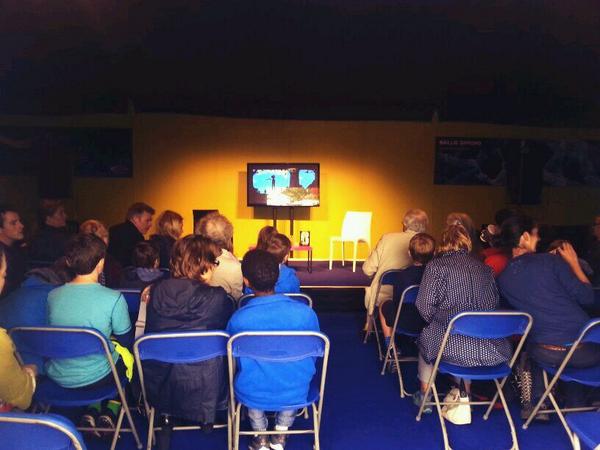

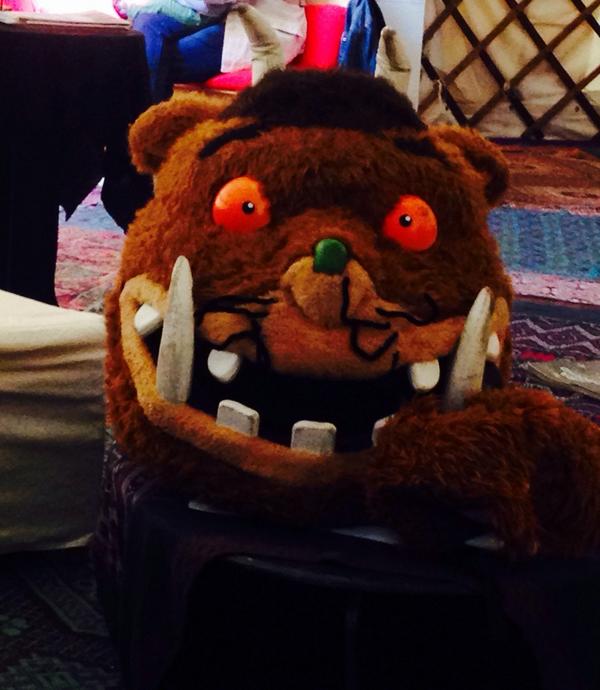
.jpg?picon=834)


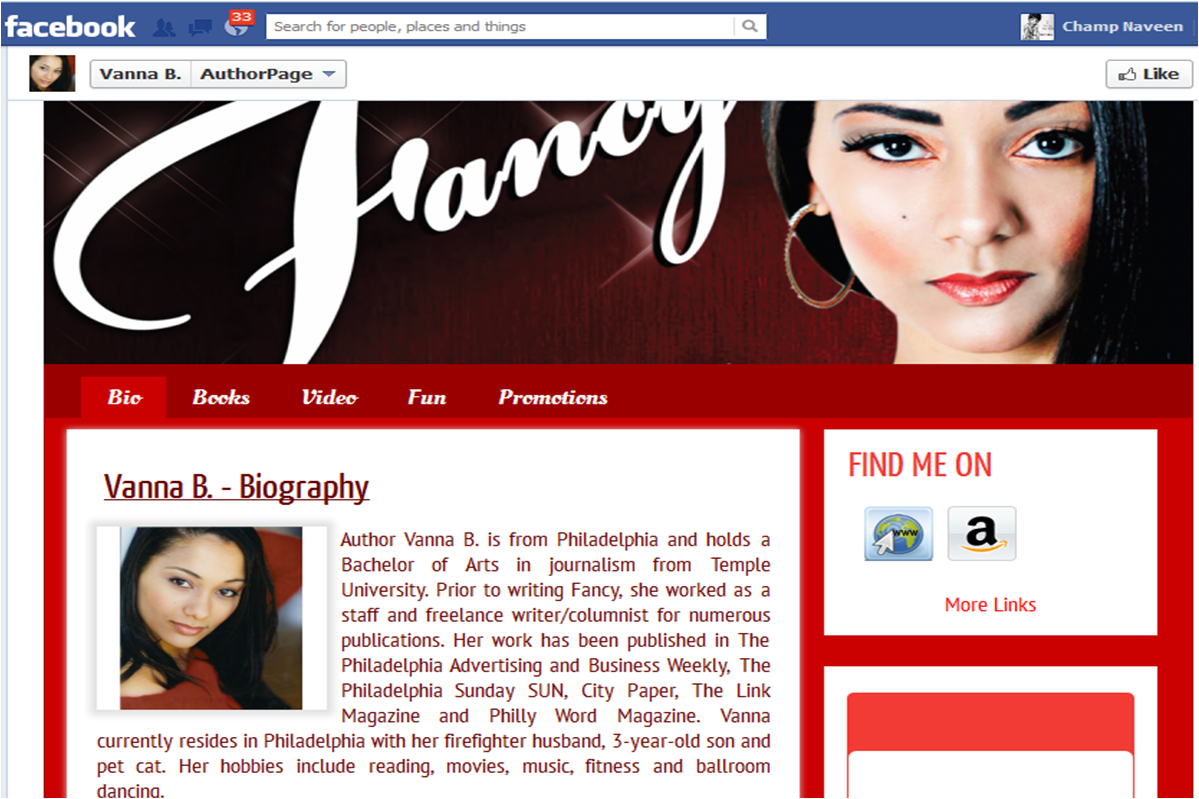
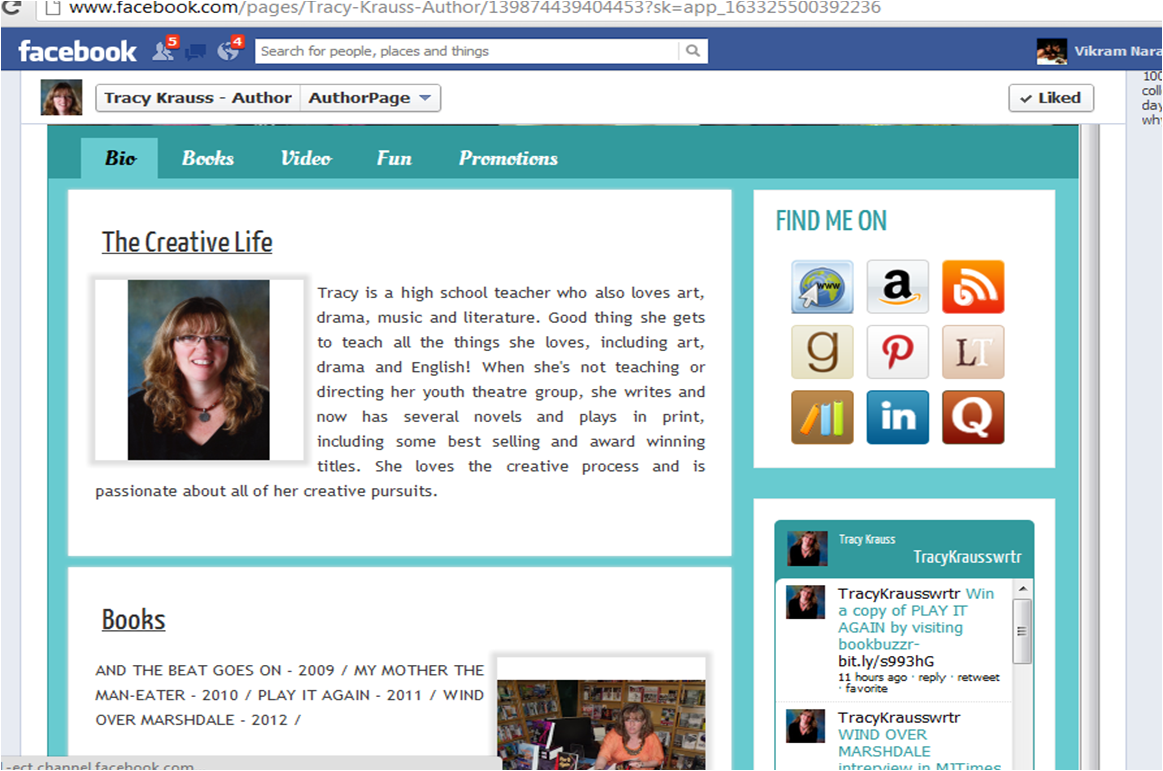

.jpeg?picon=893)


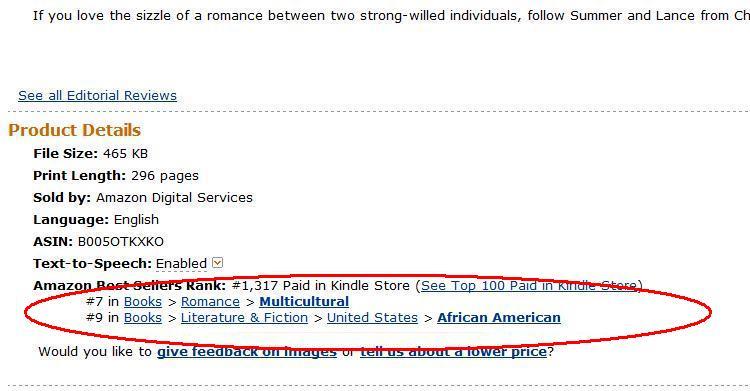

 Aggie Villanueva has written a book that gives you tips and ideas to use the categories feature on Amazon in order to break into a best seller list. We reached out to Aggie in order to get her to share some of her learning with the BookBuzzr author community.


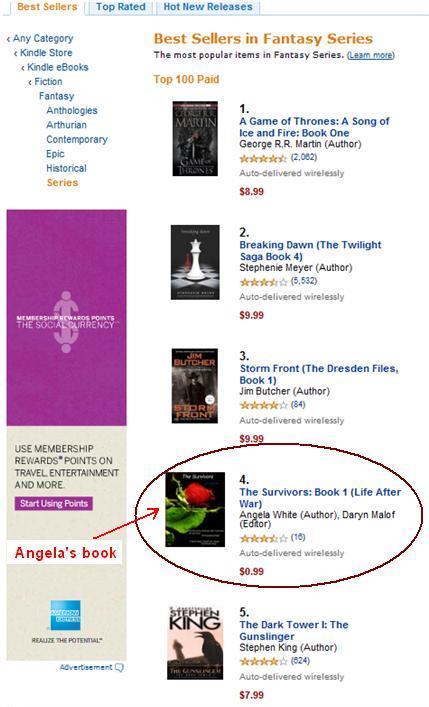


Speaking as a person who thought she was on Facebook but apparently is not, some of this is "foreign" to me--especially the math talk.
However, your ending was snappy and true. Every author does need a positive now and then.
Thanks for the post, Cathy.
I have to admit I don't know exactly what "liking" an author page will do for marketing or sales either. I am just beginning my writing career, and I can vouch for the fact that seeing that I have new "likes" on my Facebook writer's page and my blog, which is brand new (started yesterday, literally) is a huge thrill.
Great post. Thanks for sharing.
All I know is that the opposite to like is dislike so pressing like is confirmation that you are doing something right. xxx
Great post, Cathy! I was just thinking about this very same thing the other day.
I often click on the "Like" buttons that are on an author's Amazon Book Page for a particular book--especially if we're doing a book tour. Then it dawned on me a couple of days ago, this does nothing for the author's book other than making the page look popular. And it can be bad for you if you really don't like the book and are just trying to help an author out. Amazon uses those Likes to gauge how to market to you. They will send you e-mail advertisements with books they *think* you will enjoy that are similar to the book because you clicked on that Like button. They will also send you advertising when that author releases a new book. They will also show you ads of "recommended" books while you are shopping on Amazon. Amazon considers Likes as permission marketing.
So does Liking an Amazon book page or author page really help the author?
No, unless you have bought her book and want Amazon to inform you when she releases another so you can purchase it.
If you have read the author's book, why not leave a review as well as a Like? That is a lot more helpful, and reviews do help sell books. Also fill out appropriate categories for the book in the "tags" section of the page. This helps optimize the author's book page for the web. It's also important that you "Like" the right version of the book (hardcover, paperback, Kindle) if you really want Amazon to target you correctly.
Simply put: Liking does not translate to book sales.
Well, dang, Angela, I was going to write all about the Tags for next time-;-)
But yes, I'm sure a book review carries more weight than the "Like" click. I had a marketing friend say that she always asked people for honest reviews--and if they don't like the book, she still wants the review. Because bad or good, the review will help her rankings!
I'd love to read your post on Tags! I think that will be useful, and we haven't covered it before. :)
Your marketing friend is brave. I know many authors who are seriously bummed out for days about one bad review. I prefer not to spend my time writing bad reviews because I know how much goes into writing a book. I just review a book when I think it's good. I know that may not be completely helpful (and someone has to leave the bad reviews!), but that's what I'm comfortable with.
Hi Cathy,
Thanks for your excellent advice. I always learn something about writing or marketing or publishing or Liking after reading one of your posts.
I have reviewed hundreds of books on various sites--I've made a modest income reviewing books and interviewing authors. But I never realized the impact of clicking on the LIKE button, but I will now.
And I LIKE your advice.
Donna
Interesting info. Pretty sure I've only clicked the "like" button on one author page on Amazon, but I've hit it more often for books.
I didn't even know the amazon author pages could be liked! I thought this was only a Facebook thing. Thanks for the heads up!
When someone asks me to like, I do. But also like you, I wonder what it really does. I've decided that writers are already asked to do a lot, so I' won't ask people to like my pages and whatnot via emails and such. If people feel moved to like, great. :)
I always click the "like" buttons on author pages even though it's nebulous as to what it actually accomplishes. But it does encourage authors. As Angela said, I always write a review if I enjoy a book, and I don't write anything at all if it's not my cup of tea. When I'm purchasing books, I look at the reviews, rather than the "likes." It's much harder to write a good review and shows the person has at least read part of the book. Anyone can "like" a page. As for tags, don't they help in a web search so people can find the books with those tags? That would be more important than likes, I think.