JacketFlap connects you to the work of more than 200,000 authors, illustrators, publishers and other creators of books for Children and Young Adults. The site is updated daily with information about every book, author, illustrator, and publisher in the children's / young adult book industry. Members include published authors and illustrators, librarians, agents, editors, publicists, booksellers, publishers and fans. Join now (it's free).
Login or Register for free to create your own customized page of blog posts from your favorite blogs. You can also add blogs by clicking the "Add to MyJacketFlap" links next to the blog name in each post.
Blog Posts by Tag
In the past 7 days
Blog Posts by Date
Click days in this calendar to see posts by day or month
Viewing: Blog Posts Tagged with: Reading, Most Recent at Top [Help]
Results 26 - 50 of 2,315
How to use this Page
You are viewing the most recent posts tagged with the words: Reading in the JacketFlap blog reader. What is a tag? Think of a tag as a keyword or category label. Tags can both help you find posts on JacketFlap.com as well as provide an easy way for you to "remember" and classify posts for later recall. Try adding a tag yourself by clicking "Add a tag" below a post's header. Scroll down through the list of Recent Posts in the left column and click on a post title that sounds interesting. You can view all posts from a specific blog by clicking the Blog name in the right column, or you can click a 'More Posts from this Blog' link in any individual post.
Now that summer is in full swing in the banana belt of Canada, I’m willing to bet most kids in the northern hemisphere are enjoying their free time doing their favorite things like playing with their friends, hanging out at the beach, reading books by their favorite authors (wink), or going on vacations with their families. That said, I thought I’d compile a list and share my ten top favorite things that I enjoy whether it’s summer, fall, winter or spring.
1. Enjoying my morning coffee outside (weather permitting) on our patio. True therapy.
2. Big. Bang. Theory. Sheldon still cracks me up!
3. The original Star Wars movie. I know, I’m dating myself, but I was one of those people who went
to the movie theatre to see it again and again. Of course movies were cheaper back then!
4. My reading chair. It’s comfy and cozy. Even when I have to share it with the cat.
5. Reading...in my reading chair…with or without the cat.
6. Writing the first draft of a novel that nobody sees because that’s where the fun begins!
7. My pets. After all, I have to read my first draft to someone. Right?
8. Writing ‘THE END’ on the final draft of my novel. Trust me, it’s a BIG deal!
9. Connecting with my readers online and offline. Trust me, it’s a HUGE deal!
10. Single. Malt. Scotch. No explanation necessary.
So, what are some your favorite things? Would love you to comment and share! Enjoy the rest of your summer, and thank you for reading my blog! Cheers!
0 Comments on My 10 Top Favorite Things… as of 1/1/1900
Today I'm happy to share More, the latest release by Keren Hughes, who happens to be a great author and a total sweetheart. If you haven't read her books yet, you need to.
Drake Anderson is all the man Annalise Duncan ever wanted…
Annalise has it all. The perfect husband. The perfect son. The perfect life. After the father of her son Ayden abandoned her to be a single parent, she finally felt like she hit the romance jackpot. Her boss, Drake Anderson, turned out to be more than just a friend. He’s the love of her life, and an amazing stepfather to her son.
But the picture perfect marriage is merely an illusion…
After seven wonderful years, Drake leaves. He doesn’t give her a reason, or even the courtesy of a return phone call. Six months go by without even a single acknowledgement. Annalise is devastated. Her heart and soul belonged to Drake, and he was the only father Ayden ever knew. She’d dedicated her life to him and the family they built together, and she isn’t willing to let that dream go easily.
When Annalise spots Drake out at a café with a woman, her heart shatters all over again. But it’s not what Annalise thinks. He isn’t cheating on her. There are things about leaving that Drake just can’t or won’t explain. Some things should remain a secret.
He wants his old life back, but Annalise won’t accept anything but the truth…
Drake has to find a way to convince his wife, his Cariad, to take him back, but it may mean facing a truth he wanted to keep hidden. He must prove to Annalise that despite his past, he wants her…
Keren lives in the UK and is an avid bookworm. She fondly remembers the days where she would lie in her bedroom away from distraction and get lost in the world of make believe. Her first real memory of reading something she fell in love with was The Hobbit. In her teenage years, she became addicted to Point Horror books like RL Stine's The Boyfriend, but she also enjoyed light Summer reads like What Katy Did and What Katy Did Next.
Over the years she has come to realise that she is a bit of an OCD freak about books. They have to be in perfect condition without the slightest bit of damage. She has been a book reviewer for the last few years and a book hoarder for a LOT longer. You can NEVER have too many books! Her shelves are bulging and overflowing but she always wants "just one more book".
Keren had her first book published by Limitless Publishing in November 2013. It's a YA Paranormal Romance novel called Stolen. Her second book was published with LP in May 2014. This time, an NA Contemporary Romance called Nothing Like The First Time. She couldn't have been more surprised when NLTFT appeared on the Amazon Best Seller list. That was a dream come true.
Keren is currently working on more NA Contemporary Romances for you to fall in love with.
Keren loves hearing from her readers.
You can reach her by email at [email protected] Visit her author blog here: www.authorkerentshughes.wordpress.com Facebook Profile: www.facebook.com/keren.hughes.92 or Facebook Page: www.facebook.com/kerentshughes
*Want your YA, NA, or MG book featured on my blog? Contact me here and we'll set it up. Add a Comment
Happy Monday! Monday Mishmash is a weekly meme dedicated to sharing what's on your mind. Feel free to grab the button and post your own Mishmash.
Here's what's on my mind today:
Back to Normal I returned from my blogging break last Friday. Now it's back to my normal blogging schedule. While I missed the blog and all of you, it was nice to disconnect for a little while. I barely checked email or anything.
Reading I'm in the middle of three books at the moment. I haven't done that in a while. They all happen to be suspense novels too.
Revising I'm revising my adult suspense so it's ready for my editor in September. I really love this book, and each time I read it, I get ideas for how to make it better.
After Loving You I'm so close to having my Ashelyn Drake NA romance After Loving You ready for formatting. This book tugs on my heartstrings every time I read it.
National Ice Cream Day According to my planner, yesterday was National Ice Cream Day. I may have indulged in some myself. ;)
I'm back! My blogging break is over. Of course I've missed you all. Today, I'm sharing Beverly Stowe McClure's latest release, A Family For Leona.
Ten-year-old Leona Chapter doesn't understand why her papa left his six children at the Brooklyn Home for Homeless Children after their mother's death in 1921. Each day she prays he'll return and take his children home. God, however, isn't listening. Her brothers and sisters are either adopted or run away, leaving only Leona and Baby Mildred in the orphanage. Leona promises she and Mildred will be together for always. A promise she cannot keep, for Leona, along with her friend Noah, who she defends from the bullies Hiram and Jehu, and several other orphans, are soon on a train headed to Texas, while her sister stays at the orphanage. Leona vows she'll go back to Brooklyn, the first chance she gets. An Orphan Tran tale of the early 1900s.
Most days, you'll find Beverly at her computer writing stories young voices whisper in her ear. When she's not writing, she plays the piano. Her cats don't appreciate good music and run and hide when she tickles the ivories. She's sometimes called the "bug lady." She's not telling why.
*Want your YA, NA, or MG book featured on my blog? Contact me here and we'll set it up. Add a Comment
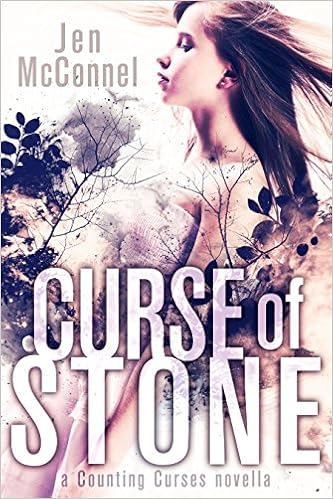
Julia is depressed. Ever since her mom died, it's been hard for Julia to enjoy life, even when she's spending a year studying in Rome. But when an ancient curse attaches itself to her, Julia realizes that she isn't ready to give up. With the help of Fernando, a too-charming-for-words guy from her art history class (and the heir to a black market antiquities business), Julia feels like she might have a second chance at everything. But time is running out, and the curse makes it a matter of life or death. Can Julia and Nando break the curse, or is it already too late?
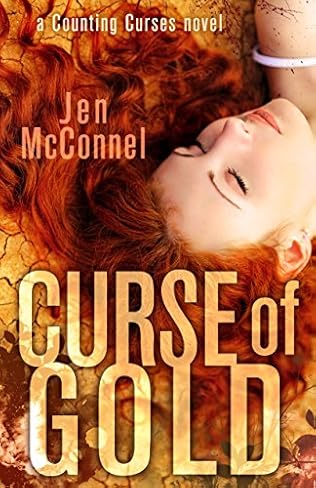
And keep an eye out for Curse of Gold coming August 2, 2016!
Some curses aren’t meant to be broken…
When Riley moved to London to get her graduate degree, she never thought of herself as dangerous. But when a guy she loves drops dead, Riley starts to believe in the family curse. Her eccentric grandmother insists that it’s up to Riley to break the centuries-old curse that has plagued the family, but all Riley has to go on are Gran’s cryptic remarks and a little bit of mostly awful luck.
Her luck changes for the better when she meets Tom, a scholar with a treasure-hunting hobby who knows more about Riley’s curse than either of them realize. Despite the risks, Riley is drawn to Tom, but her curse prevents her from acting on the growing attraction. Will their combined love of esoteric history be enough to break the curse, or will Riley remain deadly to anyone who falls for her?
Jen McConnel is an award winning author. She writes Young Adult and New Adult fiction, nonfiction, and poetry. When she isn’t writing, she can be found on her yoga mat, teaching, or wandering off on another adventure. She grew up in mid-Michigan, attending Western Michigan University, and now lives with her family in North Carolina. She holds a MS in Library Science from Clarion University of Pennsylvania, and she is currently working on her MFA in Children’s Literature at Hollins University.
Visit http://www.jenmcconnel.com to learn more.
*Want your YA, NA, or MG book featured on my blog? Contact me here and we'll set it up. Add a Comment
Happy Monday! Monday Mishmash is a weekly meme dedicated to sharing what's on your mind. Feel free to grab the button and post your own Mishmash.
Here's what's on my mind today:
After Loving You Things are coming along quite nicely for my October 3rd release, After Loving You (an Ashelyn Drake NA contemporary romance). I love the cover so much and can't wait to share it later this summer.
Reading I've been sneaking extra reading time lately and I'm loving it. I'm reading two books right now, a mystery and a thriller. Really enjoying both. :)
New Planner! My old day planner ran out of pages. The horror! But I've replaced it, and I'm loving the new one. The inside is so pretty. It has pockets, color-coded sections, plenty of space for notes, and each month starts with a list of important dates for me to fill in.
Blogging Break Coming Soon I've decided to take a blogging break. One week off, starting July 8th. Why? It's summer and we all need a break every once in a while.
Summer injuries I was proud of myself for all the exercise I've been getting between running, walking, tennis, and swimming. But I got a terrible calf cramp on my last run and haven't been able to run since. It's a huge knot in the muscle. And…I have tendonitis in my ankle too. *Sigh* So I'm walking and swimming for now since those don't hurt too much.
A LOVE THAT DISTURBS by Medeia Sharif Evernight Teen, June 17, 2016 Purchase from Amazon (merchant sites will be updated on the author's site) Maysa Mazari is alarmed by her mother’s talk about arranged marriage. As a hijab-wearing Pakistani-American, she wants to find love on her own. Her judgmental Muslim clique has protected her from racist taunts, although the leader is turning on her as Maysa strays from the group because of her attraction to Haydee. Haydee Gomez is a former gang member and juvenile detention student. Now living with a clean-cut aunt, she wants to turn her life around, even though one person will never let her forget her roots—Rafe, her abusive pimp. Haydee attempts to pull away from a life of prostitution when she develops feelings for Maysa, although Rafe isn’t willing to give her up too easily. Finding themselves in danger from Maysa’s friends and Haydee’s pimp, it’s apparent their love disturbs everyone around them as they fight to stay together.
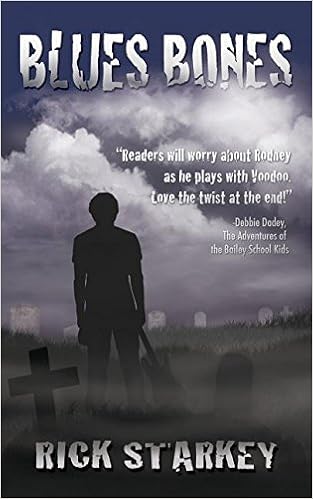
As I'm sure you all know, I acquired Blues Bones by Rick Starkey so I can't review it. However, my daughter, Ayla Hashway, is here today to review the book since she chose to read it for her summer reading. Just a little bit about Ayla: she's nine years old, going into fourth grade, and is an avid reader.
First, here's the cover and blurb:
Thirteen-year-old Rodney Becker has found the perfect cure for stage fright. Voodoo!
Armed with the stolen finger bones of a dead blues guitar player and a mishmash of voodoo spells from the Internet, he and his best friend enter a graveyard at midnight to perform their ritual. Now, all that stands in his way of winning a local guitar competition is the power of RETURN – a side effect of the voodoo that spells disaster for Rodney.
His cure has become a curse. How else can he explain jamming his finger so bad he can't hold a guitar pick, his part-time dad stealing his guitar, and his mom getting into an accident that could have taken her life?
How much is Rodney willing to risk to achieve his dream of being a guitar legend?
And now, here's Ayla with her review!
Hi,it's Ayla. I read the book Blues Bones for the first time! I kind of felt bad for Rodney when he froze up on stage at the school talent show, but it was funny at the same time. I think people can relate to Rodney with stage fright and other things. I also think it was cool when he played around with the voodoo spells. There were a lot of funny parts to this book. It was fun to read, especially with my mom. So I'm really glad Rick wrote this book. I hope many people get to read it and have as much fun reading it as I did. Have fun reading! Bye!
*Want your YA, NA, or MG book featured on my blog? Contact me here and we'll set it up. Add a Comment
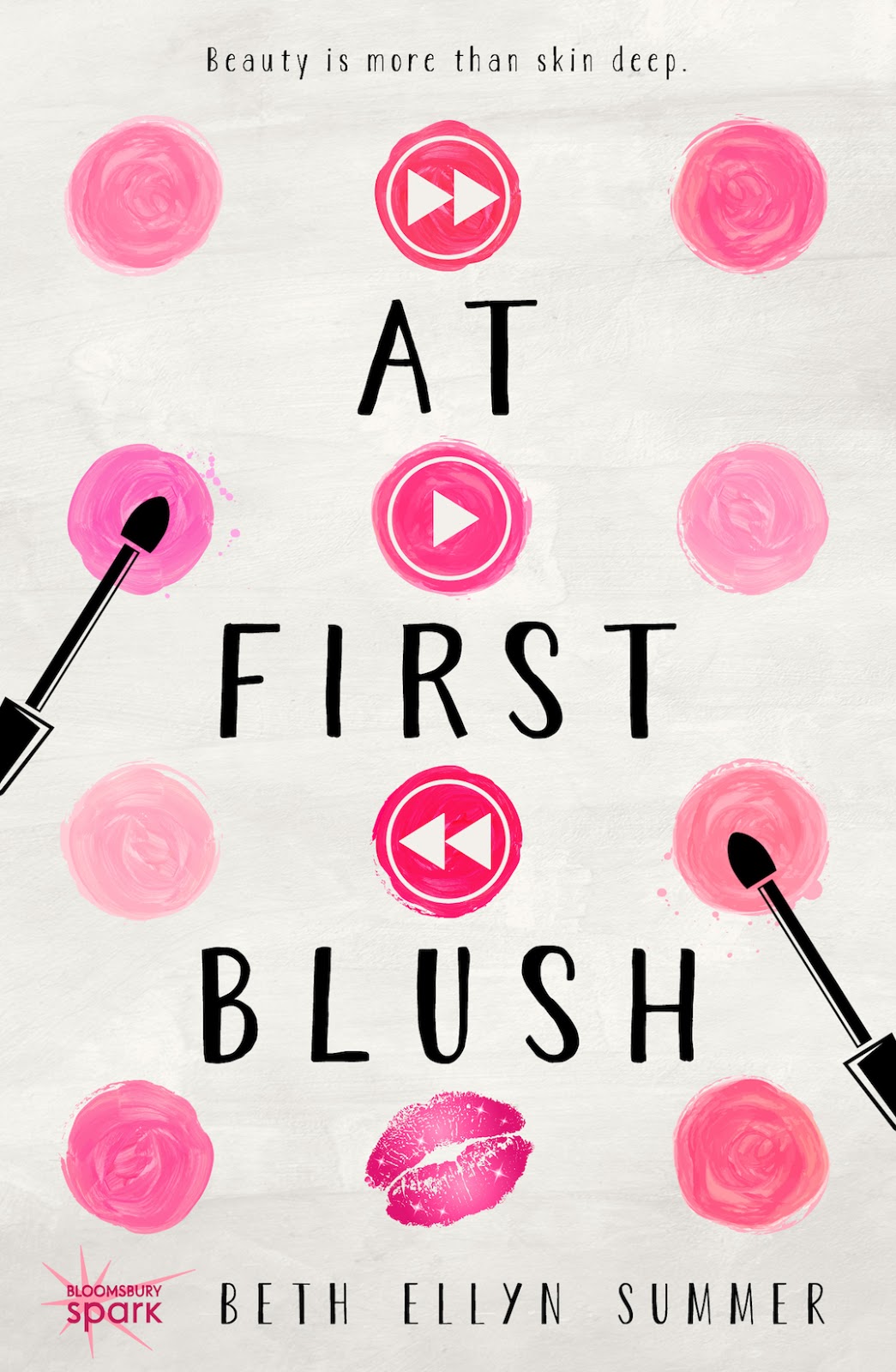
Today I'm happy to share the cover of At First Blush by Beth Ellyn Summer!
Lacey Robbins has one goal for the summer: hit one million subscribers on her YouTube beauty channel. Working as an On Trend magazine video blogger is just the platform she needs to get there, but falling for the cover boy, rock star Tyler Lance, was not part of her plan--especially since his dating history is longer than her Sephora wish list.
She can't avoid him for long though, not when it's her job to film vlogs with him. As Lacey and Tyler grow closer on and off camera, her channel becomes popular for all the wrong reasons, and the two YouTubers she's working with officially hate her. Lacey's only solace is spending time with Kendall Wynn, On Trend'sresident makeup artist. Kendall's scattered, carefree approach to makeup reminds Lacey why she ever picked up a tube of lipstick in the first place.
Nothing about this summer is going according to Lacey's perfect plan, and pretty soon she learns that filming makeup tutorials is easy. It's real life that could use some editing.
Beth Ellyn Summer writes contemporary young adult fiction that somehow always includes the following elements: fame, makeup, and television. She graduated from Long Island University with a degree in Print and Electronic Journalism. Interning for Conan O'Brien and Jimmy Fallon was the highlight of her college years. When she's not writing, Beth can be found swatching eyeshadows, solving Wheel of Fortune puzzles, and playing with her adorable cat, Penny Belle. Beth lives on Long Island in a cookie cutter town that, in an ironic twist of fate, doesn't have a single decent bakery.
Happy Monday! Monday Mishmash is a weekly meme dedicated to sharing what's on your mind. Feel free to grab the button and post your own Mishmash.
Here's what's on my mind today:
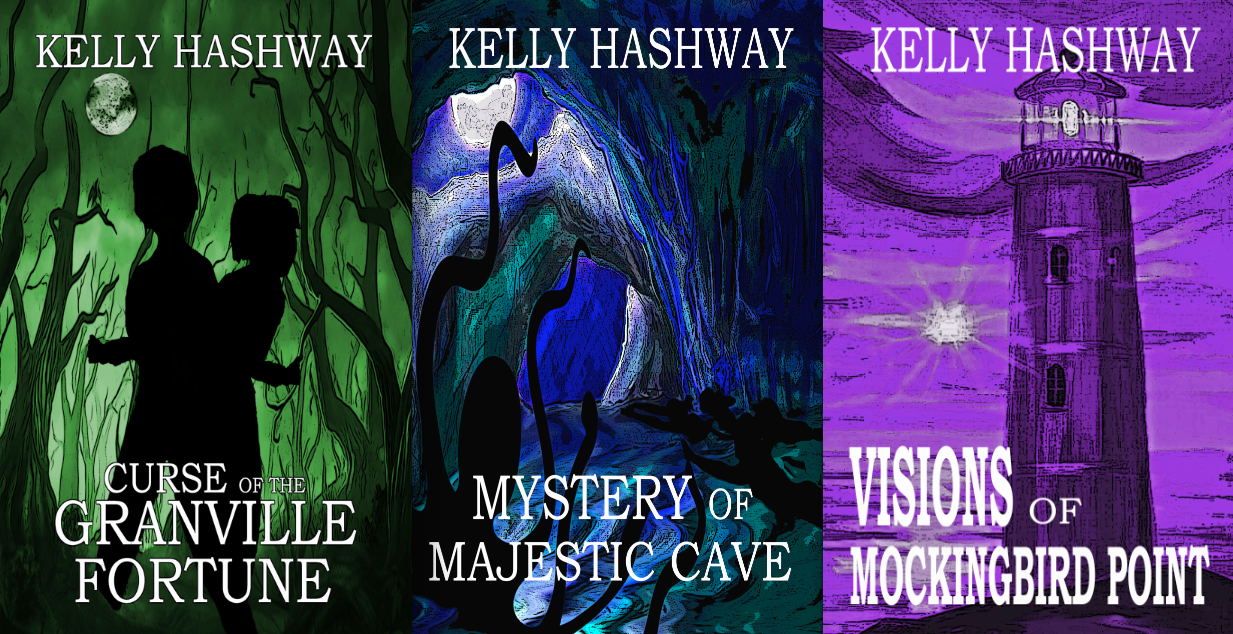
Visions of Mockingbird Point Cover In case you missed the cover of the third and final installment of my Curse of the Granville Fortune series, here's Visions of Mockingbird Point (designed by True Poison):
Edits I'm working on final edits for Visions of Mockingbird Point. I'm so lucky to work with one of my favorite editors on this series.
Another Author in the Family My nine-year-old daughter decided to write a book this summer. She's been working on it every day. I'm really excited for her.
Exercise, Exercise, and More Exercise! After taking two month off from running due to breathing issues, I'm back to it. My daughter also has me walking for an hour each day and swimming all afternoon. I'm exhausted!
Reading I'm so happy to be reading for enjoyment again. I read all the time because I edit so much, but reading a book without having to edit it is very relaxing.
I'm excited to share the cover of the final installment in my middle grade fantasy adventure series, Curse of the Granville Fortune. Check out Visions of Mockingbird Point.
Being grounded for a month is nothing compared to the mind-numbing visions thirteen-year-old J.B. has when he’s not with Edward and Noelle. The curse of the Granville fortune is getting worse, and if the three don’t find and return the stolen property soon, Noelle’s parents will die.
In a desperate attempt to break the curse, J.B., Edward, and Noelle sneak off to Mockingbird Point, the latest location in their visions. But the visions are also showing that Morgan Grimault is on his way. It’s a race to locate the final portion of the fortune and defeat Grimault once and for all.
With everything on the line, the visions might not be enough to save J.B. and the others from dying at the hands of this curse.
Huge thanks to True Poison for creating this beautiful cover! Don't all three look so nice lined up?
Look for Visions of Mockingbird Point coming late June!
*Want your YA, NA, or MG book featured on my blog? Contact me here and we'll set it up. Add a Comment
My daughter starts summer break today, so we're selecting books to read together in our own little book club. I love reading with her (we take turns reading aloud to each other) because she has such great insights. It also means I get to read some good middle grade books.
In addition to reading this summer, I need to get my Ashelyn Drake contemporary romance, After Loving You, ready for its September release. This story is very special to me because I'm a firm believer that you don't ever stop loving someone, but you can change the way you love them. If you're not sure what I mean, you'll have to read the book in September to find out. ;)
So my summer will consist of lots of reading and writing, because they go hand in hand. Learning from great authors is my favorite form of research, not to mention the most enjoyable way to improve your craft.
Have you selected your summer reads? Feel free to share them in the comments.
*If you have a question you'd like me to answer from the other side of the editor's desk, feel free to leave it in the comments and I'll schedule it for a future post.
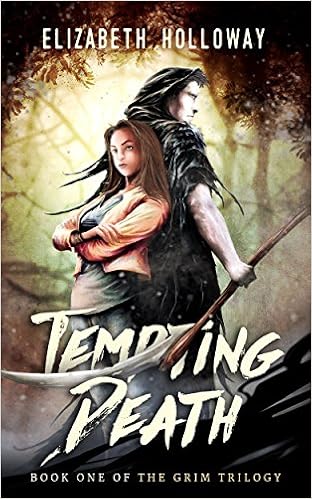
The truck should have turned Libbi Piper into a Libbi pancake, but a mysterious boy named Aaron saved her life instead. The problem? Aaron’s the local Grim Reaper. The bigger problem? He saved her life so she can take over his job.
Libbi has just days to choose between dying like she was supposed to or living a lonely life as Death Incarnate. The choice only gets harder when she learns Aaron’s reasons for wanting out of the whole morbid business. Basically, his job sucks.
Still, when Aaron looks at her, there’s something more in his eyes. Something dark and secret. Something he’s hiding. Libbi will be damned if she’ll die without figuring it out. And she’ll be damned if she lets him go.
Excerpt:
The creep is back.
I may not be able to see him, but I know he’s here, somewhere. Call it intuition. Or maybe it’s just the eerie memory of when the guy stared me down last night. I don’t know, but I’m not taking any chances.
I hunch over my history final and release my thick hair from behind my ears. It swings forward like a dark-brown curtain and hides my face.
Show’s over, buddy.
I can’t look around, not with Mr. Winkler on “cheater duty.” Hopefully, the guy will get bored and go wherever the hell he went last night when he took off.
The final is what’s important. I need to focus on this test.
I read the next question on the page, but the loser’s gaze bores through my dark shield of hair and my arms erupt in gooseflesh. Before I can skim the multiple choice answers, my eyes betray me and shoot up to scan the classroom.
Mr. Winkler sits at his desk scratching at some poor schlub’s paper with his red pen of doom. His bald head gleams in the harsh fluorescent light. God, I hope it’s not my paper he’s destroying. I can’t afford another bad grade in this class.
I quickly scan the rest of the classroom through the part in my hair, but everyone is working. Eerie feeling or not, nobody’s looking at me.
But I know someone is watching. Just like last night, I can feel his stalker stare.
This is ridiculous. I shake my head and rub my arms to dispel the goose bumps. This guy has freaked me out so much I’m imagining his eyes on me now. I don’t have time for this. I have an exam to finish.
The tip of my pencil hovers over the letter C, and something in my peripheral vision shifts. I snap my head up and finally see him.
The guy I caught staring at me at the art show last night, the guy who warned me something bad was going to happen to me today, stands at the tiny rectangular window in the door. He tilts his head and his ice-blue eyes lock on mine, sending a shiver through my body.
Shake it off, Libbi, I tell myself. He’s just a crazy boy with a crush.
Actually, with his tousled black hair and his nose pressed against the glass like that, he looks a little like a lost puppy. If he wasn’t so creepy, I’d almost feel sorry for him. But couldn’t he choose a better time than the middle of my history final to eyeball me? Plus, he said he wanted to talk to me alone, and this is most certainly not alone.
I point to my partially finished test and mouth, “Final exam.”
He nods. A half-smile lifts the corners of his lips.
“Bye.” I wave my hand.
“I need to talk to you,” he mouths.
“No,” I reply, but he continues to stand at the door.
Dude, catch a clue already. I spin away from the door, sneak a peek at Mr. Winkler, and shove the eraser of my pencil between my teeth. I yank the eraser out of its metal holder and flick it at the back of Haley’s head. Her chair squeaks as she jumps and whips around to glare at me.
“What?” she whispers.
“Look.” I point over my shoulder with my pencil to the classroom door. “That crazy guy I told you about is at the window.”
We turn to the door together, but the window’s empty. He must be a shy creeper.
“Where?” Haley says.
“Never mind. He’s gone.” I slump back in my chair. At least I can finish my test in peace.
Elizabeth Holloway is a maternity nurse, an avid reader, an artist, a karaoke singer, a music lover, and a kick-ass Pictionary player. She lives in Hanover, Pennsylvania.
*Want your YA, NA, or MG book featured on my blog? Contact me here and we'll set it up. Add a Comment
High school senior Avery Miles is ready to spread her wings and prove her worth on a mission trip to Iraq, but when their entourage gets blown off course in a dust storm in the desert, the group finds themselves lost in an inexplicable garden oasis. Along with the luscious fruits and crystal springs, Avery and her friends find poisonous snakes, deadly sink holes, and a group of natives that are almost unearthly—but that’s not their biggest problem. No matter which way they trek, they can’t seem to leave. Avery steps up and takes charge to keep the group safe, but it isn’t long before she begins suspecting things aren’t as they seem. She isn’t the only one seeing the mysterious boy named Rae, and after following her father’s path in the jungle she’s pretty sure he’s sabotaging her rescue efforts. Gathering her courage, Avery must decide what’s most important to her—finally winning her father’s approval, or getting out of the jungle for good.
What others are saying about Shadowed Eden:
"A truly original premise…filled with danger, redemption, and a cast of teenaged characters that I grew to love. I enjoyed Clark's story and look forward to seeing what she comes up with next." ~Jill Williamson, Award-winning author of By Darkness Hid andCaptives
"Shadowed Eden is a unique and intriguing tale that will keep the reader turning pages…and the suspense doesn't stop until its surprising end! I highly recommend it." ~Melanie Dickerson, Carol Award-winning author of The Merchant's Daughter
KATIE CLARK started reading fantastical stories in grade school and her love for books never died. Today she reads in all genres; her only requirement is an awesome story! She writes young adult speculative fiction, including her YA supernatural novel, Shadowed Eden, as well as The Enslaved Series. You can connect with her at her website, on Facebook, or on Twitter.
*Want your YA, NA, or MG book featured on my blog? Contact me here and we'll set it up. Add a Comment
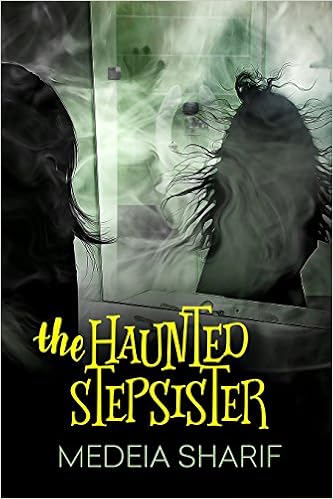
Today, I'm excited to share a book I acquired and edited for Leap Books Seek. I feel in love with The Haunted Stepsister immediately for several reasons. First, Medeia's writing is great. Second, it's about a haunted bathroom! Third, this is a diverse book.
If you haven't checked out The Haunted Stepsister yet, give it a try. You won't be disappointed.
Sixth grade isn’t easy for Jesenya Moradi, especially since her father's recent remarriage and tension with her new stepsister, Kammy. After an incident at school that nearly destroyed Kammy's life, Jess has been desperate to get on Kammy’s good side. But a fateful trip to an allegedly haunted bathroom changes both girls’ lives forever.
The rumors about the bathroom are true, and now Jess is convinced a demon's possessing Kammy. Eerie things happen whenever she's around – flying objects, flickering lights, not to mention the fact that something, or someone, is making people into its puppets.
Worse, the demon seems fixated on making Jess confess her part in ruining Kammy's reputation. Sticking to her Muslim faith, Jess enlists the help of an imam to exorcise the demon from Kammy. But can they get rid of the demon before it destroys her new family?
Medeia Sharif was born in New York City and presently calls Miami her home. She received her master's degree in psychology from Florida Atlantic University. Published through various presses, she writes middle grade and young adult short stories and novels. In addition to being a writer, she's a public school teacher.
*Want your YA, NA, or MG book featured on my blog? Contact me here and we'll set it up. Add a Comment
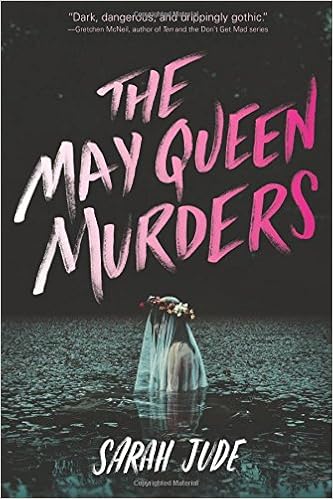
Today, I'm excited to share Sarah Jude's latest book, which just released on Tuesday. Sarah is awesome and her book looks amazing! Check out The May Queen Murders.
Stay on the roads. Don’t enter the woods. Never go out at night.
Those are the rules in Rowan’s Glen, a remote farming community in the Missouri Ozarks where Ivy Templeton’s family has lived for centuries. It’s an old-fashioned way of life, full of superstition and traditions, and sixteen-year-old Ivy loves it. The other kids at school may think the Glen kids are weird, but Ivy doesn’t care—she has her cousin Heather as her best friend. The two girls share everything with each other—or so Ivy thinks. When Heather goes missing after a May Day celebration, Ivy discovers that both her best friend and her beloved hometown are as full of secrets as the woods that surround them. Excerpt:
PROLOGUE
Now
Kerosene slopped from the rusty pail and splashed against the abandoned stable. Fumes burned my eyes but didn’t blur my father’s silhouette as he faced the building, bucket in hand. It would burn and, with it, the body inside.
“Go to hell!”
Papa’s shoulders twisted as he wheeled back, shouting, sweeping the pail around. More kerosene rained against the wood while bile scorched my throat. I was too tired to get sick on the hay, my body wasted from screaming. I wiped my hand over my mouth and something snagged my lip. My fingernail was missing, a ragged root jutting from the bloody bed. Bitten off and swallowed by someone who wanted me dead.
This ain’t real.
Yet I smelled the kerosene and felt the spring air and the dust in my nose, my feet firm on the ground. No matter how my mind ached to fly away, it tethered to a stark truth. This was real.
“Ivy, stay back,” Papa warned, and then looked to Mama, close by with an antique lantern shedding dim light. The night sky swelled with clouds like spiders’ egg sacs ready to burst, but the storm would miss Rowan’s Glen. The hay, the ground, the stable were kindling-dry, and every movement kicked up brown clouds. Mama pulled me until we were safely away. The clink of her silver bracelets racked together as she eased her arm around my shoulder.
“Don’t worry.” Mama’s still-thick Mexican accent lilted her voice, but her expression was stoic except for a pinch around her eyes. That blankness scared me.
“This must be done,” she whispered.
I wadded my fingers into my long skirt. The blue patchwork was smeared with blood and dirt. Last summer, my cousin Heather and I sewed peasant skirts together. They flared when I spun, round and round, always with Heather.
The last time I saw Heather, she was wearing a skirt with red ruffles.
Papa trailed kerosene on the ground and retreated from the stable before tossing the pail inside. I couldn’t see into the shadows. The body lying on the stone floor might yet have a pulse. A shiver tugged at my neck, my chest rising and falling with shallow breaths. One clear thought pierced my mind’s muddle, and it sickened me.
I wanted that body to burn.
“Timothy.” Mama fished a book of matches from a pocket in her apron and gave them to Papa. He took the matches and stretched one hand to hold mine. He was strong. My throat ached when I swallowed, from being choked in an attempt to silence me. Now I said nothing as Papa struck the match.
The fire didn’t whoosh to life. First, the match hit the ground and breathed. Then a blue worm of flames emerged from the earth and devoured one blot of fuel before moving to the next. Upon reaching the stable, the worm bloated into a dragon that blazed yellow and orange. The wood planks hammered by my great-great-grandfather when he was young crackled, bone-dry from drought. Fire twisted through the stable while coils of smoke erupted from the windows. The pulse of the body inside thump-thumped in my head. Frantic. Dying.
“Mama?” I whimpered.
“It’s only fair,” she said.
Papa didn’t speak. Rage had made him do the unspeakable. For me, even though I’d survived. But also for those who hadn’t. Fire was cleansing. Fire was vengeance. The flames burned red, as red as the ruffles of Heather’s skirt. As red as Heather’s hair.
SARAH JUDE lives by the woods and has an owl that lands on her chimney every night. She grew up believing you had to hold your breath when passing a graveyard. Now she writes about cemeteries, murder, and folklore. She resides in Missouri with her husband, three children, and two dogs. When she's not writing, she can be found volunteering at a stable for disabled riders. Visit her website at www.sarahjude.com.
*Want your YA, NA, or MG book featured on my blog? Contact me here and we'll set it up. Add a Comment
Hi, folks. Today I'm putting my writer hat aside and my creative hat too. I'm placing that reader hat on my head. Here I'm going to talk about something I don't chat about much. I love to read. I read every day of my life. I mark off the days to a book I want to read is ready to be published. My live revolves around stories, true and fiction. There is nothing that waters my life more than books.
I'm not a high brow reader. I occasionally read a book that is called literary fiction, but most of the time, I like children's books and genre fiction, most of all historical, historical romance and science fiction. I occasionally binge on non-fiction. I have had entire decades devoted to mysteries and thrillers. I never like horror. I like the classics and read one or two a year. I read a few fantasies every year too. Occasionally, I just like an author and I read every thing they have ever written.
In books, I have lived thousands of lives. I faced thousands of problems. I've inhabited the lives of so many and I am so much more this.
I feel like I've survived the Battle of Talavera in 1800s Spain, and at the same time, the intrigues of Russian noblemen is the times of Peter. The history of the Netherlands for thousands of years boils in my blood. I've seen the pyramids built and inhabited huts with my fellow slaves. I lived in the bogs of Ireland thousands of years ago struggling against my harsh gods. The stories of ages inhabit my soul.
I've felt Mr. Darcy's pride and Elizabeth Bennet's prejudice. I've been with Jane and heard Edward's mystic cries through time and space. I've survived bombings while working with my true love. I've been broken to shards and found love with someone also as broken as me. I've missed huge swaths of life, frozen with fear, and found the fortitude to love again. So many stories.
I've traveled to the far reaches of the galaxy. I've fought aliens, terra-formed planets, and discovered the ruins of ancient species. I've been sold into slavery and been rescued by an intergalactic cop. Apocalyptic nuclear winters, jungle green worlds, the harsh conditions of Mars, I've lived in a myriad of unique environments, survived, thrived and sometimes died. Like the intense electromagnetic radiation of the sun, the heart of all life. Speculative stories have transformed me.
I've sat on the bones of dead children waiting for rescue from a white mouse. I've had my memories stolen from me and forged a new life. My puppy fell out of an airplane once! Oh, one of my best friends is spider and I might be some pig. I care too much and call it love. I've opened my heart and believe that someone will come. I am stronger than I think, and I may not belong in the zoo but there is a place for me. I like your hat, I understand the price, and know stories are light in this dark, dark, world.
Books water the soul. They expand horizons and open my eyes to the distance shores. They encourage me to be more, to accept myself and others, and believe in happiness with good things beyond the bright light of last moments on Earth.
Pick up a book and read till your heart is content!
Next week a new series starts. Exciting news! A guest blogger will usher in the month of May with Bloom! Excellent author Alexandria La Faye will be here! If you don't know her books already, please check her out!!! Edith Shay! Strength of saints! Strawberry Hill! So many fab stories. www.facebook.com/alafayeauthorwww.alafaye.com, [email protected]
Here is a doodle.
Here is a quote for your pocket.
Stop being so fruitlessly busy and dream. Use your imagination. Reach out into the unknown and dream of how you can enlarge your experience and improve your mind and your soul and your world. Mary Balogh
0 Comments on April Showers: The Sweet Rain of Books as of 1/1/1900
Today, I'm happy to share One Smoking Hot Fairy Tail by my fellow Corvisiero author, Kevin James Breaux. I have to say I love this cover.
America’s population is slowly dying due to an epidemic, and Alexander, an ancient, immortal shaman, has medicine that can heal people. It has one small side effect—Alexander’s able to control the minds of anyone taking the drug, nicknamed “dust.”
Alexander plans to take over the country once dust is released to the general public, crushing anyone who stands in the way. He needs just a little bit more of a certain magical ingredient to make the medication work properly: fairy wings.
An intelligent, stunning fairy, Sabrina was also America’s sweetheart—until a video of a crime she was involved in surfaces, nearly destroying her. A year later, she’s finally ready to step back into the spotlight. Together with her bodyguard, Mira, a water spirit in human form, Sabrina’s prepared to start over.
Things are starting to look up until she meets Alexander in a club and goes from social outcast to tortured captive in the blink of an eye. Will she be able to escape the evil shaman and his mind-controlled slaves in time to save herself and everyone she cares about?
Kevin James Breaux is an award-winning author and artist. He has over eight years of professional writing credit, including short stories and novels and has completed seven books.
He is a member of the Horror Writers Association, Science Fiction & Fantasy Writers of America, and the Erotic Authors Association.
Breaux has a growing fan base, including foreign markets in Great Britain and other parts of Europe, and has never stopped striving to better himself as an author as well as to encourage his fellow writers. His motto is Write Makes Might! He is passionate about his craft, while understanding that writing is his business.
Breaux is represented by Marisa A. Corvisiero, the founder of the Corvisiero Literary Agency.
*Want your YA, NA, or MG book featured on my blog? Contact me here and we'll set it up. Add a Comment
I know many parents and visitors to this site are frequently on the hunt for captivating books for their older readers..and lucky me, I just discovered a new one!
Southern Gothic by Middle Grade/YA author Bridgette Alexander is a wonderful new book which incorporates art and mystery in very intriguing ways. I learned of Bridgette and this intriguing book when so became one of our Author Sponsors for Multicultural Children’s Book Day in January.
Celine Caldwell lives a life of privilege, allowed into the elite art community of NYC thanks to her powerhouse mother who is a curator for the Metropolitan Museum of Art. Julia Caldwell has made a prestigious name for herself in the art community. With that comes loyal followers as well as fervent enemies, and Celine soon gets wrapped up in her mother’s political and backwards world.
Two paintings have gone missing from the Met’s archives, paintings that Julia Caldwell publicly deemed unfit for the Met’s prestigious reputation and her selective exhibitions. Julia’s attitude towards the paintings pinpoints her as the head suspect in the NYPD’s investigation into the missing paintings. Celine cannot stand by and let her mother be accused of something she knows she would never in a million years do. Julia may not appreciate the paintings, but she would most certainly never steal them.
Celine and her best friends Sandy, Baheera, and Troy jump right into their own investigation, unaware just how over their heads than they are. But Celine soon realizes that there’s much more to these paintings than meets the eye. While they might seem simple on the surface level, they tell a story—a true story at that, one that is near to a lot of people’s hearts and forces Celine and her friends to relive a murky time in the American South’s history.
Despite the mystery and the danger that follows her investigation, Celine manages to crack the code, piece together the story behind the missing paintings, and clear her mother’s name. All while dating a new guy and managing to stay in school. I’d call that a success, wouldn’t you say?
I actually learned a lot about art in this novel. I enjoy looking at art, but I cannot say I’m necessarily profound in my analyses of them. But Celine Caldwell taught me a lot. For instance, a provenance is a record of ownership of a work of art, used as a guide to authenticity and quality. Celine’s investigation involved creating a provenance for the Southern Gothic art trilogy.
Pieces of art have been used as legal documents in the past. The Marriage of Arnolfini depicts a wedding of the Italian Medici family, and it basically serves as a marriage licence. Portrait d’une Negresse depicts an African-American woman after she was freed from slavery and brought to France. This painting serves as her ticket of freedom, showing that she is a free citizen, not a slave.
You’ll have to involve yourself in Celine’s investigation to learn more.
Bridgette R. Alexander is a modern art historian. She received her graduate training in 19th century French art history at the University of Chicago. Alexander worked with some of the world’s greatest museums in New York, Paris, Berlin and Chicago and developed art education programs; curated exhibits; she has taught and published in art history. She’s been featured in a number of publications including, Art + Auction Magazine; the Wall Street Journal; and the Washington Post. SOUTHERN GOTHIC is her debut novel. Alexander currently lives in Chicago and when not writing, she takes her husband, daughter and friends on midnight tours of the cultural institutions.
Something To Do:Interesting Links if you’re interested in getting more involved in the art community: Art
Planning a visit to France? You have to stop at the world’s biggest museum, Le Louvre. And I’d plan your day around this massive museum. You can get lost for hours in this magnificent building.
Happy reading!
Speaking of art…Do you know what Hans Christian Andersen liked as much as his fairy tales?
Paper! He was an addict to paper. He wrote on it, he drew on it and he use to cut in it. Just like a sculptor carves the figure out of stone, Hans Christian Andersen use to cut his stories out of paper. In fact he was a very popular paper cutter. (images courtesy of the Odense Museum)
In order to amuse his friends and their children, Hans made his very famous paper cuts. Wherever he would go he would carry his bag filled with paper and these very large monstrous scissors which he used to cut out the most elegant figures.
Would you like to create a very special item that is inspired by the paper cuttings of Hans Christian Andersen?
I’ve made a FREE off the shoulder felt story bag craft and tutorial just for this occasion! This simple craft is something the whole family can participate in creating it will make a delightful gift for the book lover in your life. I hope your little bag of tales holds as many wonders for you as ours has.
Click the image below and get instant access to this Hans Christian Andersen-inspired shoulder bag!
My name is Kelly and I’m a re-reader. I read the same books over and over again–some books I read once every year–and I love it.
My husband doesn’t understand this. He is always reading something new. Sometimes he sees me re-reading a book and rolls his eyes a bit. He has so many questions and protests.
But there are so many new books and so little time!
True. And I read plenty of new books, too. I love tumbling head-first into a brand new book. But I believe there’s also a deep magic in reading a book again for the second, or third, or tenth time. Sometimes re-reading is medicinal; it can help heal things in my heart. I reach for old, beloved books that are tried-and-true at those times, and turn to new, unread books when I’m ready to be swept away. And finite time on Earth doesn’t factor into my decision. I already know it is impossible for me to read every book in the world before I die, and I don’t want to try. I want to read books that challenge me, that comfort me, that surprise me, that make me laugh, or cry, that touch some inner part of me. Sometimes I want to read those books twice.
But you already know what’s going to happen!
Yes. But knowing exactly what’s going to happen only amplifies the tension for me. Knowing that Jo is going to refuse Laurie doesn’t make it any less painful when it happens. (Damn you, Louisa!) In a strange way, I sometimes find myself so invested in the story that despite knowing better I’ll begin to believe that something could turn out differently this time. The emotional resonance of a story well-told is sustaining.
I don’t have the patience for that!
Then you’re missing out. Here’s the thing: the book is always the same. The words on the page are the same words, and in some books they are as familiar as my own heartbeat. I call these my comfort books. I reach for them again and again and they fill up all my hollow spots. The books are always the same, and the characters make the same choices, and the stories have the same endings, but I am the one who has changed. The best way to describe it is to quote a passage from Catcher in the Rye in which Holden describes going to the Museum of Natural History over and over:
The best thing, though, in that museum was that everything always stayed right where it was. Nobody’d move. You could go there a hundred thousand times, and that Eskimo would still be just finished catching those two fish, the birds would still be on their way south, the deers would still be drinking out of that water hole, with their pretty antlers and they’re pretty, skinny legs, and that squaw with the naked bosom would still be weaving that same blanket. Nobody’s be different. The only thing that would be different would be you. Not that you’d be so much older or anything. It wouldn’t be that, exactly. You’d just be different, that’s all. You’d have an overcoat this time. Or the kid that was your partner in line the last time had got scarlet fever and you’d have a new partner. Or you’d have a substitute taking the class, instead of Miss Aigletinger. Or you’d heard your mother and father having a terrific fight in the bathroom. Or you’d just passed by one of those puddles in the street with gasoline rainbows in them. I mean you’d be different in some way—I can’t explain what I mean. And even if I could, I’m not sure I’d feel like it.
—J.D. Salinger, Catcher in the Rye
Do you like to re-read books too, or do you always pursue new books? If you like to re-read, which books and why?
It took only four months to bring the angels to their knees…
With a virus ravaging the fallen angels on earth, mankind’s symbol of love and hope is at risk of extinction.
Centuries ago, a group of angelic warriors known as The Fallen risked everything to save themselves and carve a future for their kind. Hope slips away as The Fallen and their kin are cut down by an ancient menace, LaMorte Nera—and no one saw it coming.
Only one immortal can save them, and only one mortal can stand in his way…
When Nephilim warrior Killian St. James sets out on a quest to find a cure, he and his blade-brothers discover nineteen-year-old Aubrey Carter—a human with a past as dark as it is mysterious—cowering in an abandoned house in the heart of Memphis, Tennessee.
The corrupted races are chasing her, and Killian is determined to find out why…
But neither he nor Aubrey are prepared for their attraction to one another, or for the frightening truths lurking in the shadows. The painful childhood memories Aubrey has buried hold precious answers. Answers that threaten to tear Killian's world apart.
With her life hanging in the balance, Killian must choose between the future of The Fallen, and the human girl he's pledged to protect.
Demons are rising, and this time they plan to win the war for dominion once and for all.
Killian stepped forward, forcing her to tilt her head back to look up at him. He still seemed so big to her. He still overwhelmed her. But he didn’t frighten her anymore.
“You look tired.” She fought the urge to lift her hand to touch his gorgeous face.
“I am,” he said, the corner of his lips turning up in a half smile.
“Oh.”
He stared down at her, his half smile slipping. A dizzying parade of emotions swirled through his eyes. She couldn’t read them all, but she understood enough. He felt as torn as she did.
“Will I remember you three years from now?” she whispered, her heart aching with the fear that she would forget him as she had so much else…and with fear that she would remember him. That she would survive this nightmare and he would haunt her for the rest of her days like so much else did.
“Do you want to remember me?” He took another step in her direction.
“I don’t know.” She frowned, confused. “You make me feel like maybe the world isn’t so bad. Like maybe I’m safe with you. I don’t think I want to forget that.”
Killian tucked a strand of hair behind her ear and cupped her cheek gently in one big hand. “You are safe with me. I won’t let anyone hurt you, Aubrey.”
She stared at him for a long, silent moment. He’d promised before that he wouldn’t hurt her, but even then an unspoken fear had stood between them like a wall. A little voice whispered that if she got too close, he would hurt her as badly as the things in her past hurt. That voice had stopped whispering when he’d kissed her today, and wasn’t that odd?
“You hurt me today.”
He bowed his head, letting his hand fall away from her face. “I’m sorry.”
Her heart ached a little at the agonized way he said it. As if it shamed him to know he’d hurt her. As if, maybe, he cared more than he should too.
“Why did you?” she asked, not accusing, but curious. She wanted to understand him. No, she needed to understand him on some level she couldn’t even explain to herself. “You wanted me, didn’t you?”
His gaze sought hers, honesty shining from his angel-bright eyes. “More than you know.”
Aubrey took a deep breath, letting her lungs fill with air even as her heart filled with his confession. And just as quickly, the buoyant feeling vanished. “It doesn’t change anything, though, does it?” she whispered.
“Do you want it to?”
She hesitated for a long moment, unsure. And then her shoulders slumped, the breath she’d taken expelling in a long sigh. “I’m sorry.”
Killian gave her a sad smile and reached for her again. He swept a finger beneath her eye, collecting the teardrop she hadn’t even realized had fallen. “No apologies,” he whispered, bringing his finger to his mouth. He stuck out the tip of his tongue and lapped that single bead of moisture from his fingertip. “You owe me nothing.”
A.K. Morgen is the Amazon Bestselling author of the Ragnarök Prophesies series. She lives in the heart of Arkansas with her childhood sweetheart/husband of twelve years, and their five furry minions. When not writing, she spends her time hiking, reading, volunteering, causing mischief, and building a Spork army. Ayden graduated summa cum laude with her Bachelor of Science degree in Criminal Justice and Forensic Psychology in 2009 before going on to complete her graduate degree in CJ and Law. She currently puts her education to use in the social services and CJ field.
Ayden also writes New Adult and contemporary romance under the penname Ayden K. Morgen.
*If you are looking for the YA Scavenger Hunt, click here.
Today I'm excited to share Beverly Stowe McClure's new young adult novel, Under A Purple Moon.
Eden Rose has learned to deal with her mother’s criticism that she can do nothing right. What she can’t deal with are the arguments between her parents. To escape their angry words, she finds refuge in an old abandoned house. She always returns home, however, hoping her mother will love her one day, even though Eden’s not sure what the word love means.
Three other teens with problems also hang out at the Old House. Meeting Murphy, Toby, and Josh changes Eden’s world, and she begins to have faith in herself. Perhaps she can do something right, after all.
Thanks to the boys, she begins to understand the meaning of love. But will it be enough to save her broken home life?
Purple has always been one of my favorite colors so I'm loving this cover!
Most of the time you’ll find Beverly Stowe McClure at her computer, typing stories little voices whisper in her ear. When she’s not writing, she enjoys taking long walks and snapping pictures of wildlife, flowers, and clouds. To relax, she plays the piano. Her fur babies don’t appreciate good music and hide when she tickles the ivories. She’s sometimes known as the “Bug Lady.” She’s not telling why.
Do you ever wonder what your life would be like if you weren’t a reader? I found myself rolling it around in my brain after work today while walking to catch my train. I’ve been feeling so busy that it seemed like I could actually manage it and, dare I say, not miss reading for at least a little while. I made myself laugh because here is what I thought:
If I weren’t a reader I would certainly have lots more time because I wouldn’t be reading, I wouldn’t be blogging about books or reading other blogs about books. Wow, I’d have so much extra time to read!
Wait, what?
And it took me a few seconds to realize what I was thinking because when I thought about how much extra time I’d have to read if I wasn’t reading my brain started going over my TBR lists and wondering what books I should read first. I was also carrying a book in my bag I had just checked out from the university where I work called Green Planets and Science Fiction about the intersection of SF and ecology.
Clearly if I ever seriously decide to give up reading for a while, I will have my work cut out for me.
No post from me tomorrow night, I will be out collecting the Dashwoods and escorting them to their new home. A respite for you all before I bombard you with baby chicken photos and video. You have hereby been warned.
For Hailey James, the ghosts of the past have never truly been laid to rest…
After a troubled childhood and one last visit to her family’s abandoned home, everything in Hailey’s life seems to be going according to plan. The business she runs with her best friend, Pat, has hit big time success, and she isn’t even twenty-five.
When night terrors come out to play, her future is in jeopardy…
With the demolition of her childhood home, and her twenty-fifth birthday drawing near, Hailey’s nightmares become even worse. She is no longer able to do her job. At Pat’s insistence, Hailey undergoes hypnosis. She doesn’t remember much of her childhood, but when she sees a man dressed all in red in her visions, Hailey knows he is the key to her understanding.
Hailey can’t seem to escape her past and the ghostly women who haunt it. But she can break the cycle of suffering that has surrounded the women of her family, especially with the future of her little niece, Lilly, on the line.
To move forward, sometimes we must go back…
Hailey’s future remains uncertain if she can’t face her demons. She can only hope she will be able to defeat the evil which has pervaded her childhood and threatens her family.
When the shadows of her past threaten to cloud her future, Hailey must find the strength to unlock the truth of her troubled childhood.
Growing up on an old dirty road in the middle of nowhere, as a child Candis used her love for books as a way to escape reality (and her brother constantly trying to kill her—literally). She blames her love of all things Horror on being born on Friday the 13th and will always find joy in scaring her friends.
You will find a little piece of her in every book she writes. She loves a good happy ending, but most of the time she prefers one she never saw coming.
When she’s not writing or reading, she can usually be found chasing her children around. She currently lives in Rome, Pennsylvania with her husband and three children. And her fat cat.




 3. The original Star Wars movie. I know, I’m dating myself, but I was one of those people who went
 4. My reading chair. It’s comfy and cozy. Even when I have to share it with the cat.
 8. Writing ‘THE END’ on the final draft of my novel. Trust me, it’s a BIG deal!

















 Bridgette R. Alexander is a modern art historian. She received her graduate training in 19th century French art history at the University of Chicago. Alexander worked with some of the world’s greatest museums in New York, Paris, Berlin and Chicago and developed art education programs; curated exhibits; she has taught and published in art history. She’s been featured in a number of publications including, Art + Auction Magazine; the Wall Street Journal; and the Washington Post.