new posts in all blogs
Viewing: Blog Posts Tagged with: Death and Dying, Most Recent at Top [Help]
Results 1 - 25 of 36
How to use this Page
You are viewing the most recent posts tagged with the words: Death and Dying in the JacketFlap blog reader. What is a tag? Think of a tag as a keyword or category label. Tags can both help you find posts on JacketFlap.com as well as provide an easy way for you to "remember" and classify posts for later recall. Try adding a tag yourself by clicking "Add a tag" below a post's header. Scroll down through the list of Recent Posts in the left column and click on a post title that sounds interesting. You can view all posts from a specific blog by clicking the Blog name in the right column, or you can click a 'More Posts from this Blog' link in any individual post.

By:
Becky Laney,
on 10/6/2015
Blog:
Becky's Book Reviews
(
Login to Add to MyJacketFlap)
JacketFlap tags:
Random House,
J Fiction,
J Fantasy,
Death and Dying,
MG Fiction,
review copy,
MG Fantasy,
2015,
2015 Cybils-eligible,
books reviewed in 2015,
Add a tag
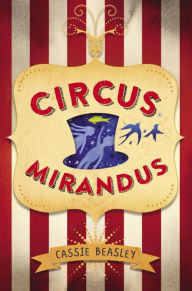
Circus Mirandus. Cassie Beasley. 2015. Random House. 304 pages. [Source: Review copy]
I found Cassie Beasley's Circus Mirandus to be a compelling read. I'm not convinced that it's the best book ever, ever, or even the best book published in 2015.
First, I do want to mention that I went into this book with little to no expectations. I wasn't expecting it to be wonderful, marvelous, unforgettable, just wow-wow-wow. I'd not read any reviews at all. And I hadn't paid any attention to what others were saying about the book, for better or worse. I do think when you've heard so-much-gush about a book and you've seen all the five-star-reviews that it can change your expectations, and, can at times lead to disappointment.
Second, how I think when I'm actually reading the book sometimes differs greatly from what I think about a book a week or two later after reading. (Not to mention sometimes how great the difference between in-the-moment reading reaction and a year or two from now reflection.) I want this "review" to capture both if at all possible.
As I was reading Circus Mirandus, I was hooked, for the most part. I wanted to know what would happen next. Would the Light-Bender come? What would the Grandfather ask for? While I suspected strongly that the miracle itself would not restore him to oh-so-perfect health and enable him to live forever-and-ever, I hoped that something good would come from his writing to Light-Bender. One thing I greatly enjoyed was the devotion Micah had for his Grandpa, and, his belief in magic, in the circus that he's grown up hearing about. Yes, the book is sad, I definitely found it to be so. It isn't FUN to read about someone, someone that is your
everything, dying slowly and painfully. And it particularly isn't fun to read about someone being kept from being with their loved one in the last days. So there were plenty of places in this one that just resonated with pure sadness. But then there were the other scenes: the flashback scenes where readers meet the boy, Ephraim, and the bird-woman, Victoria; and the scenes where Jenny and Micah visit Circus Mirandus themselves. These balance out the sadness, to some degree, by no means erasing or eliminating it. But relieving the situation somewhat. This novel isn't without hope. Sad novels without hope get little love from me. Though I will point out that just because a novel is sad doesn't mean that I will like it. Sadness is no reason to love a novel, and sadness is no reason to automatically hate a novel either.
So as I was reading, I found it compelling. I needed to know what happened next, what happened to the characters, how it all resolved. Once I started reading it, it was the one book I wanted to be reading. I wasn't tempted to pick up any other book. (And I do usually have several going at any time.) So there is something to be said for that.
But. How do I feel days after reading it? My enthusiasm is weakening in places. That's not to say, I don't really like it. But if you'd talked to me while I was reading the book, I'd be GUSHING to say the least. Wanting to tell you how great and wonderful it was. I can't say I'm in a gushing mood right now. It was good. And I'm very glad I read it. It SURPRISED me in some ways. I wasn't expecting it to be a contemporary read. I don't know where I could have gotten the idea that it was historical. I really don't. So it was refreshing to find out it was set relatively contemporary give or take a decade or two. (His grandfather was a child during World War II.)
This is one you should consider reading. You may love it. You may not. But it's worth trying.
© 2015 Becky Laney of
Becky's Book Reviews
Dear Lucas,
One full year has passed since I wrote you. You fantastic little shit.
My best friend’s son is growing up before my very eyes. Six years old now. I think of you every time I spend time with him, and I spend time with him often. I wonder what it will feel like to love a child more than I love Finn. I wonder if love can expand that wide.
 This week I took Finn to see the prenatal exhibit at the museum of science and industry. Positioned behind looking glass, there were so many tiny embryos and fetuses, each prevented from surviving by natural causes or accidents.
I thought of Seamus, another friend’s son who was born to the world but died just before turning two. And the twin babies that came later from Seamus’ mother, the two who just turned two. So many tiny children, awake, asleep, alive, dead.
My capacious ability to love children—to love humans—bewilders me.
Today is my mother’s birthday. Her alive self would be 66 years old. Her dead self is almost two years old. My time without her in the world has been so difficult, and it has also been sublime. When every cell of your body is entwined with another from the moment you are conceived, it is complicated love.
I did not write to you this past year because there were no easy words to convey. People look to me for answers about parent loss, caregiving, early onset Alzheimer’s disease, and holding on to your partner during the years when you are caring and losing and grieving. I say there are no answers. I say you should feel everything. I say you should feel nothing. I say I am better, and they will be too, and then I dream nightmares, and I am not better. None of us can ever be better when there is so much loss.
I did not write to you this past year because everything did get better. I stopped numbing myself with alcohol. I stopped terrorizing myself with memories of moments that were terrifying. I drove around the western states for three months until I remembered I could be alone with my own mind again—and not be frightened.

I did not write to you this year because I was watching for myself to come home again. I pressed my eyelids closed with the palms of my hands, and I remembered that it was all true and it is all over. I remembered that I cannot go back and alter one single moment. I cannot make my mom alive when she is dead. I cannot be someone other than me. There is only now and forward. This is nothing and everything.
And, I did not write to you this past year because I was watching for your other mother—she who occupies the most tender eyelets of my heart—to come home again. I stopped locking my elbows, and I let the damp space evaporate. I stopped worrying about drowning in the grief, because I knew I would not. I was, in fact, simply moving through the current, finding my way back to the person—to the love—by which I remain utterly transfixed.
She waited, Lucas. She waited for me.
Now we are waiting for you.
Happy birthday, Mum.

Tagged:
Alzheimer's,
death and dying,
letting go,
maddening grief,
mother loss,
prenatal entanglement 


By:
Becky Laney,
on 7/4/2014
Blog:
Becky's Book Reviews
(
Login to Add to MyJacketFlap)
JacketFlap tags:
HarperCollins,
family,
J Fiction,
grief,
Death and Dying,
J Realistic Fiction,
2009,
MG Fiction,
library book,
books reviewed in 2014,
books reread in 2014,
MG Realistic Fiction,
Add a tag
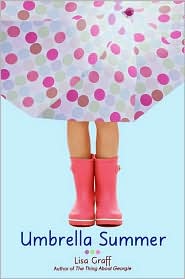
Umbrella Summer. Lisa Graff. 2009. HarperCollins. 240 pages. [Source: Library]
I have been wanting to reread Umbrella Summer for several years now. I
first reviewed it in October 2009. I remember having a good, strong connection with Annie, the heroine. Every single person in the Richards family is struggling with grief--with the loss of Jared, Annie's older brother. But it is Annie whom we come to know and love throughout the book. We see the parents handling of grief, of moving on or not moving on as the case may be. We see how they parent, if they parent, Annie. All this is seen through Annie's perspective. Annie's perspective is seen through a complex range of emotions: fear, anxiety, sadness, and anger. For example, Annie has a hard time sympathizing with her friend, Rebecca, who has lost her pet hamster. Her response to Rebecca's strong grief is understandable, but, problematic for the friendship. He was just a hamster. It's not like you lost your brother. While the book is very much about grief, it is also a very good book about friendship, about what it means to be a friend, about building new friendships and restoring broken ones.
One of my favorite friendships in Umbrella Summer is Annie's friendship with their new neighbor, Mrs. Finch. Mrs. Finch is no stranger to loss, she has also lost someone close to her, her husband. Mrs. Finch and Annie both feel their losses strongly, yet, by coming together, by being honest with one another, by sharing the best memories, the best qualities about those they have loved and lost, they realize that they are beginning to heal a little, and that is a very good thing.
I also thought it was sweet that Annie and Jared's best friend have a special connection and come together as friends to truly celebrate Jared.
© 2014 Becky Laney of
Becky's Book Reviews
By:
Becky Laney,
on 8/7/2012
Blog:
Becky's Book Reviews
(
Login to Add to MyJacketFlap)
JacketFlap tags:
grandparents,
2012,
Death and Dying,
J Realistic Fiction,
library book,
Books reviewed in 2012,
HarperCollins,
family,
J Fiction,
Add a tag
Kindred Souls. Patricia MacLachlan. 2012. HarperCollins. 119 pages.
My grandfather, Billy, hears the talk of birds. He leans out the open bedroom window with his head tilted to listen in the warm prairie morning.Kindred Souls is the kind of children's book I have come to appreciate as an adult, but, the kind of book that I would NEVER have wanted to read as a child. In other words, it's one of those books. You know, the kind, the kind that introduces you to a wonderful old man AND a dog. And you have every right to be suspicious that the end will destroy your emotional well-being.
Jake, our narrator, is ten and confident; confident that everything will stay the same, confident that life is good and will stay that way. Sure, his grandfather, Billy, is eighty-eight, sure he's moved in with them. But he will live FOREVER. Don't ask him how he knows, it's enough that he believes. The novel begins with the two going on their usual walk. Billy is talking--again--about the sod house where he was born. He is wishing--again--that it hadn't fallen into such horrible condition. He is telling Jake--again--about the old days. This time Billy seems extra-sad, so Jake asks him a simple question: "How hard is it to cut a brick of sod?" And so the idea is born that a new sod house will be built...
And then there is the arrival of Lucy, a stray dog, that seems to be the perfect companion for Billy. Billy and Lucy seem to be best, best, best friends from the very first moment they meet.
This book is about an unforgettable summer.
Read Kindred Souls
- If you like bittersweet children's books
- If you like emotional family stories
- If you are a fan of Patricia MacLachlan
- If you like dog stories
© 2012 Becky Laney of
Becky's Book Reviews
By:
Becky Laney,
on 6/8/2012
Blog:
Becky's Book Reviews
(
Login to Add to MyJacketFlap)
JacketFlap tags:
review copy,
Books reviewed in 2012,
family,
YA Fiction,
grief,
Scholastic,
YA realistic fiction,
2012,
Death and Dying,
Add a tag
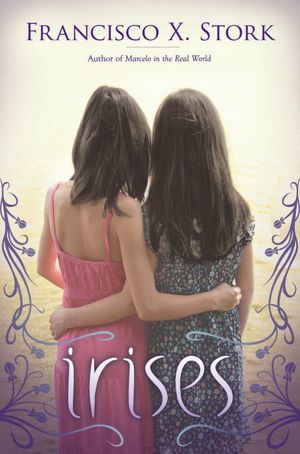
Irises. Francisco X. Stork. 2012. Scholastic. 304 pages.
From the prologue:
Kate had finally agreed to pose under the willow tree.From chapter one:
Kate and her father sat in the shade of the willow tree, side by side in two wooden chairs. It was unusually hot for an April day in El Paso. Kate and Mary are sisters. Kate, 18, dreams of being a doctor, dreams of going away to Stanford for her college education. Mary, 16, is an artist, an artist struggling to recapture her initial joy perhaps, but a very talented, very dedicated artist nonetheless. In the first chapter of Irises, both girls receive a bit of a shock: their father, a pastor, dies. Arguably he knew the end was near for he has a great heart-to-heart with his daughter, Kate, urging her to look to her soul, mend her faith, take care of the family, etc. He tells her: "
Love makes everything that is heavy light" (4). Kate, of course, not realizing the gravity of the situation, perhaps just thinking that her oh-so-strict father is just in an odd mood, quickly leaves the house and goes to study with her boyfriend, Simon. It is Mary, ever-sacrificing Mary, who is left behind to care for their Mom, who is in a vegetative state going on two years now, who discovers that her Dad has died in his sleep. While the two sisters have an aunt who lives in California, both girls know that more than likely they'll be on their own. Aunt Julia isn't exactly the most-nurturing type, after all. And Kate and Aunt Julia are like oil and water. The girls are facing at least half-a-dozen BIG, BIG decisions. And coming to agreement may not be easy...
The facts:
- Mary and Kate have very limited funds, in part because their father's insurance is being denied; the insurance company will not make good with his insurance policy after his death.
- Kate is having to make a decision about college; she's received a scholarship to Stanford, but taking it will mean leaving her mother and sister behind. Is it fair to leave the care and to some extent the expense of caring for a mother in a vegetative state to a sixteen year old girl? A job that is emotionally, psychologically, financially, physically challenging for anyone.
- Mary secretly wishes that there was a way for the family to stay together but she's afraid to disappoint Kate.
Irises may not appeal to every reader, but, I liked it all the same. Was it too heavy or too heavy-handed? I'm not sure there is a right answer to that. Some might feel it was in-your-face with a somewhat potentially controversial (at least in some circles perhaps?) issue. The issue of when is it "right" or "ethical" to take someone off of life support. Some might feel there was too much God-talk. A few might feel there is not enough God-talk.
Irises is almost by necessity a serious-minded novel. It explores many questions while not necessarily giving ready-made answers to those questions. At least not ready-made-answers for every-single-person. What does it mean to be in a family? Who is in your family? Can you walk away from family without looking back? Is it right to ever turn your back on your family and put yourself first? What is love? How do you know you love someone? Does love always mean making sacrifices? Can you love someone and by your choices cause them hardship? Can you love someone and still love yourself more? By always putting yourself and your needs and wants first are you selfish? Is it always wrong to be selfish? What's the difference between being true to yourself and following your dreams and ambitions and being a horribly selfish self-centered person? Does being honest about how selfish yo
By:
Becky Laney,
on 3/13/2012
Blog:
Becky's Book Reviews
(
Login to Add to MyJacketFlap)
JacketFlap tags:
YA Fiction,
coming of age,
grief,
YA realistic fiction,
Death and Dying,
verse novel,
2011,
library book,
Books reviewed in 2012,
cancer,
Add a tag
Under the Mesquite. Guadalupe Garcia McCall. 2011. Lee & Low. 225 pages.
I am standing just insidethe doorway, watching Mami talkto the television screen.As the latest episodeof her favorite telenovela unfolds,the soap opera drawing her in,the skins from the potatoesshe is peelingdrop into her apronlike old maple leaves...Lupita is the heroine of Guadalupe Garcia McCall's verse novel Under the Mesquite. It's an emotional coming of age story. Lupita struggles with the ordinary things of growing up, it's true, but she does it all the while watching her mother die of cancer. She does it while trying to be both mother and father to her younger sisters and brothers. She becomes an adult all too soon as she tries to cope with the devastating news--the diagnosis, the treatment, and the cure that just didn't last long enough. Where does she find the strength to face the day? How does she hold it all together? How does she keep things together enough with her family? Well, it's a mystery to her too. But taking those drama classes sure does seem to be helping. And her coach wonders why she can cry on demand...
If you're looking for an emotional 'cancer' book that is more than just a cancer book, then Under the Mesquite may be just what you're looking for.
Read Under the Mesquite
- If you're looking for a good multicultural read
- If you're looking for an emotional book with very human characters
- If you're looking for a good verse novel
© 2012 Becky Laney of
Becky's Book Reviews


I adored these characters. My only complain was that adding editorial existential angst was not needed when the novel was poignant just because of the characters' situations. That said, having support meetings in the "literal" heart of Jesus was pretty funny. Outside of my whining about that one point, an excellent, excellent novel by one of the most clever and intelligent authors in the YA field right now. Hazel and Gus' trip to Amsterdam was so well written.
Loving my autographed copy!
ENDERS' Rating: *****
John's Website

A girl is decapitated. A young man in imprisoned and beaten senseless. A hot werewolf girl is autopsied while alive.
I haven't read such a funny book in a long, long time!
The most powerful necromancer in the Seattle area is very put out that a young upstart may take over his region. But Sam, the young upstart, hasn't a clue as to his powers or why this freak is after him. But the werewolf girl is hot. Brooke still talks and harasses him even though her head is in a bowling bag. It could be worse. Bingo.
Laugh when you read this sick book. It is okay. I give permission.
ENDERS' Rating: *****
Lish's Funny Website
Ways to Live Forever. Sally Nicholls. 2008. Scholastic. 224 pages.
List NO. 1 - Five Facts about Me
1. My name is Sam.2. I am eleven years old.3. I collect stories and fantastic facts.4. I have leukemia.5. By the time you read this, I will probably be dead. Sam is dying of leukemia. Sam is also writing a book; a book about himself, a book with stories, a book with lists. One of his lists, for example, is about all the things he'd like to do before he dies. Another lists ways to live forever. Which includes things like "Become a vampire. Hope you don't meet Buffy" and "Find a Greek goddess and make her fall in love with you. Have her get Zeus the king of the gods to make you immortal" (92-93)
Sam isn't facing this alone. He's got his mom and dad, parents who are supportive of him when they're not busy arguing. He's got his sister, Ella, who's nice to be with...some of the time, if only she didn't throw baby tantrums. He's got his best friend, Felix, too. Felix is also dying, though not of leukemia. The two can be oh-so-honest with each other. One of the things they discuss is how Sam's book should end. Since it would be impossible for Sam to write about his own death before it happened. But it's not like they're talking all death, all the time. They enjoy living life too. Like trying to sneak in a cigarette so they know what it's like to smoke. Like trying to watch an R rated movie without getting caught by their parents.
How do you live life knowing your dying? How do you write about it when you're eleven?
This novel is a quick read, but it's a heavy one. It deals with death and dying in a raw, honest way.
© 2011 Becky Laney of
Becky's Book Reviews
By:
Becky Laney,
on 1/8/2011
Blog:
Becky's Book Reviews
(
Login to Add to MyJacketFlap)
JacketFlap tags:
family,
war,
YA Fiction,
YA Historical Fiction,
brothers and/or sisters,
dysfunctional families,
Civil War,
Death and Dying,
2010,
Houghton Mifflin Harcourt,
review copy,
Add a tag
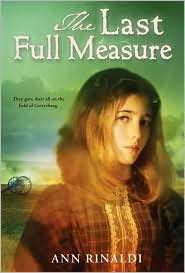
The Last Full Measure. Ann Rinaldi. 2010. [November 2010]. Harcourt. 218 pages.
"Where are you going, Tacy?"Set in Gettysburg, Pennsylvania in 1863, The Last Full Measure is Ann Rinaldi's latest historical novel. It stars the Stryker family. Our heroine, Tacy, is fourteen. She has two older brothers and a father in the war. But during these troubling summer months, she's going to mature quickly. She'll have to having witnessed some of the atrocities of war. When the novel opens, Tacy's biggest problem is her brother, David, the brother who was unable to join the army because of his bad leg. He has been put in charge of the family; it is his duty to "protect" his mother and his sister, and to look after their home. The responsibility weighs heavily on him, transforming him into a man Tacy can barely recognize. Who is this bossy brother ordering her about? Who is this man that shouts and yells and threatens? Though, perhaps, Tacy needs someone to tell her no--for her own sake.
As the novel progresses, readers get a glimpse of the war, the battle as it unfolds. Readers see the harshness, the devastation, the madness of war. One might think that the battle itself would provide the climax of this one. That its darkest moments would be in the battle itself. But. That's just the beginning. And Tacy's darkest days come
after the battle.
I found The Last Full Measure a compelling read. I read it in one sitting, in one afternoon. I enjoyed Tacy as a character. I liked her perspective. How she wasn't above questioning the world around her. And perhaps most importantly, how she wasn't perfect.
But it was a difficult read for me. I reached a point where I was like
NO! Are you serious?! Why?! And after that point, it was hard for me to "like" this one. I'm not saying it's not a good book. I'm not saying that it isn't realistic. Or that it isn't well-researched. That it isn't true to the times. But still, it didn't go the way I wanted it to go.
© 2011 Becky Laney of
Becky's Book Reviews
By:
Becky Laney,
on 12/8/2010
Blog:
Becky's Book Reviews
(
Login to Add to MyJacketFlap)
JacketFlap tags:
YA Fiction,
suicide,
grief,
YA Romance,
ghosts,
Simon and Schuster,
Death and Dying,
verse novel,
2010,
review copy,
Add a tag
Chasing Brooklyn. Lisa Schroeder. 2010. Simon & Schuster. 412 pages.
One year ago today I lost my boyfriend, Lucca.Chasing Brooklyn is a verse novel, a companion to
I Heart You, You Haunt Me. Both are set in the same town, the same high school. Both novels are about the (extended) grieving process. When the novel opens, a year has passed since Lucca's death.
The novel is told in two voices. Readers meet Lucca's girlfriend, Brooklyn, and his brother, Nico. Both are about to be haunted.
Gabe, Lucca's friend, has recently overdosed. His death proves just how emotionally raw and vulnerable this community still is. Since his death, Brooklyn has been haunted. Her dreams are nightmares. The dream-Gabe that haunts her is chasing her, taunting her, almost threatening her.
Nico is having troubling dreams as well--though not of Gabe. No, his brother is telling him night after night after night to help Brooklyn, to protect Brooklyn, to be there for her. So even though Nico and Brooklyn haven't had much to do with one another since Lucca's death, there's nothing he wouldn't do for his brother. So he takes the first steps and a friendship (of sorts) begins.
Is Nico what Brooklyn needs to heal? Is Brooklyn what Nico needs to heal? Is Lucca drawing them together for a reason?
The more I read of Lisa Schroeder, the more I like her work. I'd also recommend
Far From You.
© Becky Laney of
Becky's Book Reviews


In the midst of dystopia, vampire and violence stories emerges a refreshing story that definitely is my “feel good” novel of the year thus far.
Charlie is the freak. Gloria is the freak magnet. So both of them think! One day at a coffee shop Charlie spots the most glorious creature to grace the earth. You guessed it: Gloria. In his over-the-top, freakish way, he hits on her despite the warnings of his best buddy. Gloria disses him and heads off in her totally black persona way. Fate interweaves their lives and they continue to intersect. Gloria hates to admit it, but Charlie is hot, but still a freak. But her admissions to his endearing personality continue during their lucky encounters. This he said/she said format digs into her blackness, his love and fear for his family, and their growing affection. Charlie’s antics at his job with his quirky co-workers are laugh-out-loud funny. Gloria’s de-icing reveals the loss that she has felt the last year. This is a book that reminds us that love is in the world, if we only trust it.
ENDERS' Rating: *****
Andrew's Website
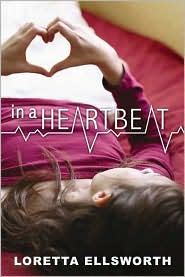
In a Heartbeat. Loretta Ellsworth. 2010. February 2010. Walker & Company. 216 pages.
I'm fatalistic. I've always had the feeling that time was running out. After 9/11, I started reading end-of-the-world type books: Alas Babylon; Lucifer's Hammer; On the Beach; The Stand. Then I started hoarding bottles of water and granola bars under my bed. Last year I spent my birthday money on two hundred batteries, which I kept in a shoe box at the back of my closet. Of course, I never intended to die.
In A Heartbeat is told in alternating chapters. Eagan, one of our narrators, has died. She was a figure skater whose death was unexpected and tragic. She was an organ donor. Amelia, our second narrator, is the one who received Eagan's heart. She's been sick for six years. Now, for the first time, Amelia has a chance to really live life. But one of the first things Amelia wants to do is learn about her donor. She wants to meet the donor's family. And with the help of her new boyfriend, Ari, she may just get her wish.
Readers meet both teens, both families. One girl is having a hard time letting go, a hard time passing over into the afterlife. The other is just learning how to live again. Just beginning to imagine the possibilities of what her life could be.
I liked this one. I liked both Amelia and Eagan. I liked seeing these two stories come together.
Also by Loretta Ellsworth: In Search of Mockingbird.
© Becky Laney of Becky's Book Reviews

Mockingbird. Kathryn Erskine. 2010. April 2010. Penguin. 224 pages.
It looks like a one-winged bird crouching in the corner of our living room. Hurt. Trying to fly every time the heat pump turns on with a click and a groan and blows cold air onto the sheet and lifts it up and it flutters for just a moment and then falls down again. Still. Dead.
Caitlin, our heroine, is grieving her older brother, Devon. But it isn't just her grief--it isn't just her father's grief--no, readers see a community grieving. How did Devon die? Perhaps that's best revealed in Caitlin's own words, in her own time.
One person whom Caitlin could always count on to understand her, to accept her, to love her was her brother. The two had an incredible bond. After he's gone, Caitlin decides she needs closure...can Caitlin find a way to do this? Can Caitlin find a way to help her dad too?
Caitlin's grief is complicated by her having Asperger's syndrome. Caitlin struggles with understanding people, reading their expressions (or emotions), relating to others. She has a difficult time empathizing. She knows how to be polite. And she tries her best to make eye contact. At least now and then to make eye contact. But it doesn't mean it's easy for her to make friends. There are so many things in life that are too messy for Caitlin to understand, to appreciate. Like colors. That's why she prefers to keep her drawings in black and white. But with the help of her school counselor, Caitlin is trying her best to cope with life, to cope with loss.
I loved Caitlin. I loved her younger friend, Michael. I loved so many things about this one.
I think Mockingbird is a compelling read, a heartbreaking one at that. It is emotional; it is intense; but it is good.
© Becky Laney of Becky's Book Reviews

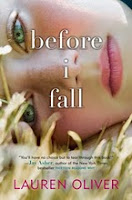
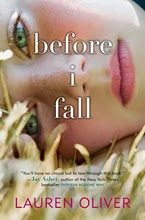
Think warped and disturbing twist on the movie Ground Hog's Day, and you have a clue about before i fall. Samantha Kingston seems to have it all. She and her group of friends flaunt it to all, and give grief to a few. Yep, these are mean girls of privilege, looks, guys, and fashion. Sam is just a little nervous about her first time with her crush-worthy boyfriend that night, after the party at Kent's house. (Of course, sans parents). Her BFFs Lindsay, Elody and Ally come to the party with their own booze, and leave pretty well sloshed. Suddenly there is a flash of white, Lindsay veers the monster SUV into a tree, Sam dies.
Then, Sam awakes to relive the last day of her life. Seven chances. Seven days. What will she do with them?
ENDERS' Rating: Like Jay Asher says, a page turner!
Lauren Oliver's Blog
.jpeg?picon=2675)
By:
Joan Enders,
on 2/20/2010
Blog:
What to Read, What to Read...
(
Login to Add to MyJacketFlap)
JacketFlap tags:
fantasy,
grief,
love stories,
death and dying,
crime stories,
good and evil,
fathers and sons,
dating and sex,
Add a tag

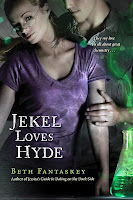
Brava to BF! In her quest to delve into romantic stories involving dark sides she has concocted a deliciously wicked story with Jekel Loves Hyde. The story is gripping from "I buried my father the day after my seventeenth birthday." That is in the prologue...do not gloss over it by looking for chapter one. Jill discovers that her father's death, her not so delightfully alliterative last name, captivating Tristin Hyde, and a science competition sporting a hefty scholarship are all going to complicate her already sorrowful life. Fans of Jessica Guide may mourn the lack of a sequel of that novel, but not for long. Fantaskey's sense of suspense, shared first person narrations, and episodic tension make a page-turning read that is sure to keep YA readers begging for more.
ENDERS" Rating: Better have mutliple copies in my library!
Beth Fantaskey's Website
By:
Becky Laney,
on 1/5/2010
Blog:
Becky's Book Reviews
(
Login to Add to MyJacketFlap)
JacketFlap tags:
review copy,
family,
war,
YA Fiction,
YA Historical Fiction,
World War II,
grief,
Death and Dying,
2009,
Boyds Mill Press,
Add a tag

The Dog in the Wood. By Monika Schroder. 2009. (November 2009). Boyds Mill Press. 168 pages.
In the distance Fritz heard again the droning of engines.
What a short but incredibly powerful little book this is. Set in Germany in the very last days of the war. It concerns a family in crisis. Fritz's grandfather is a Nazi--even though the cause may be lost, is already lost according to everyone else in the village--his grandfather clings to his beloved cause until he doesn't. One moment he's all, I'll fight to the bitter end to protect my home, my family, my land, and the next moment he's hanging--yes, hanging--alongside his wife. Afraid that the Russians will do even worse if he doesn't go this way. What's a young boy, just ten or so, to do when life as he knows it suddenly isn't. What does the Russian arrival mean for him? For his mom and older sister? Can he find a way to be strong, to make it? Is what his mother say true, is the worst really over? Or is there more horror yet to come? This one is a coming-of-age story that is ugly at times but also very compelling.
The Dog in the Wood is a harsh novel. By harsh I mean realistic. It doesn't sugarcoat the effect of war. On women. On children. On everyone. It's a very human novel as well. One of those books where you see the very human side of war, of what it does to real people (though these people are fictional), to every day people like you and me. It's a haunting story all the more so because you know its based in truth.
© Becky Laney of
Becky's Book Reviews
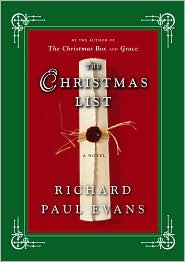
Evans, Richard Paul. 2009. The Christmas List. Simon & Schuster. 368 pages.
James Kier looked back and forth between the newspaper headline and the photograph of himself, not sure if he should laugh or call his attorney. It was the same photograph the Tribune had used a couple of years earlier when they featured him on the front page of the business section....While the photograph was the same, the headline could not have been more different. Not many people get to read their own obituary.
James Kier comes close to beating old Ebenezer Scrooge when it comes to crankiness. Well, not crankiness exactly. But for his cynical, cold-hearted, what's-in-it-for-me approach to life. His business practices don't just border on unethical and immoral, they're just downright mean and heartless. He doesn't care who he hurts in his life--it could be his childhood best friend, his elderly neighbor, or his own wife and son. The truth is if ever a man was in need of a wake-up call, it was James Kier. And you can count on Richard Paul Evans to deliver that and more in The Christmas List.
How do you want to be remembered? What do you want your legacy to be? Kier always thought he didn't care. That it just didn't matter how people felt about him. People's feelings just didn't rank very high with him. He didn't care how many enemies he made. Not if it made him richer, more successful. But when Kier reads his own obituary--well, more precisely reads the comments his online obituary brings, he realizes just how much he does care. It stings, really stings, to see how very many people are rejoicing in his death, how many are happy to talk bad about him. What he realizes--in those moments--is that truth is being spoken. The person they're describing, that is him. That is how he lived, that is how he treated people.
So what can he do about it? Can he change who he is? Can he change his legacy before it's too late? With an oh-so-helpful secretary, Kier has a plan for "fixing" his image, his legacy. But can it be done all by Christmas day?
I really enjoyed this one. It had an interesting premise. I didn't know at first how well it would work for me. But I must admit that even though this one is definitely message-driven and a bit melodramatic, well, it worked all the same. Expect it to be oh-so-bittersweet.
© Becky Laney of Becky's Book Reviews
By:
Becky Laney,
on 11/9/2009
Blog:
Becky's Book Reviews
(
Login to Add to MyJacketFlap)
JacketFlap tags:
family,
friendship,
J Historical Fiction,
brothers and/or sisters,
dysfunctional families,
J Fiction,
grief,
Simon and Schuster,
Death and Dying,
2009,
review copy,
Add a tag

Hemingway, Edith M. 2009. Road to Tater Hill. Random House. 213 pages.
For months I had wished and wished the baby would be a girl, a little sister. Maybe I shouldn't have wished so hard. A boy might have lived.
The year is 1963. The summer of 1963. And Annie's got some growing up to do. Fortunately, she won't be all on her own. This will be a time of growth and healing for all.
This one had me at hello. From the very first paragraph, I was drawn into Annie's story. Annie is eleven and carrying a heavy burden of grief and worry. Her father is in the military--and he's overseas. Her mother just had her baby prematurely. Mary Kate. Her sister's name was Mary Kate. But she lived only a day. These two (mother and daughter) are staying with her grandparents. Will grief bring this family together or tear it apart?
Annie often goes off on her own. And on one of her trips, she finds a rock baby. A baby just the right size, right weight. She wraps it in the precious yellow blanket--the blanket she made for her new sister--and holds it. But that's not all she finds in her explorations. She also discovers an older woman living in a mess of a house--more of a shack than a proper house. A woman, Eliza McGee, with issues of her own. Alone, both seem a bit hopeless. As these two come together, healing begins. It's a great story of inter-generational friendship. A really great story.
If you're looking for a family-friendly, coming-of-age novel (that happens to be historical) then I really recommend this one. I loved so many things about it. I loved the fact that both Annie and Eliza love to read. That both draw power from words. From stories. I loved the use of poetry and literature in the book. (How absorbed Annie becomes in A Wrinkle in Time.)
© Becky Laney of Becky's Book Reviews
By:
Becky Laney,
on 11/3/2009
Blog:
Becky's Book Reviews
(
Login to Add to MyJacketFlap)
JacketFlap tags:
YA Fiction,
YA Historical Fiction,
brothers and/or sisters,
Survival,
grief,
Native American,
2009,
Random House,
Death and Dying,
review copy,
Add a tag

McKernan, Victoria. 2009. The Devil's Paintbox. Random House. 360 pages.
Aiden Lynch slid down the steep creek bank, dirt crumbling beneath his bare feet and dust rising in a cloud behind him.
This is a difficult read. Emotionally that is. Especially if you are allergic to westerns. Aiden and his younger sister, Maddy, are starving to death. As in eating dirt and splitting up small bugs between them starving. If no one intervenes, it's only a matter of time until they both die. Their parents have died. And their neighbors have all scattered. Some have died. Some have moved away. But regardless, these two are isolated from the world. (The setting is Kansas in 1865.)
These two are given a second chance when Jefferson J. Jackson stumbles upon them. If Aiden agrees to work two years in a lumber camp (one year for himself, one year for his sister) then Jackson will let them join his wagon on a wagon train west. But the Oregon Trail holds so many dangers--some expected, some not so much--and their survival is never a guarantee. Every day almost seems to be a life-and-death matter.
The heart of this one turns out (in a way) to be about small pox and the oh-so-controversial vaccinations for small pox. Who deserves the chance to be vaccinated? Who doesn't? Should everyone be vaccinated? Should race and class matter? How much prejudice is involved?
This is a novel that makes you think. About the war. About the effects of the war. About prejudice. About what is right and wrong. About friendships. About life and death too.
It's a bit raw-and-rough on the emotions.
© Becky Laney of Becky's Book Reviews


What would you do for a person you love who is dying?
Rosie’s mom only has time for her affair with her married boss, while she and Rosie are mere strangers in the same house. She suggests to Rosie to visit her ill father on a daily basis. Granddad puts Rosie in charge of his piles: to toss or “In Trust.” Discovering a feather her Granddad reminisces how that particular feather came from a dancing dress of his wife, who loved to push back the furniture and dance for him. So Rosie bundled newspapers, tossed garbage and created a huge In Trust pile. Walking home she passed The House of Dance studio, and before long she made the decision to take lessons with the money that her dad sends. And for what reason?
ENDERS Rating: Touching, tender story of what is important
Beth Kephart's Blog
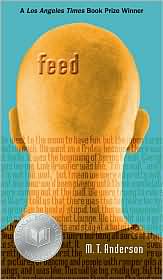
Anderson, M.T. 2002. Feed. Candlewick Press. 300 pages.
We went to the moon to have fun, but the moon turned out to completely suck.
Feed is both simple and complex; original and unique. Perhaps Titus sums it up best,
"it's about this meg normal guy, who doesn't think about anything until one wacky day, when he meets a dissident with a heart of gold...set against the backdrop of America in its final days, it's the high-spirited story of their love together, it's laugh-out-loud funny, really heartwarming, and a visual feast" (297).
Titus is our narrator and Violet is his love-interest. It all starts during spring break. On the moon. At a club. Titus, Violet, and a handful of other partying teens (mostly Titus' friends and classmates) are 'touched' by an old man. Their feeds--internal feeds--are hacked by this rebel. They broadcast--against their will--a doomsday message:
We enter a time of calamity. Blood on the tarmac. Fingers in the juicer. Towers of air frozen in the lunar wastes. Models dead on the runways, with smiles that can't be undone. Chicken shall rot in the aisles. See the pillars fall. (39)
They are taken into custody. Hospitalized. Examined to make sure that their feeds are fixed before they are fully reactivated. And all seems to be well..at first.
The feeds are responsible for so much. They deliver non-stop entertainment (music, movies, etc), non-stop advertisements and shopping opportunities, and instant connections with the world. Features such as chat and messaging, for example. Of course, with all this built into humanity--right inside the human brain--many things are being lost. Most importantly the ability to think critically, to make observations, to understand and perceive reality.
But as Titus interacts with Violet, he begins to think. And this scares him in a way. Overwhelms him. I'll be honest, Titus isn't always a lovable guy. He can be a real jerk. And Titus and his friends don't keep it clean. (So if 'bad' language offends you, then this is not the book for you.)
I'm not quite sure what to think of Feed. On the one hand, I think it's a smart novel. It challenges readers to think. To perhaps take more of an interest in the world around them. To think about cause and effect. To consider the big picture. Furthermore, it's well-written. Never for a minute do you doubt that this is Titus speaking. That this is Titus's world. The language. The dialogue. The style. Everything helps to establish this world Anderson is creating. But on the other hand, it's a bit of a downer. It's a bit sad, a bit cynical. Did I expect a happy ending? No. Would a happy ending work on this one? Never. I wouldn't think of changing it. This book tells the only story that it can tell.
© Becky Laney of
Becky's Book Reviews
By:
Becky Laney,
on 5/29/2009
Blog:
Becky's Book Reviews
(
Login to Add to MyJacketFlap)
JacketFlap tags:
YA Fiction,
brothers and/or sisters,
dysfunctional families,
grief,
YA realistic fiction,
Death and Dying,
2009,
Bloomsbury USA,
friendship,
Add a tag
 Garsee, Jeannine. 2009. Say the Word. Bloomsbury. 368 pages.
When the phone slashes a machete through my brain at six fifteen a.m. it can mean only one of two things: Dad somehow found out I was sucking face with Devon Connolly last night. Or somebody's dead.
The heroine of Say the Word is people-pleaser Shawna Gallagher. And no, her father isn't omniscient. The phone call is not good news. Her mother, her lesbian mother, the woman Shawna has been trained to hate, has had a stroke. She's dying. Remember that song in South Pacific, the one about where you have to be taught to hate? Well, Shawna's life has been like that. Her mom left her and her father when she was only six or seven. Left them for another woman. Left to have another family, a family with two little boys. Part of the anger is legitimate. I think it's only natural that that pain of being abandoned would translate into anger and bitterness. But for Shawna, the anger has been turned to hating her mother for being a lesbian. Her father, all her family really, has raised her to hate homosexuality. The words they speak, the words Shawna herself speaks are of that hate and anger. These words are ugly. These words are powerfully ugly.
Shawna has issues. Issues with her father. A man who is at times neglectful and ever-absent, and at other times controlling and manipulative. Issues with her mother. Her mother, when she visited her through the years, was equally neglectful. Out of touch with her daughter. Uncaring. She never tried to bridge the gap. It was always work, work, work. (Much like her father is all work, work, work.) Now, as a teen (16? 17?), she hasn't seen her mother in three or four years. And their last meeting, their last conversation was pure ugly. But she's dying. And she has to come to terms with that. The mother who has been so ignorable in life, becomes impossible to ignore in death. Did her mother's leaving have to do with her father? Or was she really so head-over-heels-in-love with another woman? Why didn't she try harder to have a relationship with her? What can Shawna learn about her mother from the other family? Can this other family help heal the pain? Can they help provide closure? Can she come to love and understand her mother...at last?
If the characters weren't so human, if they weren't so complexly drawn and brought to life, then this novel might be too issue-driven. A novel about all the shades of prejudice and discrimination. A novel about the inadequacies and injustices of life.
How her mother's life partner and her family are cut out of everything. No legal right to make decisions about her mother's treatment. No legal right to make the funeral arrangements. How her ex-husband, whom she hated, ruled and bullied and gloried in this horrible situation. Took advantage. True, some of this--most of this--could have been prevented if Shawna's mother had drawn up a a will and other legal papers. But she didn't foresee her own death--it was too unexpected, it was too sudden. And now it's too late.
What's right? What's wrong? Shawna has a sinking feeling that her father is wrong. Not just a little wrong, but unforgivably, undeniably wrong. Shawna sees how ugly her father can be, how horribly selfish and controlling he is. And seeing his ugliness makes her reflect on her own life.
Say the Word is about Shawna's coming of age. Her growing up and growing wise. In a way, to borrow from the Grinch, it is about Shawna's heart growing three sizes.
Say the Word is thoughtful and well-written.
© Becky Laney of Becky's Book Reviews

Scott, Elizabeth. 2009. (Late May Publication) Love You Hate You Miss You. HarperCollins. 288 pages.
Dear Julia,
Get this, I'm supposed to be starting a journal about "my journey." Please. I can see it now:
Dear Diary,
As I'm set adrift on this crazy sea called "life," I like to think of an inspirational poem I heard not long ago, one that made me weep because of its beauty. Today, I truly believe each day is a precious gift...
I don't think so.
Meet Amy. Trust me, you wouldn't want
to be her. Amy is the star of Elizabeth Scott's latest, Love You Hate You Miss You. And it's a tough read--though not as touch as Living Dead Girl. She's an alcoholic. And a grieving one at that. Her best friend, Julia, died in a car accident. And Amy blames herself. But no amount of I'm sorry's and why's and if only's will bring her friend back. Life goes on...despite it all. And Amy's return to "normal" life, to school, is anything but easy. Facing the entire high school, knowing that many of Julia's friends despise her, blame her, feeling so alone. But there are a few in her classes who do anything but ignore her. Enter Mel and Patrick. And let's not forget her former friend, Caro, "Corn Syrup." Is there a place for Amy after all? Can she live again? love again? Find a way to smile again?
What did I love about this one? I'll be honest, it's partly all-about-Patrick. Elizabeth Scott has a way of writing irresistable guys. Amy's a troubled narrator--someone who aches down to her soul. The guilt. The shame. The feelings of self-hatred. Feeling like she should never have been born. The feeling that no one wants her, needs her, loves her. Whether Amy likes it or not she's vulnerable. And it is this vulnerability that makes me like her, love her. She's in need of so much. You want her to get it.
© Becky Laney of
Becky's Book ReviewsIf you're reading this post on another site, or another feed, the content has been stolen.

Kilbourne, Christina. 2008. They Called Me Red.
It's been about a week since I read They Called Me Red, and I'm still not quite sure what to make of it. It had my attention--I'm not saying it didn't. But it was so unique, so different--in a way--that I'm not quite sure how to sum it up without giving too much away. (I don't know if that will make sense to others or not.) They Called Me Red is the novel of a father and son divided. First divided because of the father's attentions to a woman--a wicked stepmother type--and then divided by death. Devon, our young hero, endures a lot within the pages of the novel. Much more than you're probably expecting. It's an ugly story in many ways. But it's not without glimmers of hope either.
Because of the subject matter--a child being sold into the sex industry (a male brothel) in another country, a foreign country--it won't be for everyone. Also because of the content, it's impossible to say that I "enjoyed" this one. But just because I didn't enjoy it, doesn't mean it was poorly written--far from it. It was an engaging story, but one that will take a certain kind of reader to appreciate.
© Becky Laney of Becky's Book Reviews
View Next 10 Posts















Perfect description: "Kindred Souls is the kind of children's book I have come to appreciate as an adult, but, the kind of book that I would NEVER have wanted to read as a child." Perfect. This was so, so sad.
Thanks for the review, I think Patricia MacLachlan is a good author. I'd definitely try to get a copy of this book.