


Add a Comment
new posts in all blogs
 By: Sarah Davies,
on 6/9/2016
By: Sarah Davies,
on 6/9/2016
Blog: sarahs_blog (Login to Add to MyJacketFlap)
JacketFlap tags: Add a tag
 By: Rachelle Gardner,
on 5/16/2016
By: Rachelle Gardner,
on 5/16/2016
Blog: Rachelle Gardner, Literary Agent (Login to Add to MyJacketFlap)
JacketFlap tags: Publishing, Self-publishing, Self Publishing, Add a tag
By: Rachelle Gardner,
on 4/11/2016
Blog: Rachelle Gardner, Literary Agent (Login to Add to MyJacketFlap)
JacketFlap tags: Queries, Proposals & Pitches, Query letters, queries, Add a tag
 By: Danielle,
on 4/5/2016
By: Danielle,
on 4/5/2016
Blog: Upstart Crow Literary (Login to Add to MyJacketFlap)
JacketFlap tags: Announcements/Agency Biz, Books We Love, New Books, Add a tag
By: Danielle,
on 3/14/2016
Blog: Upstart Crow Literary (Login to Add to MyJacketFlap)
JacketFlap tags: On Writing, New Books, Sweet Nonsense, Books We Love, Upstart Crow News, Add a tag
By: Rachelle Gardner,
on 3/10/2016
Blog: Rachelle Gardner, Literary Agent (Login to Add to MyJacketFlap)
JacketFlap tags: Publishing, Add a tag
 By: Rachelle Gardner,
on 3/7/2016
By: Rachelle Gardner,
on 3/7/2016
Blog: Rachelle Gardner (Login to Add to MyJacketFlap)
JacketFlap tags: Writing Craft, Craft of Writing, First lines, Add a tag
By: Rachelle Gardner,
on 3/5/2016
Blog: Rachelle Gardner (Login to Add to MyJacketFlap)
JacketFlap tags: Publishing, How to get published, Publishing Facts, Popular Posts, Add a tag
By: Michael,
on 2/25/2016
Blog: Upstart Crow Literary (Login to Add to MyJacketFlap)
JacketFlap tags: digital books, Inspiration, The Industry, Sweet Nonsense, daviddenby, Add a tag
By: Rachelle Gardner,
on 2/18/2016
Blog: Rachelle Gardner (Login to Add to MyJacketFlap)
JacketFlap tags: Publishing, Agents, Agent Process, About Agents, Add a tag
By: Danielle,
on 2/18/2016
Blog: Upstart Crow Literary (Login to Add to MyJacketFlap)
JacketFlap tags: On Writing, The Industry, Add a tag
By: Rachelle Gardner,
on 2/12/2016
Blog: Rachelle Gardner (Login to Add to MyJacketFlap)
JacketFlap tags: Publishing, Add a tag
By: Rachelle Gardner,
on 2/9/2016
Blog: Rachelle Gardner (Login to Add to MyJacketFlap)
JacketFlap tags: Publishing, Business, Add a tag
By: Rachelle Gardner,
on 2/7/2016
Blog: Rachelle Gardner (Login to Add to MyJacketFlap)
JacketFlap tags: Guest Bloggers, Add a tag
By: Rachelle Gardner,
on 2/4/2016
Blog: Rachelle Gardner (Login to Add to MyJacketFlap)
JacketFlap tags: Publishing, A Writer's Life, Writer's Life, Add a tag
By: Rachelle Gardner,
on 2/1/2016
Blog: Rachelle Gardner, Literary Agent (Login to Add to MyJacketFlap)
JacketFlap tags: Comparable Books, Publishing, Competition Section, Marketing & Platform, Queries, Proposals & Pitches, Add a tag
By: Rachelle Gardner,
on 1/28/2016
Blog: Rachelle Gardner, Literary Agent (Login to Add to MyJacketFlap)
JacketFlap tags: Writing Craft, A Writer's Life, Add a tag
By: Rachelle Gardner,
on 1/25/2016
Blog: Rachelle Gardner, Literary Agent (Login to Add to MyJacketFlap)
JacketFlap tags: Publishing, Add a tag
 By: Jenny Turner,
on 1/23/2016
By: Jenny Turner,
on 1/23/2016
Blog: Quake: Shakin' up Young Readers (Login to Add to MyJacketFlap)
JacketFlap tags: Add a tag
By: Rachelle Gardner,
on 1/21/2016
Blog: Rachelle Gardner, Literary Agent (Login to Add to MyJacketFlap)
JacketFlap tags: Marketing & Platform, Blogging Tips, Add a tag
By: Rachelle Gardner,
on 1/18/2016
Blog: Rachelle Gardner (Login to Add to MyJacketFlap)
JacketFlap tags: Nonfiction, 10 Things, Editing & Revising, Add a tag
By: Jenny Turner,
on 1/14/2016
Blog: Quake: Shakin' up Young Readers (Login to Add to MyJacketFlap)
JacketFlap tags: Finance, Add a tag
By: Jenny Turner,
on 1/13/2016
Blog: Quake: Shakin' up Young Readers (Login to Add to MyJacketFlap)
JacketFlap tags: Add a tag
By: Rachelle Gardner,
on 1/12/2016
Blog: Rachelle Gardner (Login to Add to MyJacketFlap)
JacketFlap tags: Competition Section, Writing Craft, Add a tag
By: Danielle,
on 1/11/2016
Blog: Upstart Crow Literary (Login to Add to MyJacketFlap)
JacketFlap tags: The Industry, Add a tag
View Next 25 Posts
Viewing: Blog Posts from the Agent category, Most Recent at Top [Help]
Results 1 - 25 of 15,352
By: Sarah Davies,
on 6/9/2016
Blog: sarahs_blog (Login to Add to MyJacketFlap)
JacketFlap tags: Add a tag
By: Rachelle Gardner,
on 5/16/2016
Blog: Rachelle Gardner, Literary Agent (Login to Add to MyJacketFlap)
JacketFlap tags: Publishing, Self-publishing, Self Publishing, Add a tag
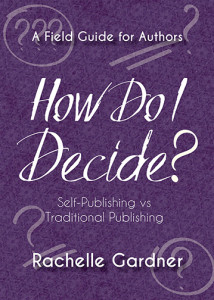
Did you know I have an e-book available on Amazon?
How Do I Decide? Self-Publishing vs. Traditional Publishing can help authors figure out which path to take.
How Do I Decide? is a concise, definitive resource that will guide you through the decision, allowing you to ignore the noise and hype and focus on the right path for YOU. This is a fair and balanced approach that avoids favoring one choice over the other—and instead shows you how to determine which best fits your own situation.
About 50 pages jammed full of insider information, How Do I Decide? gives you the facts you need to make an informed choice. It walks you through the various steps of the publishing process so you can determine which road best suits your personal goals, temperament, and level of previous publishing experience.
How Do I Decide? is brief yet comprehensive, and includes:
• an overview of the current publishing landscape
• an outline of the path to publishing
• a user-friendly checklist to help you figure out your path
• pros and cons of traditional publishing
• pros and cons of self-publishing
SPECIAL FEATURES:
• An eye-opening infographic that’ll help you decide
• A “quiz” to streamline your decision-making process
• Additional resources with links to further information
The e-book is only $2.99 on Amazon. Check it out if you’re considering which path to take!
(Cover design by the fabulous Nicole Miller.)
The post Traditional or Self Publishing? appeared first on Rachelle Gardner.
0 Comments on Traditional or Self Publishing? as of 1/1/1900
Add a Comment
By: Rachelle Gardner,
on 4/11/2016
Blog: Rachelle Gardner, Literary Agent (Login to Add to MyJacketFlap)
JacketFlap tags: Queries, Proposals & Pitches, Query letters, queries, Add a tag
 I get mail! My inbox is always filled with questions. Today I’m answering some I’ve received on the topic of Query Letters.
You’ve said on your blog, “don’t pitch a novel unless it’s complete.” Do you feel the same about query letters? Do we only query completed works, or are ideas fair game?
If you are sending a query to an agent, only pitch projects that are ready to go. If it’s a novel and you are not previously published with a mainstream commercial publisher, this means a completed manuscript. For non-fiction, a complete book proposal and two sample chapters will do. (But the more you’ve written, the better.) Think about it: If I read your query and I like it, the first thing you’ll hear from me is, “Please send a book proposal and sample chapters.” If that looks good and I’m seriously considering representation, I’m going to ask you for everything you’ve got. I can’t sell to a publisher without the whole shebang (unless you are multi-published and a proven commodity). You can’t query an idea, because ideas have no value without execution.
What about sending in a synopsis instead of a query?
Don’t do it. Some people send a synopsis and nothing else, not even a salutation or a closing. IMHO, it’s rude and unprofessional. In fact, I received one today. Just a one paragraph synopsis. Nothing about the author. Just a line saying, “Email me if you’re interested in seeing more.” I wasn’t interested, so I deleted it without responding.
I’m curious to know if there are any cliché phrases that you’ve found in query letters that writers absolutely, positively should avoid.
The thing about clichés is that in a few cases, when used correctly, they can be perfect in a query, especially if they make the reader laugh. In most cases, however, since your query is a writing sample, your best bet is to avoid sounding hackneyed or derivative. The best advice I can give about clichés is another cliché: When in doubt, leave it out.
I’ve heard about authors who strayed from standard guidelines and got picked up by a publisher or agent. Some people encourage us to do the same. We’re told to follow guidelines, then we’re told to stand out. I realize our writing will determine if we stand out or not, but what kind of things that stray from the guidelines would catch your attention in a good way?
I don’t expect you to be slaves to guidelines, I just try to offer tips to help you put your best writing forward. With all guidelines (on writing, pitching, querying, etc.) try to see behind the specific advice and get to the basic truth. With a query, the basic truth is that you need the agent/editor to want to see more, or you’re sunk. It’s up to you to figure out how to accomplish that goal. Use guidelines to help learn the craft of writing and the business of publishing… let them go when you don’t need them anymore. I can’t say “what kind of things that stray from the guidelines would catch my attention” because that’s as individual as the person.
Do you accept query letters for books that have been self-published? I ask this because I have one, but I’ve been seriously considering having it edited by a professional, rewriting it and then seeking representation for it.
Yes… no… maybe. It’s a common question these days but there are too many variables. The most important consideration will always be how good your book is, and how well it has the potential to sell. Most agents prefer you query with your next book, not the one that was self-published. But if you really want to give it a shot, I suggest a normal query to agents, including the self-pub information (release date, sales figures). You’ll find out soon enough if it’s catching anyone’s attention.
I know the importance of addressing the letter to a specific person, not just Sir or Madam or Dear Agent, however, even though I feel as if I know you from reading the blog, Dear Rachelle seems far too informal. Is Ms. So and So acceptable to most women who are agents?
Interestingly, I recently read some heated debate on another blog about the “Ms.” salutation. I was stunned to find that a few women seem to resent or dislike the term. Nevertheless, the correct salutation is Ms. Gardner or Mr. Smith. Once you’ve corresponded with the person, you can take your cue from how they sign their emails. I’m always just Rachelle and I’m okay being addressed that way. Personally, I don’t object to people querying with my first name rather than “Ms.” because I go to great lengths to be approachable by writing my blog.
Could you please provide the pronunciation of the word “query” that won’t make agents/editors wince? Does it rhyme with PRAIRIE or EERIE?
Leave it to an English teacher! Potayto, Potahto. Tomayto, tomahto. Your choice. Just make sure you use the preferred pronunciation of the editor/agent you’re talking to. (tee hee) As for me, I couldn’t care less how you say it. As long as you SPELL it right.
Questions, thoughts or comments about query letters?
Click on the icons below to share!
The post Answering Questions about Queries appeared first on Rachelle Gardner.
0 Comments on Answering Questions about Queries as of 1/1/1900
Add a Comment
By: Danielle,
on 4/5/2016
Blog: Upstart Crow Literary (Login to Add to MyJacketFlap)
JacketFlap tags: Announcements/Agency Biz, Books We Love, New Books, Add a tag
Today is the official publication day of Jacqueline West’s riveting YA novel, DREAMERS OFTEN LIE. Jacqueline is author of the NYT bestselling middle grade series, The Books of Elsewhere, and DREAMERS is her first foray into the YA genre, and she’s done a smashing job of it, too.
“Engrossing . . . A dizzying new twist on one of the Bard’s most famous plays.”
 DREAMERS is Black Swan meets Shakespeare–a twisty, enthralling story of one girl’s brush with madness:
After a skiing accident that fractures her skull, Jaye is left with a splitting headache and strong delusions. Jaye must keep these delusions secret from her family, doctors, and everyone at school in order to keep her starring part in the school production of A Midsummer Night’s Dream — even though visions of Shakespeare and … [more]
Add a Comment
By: Danielle,
on 3/14/2016
Blog: Upstart Crow Literary (Login to Add to MyJacketFlap)
JacketFlap tags: On Writing, New Books, Sweet Nonsense, Books We Love, Upstart Crow News, Add a tag
I recently had the pleasure of being interviewed by Upstart Crow client Andrew Brumbach over at the Literary Rambles blog, where we discussed the release of his debut novel, THE EYE OF MIDNIGHT the harrowing submissions process, and the joy of getting “the call”. Pop over the blog for the full interview, and do be sure to put THE EYE OF MIDNIGHT on your “to read” list today!

… [more]
Add a Comment
By: Rachelle Gardner,
on 3/10/2016
Blog: Rachelle Gardner, Literary Agent (Login to Add to MyJacketFlap)
JacketFlap tags: Publishing, Add a tag
 Are you the kind of writer who has several book ideas (or even written several books), possibly in different genres? If so, you may be wondering where to start. Which book should be the first one you write, or pitch to agents and editors?
It’s a question worth asking, and you’d do well to put some serious thought into it. Here are my thoughts:
FOR NON-FICTION:
Spend some time on each idea, one by one. First work on a rough outline of what the book would be. List the themes and topics you’d want to cover. Ask yourself: is there enough material here for a whole book? Consider whether you’ll be able to gather the information needed to fill a book on this topic. Is there enough to say?
Marketplace: Are there other books on this topic? Too many? Is there room or need for another one? Can you identify a hole in the market that needs to be filled? If there are no books on this topic, consider why. Is there a need but no one has filled it yet? Or is this something that people don’t want to read a book about?
You: Consider whether you’re the right person to write this book. Do you have any qualifications that would cause book buyers to trust you? Do you have a platform with which to sell this book?
The idea itself: Try to be honest. Is it unique, or derivative of many other books you’ve seen? When you talk with people about it, do they seem to get it? Do they respond with excitement, curiosity, inquisitiveness?
Put all your information together and a picture should emerge of each idea’s viability and chances of selling.
FOR FICTION:
Where is your heart? Others might have different advice, but I think you need to write the novel that is most on your heart and mind right now. Always save your book ideas in a file, and add to them when the muse strikes. But write the one that’s speaking to you.
Get some input. You could carefully craft a one-sentence hook for each of your book ideas, then show them to a group of friends or fellow writers, asking them to rank the ideas in order of interest. This might help, if there is some similarity in their answers. Perhaps a clear winner will emerge. But you might get a variety of responses. So again, you’ll need to choose the book you are ready to write. With fiction, the idea is important, yet secondary to the writing.
What about market trends? You do need to know what’s going on in the marketplace, but be aware it can change at any moment. What editors are looking for today might not be what they’re seeking eight months from now when you finish your novel. So don’t chase trends.
The first book sets you up. If you haven’t sold any books yet, be aware that branding is important, so the first book you sell will set you up to begin creating your brand. Make sure that first book is something you want to write, and make sure it begins establishing a brand identity that you’ll continue.
Do you have a variety of book ideas or entirely written books? How will you decide where to start?
Need a writing or publishing coach? Click here for packages.
Image copyright: petro / 123RF Stock Photo
The post So Many Ideas, So Little Time appeared first on Rachelle Gardner.
0 Comments on So Many Ideas, So Little Time as of 1/1/1900
Add a Comment
By: Rachelle Gardner,
on 3/7/2016
Blog: Rachelle Gardner (Login to Add to MyJacketFlap)
JacketFlap tags: Writing Craft, Craft of Writing, First lines, Add a tag
 Let’s talk about the opening line of your book. The first thing to know about “first lines” is that they are not going to make or break you. Sure, it’s a lot of fun coming up with great ones. But as long as the first line makes someone want to read the second line, and that line makes you want to read the third… you’re on the right track.
The second thing to know is that the opening line might be the very last thing you write before your book is finished.
That said… don’t you just love a great opening line?
The fun thing about writing a book is that you get to choose what kind of opening line you want, what type of sentence appropriately sets up your book. You can choose to set a stage or create a setting. You can reveal a character. You can drop the reader into the middle of a scene. You can introduce conflict. You can have your character speak a line of dialogue. There’s no one right way to do it.
Today I looked at some of my favorite first lines from novels, and asked myself why I liked them. I found each one appealed to me for a different reason. It might have:
- been clever
- been thought-provoking
- brought an immediate smile (or stab) of recognition
- struck me as poignant
- painted a really cool word picture
- set up an intriguing mystery
- introduced a character I want to know better
- made me laugh
- drawn me into an unfamiliar world
- used words in a beautiful way
The one thing they all have in common is they make me want to read more. They immediately draw me into the universe of the novel by the unique voice that first line begins to establish.
One of the trends lately is to come up with stunningly clever first lines, and there’s nothing wrong with that. But not every novel requires one of those. Some need a more understated approach.
Some say the best first lines introduce conflict right away. I believe that can be true, but it’s not the only way to write a first line. Most of my favorites give a small hint that something is going to go wrong, or something already has gone wrong.
There’s no formula for a first line. It should elicit interest, pique something in the reader, speak to their heart or their intellect or their funny bone. It just has to work. Some of the best opening lines stand remarkably well on their own, having enough meat to allow you to chew on it awhile.
Here are a few popular opening lines from famous novels:
Many years later, as he faced the firing squad, Colonel Aureliano Buendía was to remember that distant afternoon when his father took him to discover ice.
~ Gabriel García Márquez, One Hundred Years of Solitude (my favorite first line ever)
It is a truth universally acknowledged, that a single man in possession of a good fortune, must be in want of a wife.
~ Jane Austen, Pride & Prejudice
If you really want to hear about it, the first thing you’ll probably want to know is where I was born, and what my lousy childhood was like, and how my parents were occupied and all before they had me, and all that David Copperfield kind of crap, but I don’t feel like going into it, if you want to know the truth.
~ J. D. Salinger, The Catcher in the Rye
Once upon a time, there was a woman who discovered she had turned into the wrong person.
~ Anne Tyler, Back When We Were Grownups
The sky above the port was the color of television, tuned to a dead channel.
~ William Gibson, Neuromancer
Mrs. Dalloway said she would buy the flowers herself.
~ Virginia Woolf, Mrs. Dalloway
All this happened, more or less.
~ Kurt Vonnegut, Slaughterhouse-Five
Dr. Weiss, at forty, knew that her life had been ruined by literature.
~ Anita Brookner, The Debut
There was a boy called Eustace Clarence Scrubb, and he almost deserved it.
~ C. S. Lewis, The Voyage of the Dawn Treader
A story has no beginning or end; arbitrarily one chooses that moment of experience from which to look back or from which to look ahead.
~ Graham Greene, The End of the Affair
What is one of your favorite first lines?
Need a writing or publishing coach? Click here for packages.
Image copyright: olegdudko / 123RF Stock Photo
The post That All-Important First Line appeared first on Rachelle Gardner.
Add a Comment
By: Rachelle Gardner,
on 3/5/2016
Blog: Rachelle Gardner (Login to Add to MyJacketFlap)
JacketFlap tags: Publishing, How to get published, Publishing Facts, Popular Posts, Add a tag
 I get emails every day asking for advice on getting published or getting an agent. This is the post for people needing an entry-level introduction to publishing.
Dear Writer,
Congratulations on your decision to pursue publication. Before approaching literary agents, you’ll need to create the appropriate materials:
→ If you’re a non-fiction writer, you’ll need a full professional book proposal, with three sample chapters (this must include the FIRST chapter). (See How To Write a Book Proposal)
→ If you’re writing fiction, your manuscript must be complete, edited and polished; you also need a one-sentence hook and a one-paragraph pitch.
→ Do you need to know How to Find a Literary Agent?
→ A great title is an important aspect of attracting an agent’s or editor’s attention. Here’s how to create a perfect title for your book.
Once you have your manuscript and/or proposal ready, you need to prepare a query letter. You then begin sending your query to agents. (See How to Write a Query Letter. You may also want to Google it – there are hundreds of posts online about query letters.) Don’t attach your manuscript or proposal to the query; you’ll send that only if requested.
Please don’t contact literary agents with random questions, requests for advice, or asking for an education on how to get published. Approach literary agents with a query letter once you have a properly prepared manuscript and/or proposal. Don’t phone agents, or write them asking for a phone call.
*Resources To Help You*
An indispensable guide to publishing: Writer’s Market.
Magazines: I suggest subscribing to Writers Digest or The Writer.
Agent Directories:
Guide to Literary Agents by Chuck Sambuchino
Jeff Herman’s Guide To Book Publishers, Editors, & Literary Agents by Jeff Herman
Websites:
These help you find the right agent and even keep track of your queries: Agent Query and Query Tracker.
These help you make sure you’re dealing with reputable people: Writer Beware and Preditors & Editors.
Consider attending a writers’ conference (or two):
This is one of the best ways to get a crash course in writing, publishing, and book marketing. Check out the Shaw Guide to Writers Conferences.
Resources for CHILDREN’S and ILLUSTRATED books:
Adventures in YA & Children’s Publishing
Society of Children’s Book Writers & Illustrators
Resources for Children’s Writers
Children’s Book Insider
The Purple Crayon
Books about children’s publishing
Resources for CHRISTIAN publishing:
Click here for a list of Christian literary agents.
The most comprehensive book for Christian publishing: Christian Writers Market Guide by Jerry Jenkins.
For Christian writers’ conferences, READ THIS.
*Are You Ready to Query?*
Wait! Most agents have a website (and/or blog) on which they list their Submission Guidelines. As you use the resources above to identify agents who might be right for your work, it’s important to read their individual guidelines and submit accordingly.
*Attention Non-fiction Authors*
→ Be aware that author platform and credentials are of primary importance. It may take years to build the kind of platform necessary to interest an agent or publisher. Read all my posts on platform HERE.
→ You also MUST thoroughly examine the comparable books already available on your topic, and be ruthlessly honest with yourself. Does your book say anything that is fresh, unique, and not already well-covered in books within the last five years? If not, go back to the drawing board. Find a fresh hook or angle.
→ Does your topic typically require credentials or degrees to be credible? If so, do you have them? If not, ask yourself what you DO have (besides personal experience) that overcomes your lack of credentials. Are you really funny? Do you have a blog that gets 5,000 hits a day? Have you won awards or major accolades in your subject area? Make sure you have something special to recommend you to a book-buying audience. If you don’t have it, go create it, or give up the idea of traditional publication.
*Attention Fiction Authors*
→ Please do not send the first draft of the first novel you’ve ever written. It’s important to study the craft of writing fiction, as well as getting outside help in editing and polishing your work before calling it ready. You may want to join a writers group or get a critique partner.
*The Final Word*
If you truly want to publish with a traditional publisher, all the resources are available and many of them are free of charge. Good luck!
The post How to Get Published appeared first on Rachelle Gardner.
Add a Comment
By: Michael,
on 2/25/2016
Blog: Upstart Crow Literary (Login to Add to MyJacketFlap)
JacketFlap tags: digital books, Inspiration, The Industry, Sweet Nonsense, daviddenby, Add a tag
 Recently at the New Yorker, tetchy old fogey and lousy former film critic David Denby has published a lament about how few teens are reading books these days. He has one great overheard line—a student saying “Books smell like old people”; and he builds in a few caveats (“It’s very likely that teen-agers, attached to screens of one sort or another, read more words than they ever have in the past”); but mostly he is describing a decline of western civilization via smartphone. “If teachers can make books important to kids … those kids may turn off the screens,” he wraps up, making clear his real issue here: a favored primacy of one form of technology (ink on paper) over another (e-ink or pixels on screens).
Here’s the thing: He’s casting a transitional period … [more]
Add a Comment
By: Rachelle Gardner,
on 2/18/2016
Blog: Rachelle Gardner (Login to Add to MyJacketFlap)
JacketFlap tags: Publishing, Agents, Agent Process, About Agents, Add a tag
 Katie asked:
I was wondering, what if I get an agent and she tries to sell two or three of my novels, all in the same genre, and nothing sells. What would happen in this case?
Well Katie, sounds like you and your agent will be at a crossroads and need to make some decisions.
Each agent is different, and some agents might set you free at this point, believing they’re not the right agent to help you find success. You’ll want to clarify whether your agent wishes to continue or hang it up.
Remember that you have a choice, too. You may want to consider indie publishing. If you want to continue pursuing traditional publishing, and you think another agent can serve you better, it would be a good time for you to make this decision. Be cautious not to automatically blame your agent for the lack of a sale – she’s put in many hours on your behalf and hasn’t gotten paid a thing. She probably deserves the benefit of a conversation, at least.
If you and your agent want to continue working together, you’ll probably have a meeting to discuss your options. You’ll take a hard look at what’s going on, asking questions like:
→ Why aren’t your books capturing the attention of editors? Is it the ideas? The writing?
→ Could there be something specific about your characters and plot lines aren’t resonating?
→How much of this is due to the market, and how much is it the specific books you’re pitching?
→ Is it the genre? If so, is there another genre you’re interested in writing that perhaps is more saleable?
Ideally this meeting would culminate in a strategy and action plan for moving forward to find the success you’ve been working toward.
Keep in mind that this isn’t an uncommon scenario. Once you get an agent, it could still be a long time until serendipity strikes again and you find the perfect match between a project and a publisher.
What would you do if you were the writer in this situation?
TWEETABLE
What’s a writer to do when their agent can’t seem to sell their work? Click to Tweet.
Image copyright: scottff72 / 123RF Stock Photo
The post When You’re Missing the Mark appeared first on Rachelle Gardner.
Add a Comment
By: Danielle,
on 2/18/2016
Blog: Upstart Crow Literary (Login to Add to MyJacketFlap)
JacketFlap tags: On Writing, The Industry, Add a tag
There have been some great posts this week about the diverse books movement. Jacqueline Woodson’s 1998 article in the Horn Book, titled Who Can Tell My Story has been revived. Ellen Oh’s salient post Dear White Writer takes on diverse books and white privilege. There are numerous other articles and posts I could point you to; the discussion about diverse books is wide, intense, difficult, eye-opening, enraging, encouraging, and exciting.
In the last year, as the conversation about diverse books has picked up steam, a noticeable shift has taken place in my query box. It’s a shift that happens each time the trends change in publishing. Paranormal gave way to dystopian, which gave way to horror, which gave way to contemporary, which has recently given way to…diverse books?
The We Need Diverse Books campaign … [more]
Add a Comment
By: Rachelle Gardner,
on 2/12/2016
Blog: Rachelle Gardner (Login to Add to MyJacketFlap)
JacketFlap tags: Publishing, Add a tag
 In honor of Valentine’s Day coming up this Sunday, I thought I’d wax poetic about what I love in this industry… and in my job.
♥ First of all, I love the way writers, editors, and yes, even agents, are a true community. Competition exists, but it doesn’t get in the way of real relationships. That’s what this business is about, relationships, and the people I’ve met in this business are simply the best.
♥ I love working with authors. Your passion impresses me; your bravery amazes me. The commitment authors must maintain in order to be successful is nothing short of monumental, and for that, I salute every one of you. It is my pleasure and privilege to support you in the small ways that I do.
♥ I love the new submissions that I get to see all the time. They show me the incredible diversity of ideas out there. They show me the courage of those who have convictions. They tell me that no matter what anybody says, people will always want to write books, and people will always want to read them.
♥ I love the thrill of the hunt for great books. The anticipation that underlies the reading of every query and proposal. The “aha” feeling when you think you’ve found one.
♥ I love calling writers and offering them representation. It can be the beginning of a wonderful partnership that can enrich both of our lives.
♥ I love the moment when an author realizes they are actually going to have a book published. The offer’s on the table… the contract is signed… their dream is coming true. There is nothing better!
Happy Valentine’s Day
Image copyright: ha4ipuri / 123RF Stock Photo
The post Valentine to the Publishing Life appeared first on Rachelle Gardner.
Add a Comment
By: Rachelle Gardner,
on 2/9/2016
Blog: Rachelle Gardner (Login to Add to MyJacketFlap)
JacketFlap tags: Publishing, Business, Add a tag
 “Nobody knows anything…… Not one person in the entire motion picture field knows for a certainty what’s going to work. Every time out it’s a guess and, if you’re lucky, an educated one.” ― William Goldman, Adventures in the Screen Trade
I’ve always liked this quote, because it’s so true—and it applies to publishing, too. We don’t know how a book will do until it goes on sale, or sometimes, until it’s been on sale several months or even years.
Publishing companies and Hollywood studios routinely produce works they predict will sell based on past success of similar works. It’s a flawed method of decision making, but it’s the best we’ve got.
Besides analyzing past experience, what can we do to predict future success of a book or movie? We watch the market; we pay attention to the cultural zeitgeist; we look at what’s going on in the world and think about how that might affect people’s choices in how to spend their leisure time; we look at what people are enjoying in the other arts.
But predicting the future based on the past is an inexact science. Not really a science, even, but an art. Anytime we’re trying to project future success of an individual project, we are making an educated guess, no more.
A corollary to “nobody knows anything” is Billy Wilder’s famous tip: The audience is fickle. Sure, last year they may have gone crazy over vampire novels, but will they still be so enthralled next year? Nobody knows.
It takes just as much effort, time, and money to create a movie or a book that’s going to bomb as one that’s going to do well. This underscores the truth of “nobody knows anything” because if we knew—if we were able to make accurate predictions—then perhaps in the pursuit of the bottom line, only bestsellers would be published and only blockbuster movies would be made.
Instead, we have thousands of non-bestselling books published every year so that there are many, many great choices for those of us who like to read. The fact that nobody knows anything works in your favor if you’re a writer, and even if you’re a reader.
Anytime you ask an industry professional a question that has to do with predicting the future (Will Amish fiction ever go away? Is paranormal going out of style or will it still be hot next year?) just remember that the answer they give you is not gospel, it is simply their informed opinion based on what they see around them. It could be completely accurate… or dead wrong.
Only time will tell.
 Based on what’s happening in books and movies today, what predictions can YOU make about the future?
TWEETABLES
Can we predict the future success of a book? Click to Tweet.
Nobody in publishing knows what’s going to work. It’s a guess, every time. Click to Tweet.
Image copyright: sifotography / 123RF Stock Photo
The post Nobody Knows Anything appeared first on Rachelle Gardner.
Add a Comment
By: Rachelle Gardner,
on 2/7/2016
Blog: Rachelle Gardner (Login to Add to MyJacketFlap)
JacketFlap tags: Guest Bloggers, Add a tag
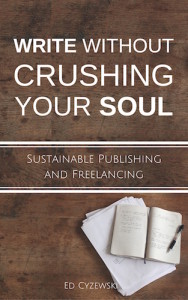 Guest Blogger: Ed Cyzewski
New authors routinely hear that they should build their marketing platforms by publishing articles in print magazines. There’s one problem with this advice: it rarely helps authors actually sell books.
There are exceptions to this, and I’ll get to them. But I’ve spoken to publicists and authors, and examined my own book releases, and I’m convinced that print magazine articles rarely convert into book sales or fans who will eventually buy a book. If a platform is supposed to help you sell books, then publishing in print magazines should be a low priority on your “platform building list.”
One award-winning reporter and widely published magazine writer I know noted that she rarely sees growth to her online platform through her magazine or newspaper work. “People just read the articles,” she shared. “They rarely look for the by-line.” One popular print and online magazine columnist shared the same experience with me after her second book failed to hit sales goals.
What should aspiring and experienced authors do to grow their marketing platforms if they aren’t writing for magazines? Are online magazine articles more effective than print magazine articles? And is there any hope for authors with experience writing for magazines?
Invest in what You Can Do
I’m not the best magazine writer around, but I genuinely enjoy blogging and have invested significant time into it. As a result, I’ve been approached by at least five editors from Christian publishing houses based on my blog. These days I aim to write something relatively long, audience-specific, and “evergreen” each week.
While I’ve seen no notable gains in my platform or my book sales from my articles in top print magazines, each blog post provides readers an opportunity to either join my email list (in exchange for two free eBooks) or follow me on social media. Blogging is a slow build, but it is a build that is working toward a viable end.
Authors need not throw themselves into blogging. A personal note each week or every other week through an email newsletter or a niche podcast can prove just as effective. Author Seth Haines has invested a great deal in his Tiny Letters (Tiny Letter is a scaled down version of MailChimp), while bestselling author Tsh Oxenreider reaches her readers through her podcast.
Build an Email List through Short eBooks
Short eBooks are a tried and true way for both commercial and independent authors to build their email lists and to prompt new readers to check out their full-length books. If you swing by NoiseTrade Books, an eBook giveaway site that lets users download eBooks by entering their email addresses and zip codes, you’ll find many bestselling Christian authors sharing books there, including Don Miller and Ally Vesterfelt. I give away several eBooks through NoiseTrade and have more than doubled my email list.
New authors should be especially eager to publish a short eBook in the 10-20,000 word range. It will provide invaluable experience in writing for a specific audience and book marketing before you have a book deal on the line with a publisher that has specific sales goals.
Learn How to Advertise Your Books
If you go the short eBook route, then you may find that publishing a few short or long independent books will help prepare you for a longer-term career with a publisher.
For instance, independent authors and commercial publishers have used price promotions and discounts as ways to spark pre-sales, encourage early reviews, or to revive an older title. Along with these price promotions, there are many services and Twitter accounts that make it easier to share these deals and give them a longer lifespan that could translate into more print sales and a longer period of time on the eBook bestseller lists when your book returns to full price.
Whether you try out Facebook ads, guest posts on high profile blogs, articles for an online news site in your niche, or some other promotion, independently releasing a book or two before querying a publisher will provide some real life book marketing experience so that you have a better idea of what works best for you and your readers.
When I promoted Write without Crushing Your Soul to my email list, I quickly learned that readers were far more receptive to a personal note about the book’s writing process than a simple overview of the book’s content.
Authentically Connect with Readers on Social Media
I entered publishing back when authors were first getting shoved onto Twitter and Facebook. We were told this would help us sell books, and far too many of us found that this wasn’t necessarily always the case.
Rather, social media provides a place for us to authentically connect with our readers, and sometimes the sales will follow if we provide the right kind of book. I’ve found that the authors who connect with readers through hashtag conversations on Twitter or niche groups on Facebook have far more meaningful interactions that are much more likely to result in readers buying a book in the future.
For instance, author Cindy Brandt (now a client of Rachelle’s at Books & Such) created an amazing group called Raising Children Unfundamentalist around her next book project, and the group is already a thriving community. On Twitter, check out the way author Emily Freeman created a conversation around the hashtag #SimplyTuesday.
So… Should Authors Write for Magazines?
While there are many other ways to promote yourself and your work outside of traditional print magazine publishing, that doesn’t mean you shouldn’t consider it. Some authors have built up a loyal following through writing for a particular magazine, especially in a niche market.
Authors with a background in journalism are especially suited for the research, querying, and unique style of writing that magazines require. In addition, a few published articles in relevant magazines can indicate to publishers that you have both the credibility and professionalism to write a book for them.
Most importantly, there’s a big difference between platform building and actively selling books. Many authors gain newsletter subscribers and social media followers through publishing articles for online magazines, but posting an article in an online magazine is not necessarily a sure bet for directly selling books from the article itself. In fact, strategies vary from project to project and from publisher to publisher.
Publicists Remain Divided Over Marketing
Having worked or spoken with several Christian publishers, I’ve found book marketing strategies and tactics vary from one publisher to another. Book marketing is a moving target, and there’s hardly a consensus on the best mix of new and old media marketing.
It’s true that some authors have used timely, shareable magazine or newspaper articles (especially online) to generate book sales. It’s especially helpful that these authors have books that are easy to find in the front of local bookstores or online retail sites!
Print magazine articles can help a few authors sell a few books. They can help most authors demonstrate credibility to an editor. They will not help the majority of authors sell books because far too many magazine readers will enjoy a well-written piece, think “That was nice,” and then go on with the day.
 This is post adapted from Write without Crushing Your Soul: Sustainable Publishing and Freelancing.
Ed Cyzewski is the author of A Christian Survival Guide, Pray, Write, Grow, and Write without Crushing Your Soul. He blogs about prayer and writing at www.edcyzewski.com.
The post Avoid this Platform-Building Mistake appeared first on Rachelle Gardner.
Add a Comment
By: Rachelle Gardner,
on 2/4/2016
Blog: Rachelle Gardner (Login to Add to MyJacketFlap)
JacketFlap tags: Publishing, A Writer's Life, Writer's Life, Add a tag
 If you know me at all, you probably know I have this annoying little habit of getting out for exercise everyday. Either the gym, or outside for a hike or bike ride. I admit I love my exercise. But not for the reasons you might think. I mean, physical health is important and all, but honestly, would that be enough to motivate me? No way.
The truth is, I go to the gym for YOU. When I’m at the gym, I have all kinds of insights about the writing life, then I come back and share them on my blog and you might think these things just sort of come to me, but they wouldn’t if I hadn’t been at the gym.
Case in point. I’ve been thinking lately about the fact that there are parts of a writing career that writers don’t enjoy. It’s different for each person, and some of you might be very strange and actually enjoy all of it, but the parts writers typically don’t enjoy include:
→ Writing a synopsis
→ Writing a proposal
→ Writing a query
→ The entire query process
→ Blogging and social networking
→ Being patient for things to happen
→ Any aspect of marketing the book
To be successful in any business, sometimes we need to step outside the comfort zone. It isn’t enough to just write your book; there are other things that need to be done.
I was thinking about this while I was going through a similar thought process about my gym regimen. I needed to shake things up a bit, kick it up a notch. I decided to try some new exercise classes. So I went for it, and here’s what I learned:
→ Lesson 1: If you’re focused on how much you hate something, you’re not going to do it well.
Class: Zumba. Can I just tell you how much I detest Zumba? Possibly as much as some of you hate synopsis or query-writing. I’m not at the gym to shake my booty and swivel my hips, but I tried it anyway. From the first song, I was in torture. Hating every second. Doing the fancy footwork, shimmying my shoulders, all that stuff. I wanted to leave but I promised myself I’d stay at least 30 minutes. It felt like 30 hours.
And you know what? Since I was so focused on my intense dislike of all things Zumba, I was unwilling to try hard. I couldn’t give it my all. I couldn’t break a sweat, my heart rate didn’t even go up. I wasn’t getting a good workout because I wasn’t giving all I had.
For you: Ask yourself: is this something I must do? Or is there another way to accomplish my goal? If the activity is a must (i.e writing a query) then face the dislike head-on and figure out a way to get past it so that you can truly give it your all. If there’s another way to accomplish your goal, by all means, head that direction!
Which is what I did. Next up:
→ Lesson 2: Sometimes, the fact that you know something will help you is enough to motivate you.
Class: Interval Step. An advanced step class where the movement never stops for 55 minutes. I never took step classes because the complicated foot work scares me. At the beginning, it seemed pretty easy to follow. Gradually the steps became more complicated until it became laughable to try and keep up. I persisted and to my amazement, it got my heart rate up and I was really sweating. I was getting a good workout regardless of how goofy I looked, and that was incredibly motivating for me. Now step class is my go-to, and surprise! I love it.
For you: You may not enjoy social networking or writing a proposal, but perhaps if you focus on the end result, the task will become easier. Who knows, you might end up enjoying it.
→ Lesson 3: Sometimes results come slowly. Don’t quit too soon out of impatience.
Class: Bosu Core Training . This is a class of slow & steady movements that are difficult and awkward yet they don’t seem like they’re doing much good. I prefer a quicker pace in my exercise classes, and I prefer not to feel like a dork, so I didn’t really like this one.
Until the next day. Wow, muscles I hadn’t talked with in awhile were communicating loud and clear. I finally realized that slow and steady sometimes works, and that I should do this class once in awhile to shake up my routine.
For you: Don’t quit blogging and social networking because you’re not seeing immediate results. Don’t quit querying, don’t quit improving your craft. Give it time.
What parts of the writing career do you find less than enjoyable? How do you deal with them?
Comment below, or by clicking: HERE.
TWEETABLE:
There parts of a writing career that writers don’t enjoy. What to do? Thoughts from @RachelleGardner. (Click to Tweet.)
.
The post Lessons from the Gym appeared first on Rachelle Gardner.
Add a Comment
By: Rachelle Gardner,
on 2/1/2016
Blog: Rachelle Gardner, Literary Agent (Login to Add to MyJacketFlap)
JacketFlap tags: Comparable Books, Publishing, Competition Section, Marketing & Platform, Queries, Proposals & Pitches, Add a tag
 When you’re trying to interest an agent or publisher in your book, you’re often asked to provide “comps” — other books that could be compared to yours, or books that might compete with yours. A good book proposal always has a “Competition” or “Comparable Books” section, and even if you’re self-publishing, it helps if you give readers a frame of reference in the form of similar books.
One of the most common questions I’m regularly asked is, “How do I figure out what books to include in my comps?” People get all hung up on it, especially with fiction. Do I look for books with the same premise or plot? Same time period? Same writing style? How do I know what to include?
I’m going to make it easy for you.
Ask yourself, “Who are my readers? What are they reading right now?” Those are your comparable books.
Keep this line in mind:
“People who enjoy the following books are likely to enjoy my book.”
You can use that line in a proposal, then follow it with the comparable books, and for each one, a brief explanation of why your book would appeal to those same readers. This approach frees you from trying to decipher what an agent is looking for, and instead, use those comps to identify your audience.
If you can’t readily identify six to ten books or authors whom your potential readers are already reading, then you need to stop what you’re doing and get a lot more educated about what’s already out in the marketplace, and who your potential audience is. If you can’t identify your audience, then how will you or a publisher sell your book to them?
Providing “comps” is all about helping your agent, your editors, your marketing team, and your readers to capture a vision for your book.
Too often, writers tell me, “I’ve looked and looked, and I can’t find anything quite like my book.” You and I both know that’s a cop-out. Think about your potential readers, and figure out what they are already reading. It’s that simple.
To read a little more about how to create a strong Competition section for your book proposal, click HERE.
Do you know what books your potential readers are already enjoying? How do you research this?
Comment below, or by clicking: HERE.
TWEETABLES
The one simple secret to providing “comps” for your book. Click to Tweet.
Think there are no other books like yours? Think again. Click to Tweet.
Providing “comps” for your book is as simple as knowing your audience. Click to Tweet.
Image copyright: dgilder / 123RF Stock Photo
The post Finding Comparable Books appeared first on Rachelle Gardner.
0 Comments on Finding Comparable Books as of 1/1/1900
Add a Comment
By: Rachelle Gardner,
on 1/28/2016
Blog: Rachelle Gardner, Literary Agent (Login to Add to MyJacketFlap)
JacketFlap tags: Writing Craft, A Writer's Life, Add a tag
 It seems in the last few years, dialogue about all-things-publishing has been focused on platform, marketing, increasing output, distribution platforms, technology, and self-publishing. But I think it’s important to call our attention back to the work.
Two years ago in January 2014, I posted a prediction for the coming year:
“I think authors will re-focus on the foundational importance of writing a good book. Conversations will be more about mastering the craft and less about the logistics of publishing. People are becoming aware that while options are expanding because of self-publishing, and it may be easier than ever to get your work out to readers, the process of writing a good book is the same as it’s ever been. It’s challenging, it’s grueling, it’s mentally and emotionally exhausting — and it can be incredibly satisfying. People will have a renewed awareness that ultimately, the great writing itself is the very best platform there is, and determine to put most of their efforts in that direction.”
I’m not sure if my prediction came true. Are authors re-focusing on the writing? Some are, some aren’t. But here’s what I know: It’s easier than ever to get a book published because of self-pub and indie publishing. But it’s not any easier to write a good book.
In fact, it may be even harder to write a good book than it was in days past, because both you and your reader have more distractions. You’re tempted by the Internet, your ability to concentrate for long periods of time has been compromised, and deep focus is more challenging. Meanwhile, your reader has infinite sources of information and entertainment. So a book has to be darn good to to keep both your attention and your reader’s. Now is the time to make sure we’re not minimizing the importance of mastering the craft.
Platform is important if you want people to read your work. But ultimately, great writing is the best platform. A million followers are meaningless if you don’t have something worthwhile for them to read. Marketing challenges, evolving technology, and competition will always be with us. But it’s irrelevant without a good book.
I sense, out there in writer-land, an increasing focus on writing more-more-more. Many want to publish as fast as possible. Volume + speed = more money, or more success, or some such equation. But readers can only read so much. They’ll have shrinking patience for works that feel sloppily crafted and hastily written.
The only way forward is the same as it ever was: run away from the noise, hunker down and wrestle mightily with your prose.
As an agent, I’m here to help with the “other stuff.” Only you, the writer, can do the most important part. Write that book. And make it great.
Let’s collectively settle into 2016 remembering that mastering the craft is the best object of our focus. There is a time for considering various publishing routes and promoting our works, but only when we have in our hands a book that is the absolute best it can be.
So where are you on this? Are you mainly focused on craft, or do you spend a great deal of energy focused on other aspects of publishing? What’s the right balance?
Tweetables
Let’s go into 2016 focused more than ever on the craft of writing. Click to Tweet.
It’s harder to write a good book today – you & your reader have more distractions. Click to Tweet.
A million followers are worthless if you don’t have something good for them to read. Click to Tweet.
Image credit: kbuntu / 123RF Stock Photo
The post Focus on Writing the Best Book You Can appeared first on Rachelle Gardner.
0 Comments on Focus on Writing the Best Book You Can as of 1/1/1900
Add a Comment
By: Rachelle Gardner,
on 1/25/2016
Blog: Rachelle Gardner, Literary Agent (Login to Add to MyJacketFlap)
JacketFlap tags: Publishing, Add a tag
 As a literary agent, I love attending conferences and meeting authors. My career is about helping writers share their words with the world, and at conferences I get to sit down with them and spend a few minutes getting to know what they’re passionate about. There’s nothing more rewarding.
When I meet with you, my goal is to get to know you and your book idea. I’m rooting for you as you sit down and we begin our conversation. Every writer has something valuable to offer, and I’m always on the lookout for the golden nugget you’ll share.
But what if you’re nervous?
Many writers feel self-conscious when sitting down with a publisher or literary agent. In any social situation, the key to reducing butterflies is to take the focus off yourself. (Tweet this.) Don’t worry about what they think of your ideas, whether or not they like you, just focus on the other person. The easiest way to do this is to ask people about themselves, about their writing, about how their day is going. If you are genuinely interested in them, you will become interesting to them.
So what do you say to a publisher or agent?
The secret to success is thoughtful preparation. Assuming you want to talk about your book idea, remember this is a conversation, and start like you would in any conversation: with a bit of context or background. Take a moment to introduce yourself and establish rapport.
The best book pitch will begin with some background information. (Tweet this.) For example:
My name is _____ and I wanted to meet with you because _____.
I’ve been blogging for ______ (how long) and my blog is about _____ (brief description).
I work as a _____ (if related to your book). Or, My ministry is _____.
Today I want to tell you about my book which is currently called _____ .
Then, launch into your pitch. This should be a maximum of 2 to 3 minutes long, and after you’re finished, the agent or editor will ask questions. Have a 1-minute pitch prepared, too, in case of mealtime or elevator pitches. (See “Crafting Your Elevator Pitch.”)
Here are some guidelines:
→ Include a closing line in your pitch—you don’t want to trail off in uncertainty, creating an awkward moment. A good closing line expresses your intent, such as, “I’m hoping this book will encourage women to become more socially conscious in their daily life, and give them practical tips for doing so.” Sometimes the best closing lines are questions, such as, “Is this something you’d like to hear more about?” Or, “Those are the basics. Can I answer any questions?”
→ Don’t get ahead of yourself. The purpose of your pitch is not to close a deal. It’s to pique your listener’s curiosity and desire to continue talking. (Tweet this.)
→ Be prepared to talk “numbers.” Know your blog stats and number of email subscribers, Facebook fans, and Twitter and Instagram followers. Letting me know the work you’ve put into your project tells me you’re willing to undertake the work we have ahead.
When you go to a conference, I hope your publisher and agent meetings are among the most enjoyable moments. It’s such a great opportunity to make positive connections. Be yourself, and try not to stress too much.
What are your biggest concerns about meeting with publishers and agents? (Tweet this.)
Comment below, or by clicking: HERE.
The post How to Talk with Publishers and Agents appeared first on Rachelle Gardner.
0 Comments on How to Talk with Publishers and Agents as of 1/1/1900
Add a Comment
By: Jenny Turner,
on 1/23/2016
Blog: Quake: Shakin' up Young Readers (Login to Add to MyJacketFlap)
JacketFlap tags: Add a tag
It is no surprise that lots of will also be clamoring to obtain anime video packages in the finest apps on the internet; anime has had the planet by surprise. Below, you will consider the numerous facets at when buying great anime getting app you have to look. You are able to decide to download free of charge by joining a membership app or purchase the video packages. You will find benefits and drawbacks these choices to each. You receive a duplicate of one’s favorite anime without spending any quantity by downloading free of charge. Nevertheless, the copies you receive may possibly not be of top quality and frequently occasion free apps do not possess attacks you want total listing.
You are guaranteed that you are obtaining the complete DVD or VCD content of one’s favorite anime whenever you get video packages from the pay site. Pay sites also maintain a backup of all of the introduced attacks along with lots of anime options. The disadvantage is the fact that you have to pay for a specific amount. Possibly, prior to making an unreasonable choice to go for apps that are free, you need to consider those spend sites’ pricing significantly carefully. This means you have to see the web to consider one of the most inexpensive bundles that provides you excellent quality movies to get a fair quantity various apps provide various costs. You need to rethink any download bundle requesting even more or forty bucks.
Another method to understand if your app is not bad would be to consider the style of the movies they are currently providing. If they are providing anime video packages from various styles, like fresh anime and previous anime, you are in fortune. You need to take advantage of this chance. Not all apps bring even the newest anime collection or aged anime. If it provides secure packages an app that provides anime video downloads is a great app. With apps that are free, you spyware together with your download and frequently get nasty adware. This is bad and it may influence the operating of one’s pc and danger your system protection. That you do not get these issues with pay sites before contemplating it safe for downloading whilst the documents are scanned. The download the greater since you reach view your preferred anime video’s quicker the pace packages faster. When you have to hold back too much time, you then should think about testing out another site like an account or pay app. Use vidmate to see how this is often to find the very best anime video packages online helpful.
0 Comments on Where you can obtain the greatest video downloads as of 1/1/1900
Add a Comment
By: Rachelle Gardner,
on 1/21/2016
Blog: Rachelle Gardner, Literary Agent (Login to Add to MyJacketFlap)
JacketFlap tags: Marketing & Platform, Blogging Tips, Add a tag
 Standard wisdom used to be that authors, both fiction and non-fiction, should build relationships with readers through blogs. As social media and online marketing have evolved, my thoughts on blogging have changed.
The proliferation of blogs in the last ten years has made it increasingly difficult to stand out in the crowd. Many authors are blogging faithfully but it doesn’t seem to be increasing readership of their books; in fact most of their readers are other writers. One good indicator blogging might not be for you is if you have a hard time figuring out what you should write about.
So, how do you decide if you should have a blog?
Have a blog if:
1. You have something important to say and it seems people want to hear it.
2. You understand that blogging is about offering something of value, NOT about promoting yourself and your books.
3. You enjoy blogging (for the most part, anyway).
4. You find blogging contributes to your creativity and enthusiasm for writing your books, rather than sucking all the energy out of you.
5. You can find the time for blogging without it completely stressing you out.
6. Your books have a highly defined target audience, making it easy to target your blog.
7. Your books are topical (especially non-fiction), so that you have a clear and obvious theme for your blog.
Don’t have a blog if:
1. You keep asking yourself and others, “But what should I blog about?”
2. You only want to blog to promote your books and/or because you think you “have to.”
3. The whole idea stresses you out.
4. You honestly don’t have the time in your schedule to blog regularly.
5. You’ve been blogging for a year or more, and haven’t built up to a traffic level that seems worth it.
Here are some alternatives to blogging when it comes to online networking and promotion.
- joining a group blog
- sending email newsletters
- using Facebook effectively
- leveraging the various ways Goodreads offers for promoting books
- attracting a readership through Pinterest and/or Instagram
- having an effective LinkedIn profile page
If you don’t want to blog or be engaged in online promotion, should you self-publish instead of seeking a publisher?
I get this question from writers frequently, and my answer is: What would be the point of self-publishing a book, if you have no intention of promoting it? Who will buy it? With millions of books available for sale at any given time, what’s your plan for letting people know that yours exists?
Blogging and other means of online promotion aren’t just hoops that publishers want you to jump through. They’re real and necessary methods of letting people know about your book. So if you have no intention of letting anyone know about your book, through a sustained, long-term promotional plan of online engagement, then think carefully about whether you want to write a book for publication. If you build it: they will NOT come. You must promote it.
Do you blog? If so, how’s it going? If not, why not? Comment below, or by clicking: HERE.
TWEETABLES
Here’s how to decide whether or not to blog. (Click to Tweet.)
Want to be an author, but don’t want to blog? There are alternatives! (Click to Tweet.)
The post To Blog or Not To Blog, That is the Question appeared first on Rachelle Gardner.
0 Comments on To Blog or Not To Blog, That is the Question as of 1/1/1900
Add a Comment
By: Rachelle Gardner,
on 1/18/2016
Blog: Rachelle Gardner (Login to Add to MyJacketFlap)
JacketFlap tags: Nonfiction, 10 Things, Editing & Revising, Add a tag
 Got a terrific nonfiction project you’re trying to sell? Wondering if you have what it takes? Here are some signs of potential future success as a nonfiction author:
1. You’ve previously written a book that was at least mildly successful… maybe something like The 7 Habits of Highly Effective People.
2. You have a recognizable name. For instance, Bradley Cooper. Or Oprah.
3. You are currently a top candidate for President of the United States.
4. You have recently won several gold medals in the Olympics. In a sport people care about.
5. You have come up with a life-changing, magical method of organizing people’s stuff. And it involves talking to your stuff.
6. You are the founder of Microsoft.
7. You are the…. what’s that? you don’t like this list?
(Hey, Bill Gates might be reading this blog, you never know.)
Okay fine, here’s a list that might help you a little more.
10 Things Editors Look For in Nonfiction
(The dead serious version.)
1. Established platform (built-in fans and potential bookbuyers).
2. Expertise and/or credentials in the subject area of your book.
3. A new and exciting idea, with a terrific title. (Yes, they do exist.)
4. A fresh take on a familiar idea. (How many parenting books do we need? Make yours uniquely compelling, and it’s possible we’ll need at least one more.)
5. A strong writing voice that compels readers. Yes, the craft of writing counts, even when your message is primary.
6. Felt-need takeaways that matter to the reader. Answer the question: What will I get out of this book? What’s in it for me?
7. A sellable concept – something people can’t already get for free elsewhere. This can be a tough one considering everything that’s on the Internet.
8. An author’s availability and commitment to playing a strong role in the marketing process.
9. A concept that could birth logical, sellable ancillary products, should the book take off. (Study guides, DVDs, specialized editions, etc.)
10. An author who is already famous (at least in his/her niche or subculture), or knows the right famous people who will offer endorsements or write the foreword.
How many can you check off your list?
The post 10 Things Editors Look for in Nonfiction appeared first on Rachelle Gardner.
Add a Comment
By: Jenny Turner,
on 1/14/2016
Blog: Quake: Shakin' up Young Readers (Login to Add to MyJacketFlap)
JacketFlap tags: Finance, Add a tag
 Payday loans Organization is simply correct for you personally if you are buying immediate money to protect your immediate spending subsequently. Payday Loan Organization is calculated as modern loans with versatile and suitable option. They are short term loans that address you are spending with easy reimbursement on payday or another salary evening. They are also called money developments in several nations that were different. Require it and the only cause of such aplus would be to provide instant educational funding to individuals who are little of money.
Creditors have now been permitting placing forward total procedure for software with the energy of the internet average along with processing, along on the website. The procedure continues to be allowed to become faster having a smaller quantity of individual treatment. They end up receiving into an inappropriate summary because many of them have been in dependence on instant cash. Therefore prior to going to get a pay day loan company, create confident you preserve particular possessions, which save your valuable money from unfamiliar costs billed by several traders online, in addition to will help you in preventing swindles. Within the assume by completing every type of sanctioning your mortgage is unquestionably not the style for to obtain a cash advance company to begin your look. Actually just for filling the types up, lots of sites have their related accuses aside from their sanction of one’s request because they need to acquire your lender info for that cause of distribution. It is hardly insignificant to pay for attention to every info to be able to negotiate using the best site. Cautiously examine the disclaimer.
On situation that is particular, proclamation that talks the site merchant isn’t the buyer will be discovered by you. If you should be persuaded adequate about its reliability you need to just take advantage of from any 3rd party. Odds are there that it is simply a harvester promoting objective to financial establishments just like a lender if your site doesn’t term it whilst the 3rd party. Attempt to remove the company info in the site. Create study your perfect buddy while taking a pay day loan option. Search through the web where you will appear lots of free distinction websites offering you total info on financial products should you need to get sophisticated depth on payday loans. Because downturn, Payday Loan Organization is getting status of obtaining affordable help using its immediate aftereffect.
0 Comments on Immediate payday loan available as of 1/1/1900
Add a Comment
By: Jenny Turner,
on 1/13/2016
Blog: Quake: Shakin' up Young Readers (Login to Add to MyJacketFlap)
JacketFlap tags: Add a tag
There are many people who want their business information to get share instantly with one other person. In such cases this will stay stable long wide. Nevertheless, are certainly a large amount of hidden jewels hidden within the Gmail program, and also the filter system is unquestionably one of these. These particular brands are able to instantly deliver communications from your own email mailbox with filters that are much like files in additional email applications and solutions. Large amount of Mailers use and produce brands. Lots of people make use of the attempted is accurate shifting communications into these various brands fall method. This short article may discuss just how to produce filters that’ll instantly get the job done for you personally.
Gmail Configurations

Begin with Gmail’s Configurations part; click the equipment image within the email Gmail page’s upper-right party and click Email Configurations. On the wording, discover and click from that page that claims Filters at the page’s top. If no filters have been produced by you however, the one thing you will notice about the page may be the clickable text Create Gmail new account that is fresh at the page’s bottom. You will visit a container which allows you to produce a filter-based on a variety of requirements: The message-sender, who it is being delivered to, the topic line, or maybe more universal issues for example offers the words or does not have some words. Certainly a quantity is of methods you should use your communications to be sorted by each one of these filters. For instance, should you get a normal email from membership a particular team or different business; you are able to place that title within the container. With this part that is next, you choose what is to be achieved using the communications that match your requirements. Today it is time for you to choose what goes on to that particular concept. When you have previously produced brands, you are able to examine the Utilize the tag container, and make use of the drop down number alongside the check box to pick which label to use.
Another essential choice to create is climate the concept may nevertheless come in the mailbox. Should you choose to use a tag, the email may nevertheless appear within the mailbox. It’ll possess a little bit of wording about the concept point, displaying what tag it goes to. You will understand you’ll find new messages in these brands since there’ll be considered a quantity in parentheses alongside the tag title within the remaining line about the primary mailbox site if that occurs. Additionally, the tag title itself is likely to be in text. Brands with no messages that are fresh won’t have any figures, and also the label’s title is likely to be in normal, low-bolded text.
0 Comments on Gmail program selection for quick communication as of 1/1/1900
Add a Comment
By: Rachelle Gardner,
on 1/12/2016
Blog: Rachelle Gardner (Login to Add to MyJacketFlap)
JacketFlap tags: Competition Section, Writing Craft, Add a tag
 “To my knowledge, nothing like this has ever been written. Ever. It is utterly fresh, mine and complete.”
That was a line in a query I received.
It’s hard to explain how this sounds to agents and editors who get pitched everything under the sun, are typically well-read, and are aware of what’s going on in the publishing marketplace. The book might be unique but not to the extent the writer seems to think.
When pitching your work, you have to walk a fine line: Be confident, but don’t come off as grandiose. Stress your original and fresh voice, yet don’t be afraid to acknowledge there have been other books similar to yours, whether in plot, style, theme, whatever. Yes, you want to be unique, but you can’t make wild claims that just aren’t true. Every book published has some similarities to something that came before; yet yours must also have something fresh and different about it.
In non-fiction book proposals, we always have to provide comparable titles (the “Competition” section) and increasingly, editors are asking us for comps even for fiction. Many authors write something like, “There are no books similar to mine.” What it says is, “I haven’t taken the time to properly research the market and I have no idea what other books could be compared to mine.”
Remember, it’s not bad to be able to compare your book to others people have heard of. It’s good. It helps people begin to capture a vision for the type of book you’ve written. If you can point out the ways your book is similar and different, and why you think yours is a good complement to the other, you can further help a publisher understand what your book is all about. Don’t ever claim “There are no books like mine.” If that’s your impression, go back to the bookstore and find some.
You don’t have to give comp titles in your query, but when you get further down the road, you may be asked what books you think yours is similar to, so it’s a good idea to be ready.
Of course, if the book in question really was amazingly fresh and original, my response to the query would not be quite so negative. Alas, it was not the case. Most of the time when people try so hard to tell me their book is awesome, rather than just showing me an awesome idea and letting me figure it out for myself… it’s usually not awesome.
Unsurprisingly, the same writer who told me their book was utterly fresh responded to my pass letter with the observation: “This is probably one of the most spectacular works of fiction ever written.”
My loss then, I guess. Bummer.
Do you have a hard time finding books to compare with yours?
The post Utterly Original: A Rant appeared first on Rachelle Gardner.
Add a Comment
By: Danielle,
on 1/11/2016
Blog: Upstart Crow Literary (Login to Add to MyJacketFlap)
JacketFlap tags: The Industry, Add a tag
It’s a grand day for books, and we’d like to extend our warmest congratulations to the extremely talented 2016 ALA award winners!  … [more]
View Next 25 Posts