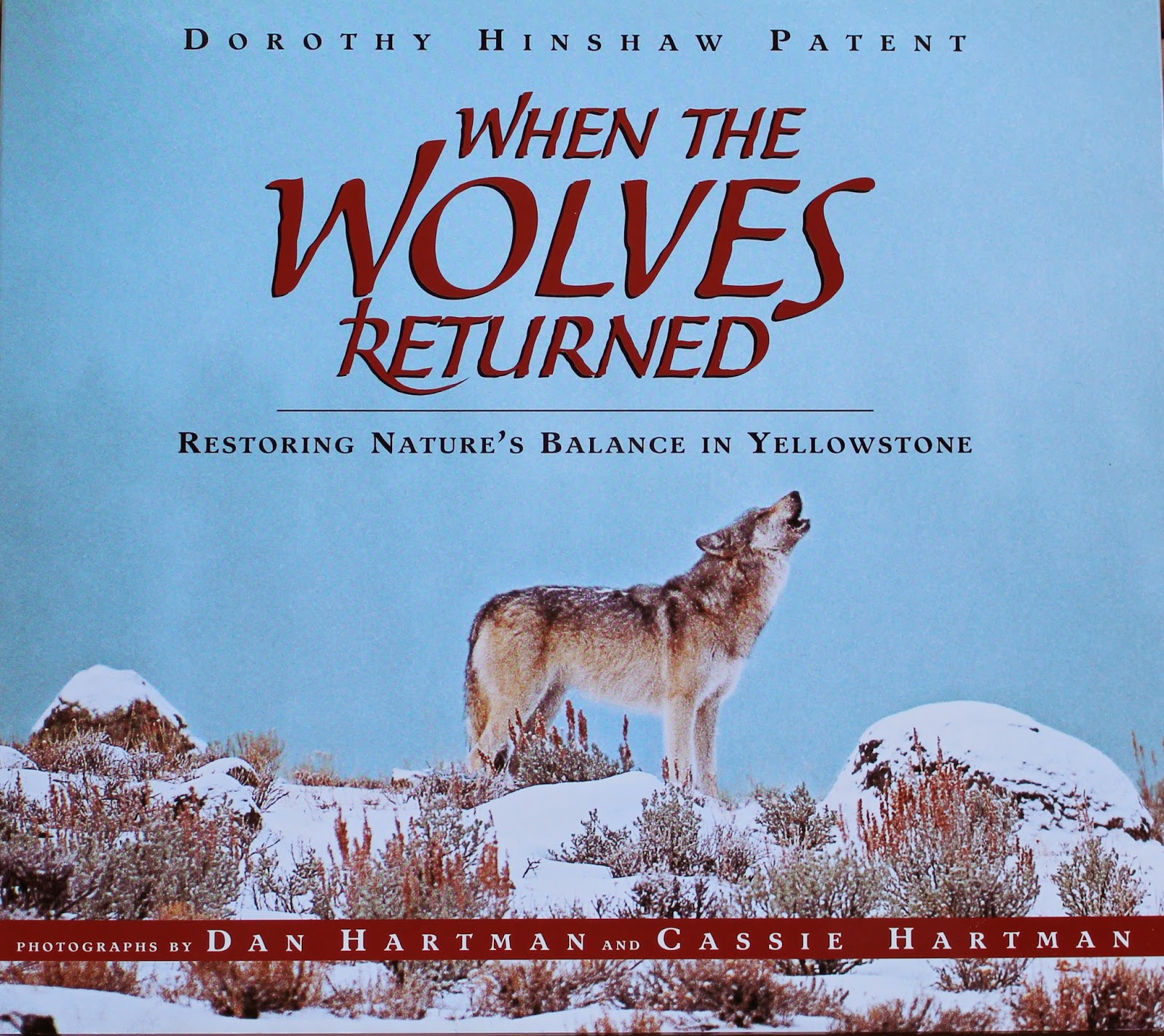
 This winter, and now thank goodness spring, I've been working by videoconference with two classrooms in Missoula, Montana, helping them with their writing projects, through iNK Think Tank's Authors on Call program, posted publicly at http://district1missoula-dorothyhinshawpatent.wikispaces.com/. At Franklin School I'm working with fourth graders, and this month they are sidelined by testing. But the third graders at Lewis and Clark School have finished their project. My book, "When the Wolves Returned: Restoring Nature's Balance in Yellowstone," is their guide to writing well, and they have been working very hard at it.
In our first videoconference, I talked to them about the importance of beginning a story with something mysterious or exciting, with a beginning, middle, and end, just like a little story in itself. Each student is writing about a member of the deer family. Here is Oliver's first paragraph:
"Imagine walking through the woods. You see something with fangs. A lion? A wolf? A sabertooth tiger? No. It is a musk deer, the only deer with fangs."
Another student wrote:
"On an early foggy morning you can hear distant clanking in the air. As the fog clears you can see two kudu. You come closer and can that their horns are interlocking. They are pulling and tugging but can't get separated."
Wouldn't you want to read more?
In our second videoconference, students were able to read their beginning paragraphs to me, and I gave them specific advice on how to improve the writing. When an author makes suggestions, the students accept them very easily, while sometimes if it's a parent or teacher making suggestions they aren't as willing to make the changes.
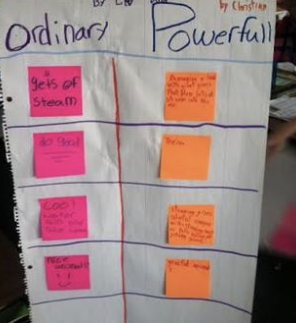
The students are carefully studying my writing and noting down the "powerful" words I use and looking them up if they are unfamiliar with them. Then they compare them with "ordinary" words I could have used:
I'm very proud of these young writers who are working so hard to do their best, and I think having a "live" author work directly with them to help them with their difficulties can lead not only to rapid improvement in their work but also in increased enthusiasm about writing and reading.


I’m sitting at a table in a condo in Whitefish, MT, not far from the Canadian border, on a writing retreat with two writer buddies, Peggy Christian and Jeanette Ingold. Jeanette writes YA contemporary and historical fiction (most recently “Paper Daughter”, about a Chinese American girl whose internship on a Seattle newspaper launches her into a mystery from the past) , and Peggy has written fiction for young people in the past (“The Bookstore Mouse”) and is now developing a blog (Backwoodsandbeyond.com).

At breakfast we pondered Vicki Cobb’s question for us nonfiction Ink Thinkers—what does our writing bring to the table that’s special, that makes us unique, that enriches the material we write about in a special way? As we talked, I realized that it isn’t just us nonfiction writers who uniquely help ‘educate’ our readers about the world—all good writers do the same thing, perhaps sometimes in different ways.
Historical fiction like Jeanette’s (she always aims to make sure that her information is 100% historically accurate) is a particularly obvious example—when Jeanette drops her characters down into a real situation, such as the terrible firestorm that engulfed the mountain west in 1910, in her book, “The Big Burn,” readers come away with an understanding of this event that’s seared into their memories. The characters may be made-up people, but their experiences of the fire are those of real people who went through that terrible time.
What does my nonfiction book, “Fire: Friend or Foe,” give readers that they couldn’t glean from Jeanette’s story? My work may cover some of the same territory, but it offers a broader view of the role of fire in the world. I can step back from a story like the 1910 fires to provide a greater context for that event, and I can help explain the various factors involved when wildfires rage, as well as provide a modern perspective on that fire’s role in shaping America’s attitudes and policies during the 20th century and into the 21st.
Perhaps h






Great post, Dorothy! A savvy retired principal told me not long ago that children should have acquired the skill to read by grade two so that from third grade on they read to LEARN. One of the problems with NCLB was that the focus on literacy and testing stalled reading into just learning enough to answer test questions, and the lack of exposure to literature prevented many children from learning how to learn from reading. The new emphasis on the Common Core Standards is a HUGE game-changer. Kids will be encouraged to read several sources on a subject before writing a report. Text-book publishers are scrambling, trying to figure out how to cash in on the Common Core by making anthologies--giving kids bigger and better snippets of our work; thinking that a snippet is all you need. This is nothing less than the "scaled-up" factory mentality at work. They are looking for the one-source-fits-all book with the huge market. There's no way that they can meet the CCS as the emphasis has shifted to process, not basic literacy.
Good points, Vicki. It's always frustrated me that in many schools first and second graders aren't allowed to go to the school library and just get books on things that interest them and read and do reports on those. Learning to read and practicing the skill and learning to love the process should be primary at that age.
We love experiential learning! As a parent, I think it has far more impact for a child to learn in a hands-on way versus a memorizing facts way. We read Alexandra Siy's Bug Shots and learned a lot about bugs by looking at them with our microscopes in our backyard. We've read books about caterpillars and butterflies, and are now raising our own. Nothing beats an engaging nonfiction text coupled with the hands-on activities they inspire.