new posts in all blogs
Viewing: Blog Posts Tagged with: gluten-free, Most Recent at Top [Help]
Results 1 - 25 of 43
How to use this Page
You are viewing the most recent posts tagged with the words: gluten-free in the JacketFlap blog reader. What is a tag? Think of a tag as a keyword or category label. Tags can both help you find posts on JacketFlap.com as well as provide an easy way for you to "remember" and classify posts for later recall. Try adding a tag yourself by clicking "Add a tag" below a post's header. Scroll down through the list of Recent Posts in the left column and click on a post title that sounds interesting. You can view all posts from a specific blog by clicking the Blog name in the right column, or you can click a 'More Posts from this Blog' link in any individual post.
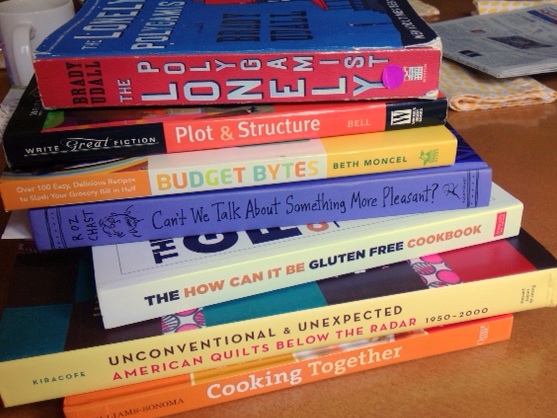
What have you been reading? I’ve always got several books going at once, and let’s be honest, they don’t stay on the nightstand, so every night I’m frantically looking for the three I want at the moment.
First up, we have The Lonely Polygamist by Brady Udall. I haven’t gotten very far yet, but so far, it’s very funny, and I’m impressed by the intricate world Udall has created and all the many characters and their complexity.
Next, Plot and Structure by James Scott Bell. I can’t remember if this was a random book I picked out or if it was recommended by a friend, but it’s a goodie I turn to again and again. It has some excellent writing exercises, which I need, because lately I’m feeling a bit depleted creatively.
On to Budget Bytes by Beth Moncel, which you may remember me mentioning before. It’s a good, solid, weeknight cookbook with lots of fresh ideas. Simple but never boring. Currently loving the chipotle black beans, which are quick enough to make myself for lunch. The author also has an excellent blog.
Next: Can’t We Talk About Something More Pleasant? which I borrowed from my friend Susan.
This may be my favorite book of the year. By Roz Chast, of New Yorker cartoon fame, it’s the story of the slow descent of her elderly parents. It’s told in handwritten journal-like entries plus cartoons, drawings, and photographs. The story is laugh-out-loud hysterical (yes, I know, sounds strange, but it works) but also sad, poignant, and above all, deeply human. It makes me want to write a cartoon journal book. Think I may have to read it again.

Under that, The How Can It Be Gluten-Free Cookbook from America’s Test Kitchen. I’m just getting into this book, but I really like the way it’s set up and the extensive research that goes into each recipe. The folks behind it test everything to death and make sure it works.

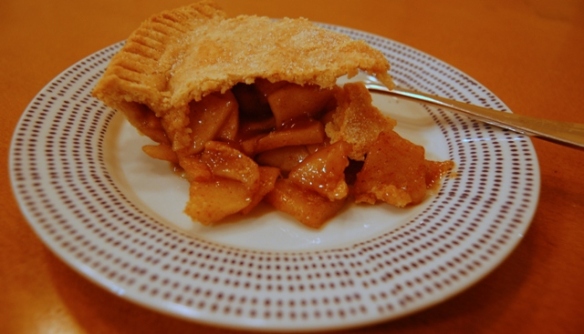
It includes a DIY gluten-free flour mix (my other go-to GF cookbook does this as well). The hubs made me a gorgeous and delicious apple pie using said flour mix and cookbook. See?

Next: Unconventional and Unexpected: American Quilts Below the Radar 1950-2000 by Roderick Kiracofe
This book kept popping up on quilting and crafting blogs, and I just had to have it (thanks, mom and dad!). It is so completely gorgeous I can’t even tell you. The collection features my favorite kinds of quilts—-improvised, imperfect, and made with the materials at hand.


And finally, we have Williams-Sonoma’s Cooking Together. Sometimes kids’ cookbooks seem to be more about making cute things out of candy and junk food than about real food. This one has a really nice range of recipes and lovely photographs to help kids envision what they might like to cook. My kids like to sit and plan—-but, confession, we haven’t actually made anything out of the book yet. I’m expecting good things, though, because our other Williams-Sonoma books are solid.
Btw, for kids interested in cooking, Chop Chop is another excellent resource for kid-friendly yet healthy, not-intimidating recipes.
Also, just finished Gone,Girl——totally worth a read if you haven’t yet. Can’t waaaaait to see the movie!


Hello readers! I’m sorry to have been M.I.A. I’ve been writing and sewing and all that good stuff, and hopefully I can share more about that soon.
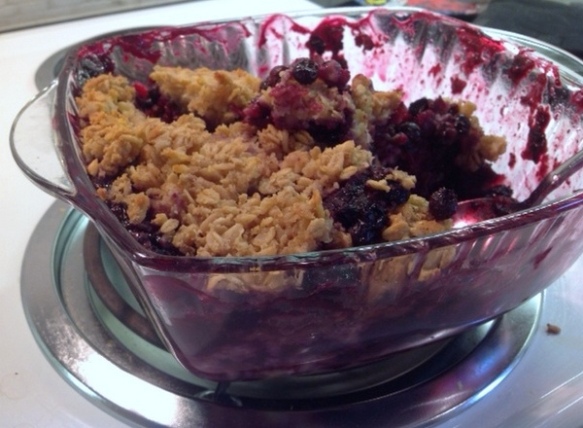
In the meantime, here’s a dessert I made recently that was a big hit.
I like to go to pick-your-own farms, especially for apples, but since we couldn’t find a functioning apple farm, we went blueberry picking while in Western North Carolina over Labor Day. It was the end of the season—-slim pickin’s for sure—but still, the berries were delicious. We found the berry patch tucked in the hills. It had just rained, but the sun had come out, and though wet, it was such a gorgeous little spot.
I had planned to make a gluten-free blueberry pie from this book, but I ran out of energy for crust-making and just made the filling along with a half recipe of baked oatmeal. I then combined the two, and voila—blueberry cobbler sans gluten.
It had almost more of a pudding/ cake-like texture that was really lovely. The filling has the most surprising and wonderful secret ingredient: grated Granny Smith apple. Filling recipe here. At the time I actually didn’t have the tapioca, and it worked fine without it.
Baked oatmeal recipe here. I used gluten-free oats, halved the recipe, added some extra liquid, and did not soak overnight since I was in a hurry. When it was cooked, I roughly layered the still-warm filling with the baked oatmeal and baked (350, maybe?) until bubbly—not that long, maybe 10 minutes, tops.
Have you been reading anything good lately? I’ve been on such a memoir and nonfiction kick that I’m a bit worn out from it and have just started a novel called The Lonely Polygamist. So far, it’s hilarious.
On TV, loving the BBC’s Foyle’s War (WWII murder mystery) via netflix, and Borgen on DVD. Borgen is a Danish political drama featuring a female prime minister. Very smart and engaging, though it’s impossible to multitask while watching (due to subtitles and fast pacing).
Found a new podcast for writers: Narrative Breakdown with Scholastic editor Cheryl Klein. Really good, meaty stuff. Also found a mention of my easy reader, Slowpoke, in Books that Teach Kids How to Write by Marianne Saccardi. The author uses Slowpoke as an example showing kids how to slow down and notice the details they need to enrich their writing. Fun, eh? I’m honored.
Meanwhile, I’ve been working on a couple of quilts, but they’re slow-going. Nothing exciting to report. What’s new with you?


By: Emily Smith Pearce,
on 8/11/2014
Blog:
Emily Smith Pearce
(
Login to Add to MyJacketFlap)
JacketFlap tags:
Food,
Recipes,
cooking,
recipe,
Gluten Free,
vegetarian,
burger,
vegan,
gluten-free,
Add a tag
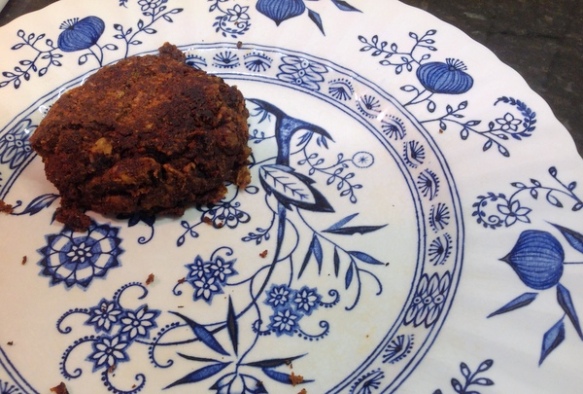
I’d been wanting to try these for a long time but never got around to it until last week. There were a few mishaps, but all in all, I was psyched about how they turned out, despite their less-than-photogenic looks. They even got the hubs stamp of approval—-as in, he not only ate them without complaint (he pretty much always does that) but says he’d like me to make them again. He even chose them leftover the next day instead of grilled chicken.
The recipe is adapted from Mark Bittman’s How to Cook Everything Vegetarian. Here’s the original recipe. I’ve cooked a lot, lot, lot from this book. Check out my archives if you want to see more posts about food and cooking.
1 can black beans, drained
1 medium onion, roughly chopped
1/2 cup old-fashioned oats (I used gluten-free)
1 TB chili powder
1 garlic clove
a generous squirt of Sriracha sauce
a nice blob o’ ketchup
3 pickled jalapeno slices
Pulse everything just a little, not a lot, in the food processor. I accidentally left out the egg, but it didn’t seem to matter much, so I doubt I’d add it back in. I also goofed and blended the ingredients too long.
After processing, let it all rest a few minutes.
Form into patties and chill in the fridge for a little while.
Heat a cast-iron skillet to medium, add oil, then brown the patties on one side, then the other.
The next bit was tricky for me. The burgers actually had to be cooked a long, long time to get the right texture. You want the texture to be kind of burger-like. The right kind of chew, not mushy and damp.Maybe I had trouble because I added too much moisture and pulsed the ingredients too long. I don’t know. I may try browning and then baking next time.
What I ended up doing was just turning the heat down to low and cooking them forever very slowly so as not to burn them. I was afraid the whole experiment would be a wash, but lo and behold, they turned out very well in the end.
I didn’t think they were more than mildly spicy, but my daughter (who likes to remind me that children have more taste buds) said the spice factor was too much for her. I hadn’t expected the kids to flock toward bean burgers anyway and had made them turkey burgers instead.
You could totally crank the spice factor up or down. These are definitely going into the rotation.
If you want more detail about all kinds of tips and variations, do check out the original recipe.
I’ve been reading Jennifer Worth’s memoir, Call the Midwife, since I love the show so much. I was surprised that the show actually follows the memoir fairly closely. I’ve been watching old episodes of Foyle’s War, a British WWII detective show. Also tried Outlander (no, I’ve never read the books) and The Knick. I’m definitely on a mostly British historical kick. Not sure what I think of those shows yet. You?
Also doing some patchwork, some of which I hope to show you soon.


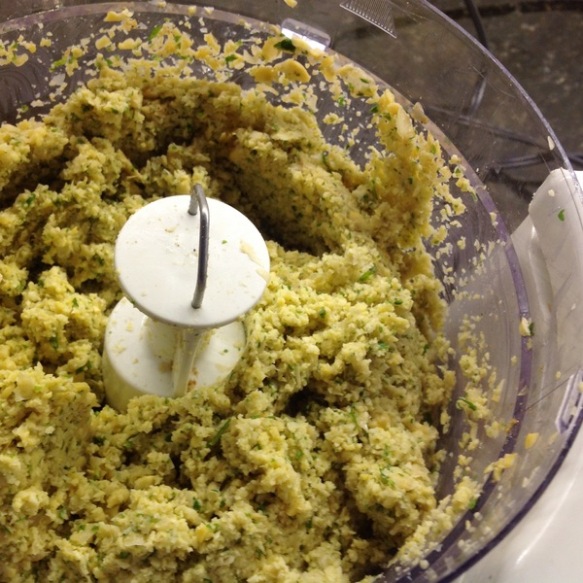
When we were living in Hannover, I became a falafel addict. Might not sound typically German, but there’s a large Turkish population in Germany, and you can buy inexpensive, fresh, delicious falafel (as well as other yummy treats) at almost any corner. The guys at my imbiss (fast food joint) knew my falafel order by heart.
You can get excellent falafel in Charlotte (try Zeitouni), but I miss being able to walk across the street and get it, so I often make it at home. Box mixes are actually pretty good (Far East has a good one) but I’d always wanted to try making them from scratch.
So what’s in there? Dried, soaked (uncooked) chickpeas, onion, parsley, spices.
How hard was it? Well, if you’ve made from-the-box falafel before, it’s really not that hard, but it does require more planning and more cleanup. Big bonus if you have trouble with gluten is that making them from scratch requires no flour, which most mixes have. I find the difficult part is that I want to make all the fixin’s, too, which also take time—yogurt sauce, tahini sauce, chopped veggies.
Since I spent most of my energies on the falafel, I put my daughter to work on the yogurt sauce (she loves this) and dressed the veggies with just a little lemon juice, salt, and pepper.
This time I think my husband was right: I really DID use every dish in the house.
Results: delicious. Was it worth making from scratch? I have to say that, while I loved them would make them again, the box-mix kind are a close second.
Bittman’s recipe here.
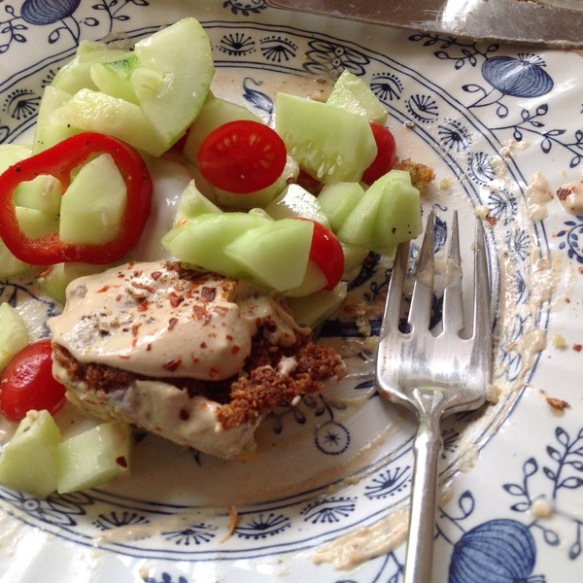
Next on my list: making harissa from scratch, and Egyptian falafel. They’re green!
For more of my posts on cooking and food, click here.


By: Emily Smith Pearce,
on 4/9/2014
Blog:
Emily Smith Pearce
(
Login to Add to MyJacketFlap)
JacketFlap tags:
author,
Food,
Recipes,
writing,
recipe,
Gluten Free,
vegetables,
vegetarian,
salad,
vegan,
gluten-free,
beans,
Add a tag
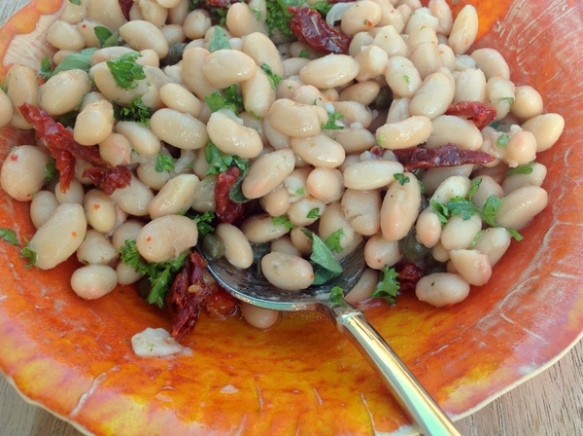
This is my weeknightified version of a Foster’s Market recipe. It’s super simple and really hits the spot when I want a tasty deli-style salad with next to no work. You could dress it up as much as you like with fresh veggie add-ins. The original recipe is lovely, though not super fast (you cook the beans yourself and make their delicious dressing from scratch, among other things). Again, this is more a list of ideas than a real recipe, but it’s not hard to eye the proportions.
Ingredients:
Rinsed and drained canned white beans (I like navy beans)
Italian dressing—-I like the Penzey’s mix
Capers
Sundried tomatoes
Chopped fresh parsley
Mix beans with enough dressing to coat and enough capers and tomatoes to give it a little color. Let marinate a few hours if you have time. Add parsley. Enjoy!
Got some more feedback on my nonfiction manuscript this week. Things are finally moving forward. So excited.
Still working on the last few chapters of my young adult novel. It’s slow-going, but I do think I’m getting somewhere.
And in other news this week, I’ve been talking to 4th and 5th graders about writing an early reader (i.e. Slowpoke). Fun times! Love getting their questions.
For more food-related posts, click here. Have a great rest of your week.


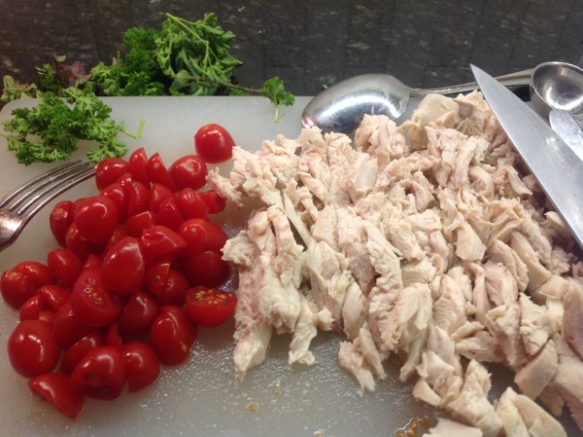 How about a final soup to say good-bye to cold-weather? Am I jinxing us just writing that?
I was going to call this a Greek chicken soup, but it’s really just Greek-inspired. I like to make it when I’m feeling a little tired of our usual chicken noodle with carrot and onion version.
This is less a recipe and more an idea for flavors.
You need:
–chopped cooked chicken (I usually poach* some breasts. Roasting bone-in is probably the most flavorful way you could go, but poaching is quick and painless)
–chicken broth (I use chicken base and water)
–cooked rice
–pre-cooked or drained and rinsed canned white beans. I like navy beans.
Assemble and heat gently until hot. Then add:
–chopped tomatoes (I used cherry ones since they’re always available and good)
–oregano (I grow it in the back yard, but dried is also ok—-as I look at my photo I see what appears to be parsley. hmmm…well, that will work, too and is also growing in the back yard)
–juice from 1/4 to 1/2 lemon
Enjoy! For more of my cooking and eating adventures, click here.
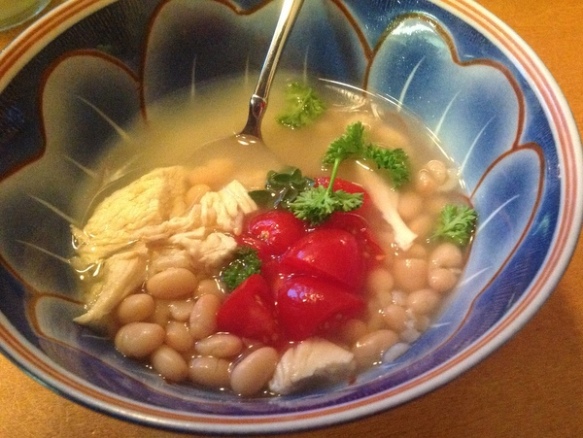
Hoping the weather is sunny and warm wherever you are.
Things making me happy this week (besides the lovely weather): I discovered the NPR Pop Culture Happy Hour podcast. Smart people talking about tv and movies. A dream!
Speaking of dreaming, I’ve been tweeting what my imaginary personal chef would make me for lunch if she existed. If you want to dream-eat with me, find me @emilysmithpearc on Twitter.
Also, Call the Midwife is back! And, I finished a draft of my nonfiction manuscript and sent it off for comment. Wahoo!
And now, trying very hard to focus on finishing this draft of my novel. Nose to grindstone.
*Poaching is like allllmost boiling something, but don’t let it come to a boil. Cook slowly at the almost boiling point until done, and you’ll have tender chicken. Boiling will give you a rubbery mess.
See you again soon!


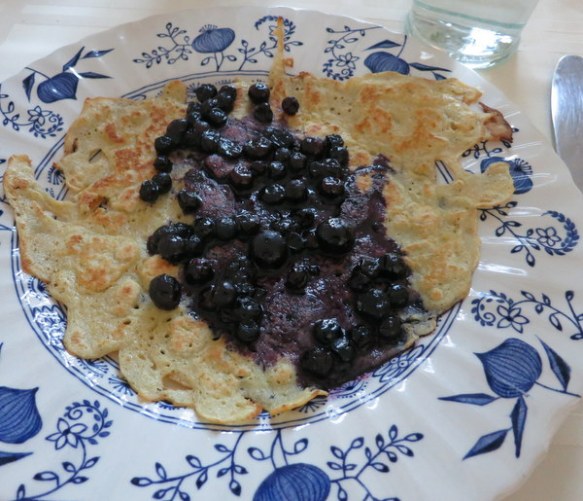
My friend Jamie first introduced homemade crepes to me when we used to do Thanksgiving together in Boston. Oh, those were fun times! We’d make crepes in the morning and just cook, cook, cook all day and listen to “Alice’s Restaurant,” that classic Thanksgiving tale.
Before that crepes had seemed so mysterious and fancy, but really, once you do them a couple of times, they’re no more difficult than pancakes. You just have to get the knack of how thick the batter should be (not very) and when to flip them (when the first inch or two of the edges are dry). Turns out it’s super easy to make gluten-free crepes, and they’re quite a bit faster than waffles.
Once again I used Artisanal Gluten-Free Cooking with great results. A similar recipe is here on their blog (I didn’t use cinnamon). The one thing I would say is that the batter was a little bit thick, so I had to add a little more milk (I think I used almond milk). You want the batter to be just a bit thinner than regular pancake batter. The photo above is of the very first crepe, before I thinned the batter, so the shape is kinda crazy. But normally the crepes look and taste the same as regular ones. They were a big hit with the family.
Lately I’ve been making blueberry syrup with a big handful of frozen berries and just a tablespoon or so of maple syrup. I put them together in a microwaveable container, heat for a little bit (30 seconds?) and voila!
I’ve been slogging away at my novel, revising and adding new material. Also reading One Summer by Bill Bryson, a history of the summer of 1927. Very interesting. Crazy times!
Also, Wes Anderson’s new movie, The Grand Budapest Hotel, is now on my must-see list. Not sure if it’s related, but I’ve been dreaming about weird European hotels lately. Hmmmm…
Coming soon: pics of a recently finished sewing project. Hope you’re having a good week!


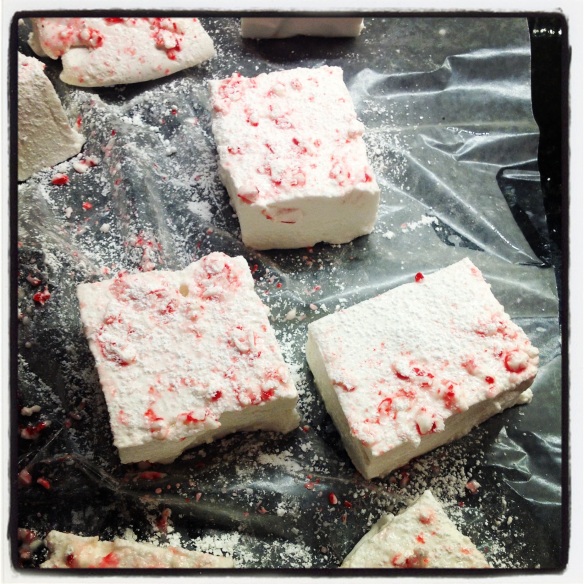
We actually made these around Christmas, as a rainy day activity with the kids. We just followed Martha Stewart’s recipe and added some crushed peppermint candy on top.
We loved the way the concoction of sugar and gelatin morphs into white foam. It made me feel like a chemist (my chemist grandfather, by the way, loves to make candy and measures things out neatly on little squares of waxed paper).

True to form, I tried to cut out some of the sugar, as drowning the finished cubes in yet more white stuff seemed a bit excessive. Turns out, though, that you kind of need the powdered sugar on top at the end to keep the marshmallows from being a total sticky mess. It’s like flour, I guess, when you’re rolling out pizza dough.
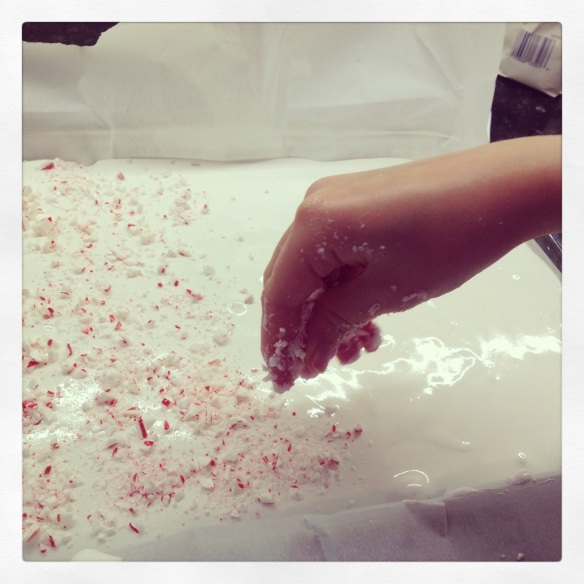
Marshmallows weren’t hard to make but they were definitely messy, even for my high mess threshold. I would totally recommend a giveaway plan, since even my kids, who were sure they’d want to eat the whole pan on their own, couldn’t finish them before they were past their prime (a couple of days).
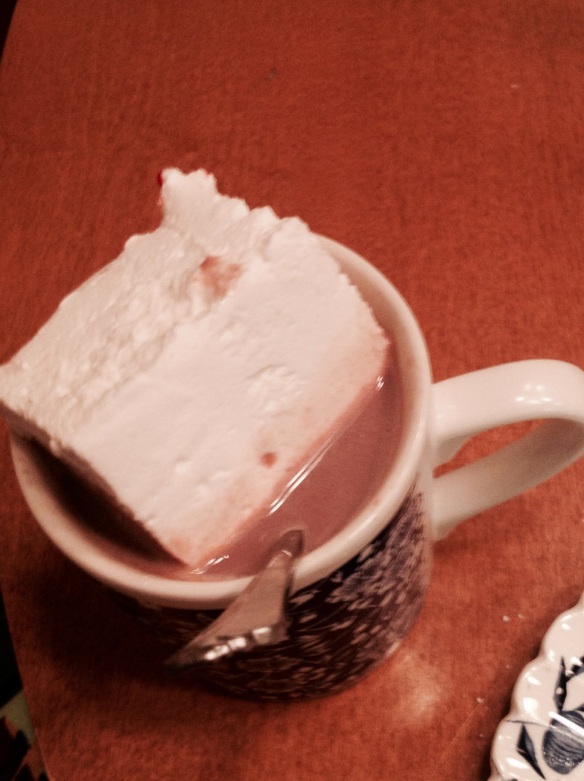
The best part for me was having a giant marshmallow (we call them marsh planets) to put in my hot cocoa, which I made not-too-sweet on purpose.
For more of my cooking and eating adventures, go here.
Around these parts we’re still being absolutely buried by fourth grade homework (what’s up with that?). I’m still loving, really loving My Berlin Kitchen by food blogger Lisa Weiss of The Wednesday Chef. It’s got love, travel, international friends and family, and recipes to boot. Currently dreaming of baby artichokes with potatoes and separately, braised endive. Never thought I’d be interested in endive, but she makes it sound so exciting! As an added bonus, the book is making me want to keep writing, and in my mind that’s the best kind of book.
I’ve been sewing a bit, some of which you can see on my Instagram feed. You can find me there under Emily Smith Pearce or in the lower righthand corner of my blog homepage.
This interview with writer/ director David O. Russell (of Silver Linings Playbook and American Hustle) was so good I may have to listen to it again. I also loved reading this interview with the author, the illustrator, and the translator of Sydney Taylor Award honor book The War Within These Walls. The translator (Laura Watkinson) is a friend of mine in Amsterdam, and the interviewer (Joyce Moyer Hostetter) is a friend here in North Carolina. Small world!
Also just sent out my nonfiction manuscript to some early reader friends. So excited to be moving ahead with it. How are you? Cooking/ reading/ watching anything good?


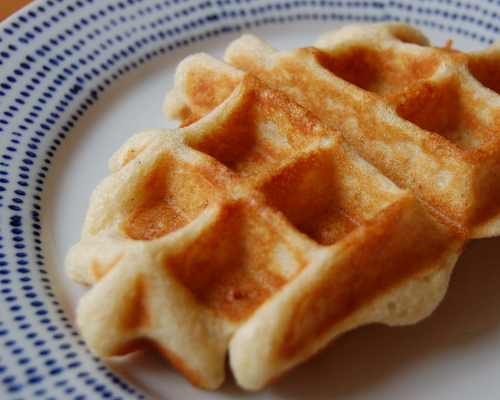
We’ve made gluten-free waffles before with our gf oat and buckwheat pancake batter, but these waffles are more traditional and fluffy. My daughter and mother-in-law were the first to try out this recipe, and everyone agreed they were delicious, gluten eaters or no.
Once again, the recipe comes from our go-to GF cookbook, Artisanal Gluten-Free Cooking. You make your own flour blend and then use it for various recipes. Waffle recipe here.
In other news, we have a snow day here. Enough snow to make the roads dangerous, but not quite enough to really play in it. The kids are making do, with gusto. Meanwhile I’m having trouble concentrating on what I should be doing. Keep checking my to-do list. I should mention that our daughter made the waffles again today, and it was surely a nice mid-week treat. Hope you are warm and cozy—-or at least, bundled appropriately and having fun.
For more of my cooking and eating adventures (many of which are gluten-free), click here. I’m about to add a new gluten-free tab so you can see all those in one place. Enjoy!


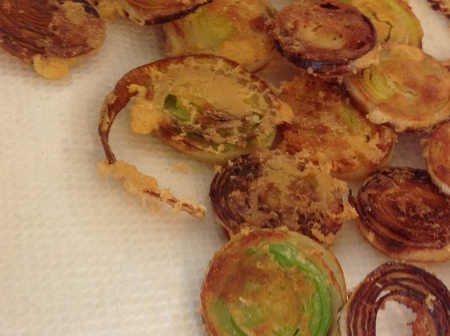
I made this as a quickie-quick appetizer on Christmas Eve. No, the kids didn’t eat them, but the hubs and I thoroughly enjoyed them. A repeat performance definitely has to happen.
I’d been thinking about this onion fritter recipe, found on Pinterest, for a long time. I ended up using a simpler recipe from Mark Bittman’s How to Cook Everything Vegetarian, but I love the ideas in the first, too. I was just short on time.
The brilliance of this concoction is that the ingredients are so few, the flavor is more than the sum of its parts, and it’s painlessly gluten-free—–without even trying. Given my well-documented obsession with chickpeas (here, here, and here—oh, and here and here) it really hit all the points on my checklist.
So, here’s the skinny:
1 part chickpea flour, 4 parts water, salt. A sprinkle or two of cumin and cayenne. I used 1/4 cup chickpea flour and 1 cup water for 1 sliced leek. Drag leek rounds (or onion rounds) in extra chickpea flour, then dunk in batter. Fry in a generous (but not huge) amount of oil. Drain and enjoy.
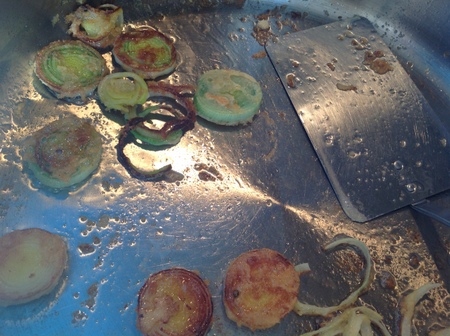
Mr. Bittman says battering veggies with chickpea flour and frying is a traditional Indian preparation and can be served with chutney (oooh!). Sadly, I didn’t have any chutney on hand and didn’t feel like making any, but maybe some other time. I poured out the last bit of batter and made a lacey pancake with the last scraps of leek. Yum! I may have to try this with other veggies.
Poking through the blog I found thru Pinterest (a bit of this and a bit of that) I see lots of exciting Indian recipes. I’ll have to browse some more…
In other news, I’m still working on my nonfiction picture book, and things are starting to gel. So exciting. And the other night I got to attend the Women’s National Book Association book swap. Check out my instagram feed (it’s in the right hand column of the blog) to see my haul.
And for more of my cooking and eating adventures, click here.


We served these yesterday to non-gluten-free guests, and they were a hit with everyone, kids and grown-ups alike. They have a nice, chewy texture.
I actually made them egg-free as well (using egg substitute) since one of our guests is allergic to eggs. The cookies have a lot of butter in them, but next time I may try coconut oil, since I’ve made similar cookies with regular flour and coconut oil in the past, and they were great.
The recipe is once again from Artisanal Gluten-Free Cooking by Peter and Kelli Bronski. You can find the recipe on their blog here.
Today, we made a little candy! So I’ll show you that when I have time. Hope you’re cozied up with loved ones and enjoying festivities.
P.S. We got a special Christmas supplement to the newspaper today: a cup of water and an earthworm fell out when I removed plastic bag #1! Luckily the paper itself was dry and wormless. Gives you an idea of how much rain we’ve had in the last day or so.


Turns out my recipe for almondy cookies easily adapts to a gluten-free version. I made a half-batch last week just to test it out. Everyone loved them, including visiting gluten-eaters. They are not too sweet and have a nice shortbready-type texture.
I make my own gluten-free flour blend in large batches according to the recipe in Artisanal Gluten-Free Cooking, but you could probably use any GF flour blend.
GLUTEN-FREE ALMONDY CUT-OUT COOKIES (adapted from this cooks.com recipe)
Makes about 4 dozen cookies, depending on the size of your cutters, but you can easily halve it if you don’t want that many.
2 sticks butter (I’ll have to try subbing coconut oil another time….)
1/2 cup white sugar
1/4 cup brown sugar
1 egg
1/4 tsp. almond extract
1 1/2 cups almond meal
3 cups gluten-free flour blend (homemade or purchased)
pinch of salt
Cream together butter, sugar, egg, and almond extract. Beat in flour, almond meal, and salt.
Make a ball and flatten it, wrap in wax paper and place in the fridge for an hour or a day.
Preheat oven to 325°, roll out dough, and use cutters to cut shapes. Ours were a little thicker—in the 1/4 inch range, but you could go thinner, depending on how crispy or chewy you want yours. Just watch the time—you definitely don’t want to overcook them.
Bake for 8-10 minutes or more. They should be very lightly browned. I should’ve cooked ours a little longer, but I got impatient.
I’m tempted to up the almond meal further and lower the flour portion. Maybe next time. Also hoping to try out a GF molasses cookie recipe. Stay tuned. For other eating and cooking adventures (including gluten-free) click here.


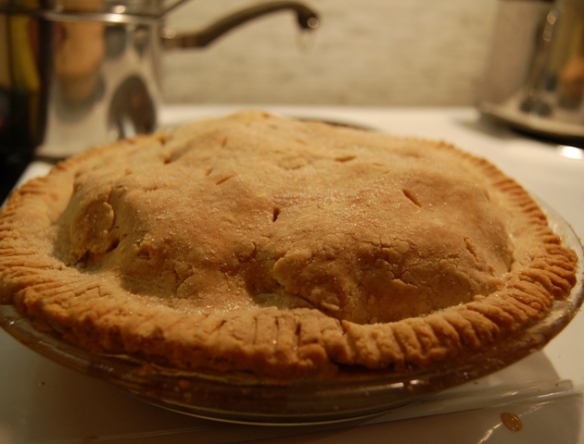
I can’t take any credit for this pie, other than having been an experienced taste-tester. At my kids’ request, my mother-in-law took the reins on this project during a recent visit.
She used the pastry recipe here from Artisanal Gluten-Free Cooking and her favorite apple pie filling recipe for the center. According to her, the dough was “terrible, just terrible to work with,” but of course GF doughs are often tricky and tend to fall apart a lot. We wondered if using a pastry cloth would’ve made it easier (I don’t have one). Still, though, isn’t it a beautiful pie?
The results are so delicious that I would definitely try this again, tricky dough or not! A certain anonymous person (not a gluten-free eater) even tried to eat more than his allotted share.
I would say the pastry was a bit more crackery in texture than traditional dough, but it was still yummy. I think I’ll try it again at Thanksgiving, though I may use a crumble-top instead of a pastry top.
Currently reading America’s Women by Gail Collins. She’s got such a fresh voice and fantastic sense of humor—-this is the way history should be written.
A few of posts around the web that caught my fancy recently:
–this one from Amy Karol of Angry Chicken about using free digital art from the Rijksmuseum
–a glow-in-the-dark party over at Elsie Marley
–love, loooove this collaboration between an illustrator and her 4-year-old
Hope you had a great weekend. Ours was long and relatively lazy. We even started some Christmas crafting. Feels a little early, but I know it’ll be here before we know it. I even went totallly nerdo and made a spreadsheet of the gifts I’ve already purchased and squirreled away. I have more of a head start than I thought. Woohooo!


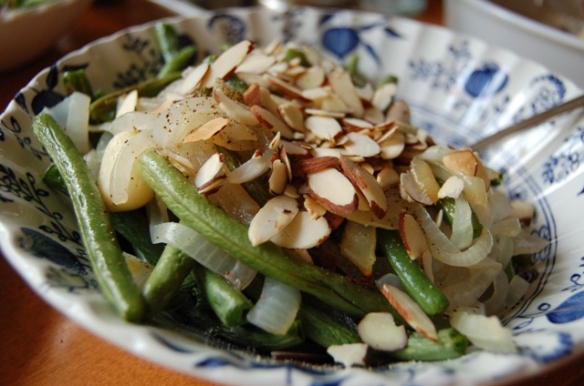
This is a really simple way to do green beans and a favorite in our house. Until I was in my twenties, I had never had a crunchy-ish green bean—always the soft and soupy kind. I still like the soft ones now and then, but roasting is my go-to way to cook them, and the garlic, onions, almonds, and vinegar give this dish lots of flavor.
When I roast the beans and onions, I keep the onions all to one side of the pan so they can be easily separated. The kids won’t touch anything with a visible onion attached to it. They don’t eat the almonds, either. More for the grown-ups, right? The kids do like the flavor the finishing vinegar gives, though, and even my six-year-old, by far the pickiest, asked for seconds when I served this dish.
The Mollie Katzen recipe, from The New Moosewood Cookbook, is here. I just substituted sliced almonds for pine nuts, since I always have almonds on hand and pine nuts are crazy expensive.
For more of my cooking adventures, click here.


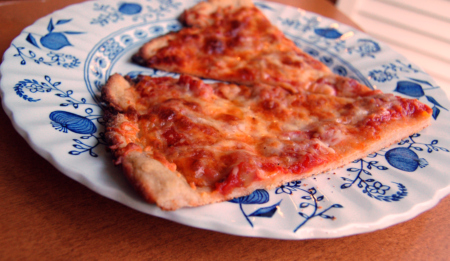
Y’all, I’ve tried a LOT of gluten-free pizza. Some baked goods are easy to make GF, but pizza isn’t one of them. It usually tastes kind of card-boardy. The best store-bought kind I’ve found was of a ball of frozen dough from Earth Fare (sorry, I don’t know the brand). But it was crazy, crazy expensive.
This recipe is by far the best I’ve had. Favorito. Really nice texture, not sandy or weird like some others. Even our six-year-old (who is newly gluten-free) loved it. It’s also incredibly easy if you’ve already made your stash of gluten-free flour mix.
And the best part is, the dough only has to rise 10 minutes, so, unlike traditional homemade pizza dough, you don’t have to plan so far in advance. It doesn’t require kneading, either, just mixing.
This recipe is a TOTAL keeper! Like my recent GF recipe trials, it’s also from Artisanal Gluten-Free Cooking by Kelli and Peter Bronski. The recipe for a similar version of it is here.
The book includes a recipe for a bulk batch of GF flour mix, and then you’re all set to use it in many of the recipes. It’s completely worth the effort, and, although not inexpensive, is a better deal than buying pre-mixed GF flour.
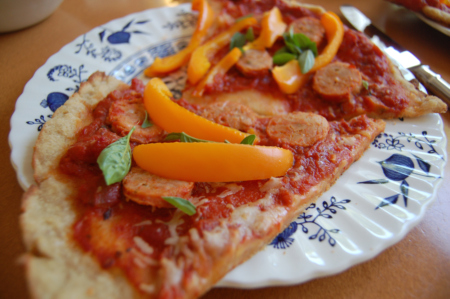
One note on the recipe. My hubs grilled it, which went really well, but he had to pay close attention to the cooking time. I like it nice and crispy, but there are also directions for deep dish pizza in the book.
Yes, I hear you, you’re not gluten-free, and you wonder when my regularly scheduled cooking program is coming back. No worries, this is not going to become a blog solely about GF baking. It’s just what I’m excited about right now.
In other news, I’m waiting to get editorial notes on my young adult novel, and I’m currently researching for a nonfiction book project that had been on the back burner for quite awhile (since we were living in Germany over a year ago). Now that I’m researching in the U.S., with access to an American library, it’s way more fun! I’m still struggling with the shape of the project, but I’m happy to find that I’m just as interested in the subject matter. Hopefully I can share more about it when it’s a bit further along.
Meanwhile, I’ve been sewing a lot. Close to finishing a couple of projects that I hope to show you soon.
For more posts on cooking, click here.


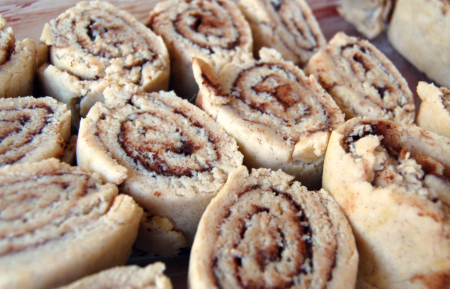
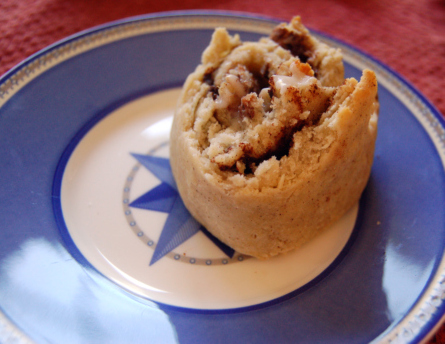
My kids saw these cinnamon rolls in Artisanal Gluten-Free Cooking and begged for days and days to make them. I usually save my cooking energy for meal-making, but the kids were determined, so we gathered ingredients and gave them a whirl.
Here’s the recipe on the Bronskis’ blog, No Gluten, No Problem.
As these things go, they were not all that hard to make. As usual with GF baking, the dough is a bit trickier to handle, but rolling it out between sheets of plastic wrap, as instructed, helped a lot.
When you roll the dough into a long tube, you can kind of pull the plastic out from under the dough, and it rolls together quite nicely.
We cut the sugar by about 1/3 cup and didn’t miss it because of the sugar glaze. They didn’t rise much (at all?), and the texture was a bit more like shortbread than a traditional cinnamon roll. As a friend pointed it, that’s probably because of all the butter! That said, they were a big hit with everyone, gluten-free or not, including my parents.
Two thumbs up for these. I’m sure we’ll make them again when we have the time. For more of my cooking posts, click here. For those of you who aren’t gluten-free, don’t worry, I’ll still be posting all kinds of meals, not just GF baking.
Coming up: some craft and sewing posts. Oh, and we just saw two movies worth watching. One, for grown-ups: The Best Exotic Marigold Hotel, with Judi Dench and Maggie Smith. The other, for kids: Dolphin Tale, inspired by the true story of a dolphin who got a prosthetic tail after losing hers to amputation. Our kids love animal movies and are extremely sensitive to anything scary. After a little coaxing past the beginning injury scene (not very graphic), it went over very well.


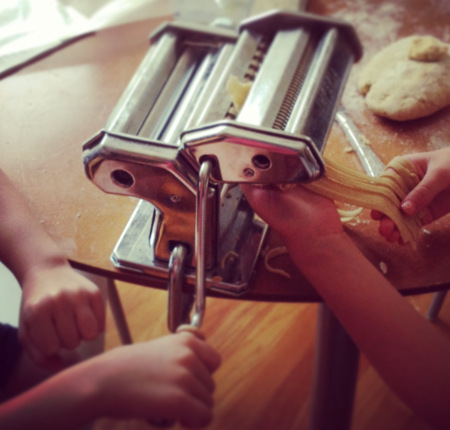
We were going to go to the pool, but it was thundery. So we pulled out our pasta crank and got going on our first try at gluten-free homemade pasta.
Hubs got me Artisanal Gluten-Free Cooking as a gift not long ago, and though I’d looked at its lovely pages many times, I’d never tried anything from it. Now that we’ve got two gluten-avoiders in the house, though, I’m more inclined to try gluten-free baking and such. The book has a special gluten-free flour blend recipe. You make a big batch of it and keep it in the fridge for all sorts of recipes.
I’ve made regular pasta with the crank a few times. The gluten-free version was definitely more challenging, and the results, while yummy, aren’t quiiiite the same. Everyone ate it enthusiastically, though, and fought over who got the last bits. I’m sure it will be easier and better the next time. The kids did a great job, but my patience was definitely wearing thin by the last few cranks.
Click here for a similar recipe by the cookbook authors. Hubs and I ate the pasta with basil and walnut puree (same ingredients as in the last post, just adding walnuts. Yum! The kids are begging to try the cinnamon rolls (from the book) next.
For more of my food posts, click here. Have a great weekend!


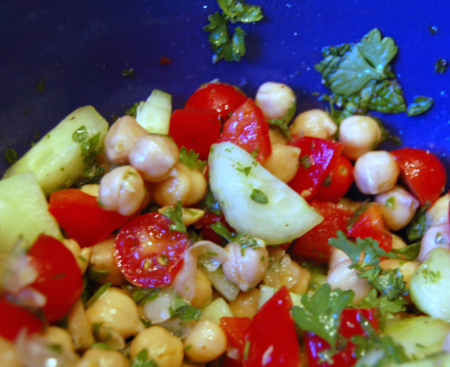 This is really more of a suggestion than a recipe. As I may have mentioned, I’m not doing wheat these days (long story), and in general I’m trying to eat more veggies and fewer grains. I miss my tabbouleh, though (usually made with bulghur wheat).
So, I changed up Mark Bittman’s tabbouleh recipe from How to Cook Everything Vegetarian. Instead of bulghur wheat, I used a can of rinsed chickpeas, then added chopped cucumber and tomato as well. If you do dairy, you could add feta. Mmmmm…
As usual, the full-of-fresh-herbs dressing is the key ingredient, and it tied everything together nicely. Even got a thumbs up from the hubs. I planted a whole hedge of parsley this year and have been so, so happy to have it for salads like this. It’s really easy to grow from seed (basil, too).
For more of my recipes and cooking posts, click here. You’ll notice I seem to have a thing for chickpeas.
What about you? Made any interesting salads lately? My new herb garden is keeping me inspired.


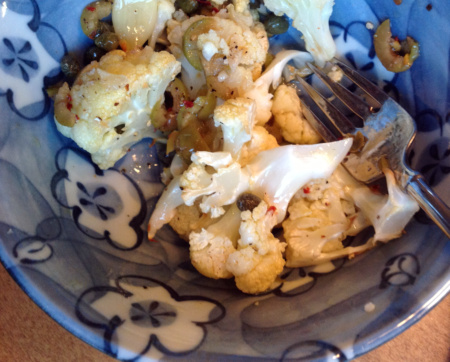
I’m on a cauliflower kick, what can I say? I seem to be eating a lot of it, roasted, with various toppings. I think it’s because my friend Laurel mentioned it, then it was in the paper (something about a cauliflower trend—yes I still read a paper paper) and then I just couldn’t get it out of my head.
Besides cutting out wheat, I’m avoiding large servings of grains in general, so the idea of something mild and non-grain that takes flavors very well —–a sauce depository, if you will—-is very appealing. I was never a huge fan of cauliflower in the past, but I think, as with many veggies, I just had to find my favorite cooking method. Roasting wins.
Roasted Cauliflower
First, preheat the oven to 375F. Slice the cauliflower into pieces about 1/4 inch to 1/3 inch thick, brush with olive oil and roast for about 20 minutes (just like the broccoli here). If you’re going to make the vinaigrette below, throw in a clove or two of garlic and roast them while you’re at it.
When the cauliflower is tender but still firm, with browning on the edges, it’s done. At least, that’s the done-ness I like.
At this point you could serve it with any number of sauces or toppings: peanut sauce? bread crumb/ nut topping? curry?
I made this vinaigrette in homage to a bread dipping sauce from a favorite restaurant, Passion8 Bistro in Fort Mill. Charlotte area friends, seriously, you MUST go there. It’s this funky little farm-to-fork place in the middle of nowhere. Besides great food, it has loads of character.
But I digress.
The vinaigrette is a loose combination of:
Olive Oil
Roasted Garlic, minced
Chopped Olives (I used green ones but kalamata would be excellent)
a spoonful of Capers
a judicious amount of red pepper flakes (I’m addicted)
Red Wine Vinegar
Salt and Pepper to taste
I usually do a little more olive oil than vinegar and just add however much I like of the rest of the stuff, to taste.
Charlotte friends, I feel compelled to mention a couple of places we’ve eaten recently that, in addition to Passion8 Bistro, were just outstanding.
- The King’s Kitchen (which is owned by the same guy that owns Roosters, which I also love) is outstanding—-sort of re-imagined upscale meat and three, and btw it’s non-profit, which is totally fascinating and you should read about it on their website. I had the hangar steak. Yum!
- Doan’s Vietnamese Restaurant: try the hotpots!! It’s like a Vietnamese broth fondue. So excellent and fun. Best tomyum broth I’ve ever had.
- And one more: Zeitouni’s Mediterranean Grill at Toringdon in Ballantyne. Seriously, how did I not get a clue about this place earlier? The falafel is TO DIE FOR!
Okay, that’s a lot of exclamation points, but really, it’s been good dining lately. What about you? What’s got you inspired in the kitchen/ out to eat lately?


By: Emily Smith Pearce,
on 3/13/2013
Blog:
Emily Smith Pearce
(
Login to Add to MyJacketFlap)
JacketFlap tags:
dairy-free,
Food,
Recipes,
cooking,
recipe,
dinner,
vegetarian,
healthy,
vegan,
gluten-free,
vegetable,
Add a tag
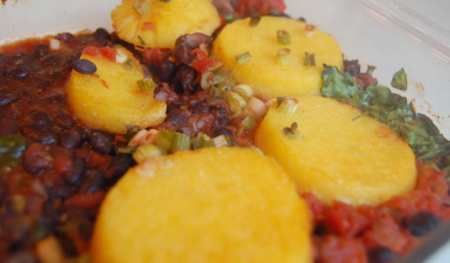
I threw this together the other night when I needed something pretty quick and had to use what I had on hand. It was a perfect easy supper.
It’s inspired by Rachael Ray’s Calabacitas Casserole, which is yummy but more involved, with no beans. I once had it at my sister-in-law’s house, and was immediately sold.
My casserole is based on three main ingredients: black beans, salsa, and pre-cooked polenta. Anything else is icing on the cake.
Quick Black Bean and Polenta Casserole
Measurements are approximated. What you want is enough salsa to give the beans plenty of flavor.
2-3 cups canned or pre-cooked black beans, drained (I used up leftovers I had cooked the day before)
1/2 to 1 jar chunky salsa (I used Herdez salsa, which was great, but would’ve been better semi-drained. I think semi-drained Ro-tel would also be excellent, and maybe even Mexican-style stewed tomatoes)
1 tube prepared polenta, sliced into 1/3 inch rounds (you could also cook your own, then chill and slice)
Olive oil
Optional add-ins: diced scallions, cilantro, chopped veggies, spinach, cheese
Preheat oven to 375 F. I made a smaller version of this (since it was just for me) and cooked it in the toaster oven.
Place the beans in an oiled casserole dish (maybe 8 x 8), and add enough salsa to suit your taste. You want a little less salsa than beans, but enough salsa to add lots of flavor. Lay the polenta rounds on top and brush them with a little olive oil.
Bake for 35 minutes or so at 375 F, then add, if you feel like it, a handful of spinach and chopped scallions, and turn up the heat to 400 F. When the spinach is wilted, the polenta is getting crispy, and the beans are bubbling, it’s done.
The polenta adds structure and has such a great creamy/ crispy texture that I really didn’t miss having cheese. This one will definitely go on my repeat list. I think I’ll add more spinach next time and maybe cilantro. Hmmm…what about sweet potato?
For more of my recipes and recipe trials, click here.
You have less than a day left to join the giveaway for a gorgeous Dawn Hanna print. Details here. All you have to do is comment about which print is your favorite—-you won’t be added to a mailing list. Just enjoy!


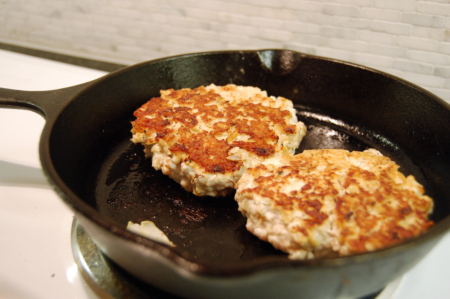
You may think I’m a vegetarian from all my veggie posts, but I DO eat meat. Just not a lot of it. More on that here.
We love burgers around here, but I’m always trying to get my people to eat ones that don’t involve red meat. The turkey ones always seem to need a bit of doctoring, in my experience. I love the Mar-a-Lago burgers championed by Oprah, but really, they’re just too much work for a weeknight and the flavors, while delicious, don’t really go with our favorite toppings (like ketchup and pickles).
These are a good compromise, and, with a few recent tweaks, they’ve entered into that rare realm which is the full-family-seal-of-approval. Like, all four members. I’m probably jinxing that status just by typing this, but I’m willing to risk it, just for you.
My recipe is adapted from this one.
Favorite Turkey Burgers
1/2 cup rolled oats*
1 1/2 pounds ground turkey (I use breast meat)*
3 TB mayonnaise
1/4 to 1/2 cup chopped onion (the finer the better, in order to trick the kids)
1 TB Worcestershire sauce
dash of hot sauce
good sprinkling of sweet paprika
a judicious amount of ground pepper
1. If your turkey meat is fairly dry, moisten the oats with about a tablespoon of water and let rest for a minute or two. If the meat has a fair amount of water content already, skip this step.
2. Combine with other ingredients. I hate doing this with my hands so I use two big spoons. Mix just enough to get it well-combined and make into patties.
3. You can grill these, but I find it’s actually a lot easier to cook them in my cast iron pan on the stove. They fall apart easily on the grill. I cook them at medium low for several minutes on each side to make sure they’re all the way done. This way the outsides don’t burn. Check to make sure there’s no pink.
4. Add toppings and enjoy!
*So, like many turkey burger recipes, the mother recipe called for bread crumbs. Since I’m not eating wheat, I could use GF bread crumbs, but I decided instead to try oatmeal. Bingo! Totally works and in fact is an improvement in my book.
*Last night I discovered I had a pound of turkey, not a pound and a half. The whole mixture was gooey (ew!) so I added a second half cup of oatmeal. I was a little nervous about the gamble, but they turned out great, with no comments from the peanut gallery. And as a bonus, they used less meat.
One question I have for you—-all turkey burger recipes seem to have something like mayo in them for, I guess, texture and flavor. Do you think the mayo nixes the health benefits of changing to turkey meat? Do you think I could skip it?
And one more question: anybody have a fantastic gluten-free vegan burger recipe? I know, sounds like a tall order, but I’m totally convinced there’s one out there. So far I haven’t done any trials, but let me know if you’re ahead of me.
For more recipe trials and food posts, look here.


Yep, this is just the same pancake batter (Ben’s Friday Pancakes from Feeding the Whole Family) made into waffles. No changes at all except cooking method. They turned out really well. Great texture and flavor. Gluten-free if you use gluten-free oats. Yum!
In other news, I’m still plugging away at the character exercises on my novel. On a whim, I decided to organize all the documents related to this novel. Over a hundred documents! Seems like it should be finished by now, but there’s so much more to do.


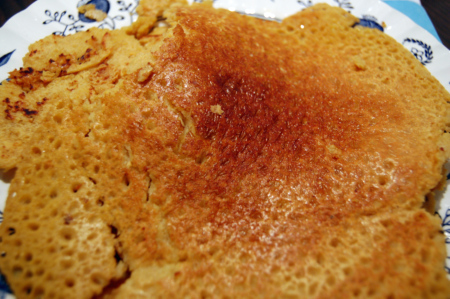
I started making these a few years ago when we were going through a no-wheat exclusionary diet for my son. I thought the kids might balk at the thought of pancakes made out of chickpea flour, so I just told them they were “salty” pancakes, and the name stuck. Three of us really like them. My son is now going through a phase where he’s rejecting everything, but I still make them. They’re a quick, pantry-friendly meal, and I love that the protein and fiber from the beans goes down so easily.
The recipe is here, though there’s also one in Mark Bittman’s How to Cook Everything Vegetarian. He also has one for chickpea fries that I’ve never tried, but it sounds divine.
A few notes on the recipe. You’re directed to cook the pancake partly on the stove and partly in the oven, using an ovenproof pan. Maybe my technique is lacking, but that method has never worked for me, and I cook them much like other pancakes, flipping over in the pan. Sometimes they do fall apart (don’t make them too big) but they taste good even when in bits.
Germany friends: you can find chickpea flour at Denn’s Bio and Alnatura. I’ve found the chickpea flour here in Germany to be a bit coarser than the American kind. The coarse flour makes for a slightly different (but still good) texture. You will probably need to add more water to the batter than the recipe calls for in this case. It should be about the same consistency as regular pancake batter.
I usually serve the pancakes plain with some freshly ground pepper on top and veggies on the side. The recipe says you can serve with sliced onions, which I’m sure is delicious, and I’m thinking they would also be great topped with fresh tomatoes or feta lots of other things. Enjoy!
Here’s a photo of the batter in the pan:


6 Comments on
Chickpea Pancakes (Socca), last added: 3/7/2012





 , James Marshall's sweet and funny book (the first in a series) about two best friends.
 , or Bert and Ernie. Despite misunderstandings, their friendship is what holds them together.
I made black bean burgers from a youtube demo and loved them. Never watch any of the shows – so sorry – I’m not help with that. Look forward to seeing your patchwork.
Yep, I’m a bean burger believer now. Patchwork coming soon…..