new posts in all blogs
Viewing Blog: Plot Whisperer for Writers and Readers, Most Recent at Top
Results 1 - 25 of 654

A blog about story, character and plot structure.
A writer by night, by day I help other writers achieve their dreams of completing a worthy project.
Statistics for Plot Whisperer for Writers and Readers
Number of Readers that added this blog to their MyJacketFlap: 13
Striving always toward full integration of the logical - linear and analytical with the intuitive - creative and imaginative, I've united those parts in a lovely new website! Come visit me!
 MarthaAlderson.com
And, a lovely new blog as part of the site.
MarthaAlderson.com/Plot-Whisperer-Blog/
For plot tips and tricks, resources and workshops, personal inspiration and transformation, subscribe to my new blog and check out my two new programs. Well, one new and one a re-filming.
See you there!
Dictionary definition of Imagination:
- The capacity to form a picture in your mind of something that you have not seen / experienced / isn't real
- The skill of thinking new things
- Something that exists or happens in your mind
Does imagination come from our minds? Is it a brain-based skill? Or, does it come from outside of us like the muse? To embrace the miraculous demands an openness to all possibilities and a whimsical imagination.
In today's world, we often use our imaginations to imagine the worst. We're dissuaded from being led by fancy and persuaded to follow reason. In fear of appearing childish, we overrule our imagination with logic.
Writers benefit from a vivid imagination. An inward journey takes you back, back before any wounding, all the way back to the imaginations of our innocence. Imagination opens us to embrace all choices, alternatives, solutions. Suddenly, we're surrounded by the miraculous.
If my 95-year old mother believed the vision of birds in a far-off nest impossible and improbable because of her macular degeneration, the vision disappears. That she has an openness to the impossible and amazing, astounding, remarkable, extraordinary, incredible, unbelievable, sensational, and even what could be viewed as highly improbable and extraordinary, she experiences a miracle. The blind seeing.
Swirling thoughts as I film the next exercise for:
Led by intuition, inspiration and enthusiasm, I wade deeper into the spiritual waters of creativity. Join me!
This is the year you start believing in miracles… again and, like my mom, daily live the wonder of birds fly to and fro a distant tree.
COMING SOON!All Inclusive Special Offer$9.99 2015 Plot Whisperer Beta-Membership includes BOTH: ~~~~~For plot help and resources throughout the year:
1) The Plot Whisperer Workbook: Step-by-step Exercises to Help You Create Compelling Stories2) The Plot Whisperer: Secrets of Story Structure Any Writer Can Master3) The Plot Whisperer Book of Writing Prompts: Easy Exercises to Get You Writing
Click for the
New and Improved version PlotWriMo
This is your year! If you've been thinking and thinking and thinking about writing a novel, memoir, screenplay… this is the year to stop thinking and time to start writing.
Lots of people believe you're either born to be a writer or you're not. I believe that we all have stories to tell and, by writing consistently and studying the craft of plot, we each have the ability to write those stories.
Some writers struggle finding and developing the plot and design of their stories. I also work with writers who struggle finding the confidence and belief in their imaginations to actually embark upon the epic journey writing takes us.
Next week I launch two programs, one revised and one new:
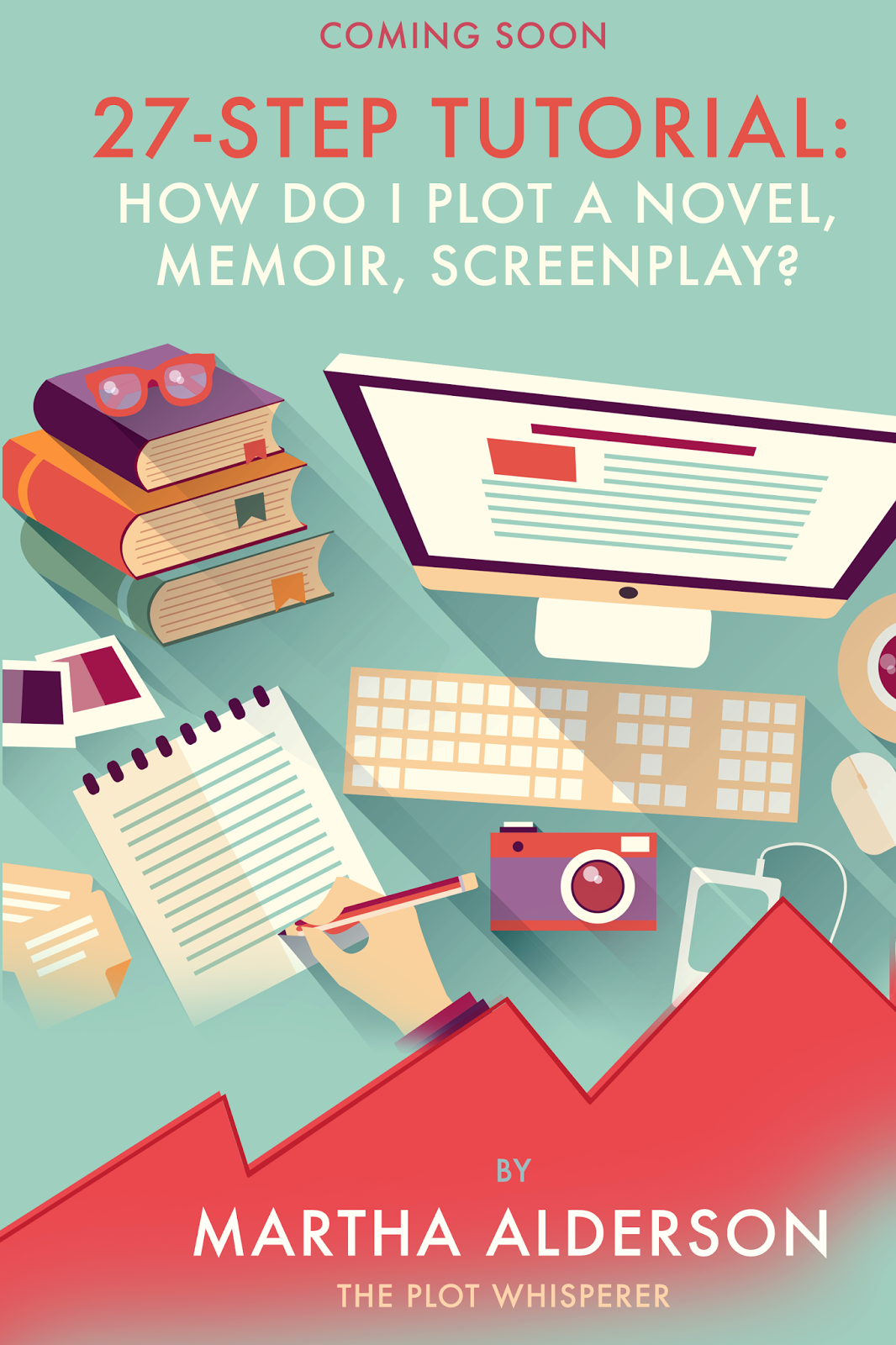
- 27-Step Tutorial: How Do I Plot a Novel, Memoir, Screenplay?
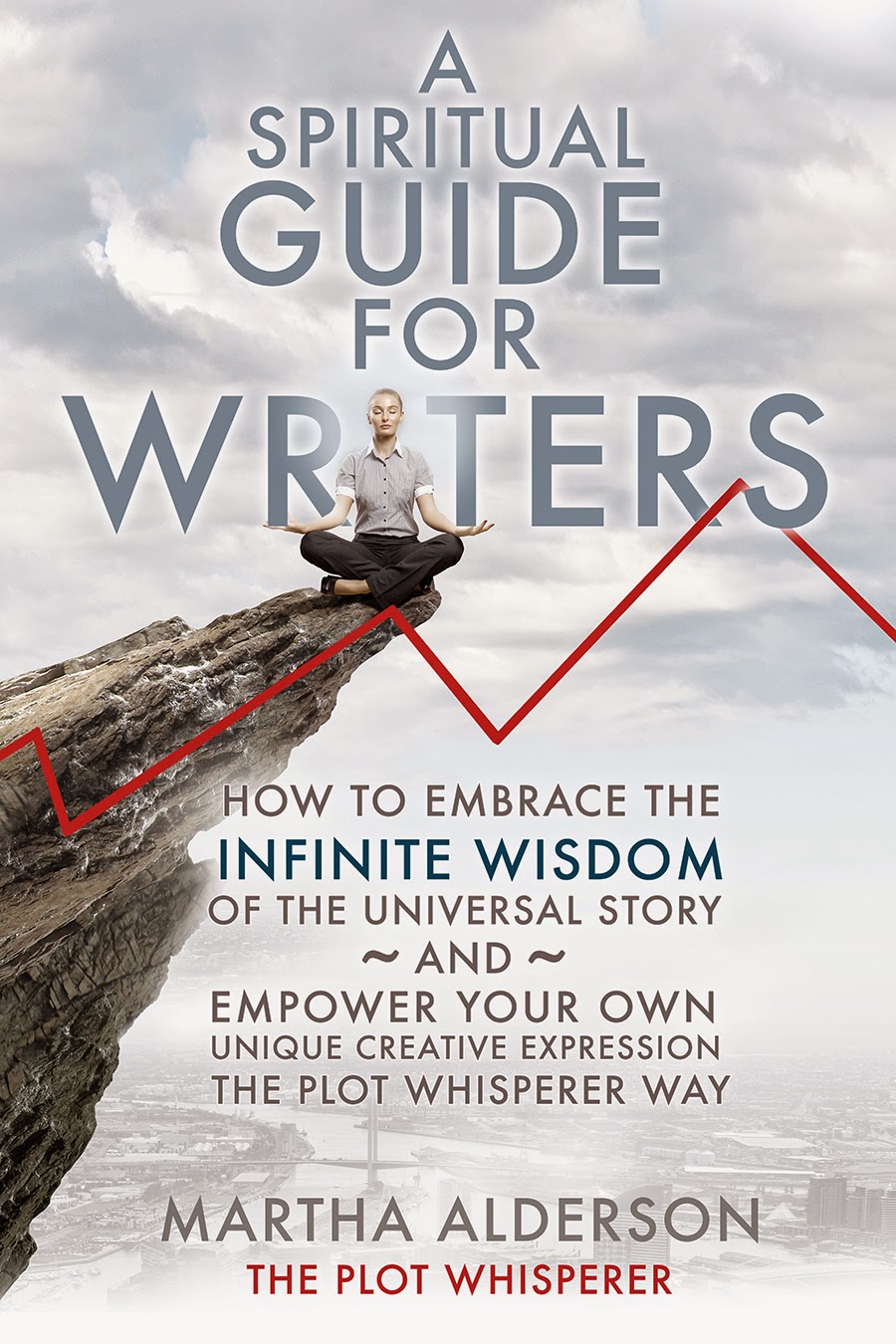
- The Spiritual Guide for Writers: How to Embrace the Infinite Wisdom of the Universal Story and Transform Your Own Unique Creative Expression the Plot Whisperer Way
Now, whether you're held back because you don't know how to proceed or you're held back by fear (or both), I've got the programs to help!
Check back next week when both programs become available.
COMING SOON!All Inclusive Special Offer$9.99 2015 Plot Whisperer Beta-Membership includes BOTH: ~~~~~For plot help and resources throughout the year:
1) The Plot Whisperer Workbook: Step-by-step Exercises to Help You Create Compelling Stories2) The Plot Whisperer: Secrets of Story Structure Any Writer Can Master3) The Plot Whisperer Book of Writing Prompts: Easy Exercises to Get You Writing
Click for the
New and Improved version PlotWriMo
From years of working with writers and teaching about the Universal Story I've come to believe that we’re all on the same transformative journey, child, adult, all of us together. Without a map of the journey, we're often left reeling, feeling slapped by life and confused. I have that map and I'm eager to share it with you.
- Step away from the drama swirling in life
- Understand how your own personal story alignes with the Universal Story
- Appreciate the forces both supporting and interfering with your success
- Recognize the deeper meaning behind your reaction to situations
- Identify the significance of friends and foes in your life
- Discover how you trip yourself up
Awareness of the Universal Story brings a more intense consciousness of:
- your purpose
- the words you speak
- the schedules you create
- your habits and behavior
This universal rhythm is the undercurrent of every breath you take, every story you tell yourself, and all the stories you write. Learn to refer to it when you find yourself mired and lost or simply when you are curious about where you are and where you are headed or, at least, the general direction you are moving.
COMING SOON!All Inclusive Special Offer$9.99 2015 Plot Whisperer Beta-Membership includes BOTH: - The Spiritual Guide for Writers Video Program
- 27-Step Tutorial: How Do I Plot a Novel, Memoir, Screenplay Video Program
~~~~~For plot help and resources throughout the year:
1) The Plot Whisperer Workbook: Step-by-step Exercises to Help You Create Compelling Stories2) The Plot Whisperer: Secrets of Story Structure Any Writer Can Master3) The Plot Whisperer Book of Writing Prompts: Easy Exercises to Get You Writing
Click for the
New and Improved version PlotWriMo
The original
The 27-Step Tutorial: How Do I Plot a Novel, Memoir, Screenplay?, viewed over 160,000 times, sprang out my passion for teaching plot, my first book
Blockbuster Plots Pure and Simple and all the workshops and retreats and conferences I've taught.
I was offered a contract to write
The Plot Whisperer: Secrets of Story Structure Any Writer Can Master mid-way through filming that series and the tutorial helped shaped that book. As one 5-Star reviewer commented on Amazon: An understanding of the plot development trajectory of classic and award-winning stories reveals an "undeniably consistent pattern - the bones that make up the skeleton of virtually every irresistible tale."
The reviewer goes on to say: "As a former educator [Alderson] is adept at moving students beyond abstract concept to the tangible and concrete. For me it was like the plotting lightbulb flickered from 15 incandescent watts to 200 halogen. Amazing and totally exhilarating!
Because of the series popularity, I felt you deserved less external distractions and a cleaner presentation.
I'm re-filming the series now. If you'd like to follow along as I film all 27 steps to plotting a novel, memoir, screenplay, I'm offering a beta-membership in mid-January.
COMING SOON!All Inclusive Special Offer$9.99 2015 Plot Whisperer Beta-Membership includes BOTH: - 27-Step Tutorial: How Do I Plot a Novel, Memoir, Screenplay Video Program
~~~~~For plot help and resources throughout the year:
1) The Plot Whisperer Workbook: Step-by-step Exercises to Help You Create Compelling Stories2) The Plot Whisperer: Secrets of Story Structure Any Writer Can Master3) The Plot Whisperer Book of Writing Prompts: Easy Exercises to Get You Writing
Click for the
New and Improved version PlotWriMo
When you give birth to the dream of writing a novel, finishing a screenplay or publishing a memoir, you travel the same journey your protagonist does.
The journey offers the gift of transformation, one that is often deep and profound.
Though writing a novel, memoir, screenplay can takes years, on a traditional Native American vision quest, one spends several days and nights alone in nature. This solitary time in nature connects fundamental forces and spiritual energies of creation and self-identity to reveal profound insight about yourself, your story, your purpose and destiny in life and the world around you.
Whether you're in the flow of writing a story or stalled and blocked, there comes a time in all of our lives when you feel pushed to separate from all you know and wander off alone in search of meaning. People of all ages undergo this powerful journey.
A map comes in handy. I have that map and I'm eager to share it with you.
- Are you standing at a turning point uncertain which way to go?
- Is the view around you muddy?
- Days drag?
- Going through the motions?
- Wondering where you lost your passion?
I invite you on a vision quest with the help of the Universal Story. Like most vision quests under the guidance of an elder, I serve in that capacity. I use many of the same ideas I developed to help writers create a compelling plot for their stories to help you reconnect to your intended spiritual and life purpose.
The wilderness we travel together isn't in a forest or by a secluded lake. Our journey is an inward one taken wherever you feel a sense of safety. You won't be asked to be sleep deprived or shut in a small room to commune with the other side. Simple exercises are designed to take you there in the room you're sitting in. You won't be asked to fast and wait for a Guardian animal or force of nature to provide you with a vision or dream and give guidance for your life. Following the exercises at your leisure accesses a spiritual communication and forms new insights into your life and thoughts and choices. You'll connect to the creative force, find truths and feel enlivened again and enthusiastically passionate about your life and your story.
In the end, you'll returns to your old life transformed and with a new direction in life which will cause all those around you to shift and change as well.
COMING SOON!Special $9.99 2015 Plot Whisperer Beta-Membership includes BOTH: - The Spiritual Guide for Writers Video Program
- 27-Step Tutorial: How Do I Plot a Novel, Memoir, Screenplay Video Program
Details to follow...
The trick to starting off the new year on more solid-footting, begin now.
1) Think about how you'd like 2015 to be for yourself personally (I appreciate how difficult the task to separate yourself out from your family and friends and community at large. For this exercise, try). If the entire year feels too daunting, visualize simply the very best January you can imagine.
2) Write a long-term - 21day -- goal of the skill(s), belief(s), ability(s), habit(s) you wish to take into the new year that best serves your vision. Write the 21-day goal in the present-tense.
3) List specific steps you plan to take, starting today, to position yourself in the direct light of your vision for 2015.
4) Schedule and mark the next 21-days on your calendar the specific steps on your list:
- daily writing
- sitting at your computer for 5-minutes
- unplugging 3 times a day from negative emotions to positive affirmations
- 21 days with a Plot Planner and 10 minutes daily questioning your characters, twisting the action and mining the meaning
- making a Plot Planner for your life with your goal at the highest point (see the Plot Tips banner) and working backwards for what to do daily to move one step nearer to your glory in 21-days.
5) Everyday, check off another success on your calendar. Turn to 2015. On January 4th, greet the new year changed and better aligned with your vision of the future.
In early November, I wrote about Characters in Action-Driven Novels and Those in Character-Driven Stories.
A few nights ago, engrossed in The Hundred-Foot Journey directed by Lasse Hallström from a screenplay written by Steven Knight and adapted from Richard C. Morais' 2010 novel The Hundred-Foot Journey, I was struck how perfectly Hassan exemplifies the character-driven profile while Papa Kadam assertively personifies the action-driven profile.
1) Reflective of a character-driven character profile
Hassan, before moving on when faced with failure / challenges / obstacles :
- Slows down
- Reflect how he's doing while being sensitive to others
- Evaluates his behavior and reactions
- Examines at what went wrong from all angles
- Learns from his mistakes
2) Reflective of an action-driven character profile
Papa Kadam, on the other hand, classically impulsive and, when faced with failure / challenges / obstacles (until the very end):
- Doesn't stop to evaluate what went wrong
- Thinks less
- Acts / reacts faster
- Multi-tasks
- Focuses on the achieving the goal not how his behavior affects others
Seven years ago, I began offering the beta version of PlotWriMo for novelists who were word drunk from NaNoWriMo. Over the years I continued refining and perfecting the steps to help writers revise all those words generated in November into a compelling story with a plot (and all other novelists and memoirists and screenwriters alike struggling to create a pleasing stories for readers).
Earlier this year, I partnered with
Jill Corcoran and incorporated her insight and love of concept and knowledge about the inside of publishing into entire video series of the program. The feedback and "ah ha" moments we have received have been enormously rewarding and makes all the time and hard work worthwhile.
Sample of incredibly gratifying "ah ha" Moments from Writers Using PlotWriMo to Revise their Stories"Now, what did I learn from the videos? Goodness, what did I not? It's all about the structure. Being a pantser doesn't work when you are revising (Not sure it would work for me - ever), but you have to be clear in your journey. I also learned to forgive myself. To keep writing. And that we can learn from our mistakes and become better writers."
"Jill (video 4, I think) explained what agents meant when they say "They didn't connect" and it was like a lightbulb had been screwed in my head-- I failed to meet all of the essential elements of a scene. There was always something about my former MS that I could never pinpoint that felt off, and that was just it! I needed more emotional development, conflict/ tension, dramatic action and clear goals PER scene."
"I watched the Revise Your Novel in a Month videos and really began to understand the difference between crisis and climax and the key ways to develop each part of the plot."
"PlotWriMo is the closest “formula” for structuring a book I’ve ever discovered. It’s like an algebra equation for writing – if you’re missing any of the energetic markers you can’s solve for X."
"It’s helped me re-envision my own work and I can’t stop myself from dissecting every movie and book I’ve read since."
"I've learned a lot through the PlotWriMo series. I've always struggled with revision, but the PlotWriMo series has helped me organize my revision so that I am going deeper than I ever have before at making my story shine."
"I watched PlotWriMo and learned about EMs, concept and that the antagonist OWNS the middle."
“Ah, ha” Moment: The exercise of writing down all of the themes, and getting down to the grittier ones. And when I found my darker theme was about loss, and the threat of losing someone you love. I couldn’t believe when I went back and looked at the Energy Markers and found that common theme. I’m working on deepening the scenes with metaphors and thematic significance."
"Don't start drafting until you're happy with the concept and markers."
"As for what I learned, viewing both the crisis and the climax from my antagonist’s point of view gave my story dramatic action and the depth it needed to bind the story and pull in the reader."
"Yet my greatest aha moment came with the challenge of writing the concept, giving my story definition. As a young woman I took my family on some exciting adventures, wounds and all, and the only dream still intact in the end was my passion and desire to be a writer. I couldn’t just throw out my concept because it wasn’t good enough, or my life wouldn’t be either. Crafting my concept, meant validating what I had done and why, all the parts and pieces."
"I really had an "aha moment" when Martha Alderson talked about the end mirroring the beginning."
The icing on the proverbial cake is all the great success we hear from writers like the one writer who secured an agent (having the amazing opportunity to chose from 3 offering her contracts). As she writes: "No word of lie - it is absolutely thanks to Jill Corcoran and Martha Alderson! The last round of revisions changed everything! I just thank god I have the videos and future classes for other books! I have worked like a dog on this book, but the videos and Martha's book really changes everything. The advanced workshop kicked my butt in the best way possible and made me really rethink some things and made the work so much better!"
Universal is characteristic of the whole, covering the entire collective, everyone and everything.
Story is an account of events in the evolution of something.
The Universal Story embodies both these parts. An account of events in the evolution of something characteristic of the whole.
With no true beginning and no end -- though we often believe we can pinpoint the moment a new life is born, the true end of life -- when you begin writing a story, you jump right into the middle of the universal flow of things and fly in the current. Coming into existence, bound up and separated from all you know a struggle ensues. Finally free, transformation happens.
The Universal Story flows endlessly. Within the collective, each moment, each scene, every life begins, struggles and grows, transforms and dies off. Beginnings, middles and ends, each part of the whole. The Universal Story sends all our stories, all our lives spiraling upward, evolving, transforming and dying off.
I teach writers about the Universal Story with Plot Planners to better see the whole of of their stories and how each scene fits into the collective of the Universal Story.
Each of us benefits from considering our own personal stories and lives against the backdrop of a broader reality and the Universal Story

By: Martha Alderson, M.A.,
on 12/12/2014
Blog:
Plot Whisperer for Writers and Readers
(
Login to Add to MyJacketFlap)
JacketFlap tags:
Dramatic Action,
Character Emotional Development,
antagonists,
plot twists,
energize your story through thematic significance,
4 energetic markers,
New England horror writers NEHW,
the shadow in stories,
Add a tag
The straight and well-defined line of the Plot Planner is an attempt to control the twistier and often blurry reality of the Universal Story. Plot twists engage readers. Each time the dramatic action twists in an unexpected (and carefully foreshadowed) direction the protagonist is forced to define new goals and perform difficult tasks, pointing the reader in the direction of her true goal.
At each of the
4 Energetic Markers, imagine and list five horrible
antagonists that create five most horrible events. Look for people and action that feel the most thematically true to the protagonist's ultimate transformation AND that twists the story in a new (and carefully foreshadowed) direction. The Plot Planner guides the direction and degree of story intensity and provides a place for expansion. Each horrible thing broadens the readers appreciation of the protagonist's sense of self beyond the limitations of what was currently visible in the story.
The New England Horror Writers (NEHW) just today followed me on Twitter, @NEhorrorwriters and RTed one of my tweets to their followers. I followed back with the comment how horror writers penetrate our deepest fears and bring darkness to light.
In real life most of us run from the dark. We're afraid of the unknown and always looking for the light or dulled to an ashy grey. We deny our feelings and our protagonist's their shadows. We attempt to navigate the straight and narrow line of the Plot Planner, afraid of losing control of the story and falling into an abyss.
The braver you are, the bigger your story. Rather than confuse the reader, each plot twist spins the story deeper into the darkness of what haunts the protagonist, urges her to take heart and gather her courage for her next defined test of initiation and, in the end, brings the light and her true personal power.
At each step deeper, name the emotion. Search for the truth in the emotion. Convey that step, that emotion in an active, energetic and meaningful way, fulfilling the three major plot lines:
Character Emotional Development Plot -- emotion
Dramatic Action Plot -- steps taken / resistance met
Thematic Significance Plot -- defines that action / the meaning of her emotion
At each twist and turn and dark thing that happens as she pursues lofty ideals define her next specific short-term goal. Imagine the next horrible thing, obstacle, challenge, demon she meets. Foreshadow and twist the forward action in yet a different direction that affords a new view of her. Show emotions thematically true to her.
Each time an antagonist twists the story in a new direction, the protagonist defines a new goal like an arrow flying in the direction that brings forward her true purpose, releases power and provides her the freedom to conquer her fears and align with the final confrontation in her willingness to transform.
For more on plot twists
:
1) The Plot Whisperer Workbook: Step-by-step Exercises to Help You Create Compelling Stories2) The Plot Whisperer: Secrets of Story Structure Any Writer Can Master
I'm almost sad to have the blog tour end! It's been such fun visiting author's blogs and gratifying reading all the lovely testimonials and hearing how PlotWriMo: Revise Your Novel in a Month has positively affected writers' lives.
Today we have 1 blog for you from someone I admire (likely you can guess why based simply on the name of her blog!)
Christine Sang Connecting to the Mysteries of Energy (To learn more about
PlotWriMo: Revise Your Novel in a Month and for some "ah ha" moments from writers using the video series to revise their novels, click
here.)For plot help and resources throughout the year
:
1) The Plot Whisperer Workbook: Step-by-step Exercises to Help You Create Compelling Stories2) The Plot Whisperer: Secrets of Story Structure Any Writer Can Master3) The Plot Whisperer Book of Writing Prompts: Easy Exercises to Get You Writing. ~~~~~~~~For as little as $10 a month, watch the videos as often as you wish for an entire year
(and, lots of writers are finding PlotWriMo the exact right resource to help pre-plot for a powerful first draft. Knowing what to look for in a revision helps create a tighter first draft): ~~
View your story in an entirely new light. Recharge your energy and enthusiasm for your writing. 8 videos (5.5 hours)+ 30 exercises
3 bloggers are taking part today on our PlotWriMo: Revise Your Novel in a Month blog tour. Hop on over. Comment to enter and win an observation spot in an upcoming Office Hours.
(Remember to use #PlotWriMo in your tweets about the event.)
(To learn more about PlotWriMo and for some "ah ha" moments from writers using the video series to revise their novels, click
here.)Laurie Edwards Author, Artist, Dreamer Mikey Brooks My Keys on Writing, Illustrating and more Deb Atwood Pen in Her Hand For plot help and resources throughout the year
:
1) The Plot Whisperer Workbook: Step-by-step Exercises to Help You Create Compelling Stories2) The Plot Whisperer: Secrets of Story Structure Any Writer Can Master3) The Plot Whisperer Book of Writing Prompts: Easy Exercises to Get You Writing. ~~~~~~~~For as little as $10 a month, watch the videos as often as you wish for an entire year
(and, lots of writers are finding PlotWriMo the exact right resource to help pre-plot for a powerful first draft. Knowing what to look for in a revision helps create a tighter first draft): ~~
View your story in an entirely new light. Recharge your energy and enthusiasm for your writing. 8 videos (5.5 hours)+ 30 exercises
Having such fun on the blog tour! Love reading everyone's comments and feel incredibly gratified to know how much PlotWriMo: Revise Your Novel in a Month has supported and changed writers lives. I feel like I'm glowing from the testimonials… Join us for revision tips, meet new writers and perhaps win a prize.
Today we have 3 new blogs for you to visit today and comment to win.
Jordan Rosenfeld
Robyn Campbell
Adite Banerjie
(To learn more about PlotWriMo and for some "ah ha" moments from writers using the video series to revise their novels, click here.) (To visit the other participating blogs scroll down to Day #2 and #1 blog posts)
For plot help and resources throughout the year:
1) The Plot Whisperer Workbook: Step-by-step Exercises to Help You Create Compelling Stories
2) The Plot Whisperer: Secrets of Story Structure Any Writer Can Master
3) The Plot Whisperer Book of Writing Prompts: Easy Exercises to Get You Writing.
~~~~~~~~
For as little as $10 a month, watch the videos as often as you wish for an entire year (and, lots of writers are finding PlotWriMo the exact right resource to help pre-plot for a powerful first draft. Knowing what to look for in a revision helps create a tighter first draft):
~~
View your story in an entirely new light. Recharge your energy and enthusiasm for your writing. 8 videos (5.5 hours)+ 30 exercises
We have 4 new blogs for you to visit today on our PlotWriMo: Revise Your Novel in a Month blog tour. Comment to enter and win an observation spot in an upcoming Office Hours. We'd love you to tweet about your participation and use the hashtag #PlotWriMo.
(To learn more about
PlotWriMo: Revise Your Novel in a Month and for "ah ha" moments from writers using the video series to revise their novels, click
HERE.)
The 4 blogs to visit today:
Write Learn Create Connect 1st 10 Pages: 1st Impressions / Final Drafts The Storyteller's Scroll Mostly Fiction For plot help and resources throughout the year:
1) The Plot Whisperer Workbook: Step-by-step Exercises to Help You Create Compelling Stories2) The Plot Whisperer: Secrets of Story Structure Any Writer Can Master3) The Plot Whisperer Book of Writing Prompts: Easy Exercises to Get You Writing. ~~~~~~~~For as little as $10 a month, watch the videos as often as you wish for an entire year (and, lots of writers are finding PlotWriMo the exact right resource to help pre-plot for a powerful first draft. Knowing what to look for in a revision helps create a tighter first draft): ~~ View your story in an entirely new light. Recharge your energy and enthusiasm for your writing. 8 videos (5.5 hours)+ 30 exercises
When: Starting today and running daily through Friday, Dec. 5th
What: Blog Tour for
PlotWriMo: Revise Your Novel in a Month offers tips and ideas for revising your story. Visit new blogs and meet new writers (we'd love you to tweet about your experience on the tour and use the hashtag
#PlotWriMo).
Who: All writers interested in or needing help revising your stories, including writers word-drunk from NaNoWriMo.
Where: Today's 2 participating blogs, please visit and comment to enter to win an observation spot in an upcoming
Office Hours.Writing Classes for Kids and Adults Ink and Angst Writers of Nefarious Plots Why: Revising a novel, memoir, screenplay can be a daunting prospect.
PlotWriMo: Revise Your Novel in a Month offers tried and true methods that have worked for hundreds of writers (for more about PlotWriMo
AND "ah ha" moments from writers who have or are currently viewing the video series, click
HERE).
For plot help and resources throughout the year
:
1) The Plot Whisperer Workbook: Step-by-step Exercises to Help You Create Compelling Stories2) The Plot Whisperer: Secrets of Story Structure Any Writer Can Master3) The Plot Whisperer Book of Writing Prompts: Easy Exercises to Get You Writing. ~~~~~~~~For as little as $10 a month, watch the videos as often as you wish for an entire year
(and, lots of writers are finding PlotWriMo the exact right resource to help pre-plot for a powerful first draft. Knowing what to look for in a revision helps create a tighter first draft): ~~ View your story in an entirely new light. Recharge your energy and enthusiasm for your writing. 8 videos (5.5 hours)+ 30 exercises
Resist the temptation to rush through writing the end just to finish your story. Use wisely the few days that are left to you this month (keep in mind you can continue writing in December to finish your fast draft all the way to the end while at the same time taking part in PlotWriMo).
The beginning quarter of your story informs the end and the end informs the beginning. Forget all you've written of the middle for now. Focus on the how the beginning and the end thematically support each other, how the beginning foreshadows the end and how the end satisfy the intent you established when writing the beginning of your story.
Examine who the character is portrayed to be in the beginning. What could she not do then and what she must do now at the end? How has who she presented herself to be in the beginning changed or transformed and into what?
See you December 1st and the beginning of
PlotWriMo blog tour to re-vision your story.
For plot help and resources throughout the year
:
1) The Plot Whisperer Workbook: Step-by-step Exercises to Help You Create Compelling Stories2) The Plot Whisperer: Secrets of Story Structure Any Writer Can Master3) The Plot Whisperer Book of Writing Prompts: Easy Exercises to Get You Writing. ~~~~~~~~To continue writing and revising (and, lots of writers are finding PlotWriMo the exact right resource to help pre-plot for a powerful first draft. Knowing what to look for in a revision helps create a tighter first draft): ~~
View your story in an entirely new light. Recharge your energy and enthusiasm for your writing. 8 videos (5.5 hours)+ 30 exercises
You've one final week to complete NaNoWriMo, though of course you can keep writing into December and all the way into 2015. Whatever you've written this month has moved you nearer to your goal of writing a story with a plot from beginning to end. Remember to celebrate all you have accomplished rather than moan over what you haven't. Even if you don't get to the 50,000 words, everyone who takes part is a winner.
For now, forget everything other than the final 1/4 of your story. Imagine where you wish your protagonist to be and be doing at the Climax in the scenes or chapter before the very end. Then write to get her there and do what she needs to do to show change or transformation by preforming and acting in ways she couldn't have anywhere else in the story and using what she learned in the middle from all the obstacles and antagonists. (For plot prompts in the final 1/4 of your story and everywhere else:
The Plot Whisperer Book of Writing Prompts: Easy Exercises to Get You Writing. As one writer proclaims: The PW Book of Prompts is my lighted path…)
The end defines the beginning. More important now to write the end than to stay stuck were you currently are. Writing the end will make the revision process that much easier.
Who is she at the end? Write that.
Then join us December 1st on the
PlotWriMo: Revise Your Novel in a Month blog tour (I'll post the schedule here in the upcoming days), glean revision tips, comment and enter to win an observer spot in an upcoming
Office Hours for the opportunity to learn more. We're going on the tour to help spread the word about the benefits of PlotWriMo and how the video series helps you revision what you've written into a pleasing form for your readers.
Good luck and happy plotting… er, writing…
Today I write!
For plot help and resources during NaNoWriMo
:
1) The Plot Whisperer Workbook: Step-by-step Exercises to Help You Create Compelling Stories2) The Plot Whisperer: Secrets of Story Structure Any Writer Can Master3) The Plot Whisperer Book of Writing Prompts: Easy Exercises to Get You Writing. ~~~~~~~~To continue writing and revising (and, lots of writers are finding PlotWriMo the exact right resource to help pre-plot for a powerful first draft. Knowing what to look for in a revision helps create a tighter first draft): ~~
View your story in an entirely new light. Recharge your energy and enthusiasm for your writing. 8 videos (5.5 hours)+ 30 exercises
You're beginning to falter. Tearing your hair out and your story apart. Looking for reasons to procrastinate rather than write. Sighing often. Telling yourself why bother.
Don't worry. It's not you. You're at the Crisis point in the month-long quest to write a story with a plot from beginning to end. Nearly 3 weeks in makes for the 3/4 mark of the month and as you know, the 3/4 mark of anything, according to the Universal Story is the Dark Night -- a time of breakdown for a possible break through.
You're being tested. Writing is not for the faint-hearted. Go for a walk. Meditate. Chant affirmations. Do whatever you need to keep your energy and spirit high. Slog through this time, knowing you're nearly there.
You've heard about people who give up right before something amazing would have happened. Don't let this be you. Persevere! You can do this.
This is also a time filled with great emotion and the need for courage to keep at your passion. Whether you have gathered together with other writers for NaNoWriMo or are persevering alone, the biggest test this month is staying passionately loyal to your goal and not giving up when challenged.
Today I write!
For plot prompts to move your writing everyday and reach each major turning point:
The Plot Whisperer Book of Writing Prompts: Easy Exercises to Get You Writing. To complete write your story in a month, complete 4 prompts everyday. (As one writer proclaims: The PW Book of Prompts is my lighted path…)
For plot help and resources during NaNoWriMo
:
1) The Plot Whisperer Workbook: Step-by-step Exercises to Help You Create Compelling Stories2) The Plot Whisperer: Secrets of Story Structure Any Writer Can Master3) The Plot Whisperer Book of Writing Prompts: Easy Exercises to Get You Writing. ~~~~~~~~To continue writing and revising (and, lots of writers are finding PlotWriMo the exact right resource to help pre-plot for a powerful first draft. Knowing what to look for in a revision helps create a tighter first draft):-
- PlotWriMo: Revise Your Novel in a Month
~~
View your story in an entirely new light. Recharge your energy and enthusiasm for your writing. 8 videos (5.5 hours)+ 30 exercises
By: Martha Alderson, M.A.,
on 11/17/2014
Blog:
Plot Whisperer for Writers and Readers
(
Login to Add to MyJacketFlap)
JacketFlap tags:
blog tour,
prizes,
memoirs,
screenplays,
how to revise,
PlotWriMo: Revise Your Novel in a Month,
revision for novels,
writing a story with a plot and concept,
Add a tag
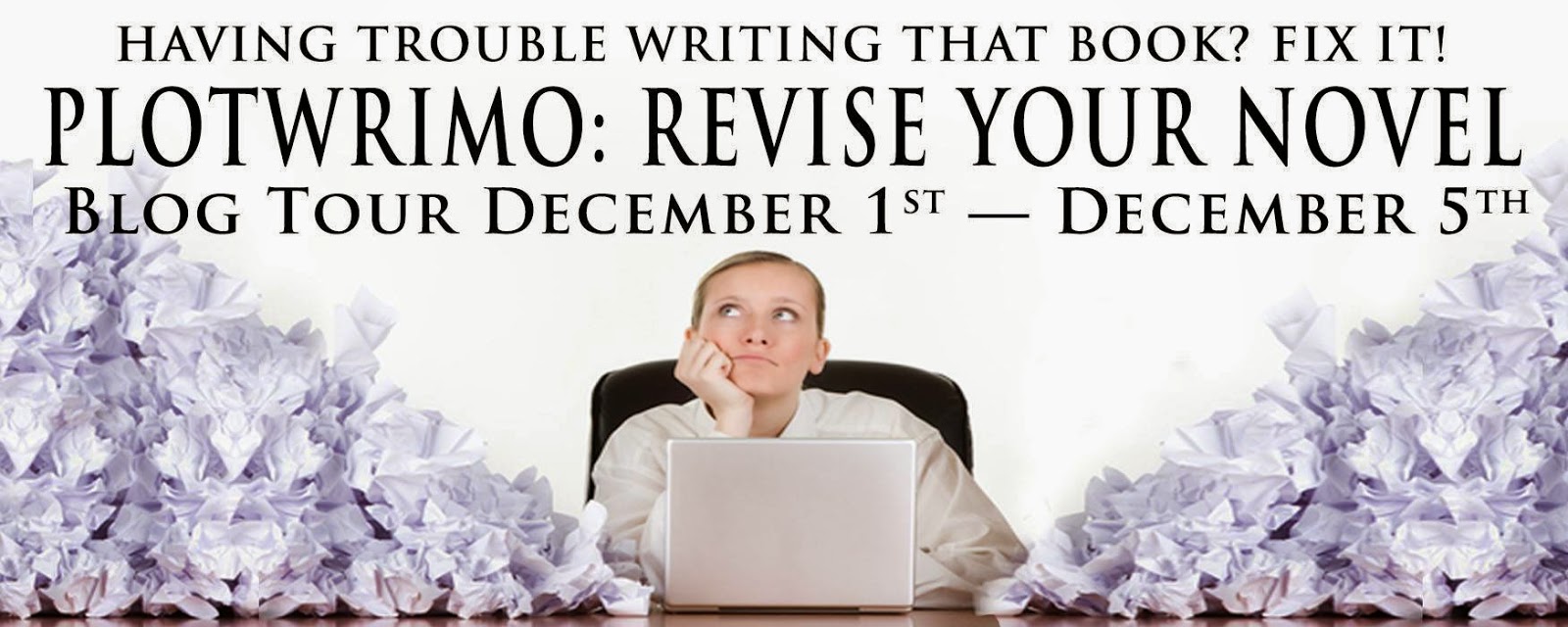
Thanks to a very generous benefactor, we are taking PlotWriMo: Revise Your Novel in a Month on what appears to be developing into a massive blog tour beginning December 1st through the 5th!
Seven years ago, I began offering the beta version of
PlotWriMo for novelist word drunk from
NaNoWriMo. Over the years I continued refining and perfecting the steps to help writers revise all those words generated in November into a compelling story with a plot (and all other novelists and memoirists and screenwriters alike struggling to create a pleasing form for their readers)
Earlier this year, I partnered with
Jill Corcoran who brought her insight and love of concept and knowledge of the inside of publishing. Together we created an entire video series of the program. The feedback and "ah ha" moments we have received have been enormously rewarding and makes all the time and hard work worthwhile.
Sample of feedback:
"Jill (video 4, I think) explained what agents meant when they say "They didn't connect" and it was like a lightbulb had been screwed in my head-- I failed to meet all of the essential elements of a scene. There was always something about my former MS that I could never pinpoint that felt off, and that was just it! I needed more emotional development, conflict/ tension, dramatic action and clear goals PER scene."
"I watched the Revise Your Novel in a Month videos and really began to understand the difference between crisis and climax and the key ways to develop each part of the plot."
"PlotWriMo is the closest “formula” for structuring a book I’ve ever discovered. It’s like an algebra equation for writing – if you’re missing any of the energetic markers you can’s solve for X."
"It’s helped me re-envision my own work and I can’t stop myself from dissecting every movie and book I’ve read since."
"I've learned a lot through the PlotWriMo series. I've always struggled with revision, but the PlotWriMo series has helped me organize my revision so that I am going deeper than I ever have before at making my story shine."
"Now, what did I learn from the videos? Goodness, what did I not? It's all about the structure. Being a pantser doesn't work when you are revising (Not sure it would work for me - ever), but you have to be clear in your journey. I also learned to forgive myself. To keep writing. And that we can learn from our mistakes and become better writers."
"I watched PlotWriMo and learned about EMs, concept and that the antagonist OWNS the middle."
“Ah, ha” Moment: The exercise of writing down all of the themes, and getting down to the grittier ones. And when I found my darker theme was about loss, and the threat of losing someone you love. I couldn’t believe when I went back and looked at the Energy Markers and found that common theme. I’m working on deepening the scenes with metaphors and thematic significance."
"Don't start drafting until you're happy with the concept and markers."
"As for what I learned, viewing both the crisis and the climax from my antagonist’s point of view gave my story dramatic action and the depth it needed to bind the story and pull in the reader."
"Yet my greatest aha moment came with the challenge of writing the concept, giving my story definition. As a young woman I took my family on some exciting adventures, wounds and all, and the only dream still intact in the end was my passion and desire to be a writer. I couldn’t just throw out my concept because it wasn’t good enough, or my life wouldn’t be either. Crafting my concept, meant validating what I had done and why, all the parts and pieces."
"I really had an "aha moment" when Martha Alderson talked about the end mirroring the beginning."
The icing on the proverbial cake was the news that one writer secured an agent (having the amazing opportunity to chose from 3 offering her contracts). As she writes: "No word of lie - it is absolutely thanks to Jill Corcoran and Martha Alderson! The last round of revisions changed everything! I just thank god I have the videos and future classes for other books! I have worked like a dog on this book, but the videos and Martha's book really changes everything. The advanced workshop kicked my butt in the best way possible and made me really rethink some things and made the work so much better!"
The tour begins December 1st through the 5th so if you'd like to add your blog to the tour, please
sign up ASAP. We're using the opportunity to spread the word about writing and revising stories and about A Path to Publishing in general. Jill and I will visit all the participating blogs, comment and award prizes. (If you'd like to simply follow along on the tour, I'll list the participating blogs during the tour.)
See you soon!
For help about the Energetic Markers to write toward every week of
NaNoWriMo.
The Plot Whisperer Workbook: Step-by-step Exercises to Help You Create Compelling StoriesFor plot prompts to move your writing everyday and reach each major turning point:
The Plot Whisperer Book of Writing Prompts: Easy Exercises to Get You Writing. To complete write your story in a month, complete 4 prompts everyday. (As one writer proclaims: The PW Book of Prompts is my lighted path…)
For plot help and resources during NaNoWriMo
:
1) The Plot Whisperer Workbook: Step-by-step Exercises to Help You Create Compelling Stories2) The Plot Whisperer: Secrets of Story Structure Any Writer Can Master3) The Plot Whisperer Book of Writing Prompts: Easy Exercises to Get You Writing. ~~~~~~~~To continue writing and revising (and, lots of writers are finding PlotWriMo the exact right resource to help pre-plot for a powerful first draft. Knowing what to look for in a revision helps create a tighter first draft):-
- PlotWriMo: Revise Your Novel in a Month
~~
View your story in an entirely new light. Recharge your energy and enthusiasm for your writing. 8 videos (5.5 hours)+ 30 exercises
In an earlier post, I shared how to schedule your writing time during NaNoWriMo and the month of November to give you an idea of where you need to be each week and ensure you're not simply writing lots of words but writing to reach the climax of your story by month's end.
Tomorrow marks the end of
Week 2. This means you should be writing the Recommitment scene today and prepared tomorrow to write into the darkest part of the middle where the antagonists in the exotic world are the most fierce.
For help about the Energetic Markers to write toward every week.
The Plot Whisperer Workbook: Step-by-step Exercises to Help You Create Compelling StoriesFor plot prompts to move your writing everyday and reach each major turning point:
The Plot Whisperer Book of Writing Prompts: Easy Exercises to Get You Writing. To complete write your story in a month, complete 4 prompts everyday. (As one writer proclaims: The PW Book of Prompts is my lighted path…)
For plot help and resources during NaNoWriMo
:
1) The Plot Whisperer Workbook: Step-by-step Exercises to Help You Create Compelling Stories2) The Plot Whisperer: Secrets of Story Structure Any Writer Can Master3) The Plot Whisperer Book of Writing Prompts: Easy Exercises to Get You Writing. ~~~~~~~~To continue writing and revising (and, lots of writers are finding PlotWriMo the exact right resource to help pre-plot for a powerful first draft. Knowing what to look for in a revision helps create a tighter first draft):-
- PlotWriMo: Revise Your Novel in a Month
~~
View your story in an entirely new light. Recharge your energy and enthusiasm for your writing. 8 videos (5.5 hours)+ 30 exercises
Just as some writers excel at creating believable and intriguing characters and others at creating exciting and meaningful action, some characters are better at opening up and showing emotion in stories while others excel at taking action.
With the belief that we write best when we understand our writing strengths and weaknesses, I include how to determine whether you're an action-driven writer or a character-driven writer or a thematically-driven writer or a combination of all of the above in
The Plot Whisperer: Secrets of Story Structure Any Writer Can Master.
In my work with writers, what I find fascinating is that often character-driven writers who love to delve into the characters' internal landscape often write about characters who before moving on when faced with failure / challenges / obstacles in the middle:
- Slow down
- Reflect how they are doing
- Evaluate their behavior and reactions
- Look at what went wrong from all angles
- Learn from their mistakes
While action-driven writers often develop characters who are more impulsive and when faced with failure / challenges / obstacles in the middle:
- Don't tend to stop to evaluate what went wrong
- Think less
- Act faster
- Multi-task
- Focus on the achieving the goal
In other words, often writers who excel at goal-setting for their characters and love action seem to create characters who move and act quickly and often impulsively to reach the reward at the end.
Writers who excel at creating characters who feel seem to create characters who think and ponder and evaluate on their way to reaching the reward at the end.
Which sort of writer are you?
Uncertain what to write next in a story with a plot? For plot prompts to move your writing to each major turning point and reach the end:
The Plot Whisperer Book of Writing Prompts: Easy Exercises to Get You WritingFor plot help and resources during NaNoWriMo
:
1) The Plot Whisperer Workbook: Step-by-step Exercises to Help You Create Compelling Stories2) The Plot Whisperer: Secrets of Story Structure Any Writer Can Master3) The Plot Whisperer Book of Writing Prompts: Easy Exercises to Get You Writing. ~~~~~~~~To continue writing and revising (and, lots of writers are finding PlotWriMo the exact right resource to help pre-plot for a powerful first draft. Knowing what to look for in a revision helps create a tighter first draft):-
- PlotWriMo: Revise Your Novel in a Month
~~
View your story in an entirely new light. Recharge your energy and enthusiasm for your writing. 8 videos (5.5 hours)+ 30 exercises
In an earlier post, I shared how to schedule your writing time during NaNoWriMo and the month of November to give you an idea of where you need to be each week and ensure you're not simply writing lots of words but writing to reach the climax of your story by month's end.
Today marks the end of Week 1. This means you should be writing the End of the Beginning scene today and prepared to write into the middle to the exotic world of the antagonist beginning tomorrow.
For help about the Energetic Markers to write toward every week.
The Plot Whisperer Workbook: Step-by-step Exercises to Help You Create Compelling StoriesFor plot prompts to move your writing to each major turning point:
The Plot Whisperer Book of Writing Prompts: Easy Exercises to Get You WritingFor plot help and resources during NaNoWriMo
:
1) The Plot Whisperer Workbook: Step-by-step Exercises to Help You Create Compelling Stories2) The Plot Whisperer: Secrets of Story Structure Any Writer Can Master3) The Plot Whisperer Book of Writing Prompts: Easy Exercises to Get You Writing. ~~~~~~~~To continue writing and revising (and, lots of writers are finding PlotWriMo the exact right resource to help pre-plot for a powerful first draft. Knowing what to look for in a revision helps create a tighter first draft):-
- PlotWriMo: Revise Your Novel in a Month
~~
View your story in an entirely new light. Recharge your energy and enthusiasm for your writing. 8 videos (5.5 hours)+ 30 exercises
Many writers develop one plotline at a time and they tend to begin with the Character Emotional Development line or the Dramatic Action line, while putting off the Thematic Significance line to the end.
Most writers have a preference for one style over the other. The plot line you first choose to carry through the entire first draft is most often directly tied to your strength; strength deteremines preference.
Are you adept at developing complex, interesting, and quirky characters? Or, do you excel at page-turning action? Perhaps you're one of the fortunate writers and find ease in creating both the Character Emotional Development plotline and the Dramatic Action plotline simultaneously.
Broadly speaking, writers who prefer writing action-driven stories focus on logical thinking, rational analysis and accuracy. Action-driven writers approach writing as a linear function and see the story in its parts. Action-driven writers like structure and usually pre-plot or create an outline before writing. They also have little trouble expressing themselves in words.
On the other hand, writers who write character-driven stories tend to focus on aesthetics and feelings, creativity and imagination. These writers enjoy playing with the beauty of language. They are more intuitive, and like to work things out on the page. Character-driven writers are holistic and subjective. They can synthesize new information, but are somewhat (or more) disorganized and random. In their eyes, the story is seen as the whole. They may know what they mean but often have trouble finding the right words.
Not sure which kind of writer you are? Take the
test For plot help and resources
:
1) The Plot Whisperer Workbook: Step-by-step Exercises to Help You Create Compelling Stories2) The Plot Whisperer: Secrets of Story Structure Any Writer Can Master3) The Plot Whisperer Book of Writing Prompts: Easy Exercises to Get You Writing. ~~~~~~~~To continue writing and revising (and, lots of writers are finding PlotWriMo the exact right resource to help pre-plot for a powerful first draft. Knowing what to look for in a revision helps create a tighter first draft):-
- PlotWriMo: Revise Your Novel in a Month
~~
View your story in an entirely new light. Recharge your energy and enthusiasm for your writing. 8 videos (5.5 hours)+ 30 exercises
The idea of thousands and thousands of writers writing together as one beginning in just a couple of days is sublime.
Many of you will use the support of other writers to keep you writing. Others will take daily walks. Some will plot as you write. Others have detailed Plot Planners at the ready as you write, every word a joy. I give thanks for journey we travel together.
NaNoWriMo Schedule:11/1 - 11/7 -- Write the Beginning 1/4 of your story
11/7 -- Write the End of the Beginning scene
11/8 -- 11/14 Write the 1st 1/2 of the Middle
11/14 -- Write the Recommitment scene
11/15 -- 11/21 Write the 2nd 1/2 of the Middle
11/21 -- Write the Crisis
11/22 -- 11/28 Write the End 1/4
11/27 -- Write the Climax
11/28 -- Write the Resolution
11/29 -- 11/30 Catch-up
(NOTE: For now, don't worry about your plot or if you're starting in the right place or any of the details. We'll get to that in December. For now, give yourself permission to completely give yourself to writing your story.)
~~
View your story in an entirely new light. Recharge your energy and enthusiasm for your writing. 8 videos (5.5 hours)+ 30 exercises
View Next 25 Posts