new posts in all blogs
Viewing Blog: Children's Picturebook Price Guide, Most Recent at Top
Results 1 - 25 of 116
Finding, Assessing & Collecting Contemporary Children's Books
Statistics for Children's Picturebook Price Guide
Number of Readers that added this blog to their MyJacketFlap: 8

By: Stan Zielinski,
on 2/8/2015
Blog:
Children's Picturebook Price Guide
(
Login to Add to MyJacketFlap)
JacketFlap tags:
Book Collectors,
First Edition Caldecott Books,
First Edition Caldecott Medal,
Identifying First Edition Books,
Valuable Books,
Caldecott First Editions,
Book Collecting,
Caldecott Medal,
Caldecott Honor Books,
A Book Collectors Perspective,
1996-Present,
Add a tag
Every year at it's mid-Winter Conference the American Library Association presents the Caldecott Award "to the artist of the most distinguished American picturebook for children." In addition to the Medal award, several Honor awards are presented to the runner-ups in the category. The awards were announced this past Monday, Feb. 2, 2015.
The day of the announcement the first edition Caldecott Medal and Honor books become instantly collectible, and copies are quickly bought up by both collectors and booksellers, the latter buying them for resale.
2015 Caldecott Medal Winner

The 2015 Caldecott Medal winner is The Adventures Of Beekle illustrated and written by Dan Santat (Little Brown).
From the American Library Association's website:
" In four delightful “visual chapters,” Beekle, an imaginary friend, undergoes an emotional journey looking for his human. Santat uses fine details, kaleidoscopic saturated colors, and exquisite curved and angular lines to masterfully convey the emotional essence of this special childhood relationship.
“Santat makes the unimaginable, imaginable,” said Caldecott Medal Committee Chair Junko Yokota.
Now that Santat has won a Caldecott Medal, look for his earlier first edition children’s picturebooks to have higher collector interest. I was fortunate to acquire a couple of first edition copies of The Adventures of Beekle at a neighborhood independent bookstore.
2015 Caldecott Honor Books
Six books were awarded the Caldecott Honor by the ALA’s Selection Committee. The first edition for each of these will have increased book collector interest, as will the other books for each of the award winning illustrators.
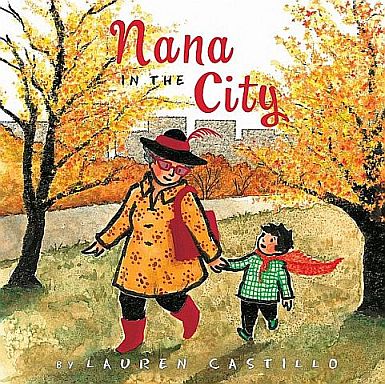
Nana In The City, written and illustrated by Lauren Castillo published by Clarion Books.
“Castillo’s evocative watercolor illustrations tell the story of a young boy’s visit to his grandmother, and the reassuring way she helps him to lose his fear and experience the busy, loud city in a new way.”
From Clarion’s promotional page:
“In this magical picture book, a young boy spends an overnight visit with his nana and is frightened to find that the city where she lives is filled with noise and crowds and scary things. But then Nana makes him a special cape to help him be brave, and soon the everyday sights, sounds, and smells of the city are not scary—but wonderful. The succinct text is paired with watercolor illustrations that capture all the vitality, energy, and beauty of the city.“

The Noisy Paint Box: The Colors and Sounds of Kandinsky’s Abstract Art (Alfred A. Knopf), illustrated by Mary GrandPré and written by Barb Rosenstock.
“Abstract artist Vasily Kandinsky experienced colors as sounds and sounds as colors; he created work that was bold and groundbreaking using colors from his “noisy paint box.” His process is reflected beautifully by GrandPré, whose paint flows across the page in ethereal ribbons of color.“
Many people know Mary GrandPré’s artwork from the covers of the Harry Potter books published by Scholastic – before the movies she imagined Harry for the US reading public. It’s nice to see her honored by the ALA.

Sam & Dave Dig a Hole (Candlewick Press), illustrated by Jon Klassen and written by Mac Barnett.
“Klassen’s use of texture, shape and earth tones in this deceptively simple book invite readers into the experience of two boys, who, accompanied by their dog, set out to dig a hole. Readers will find an unexpected treasure and be challenged to ponder the meaning of “spectacular.”“
Jon Klassen won the Caldecott Medal award in 2013 for This Is Not My Hat, and he has won a Caldecott Honor award for his illustrations in Extra Yarn.

Viva Frida (Roaring Brook Press), illustrated and written by Yuyi Morales.
“Using a unique variety of media – puppetry, printmaking, painting and photography – combined with an intoxicating use of color and unfailing sense of composition, Morales celebrates the artistic process.“
This is a beautiful mixed media book, see Macmillan’s promotional page

The Right Word: Roget and His Thesaurus (Eerdmans Books for Young Readers) illustrated by Melissa Sweet and written by Jen Bryant.
“Sweet’s inspired mixed media illustrations illuminate the personality and work of a man passionately interested in many things. Her collages combine disparate elements to create a cohesive whole, echoing the ways in which Roget ordered the world into lists that evolved into his groundbreaking thesaurus.“
This book also won this year’s Robert F. Silbert Medal for the “most distinguished informational book for children”, from the ALA Silbert Award announcement:
“The Right Word is about Peter Mark Roget, whose boyhood passion for list-making and finding the right word for every situation led him to create his “treasure house” of a book, the thesaurus. Bryant’s engaging, accessible narrative and Sweet’s delightfully detailed mixed media illustrations meld together to create “a marvel, a wonder, a surprise,” of a book. “
“With both lovely storytelling and intricate illustrations, this picture book biography of a life that had such a far reaching impact takes the format to another level,” said Sibert Medal Committee Chair Deborah Taylor.“
Melissa Sweet’s illustrations were awarded a 2008 Caldecott Honor for A River Of Words.
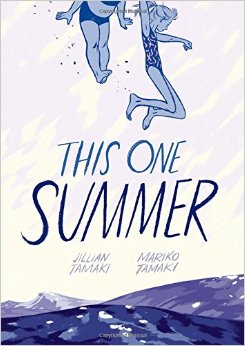
This One Summer (First Second), illustrated by Jillian Tamaki and written by Mariko Tamaki.
“Intricately detailed illustrations in shades of indigo are masterfully layered with the text in this graphic novel. The pacing and strong imagery evoke myriad emotions and ground this poignant and painfully realistic coming-of-age story.“
Beautiful illustrations notwithstanding this is an odd choice by the Caldecott Selection Committee, as This One Summer is more a graphic novel than a children’s picturebook. See Macmillan’s promotional page .
The Newbery and Caldecott Medals and Honor Book seals are property of the American Library Association and cannot be used in any form or reproduced without permission of the ALA Office of Rights and Permissions.
Members of the 2015 Caldecott Medal Selection Committee are: Chair Junko Yokota, Center for Teaching through Children’s Books, Skokie, Ill.; Lucia Acosta, Princeton (N.J.) Public Library; Tali Balas Kaplan, Success Academy Charter School, Bronx, N.Y.; Bradley Debrick, Johnson County Library, Overland Park, Kan.; Alison Ernst, University Liggett School, Grosse Pointe Woods, Mich.; Adrienne Furness, Henrietta Public Library, Rochester, N.Y.; Jonathan Hunt, San Diego (Calif.) County Office of Education; Rebecca Jackman, New Providence Middle School, Clarksville, Tenn.; Roger Kelly, Santa Monica (Calif.) Public Library; Barbara Klipper, Stamford, Conn.; Susan Kusel, Temple Rodef Shalom Library, Falls Church, Va.; Amy Lilien-Harper, Ferguson Library Harry Bennett Branch, Stamford, Conn.; Sharon McKellar, Oakland (Calif.) Public Library; Shilo Pearson, Chicago Public Library; and Angela Reynolds, Annapolis Valley Regional Library, Nova Scotia, Canada.
Searching For The First Forty Caldecott Medal Books
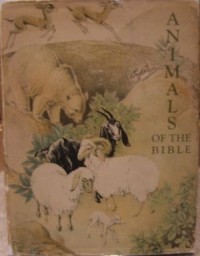 I recently performed a search for first editions of the first forty Caldecott Medal books (covering the award years 1938-thru-1978) to determine the number of books currently being offered for sale. The search was identical to an internet search I completed a couple of years ago, and similar to past searches, calculated the average selling price for each book. The searches were performed across multiple book sites, ABE, ABAA, and Bookfinder, and were filtered for first edition books with dust jackets, in VG- condition or better. Ex-library editions, first editions without dust jackets, and dust jackets in poor condition were excluded from the search results. For the results of survey please see the table below.
Note: In the table below, click on the book’s title to see a representative search for the book on ABE Books. You will have to comb thru the results and select the first editions. The search queries do not rely on the ‘first edition’ or ‘dust jacket’ properties within ABE listings since these are unreliable.
I have no affiliation to ABE Book, any bookseller, their offering(s), or to the sale of any particular book mentioned on this site.
For the years 1938-to-1978, the survey found 130 first edition Caldecott Medal books currently offered for sale (2013 search, 122 found) with an average selling price of $2,726. In the survey the asking price was not adjusted to the condition of the book being offered, so use the average price judiciously, since the book and jacket’s condition has a major impact on valuation. Also, the average price is skewed by the Caldecott collection being offered on consignment by James Cahill of Quintessential Books. James indicates the prices for the books are established by the seller, a private collector.
In this year’s survey table the Scarcity and Collectibility index for each title is omitted, however they can be found on here at Collecting Picturebook's Caldecott Medal web page. As many of the regular readers know, for the 24,000 picturebooks in my database, each book's collectibility is ranked on a 1-to-10 scale, with 10 being the most desirable, and each book's scarcity is similarly ranked, with 10 being the most scarce. For first edition Caldecott Medal books, my norm is to start with a Collectibility Index of '7', then adjust the index for other factors, such as illustrator's or author's eminence, copies sold, and so forth (see Factors Affecting The Value Of Children's Books).
Seven Books In Absentia
First editions for seven of the forty Caldecott Medal winners are not currently being offered for sale on the internet. Understandably it would be a seller's market for pricing any of seven in first edition issue with dust jacket.
Six of the books were not found in the 2013 census either, in chronological order: the Hader's The Big Snow (1948), Leo Politi's Song Of The Swallows (1949), Finder's Keepers (1951), Nonny Hogrogian’s Always Room For One More (1966) Ed Emberley’s Drummer Hoff (1968), and Gerald McDermott’s Arrow To The Sun (1975). From my experience, of these Finder's Keepers is the scarcest issue, followed by Song Of The Swallows. Finder's Keepers is a scarce issue, nearly as 'rare' (less than 10 known copies) as The Snowy Day (1962) or A Story, A Story (1970).
While first editions were not found in the market in 2013 or for the current search, I don't think Always Room For One More, Drummer Hoff, and Arrow To The Sun are scarce in first edition issue – time will tell – however I did elevate their Scarcity index to ’7′ in the picturebook database. Obviously, should a single copy surface, the offering price will represent a seller’s market with no competing comparables.
William Steig's Sylvester And The Magic Pebble is a tough 'get' in first edition issue. The book is larger than one would expect, and beautiful to behold. In consideration of Steig's success as a cartoonist for the New Yorker, producing some 2,600 illustrations and over 110 covers for the magazine, and his creation of Shrek, which formed the basis for the Dreamworks movie series, his first edition picturebooks are very collectible.
Only one first edition copy of Feodor Rojankovsky's Frog Went A Courtin (1955) was found in the 2013 search – was offered for $1,650, so presumably sold – and none for this year's survey.
Caldecott Medal Winners 1938-1978
| Award Year |
2013 # |
2013 Avg$ |
Title |
Illustrator |
2014 # |
2014 Avg$ |
| 1938 |
6 |
1,250 |
Animals Of The Bible |
Dorothy P. Lathrop |
4 |
1,825 |
| 1939 |
8 |
1,025 |
Mei Li |
Thomas Handforth |
1 |
1,000 |
| 1940 |
3 |
1,600 |
Abraham Lincoln |
Ingri & Edgar Parin d’Aulaire |
2 |
1,175 |
| 1941 |
8 |
825 |
They Were Strong And Good |
Robert Lawson |
4 |
950 |
| 1942 |
4 |
23,350 |
Make Way For Ducklings |
Robert McCloskey |
2 |
23,750 |
| 1943 |
2 |
15,000 |
The Little House |
Virginia Lee Burton |
3 |
14,675 |
| 1944 |
2 |
775 |
Many Moons |
Louis Slobodkin |
4 |
2,125 |
| 1945 |
4 |
300 |
Prayer For A Child |
Elizabeth Orton Jones |
6 |
350 |
| 1946 |
3 |
500 |
The Rooster Crows |
Maud & Miska Petersham |
1 |
1,250 |
| 1947 |
- |
- |
The Little Island |
Leonard Weisgard |
3 |
- |
| 1948 |
3 |
800 |
White Snow Bright Snow |
Roger Duvoisin |
4 |
1,275 |
| 1949 |
- |
- |
The Big Snow |
Berta & Elmer Hader |
0 |
- |
| 1950 |
- |
- |
Song Of The Swallows |
Leo Politi |
0 |
- |
| 1951 |
4 |
400 |
The Egg Tree |
Katherine Milhous |
3 |
625 |
| 1952 |
- |
- |
Finders Keepers |
Nicholas Mordvinoff |
0 |
- |
| 1953 |
1 |
350 |
The Biggest Bear |
Lynd Ward |
1 |
950 |
| 1954 |
12 |
800 |
Madelines Rescue |
Ludwig Bemelmans |
15 |
875 |
| 1955 |
- |
- |
Cinderella |
Marcia Brown |
2 |
- |
| 1956 |
1 |
1,650 |
Frog Went A Courtin |
Feodor Rojankovsky |
0 |
- |
| 1957 |
1 |
500 |
A Tree Is Nice |
Marc Simont |
2 |
950 |
| 1958 |
2 |
600 |
Time Of Wonder |
Robert McCloskey |
4 |
625 |
| 1959 |
8 |
175 |
Chanticleer And The Fox |
Barbara Cooney |
6 |
350 |
| 1960 |
6 |
525 |
Nine Days To Christmas |
Marie Hall Ets |
5 |
575 |
| 1961 |
- |
- |
Baboushka And The Three Kings |
Nicolas Sidjakov |
1 |
- |
| 1962 |
3 |
775 |
Once A Mouse |
Marcia Brown |
2 |
1,150 |
| 1963 |
- |
- |
The Snowy Day |
Ezra Jack Keats |
1 |
4,500 |
| 1964 |
10 |
13,425 |
Where The Wild Things Are |
Maurice Sendak |
13 |
13,025 |
| 1965 |
1 |
575 |
May I Bring A Friend |
Beni Montresor |
3 |
375 |
| 1966 |
- |
- |
Always Room For One More |
Nonny Hogrogian |
0 |
- |
| 1967 |
4 |
375 |
Sam, Bangs, And Moonshine |
Evaline Ness |
4 |
1,050 |
| 1968 |
- |
- |
Drummer Hoff |
Ed Emberley |
0 |
- |
| 1969 |
4 |
325 |
The Fool Of The World And The Flying Ship |
Uri Shulevitz |
3 |
250 |
| 1970 |
- |
- |
Sylvester And The Magic Pebble |
William Steig |
4 |
1,500 |
| 1971 |
- |
- |
A Story, A Story |
Gail E. Haley |
1 |
3,500 |
| 1972 |
1 |
150 |
One Fine Day |
Nonny Hogrogian |
1 |
350 |
| 1973 |
3 |
250 |
The Funny Little Woman |
Blair Lent |
5 |
325 |
| 1974 |
5 |
175 |
Duffy And The Devil |
Margot Zemach |
9 |
225 |
| 1975 |
- |
- |
Arrow To The Sun |
Gerald McDermott |
0 |
- |
| 1976 |
4 |
400 |
Why Mosquitoes Buzz In Peoples Ears |
Leo & Diane Dillon |
1 |
300 |
| 1977 |
2 |
175 |
Ashanti To Zulu |
Leo & Diane Dillon |
2 |
175 |
| 1978 |
7 |
200 |
Noahs Ark |
Peter Spier |
8 |
375 |
Eight One-sies
Only one first edition copy of eight other Caldecott Medal books were found on the market. The two big surprises are a first edition copy each of The Snowy Day ($4,500) and A Story, A Story ($3,500). These are two scarce books, probably 'rare' in the classical sense, with less than ten known copies. This is the first time in over a decade of internet searches that I've found either first edition book standing for sale on the market.
Note: Caveat emptor. I have no affiliation to any bookseller, their offering(s), or to the sale of any particular book mentioned on this site. The prospective book buyer must perform their own due diligence concerning the actual book, its issue points, its condition, and the reliability of the bookseller.
In addition to the two above, there is only one first edition copy of Mei Li (1938), The Rooster Crows (1945), The Biggest Bear (1953), Baboushka And The Three Kings (1960), One Fine Day (1972), and the Dillon's Why Mosquitoes Buzz In People's Ears (1975).
The Availability Of Where The Wild Things Are
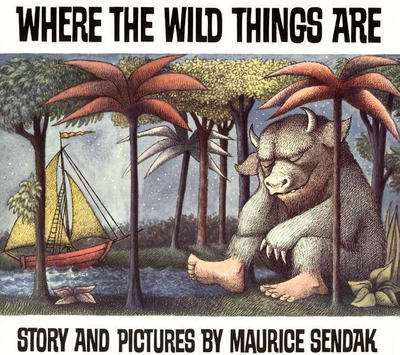 There are thirteen copies of the 1964 Caldecott Medal winner Where The Wild Things Are on the market. The asking price averages over $13,000, and ranges from $20,000 to $8,500. The high prices are indicative of the high desirability/collectible of the book coupled with its relative scarcity. In my database of over 24,000 children's book titles, I give only two books a Collectibility Index of '10'; Cat In The Hat and Where The Wild Things Are. Even Curious George and Goodnight, Moon only garner a '9' in collectibility/desirability.
Where The Wild Things Are has been a known collectible outside of the children's book market, so generalist booksellers have carried the book in addition to the children's book specialist. The book is routinely included in fine book auctions. These documented prices have become known, so book scouts and booksellers are on the lookout for first edition copies. Documented prices have escalated over the past two decades.
Are thirteen copies too many? Should prices fall? I don't know – it depends on how many copies are being bought/sold each year, the annual 'turnover' of the first edition book in the market. For example, if only one copy is sold/bought per year, then thirteen copies on the market is too much. However if twenty copies are sold/bought per year, then thirteen is probably too few. There are an adequate array of prices, book condition, provenence, and bookseller credence to provide the able and willing prospective book buyer an adequate range of selection. Thirteen copies seems within the range of the 'right number'.
Interestingly several of the higher priced copies of Where The Wild Things Are from the previous survey are no longer on the market, presumably sold. This is also the case for several of the other Caldecott books – the higher priced issues are no longer on the market, presumably sold.
The Precarious Balance: Scarcity and Demand for First Edition Picturebooks
 The collectability and scarcity of the 24,000 titles in my database have each been rated on a 1-to-10 scale (10 being most collectible and 10 being most scarce). These ratings are included in the table with the survey results.
As most experienced book collectors and booksellers know, the scarcity of a book has a major impact on its value in the market. Scarcity in and of itself does not drive value, but instead value results from a combination of scarcity and demand. For books, the scarcity-versus-collectibility equation is synonomous with the familiar supply-versus-demand equation taught in classical Economics. Scarcity represents the collective supply for the first edition book, while collectibility is the population's demand.
There are two different aspects of scarcity to be considered:
- The existence of all first edition copies, inclusive of private & public collections
- The first edition copies currently on the market
While the latter is of primary concern to the book collector and to the bookseller when pricing a book within the current market, the former must be considered, if only slightly, when making a collectible book purchase with "investment" concerns. Since most librarians currently do not know how to correctly identify first editions of contemporary American picturebooks, it is problematic to query libraries/institutions using Worldcat to understand the population statistics for such books. Keep this in mind as the hobby matures. Eventually, libraries will house first edition collections of Caldecott Medal books, Seuss books, and the like, so querying Worldcat will not be as futile.
With regard to the number of copies currently on the market, there is no "one magic number" agreed upon in the hobby which balances the supply and demand of the book. For example, if three first editions are on the market, should the price rise? In theory a rising price should bring more copies to market. If ten copies are on the market, should prices fall? I dunno the answer – it all depends.
There is no right "one magic number" which works for all books. Each particular book is different. This number which balances the supply and demand would be dependent upon the average turnover for that book in a particular year (or over the course of years), along with the current average selling price, along with historical auction/selling records, along with a lot of other considerations.
For example, ten first edition copies might be right for a $10,000 book, where two or three copies are sold per year, along with decades of auction prices to support this pricing/valuation. On the other hand, ten first edition copies might be too many for a $100 book, with one, maybe two copies sold per year, and no auction or historical prices to support this valuation. It all depends.
A comprehensive database does not exist which records every transaction of every first edition picturebook offered and sold. If one did, then it would be much easier for the bookseller to price a book and the book collector to value a book. The turnover of the book would be visible along with the historical selling prices. Trends would be visible. Instead booksellers and book collectors operate in a very imperfect market, one with very little historical information. Auction records do exist for high-end books, however for the vast majority of American picturebooks no such records exist.
To read more about Scarcity and Collectibility, see Part 8 of my article on the Top 100 Collectibile American Picturebooks.
By: Will I Retire on Mulberry Street? | Baby Gates Dow,
on 7/17/2014
Blog:
Children's Picturebook Price Guide
(
Login to Add to MyJacketFlap)
JacketFlap tags:
Add a tag
[…] first edition and has no dust cover (apparently a first edition with a dust cover of Mulberry Street could fetch me $8000), it doesn’t appear I’ll be quitting my day job anytime […]
First Edition Identification Points – Very Hungry Caterpillar
The Very Hungry Caterpillar, A Seriously Rare Edition

A first edition of Eric Carle’s 1969 The Very Hungry Caterpillar is a very difficult book to find. Prior to 2013, in twenty years of collecting children’s picturebooks, I had never seen a first edition copy for sale. Sadly, I don't have one in my book collection.
Within the collectible bookselling market this scarcity had propagated some myths about the first edition identification points for The Very Hungry Caterpillar. Without ‘proof’, many booksellers thought the first edition could be identified by the Cleveland imprint of World Publishing Company. Times-Mirror bought World in the 1960′s, and transitioned the publishing office from Cleveland to New York, so Carle’s classic was thought to have been published prior to the New York transition.
World Publishing became World Collins in 1974 upon its purchase by Collins Publishing, so many thought that the Cleveland imprint, with World Publishing – not World Collins – was sufficient to identify a first edition The Very Hungry Caterpillar. Several of these imposters are marketed as first editions. We now know better.
A true first edition The Very Hungry Caterpillar came up for sale on eBay in 2013. The book is without DJ, however sufficient photographs are posted in the listing to positively identify it as a first edition. The book, without DJ, is being offered for $15,000! This seems a bit optimistic, but one can afford to reach when one has the only copy of a rare and highly desirable first edition book.
[Disclaimer: The images posted here are courtesy of eBay seller kirthgersen. I have no affiliation with "kirthgersen" and would not profit in any way from the sale of this or any of their books.]
Collectibilty
A first edition copy of The Very Hungry Caterpillar is a highly desirable collectible children’s book. We’ve identified six factors which affect the collectibility and value of a contemporary children’s picturebook:
The Very Hungry Caterpillar hits it out of the park along all six factors. Great story and illustrations, the book has been translated into more than 50 languages and sold over 33 million copies.
While not his first book, the book launched Eric Carle’s career. Carle is succussful enough to have chartered The Eric Carle Museum of Picture Book Art, the only full scale museum of its kind, located in Amherst, Massachusetts.
The Very Hungry Caterpillar has won a half dozen notable awards:
- New York Times Ten Best Picture Books of the Year citation, 1969.
- American Institute of Graphic Arts award, 1970.
- Best Children’s Books of England citation, 1970.
- Selection du Grand Prix des Treize, France, 1972.
- Brooklyn Museum Art Books for Children citation, 1973, 1976, 1977.
- Nakamori Reader’s Prize, Japan, 1975
Because of these credentials and its worldwide success in the market, in the 2012 list of the Top 100 Collectible Children’s Books, I selected The Very Hungry Caterpillar one of the Marquis 25 – one of the top twenty-five collectible children’s picturebooks of all time.
A first edition The Very Hungry Caterpillar is indeed a highly collectible book.
Scarcity
The scarcity of a collectible book has a major impact on its value, however alone does not drive value. The value results from the balance of supply and demand, where scarcity represents the supply of the first edition book and collectibility represents the demand. The market value of a book is determined by the relationship between scarcity and collectibility.
When valuing the 23,000 books for the Children’s Picturebook Price Guide, a 10-to-1 scale was used in the database to rank a book’s scarcity, with 10 being the most scarce, and 1 being the most common (click here for a definition of each ranking).
I would rate the scarcity of The Very Hungry Caterpillar a 10.
In support of this scarcity rating I would put forth that I’ve seen only one copy for sale in over twenty years of collecting first edition children’s books. There are potentially two others which could be first editions, however they don't definitively list the first edition identification points; one of the books proclaims the Cleveland imprint as proof. In the past fifteen years, I’ve executed over thirty book searches weekly on the internet trying to find collectible first edition picturebooks, including The Very Hungry Caterpillar. For the latter, this has been a pursuit to no end. Until late last year.
Market Value
With only one copy on the market it is difficult to value a book. There are really no good comparables (aka ‘comps’ within the bookselling industry) – Carle has many other successful books, several of which are scarce, however nothing approaches the collectibility of The Very Hungry Caterpillar. Few books do.
Published a half decade earlier, the first edition Where The Wild Things Are is comparable in collectibility to The Very Hungry Caterpillar. There are ten first edition Where The Wild Things Are in VG/VG or better condition on the market offered at $8,500-to-$20,000. Market prices ebb and flow with the current availability a book; today I value the first edition Where The Wild Things Are in the $12,000-to-$15,000 range.
With this in mind, and in consideration of its higher scarcity, I value a first edition The Very Hungry Caterpillar in Very Good condition with a Very Good dust jacket, to be in the same range, about $12,000-to-$15,000. It could be higher. The first edition Where The Wild Things Are has auction results and ‘collectibility history’ within the market which support its market valuation, while the The Very Hungry Caterpillar does not. Yet.
Key First Edition Identification Points
The first edition The Very Hungry Caterpillar first edition a has full number line on the copyright page, “1 2 3 4 5 73 72 71 70 69″. See photograph and ensuing commentary, below.
The book being offered on eBay does not have a dust jacket, so I can’t post photos of the DJ flaps. I have a very early library edition of The Very Hungry Caterpillar, published prior to the Collins acquisition of World (so pre-1974), but do not want to post the DJ flaps for fear of erroneous identification. There have been enough myths about the first edition identification points for The Very Hungry Caterpillar so I don’t want to propogate additional misinformation.
[Disclaimer: The images posted here are courtesy of eBay seller kirthgersen. I have no affiliation with "kirthgersen" and would not profit in any way from the sale of this or any of their books.]
First Edition Book
Front Cover:
 Copyright Page: A full number line, “1 2 3 4 5 73 72 71 70 69″.
Following this convention, the second printing of The Very Hungry Caterpillar would drop the “1″ from the front of the number line and be “2 3 4 5 73 72 71 70 69″ if it were re-printed in 1969, or “2 3 4 5 73 72 71 70″ if it were printed in 1970.
Similarly, the third printing would drop the “1 2″ from the front of the number line, and be “3 4 5 73 72 71 70 69″ were it re-printed in 1969, and “3 4 5 73 72 71 70″ if in 1970.
However no second printings or third printings have ever surfaced which follow this number line convention. I think this is what has caused confusion within the market. Had second or third or any printings been found which follow this number line convention, then it would have been easy to deduce the first edition identification points for The Very Hungry Caterpillar.
 Title Page: The World Publishing Company / New York and Cleveland.
No date on the title page, and “World Publishing Company” as expected; World-Collins would indicate a post-1974 printing.
 Book Back:
Note the ‘A3450′ on the bottom right.
Every year at it’s mid-Winter Conference the American Library Association presents the Caldecott Award “to the artist of the most distinguished American picturebook for children.” In addition to the Caldecott Medal award, several Honor awards are presented to the runner-ups in the category. The awards were announced this past Monday, Jan. 26, 2014.
The day of the announcement the first edition Caldecott Medal and Honor books become instantly collectible, and copies are quickly bought up by both collectors and booksellers, the latter buying them for resale. Good luck finding your first edition copies!
2014 Caldecott Medal Winner
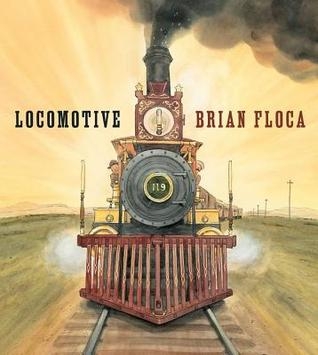
The 2014 Caldecott Medal winner is Locomotive illustrated by Brian Floca (Atheneum Books).
From the American Library Association’s website:
“All aboard! Accompany a family on an unforgettable weeklong train trip from Omaha to Sacramento in 1869. Brian Floca’s dramatic watercolor, ink, acrylic and gouache illustrations incorporate meticulously-researched portraits of the train, the travelers and the crew as they traverse the American landscape on the new transcontinental railroad.
All aboard! Accompany a family on an unforgettable weeklong train trip from Omaha to Sacramento in 1869. Brian Floca’s dramatic watercolor, ink, acrylic and gouache illustrations incorporate meticulously-researched portraits of the train, the travelers and the crew as they traverse the American landscape on the new transcontinental railroad.
Floca also won a Silbert Honor award for Locomotive. The Silbert Award is given annually by the ALA to the author and illustrator of the most distinguished informational book published in the US.
In 2011 Floca won a two Silbert Honor awards, for his illustrations in Ballet For Martha, and for his writing and illustrations for Moonshot.
I acquired a couple of first edition copies of Locomotive at a neighborhood independent bookstore.
2014 Caldecott Honor Books
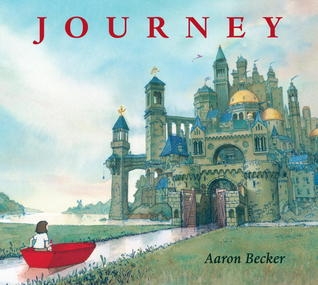
Journey, written and illustrated by Aaron Becker published by Candlewick Press.
“Finding a magical red crayon, a bored and lonely girl draws a new door on her bedroom wall that leads her to a wondrous but perilous new world. Her drab, sepia-toned, humdrum reality gives way to sumptuous, lushly-hued watercolor and pen and ink landscapes.”
This is Becker’s first children’s book. I considered this wordless picturebook a front runner for the Caldecott, so purchased a couple of first edition copies last winter. Journey was in it’s seventh printing at the time the award was announced, so expect first editions to be scarcer than the Medal winner, and potentially pricey.
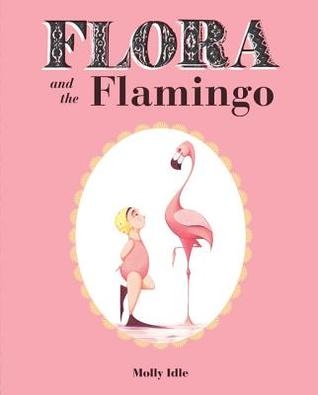
Flora And Flamingo, written and illustrated by Molly Idle and published by Chronicle Books.
“The budding relationship between an awkward young girl and a graceful flamingo is revealed through carefully orchestrated flaps. The minimalist setting, limited color palette, use of white space and page turns create a timeless and joyful visual experience. The call-and-response of this balletic duet is cinematic and comedic.“
This is a fantastic book! I hadn’t heard of Molly Idle until this award. Her illustrations are wonderful. This is an interactive flap book, and I was lucky enough to find a couple of first editions in a Barnes & Noble.
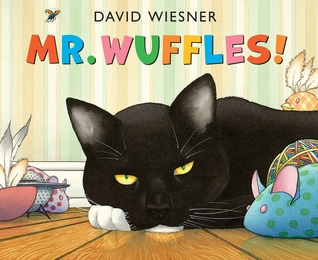
Mr. Wuffles, illustrated and written by David Wiesner and published by Clarion Books.
“Mr. Wuffles finds a new toy that is actually a tiny spaceship in this nearly wordless science fiction tale of epic and miniature proportions. Crisp watercolor and India ink illustrations shine in an innovative graphic novel, picture book hybrid featuring hidden worlds, alien languages and one peeved cat..“
Wiesner is one of the most successful children’s book illustrators, and has previously won three Caldecott Medal awards, in 1992 for Tuesday, in 2002 for The Three Pigs and in 2007 for Flotsam. Wiesner has also won two Caldecott Honor awards, in 1989 for Free Fall and in 2000 for Sector 7.
Every year I buy one first edition copy of each David Wiesner book, and acquired a copy of Mr. Wuffles at Barnes & Noble.
The Newbery and Caldecott Medals and Honor Book seals are property of the American Library Association and cannot be used in any form or reproduced without permission of the ALA Office of Rights and Permissions.
Members of the 2014 Caldecott Medal Committee are Chair Marion Hanes Rutsch, Chevy Chase, Md.; Deborah A. Burns, Chicago Public Library; Dr. Cora Phelps Dunkley, University of South Florida School of Information, Tampa, Fla.; Carol A. Edwards, Denver Public Library; Natasha J. Forrester, Multnomah County Library District, Portland, Ore.; Judy Freeman, Children’s Literature Consultant, Highland Park, N.J.; Rachel Fryd, Free Library of Philadelphia; Carl A. Harvey, II, North Elementary School, Noblesville, Ind.; Travis Jonker, Wayland Union Schools, Dorr, Mich.; Carla J. Kozak, San Francisco Public Library; Dennis J. LeLoup, Avon (Ind.) Intermediate Schools; Miriam Medow, Oakland (Calif.) Public Library; Leslie M. Molnar, Cleveland; Kathy G. Short, University of Arizona, Tucson; and Blanche Woolls, Glendale, Calif.
2013 Caldecott Medal Winner
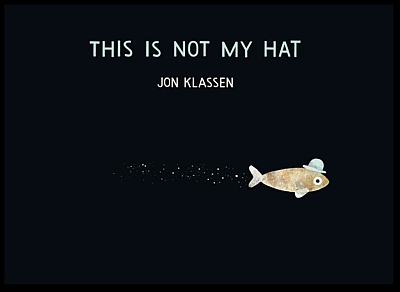
The 2013 Caldecott Medal winner is This Is Not My Hat illustrated by Jon Klassen (Candlewick Press). This Is Not My Hat is Raschka's second Caldecott Medal, having won the 2006 award for The Hello, Goodbye Window. This Is Not My Hat is a wordless picturebook.
From the American Library Association's website:
"In this darkly humorous tale, a tiny fish knows it’s wrong to steal a hat. It fits him just right. But the big fish wants his hat back. Klassen’s controlled palette, opposing narratives and subtle cues compel readers to follow the fish and imagine the consequence.
“With minute changes in eyes and the slightest displacement of seagrass, Klassen’s masterful illustrations tell the story the narrator doesn’t know,” Caldecott Chair Sandra Imdieke said.
Klassen also won a Caldecott Honor award this year for his illustrations in Extra Yarn (see below).
2012 Caldecott Honor Books

Creepy Carrots!, illustrated by Peter Brown, written by Aaron Reynolds and published by Simon & Schuster Books for Young Readers.
“A summer’s power outage draws an urban family up to their building’s roof and then down to the street for an impromptu block party. Rocco illuminates details and characters with a playful use of light and shadow in his cartoon-style illustrations. He delivers a terrific camaraderie-filled adventure that continues even when the electricity returns.”
I found a couple of first edition copies, however the dust jackets were rather tatty, so did not purchase them.
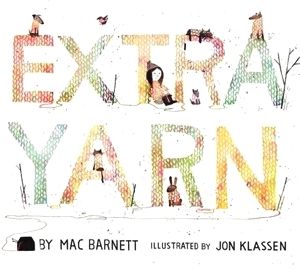
Extra Yarn, illustrated by Jon Klassen, written by Mac Barnett and published by Balzer + Bray,
“A selfish archduke threatens to halt a little girl's transformation of a colorless town and steal her box of magical yarn. Klassen's innovative digital technique results in shifts of color that signal character change and critical turns of plot -all done with just the right stitches of humor..“
Klassen is the first illustrator to earn two Caldecott awards in a single award year.

Green, illustrated and written by Laura Vaccaro Seeger and published by Neal Porter Books, an imprint of Roaring Brook Press
“In this original concept book, Seeger engages all the senses with her fresh approach to the multiple meanings of “green.” Using thickly-layered acrylics, word pairings and cleverly placed die cuts, she invites readers to pause, pay attention and wonder..“
Seeger won a Caldecott Honor award in 2008 for First The Egg.
I acquired a first edition copy of Green earlier in the year at Barnes & Noble.
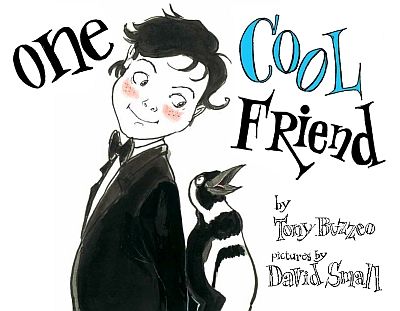
One Cool Friend, illustrated by David Small, written by Toni Buzzeo and published by Dial Books for Young Readers,
"Energetic line and dizzying perspective combine for a rollicking tale of Father, Elliot and a highly improbable pet (or two). Buzzeo’s text, brimming with sly wordplay, earns its perfect counterpoint in Small’s ink, watercolor and pencil illustrations with chilly details and visual jokes that invite many repeated readings. “
I'm a big fan of David Small. He won a Caldecott Medal in 2001 for So You Want To Be A President? and a Caldecott Honor in 1998 for The Gardener.

Sleep Like a Tiger, illustrated by Pamela Zagarenski, written by Mary Logue and published by Houghton Mifflin Books for Children.
"Surrounded with dreamlike images of crowns, ornate patterns and repeated visual motifs, her parents coax her into bed. Using mixed media artwork on wood enhanced with computer illustrations, this is a whimsical story with universal appeal.”
Zagarenski won a Caldecott Honor in 2010 for Red Sings From The Treetops.
I acquired a first edition copy of Sleep Like A Tiger yesterday at a local Barnes & Noble.
The Newbery and Caldecott Medals and Honor Book seals are property of the American Library Association and cannot be used in any form or reproduced without permission of the ALA Office of Rights and Permissions.
Searching For The First Forty Caldecott Medal Books
 Last year I performed an internet search for the first editions of the first twenty Caldecott Medal books to determine the number of books currently being offered for sale, and similar to past searches, calculate the average selling price. I recently performed a similar search, this time for the first forty first edition Caldecott Medal books covering the award years 1938-thru-1978. The searches were performed across multiple book sites, ABE, ABAA, and Bookfinder, and were filtered for first edition books with dust jackets, in VG- condition or better. We excluded ex-library editions, first editions without dust jackets, and dust jackets in poor condition. For the results of this survey please see the table below.
Note: In the table below, click on the book’s title to see a representative search for the book on ABE Books. You will have to comb thru the results and select the first editions. The search queries do not rely on the ‘first edition’ or ‘dust jacket’ properties within ABE listings since these are unreliable. I have no affiliation to ABE Book, any bookseller, their offering(s), or to the sale of any particular book mentioned on this site.
For the years 1938-to-1978, 122 first edition books were found currently for sale. There are ten copies of Maurice Sendak’s Where The Wild Things Are being offered, which greatly skewed the average asking price. With WTWTA included, the 122 books have an average asking price of $2,635. In the survey the asking price was not adjusted to the condition of the book being offered, so use the average price judiciously, since the book and jacket’s condition has a major impact on valuation.
The survey results table also provides the Scarcity and Collectibility index for each title. As many of the regular readers know, in the 23,000 picturebooks in my database, each book's collectibility is ranked on a 1-to-10 scale, with 10 being the most desirable, and each book's scarcity is similarly ranked, with 10 being the most scarce. My norm is to start with a Collectibility Index of '7' on first edition Caldecott Medal books, then adjust for other factors, such as illustrator's or author's eminence, copies sold, and so forth (see Factors Affecting The Value Of Children's Books).
Twelve Books In Absentia
First editions for twelve of the forty Caldecott Medal winners are not currently being offered for sale on the internet. Understandably it would be a seller’s market for pricing any of these in first edition issue with dust jacket. As was expected due to their scarcity Ezra Jack Keats’s The Snowy Day (1962) is not available nor Marcia Brown’s Cinderella (1954). First editions in dust jacket for either book do not surface for sale very often.
Ten other books are not currently offered, including Nonny Hogrogian’s Always Room For One More (1966) Ed Emberley’s Drummer Hoff (1968), and Gerald McDermott’s Arrow To The Sun (1975). I don’t think the three books are scarce in first edition issue – time will tell – however I did elevate their Scarcity index to ’7′ in the following table. Obviously, should a single copy surface, the offering price will represent a seller’s market with no competing comparables.
William Steig's Sylvester And The Magic Pebble is a tough get in first edition issue. The book is larger than one would expect, and beautiful to behold. In consideration of Steig's success as a cartoonist for the New Yorker, producing some 2,600 illustrations and over 110 covers for the magazine, and his creation of Shrek, which formed the basis for the Dreamworks movie series, his first edition picturebooks are very collectible.
Caldecott Medal Winners 1938-1978
| Award Year |
Collect ibility |
Scar city |
Title |
Illustrator |
Web |
Avg. $ |
| 1938 |
7 |
6 |
Animals Of The Bible |
Dorothy P. Lathrop |
6 |
1,250 |
| 1939 |
6 |
8 |
Mei Li |
Thomas Handforth |
8 |
1,025 |
| 1940 |
7 |
7 |
Abraham Lincoln |
Ingri & Edgar Parin d’Aulaire |
3 |
1,600 |
| 1941 |
6 |
6 |
They Were Strong And Good |
Robert Lawson |
8 |
825 |
| 1942 |
9 |
10 |
Make Way For Ducklings |
Robert McCloskey |
4 |
23,350 |
| 1943 |
9 |
9 |
The Little House |
Virginia Lee Burton |
2 |
15,000 |
| 1944 |
6 |
6 |
Many Moons |
Louis Slobodkin |
2 |
775 |
| 1945 |
6 |
6 |
Prayer For A Child |
Elizabeth Orton Jones |
4 |
300 |
| 1946 |
7 |
7 |
The Rooster Crows |
Maud & Miska Petersham |
3 |
500 |
| 1947 |
7 |
6 |
The Little Island |
Leonard Weisgard |
0 |
- |
| 1948 |
7 |
7 |
White Snow Bright Snow |
Roger Duvoisin |
3 |
800 |
| 1949 |
7 |
7 |
The Big Snow |
Berta & Elmer Hader |
0 |
- |
| 1950 |
7 |
6 |
Song Of The Swallows |
Leo Politi |
0 |
- |
| 1951 |
7 |
8 |
The Egg Tree |
Katherine Milhous |
4 |
400 |
| 1952 |
7 |
8 |
Finders Keepers |
Nicholas Mordvinoff |
0 |
- |
| 1953 |
7 |
7 |
The Biggest Bear |
Lynd Ward |
1 |
350 |
| 1954 |
8 |
6 |
Madelines Rescue |
Ludwig Bemelmans |
12 |
800 |
| 1955 |
7 |
8 |
Cinderella |
Marcia Brown |
0 |
- |
| 1956 |
7 |
6 |
Frog Went A Courtin |
Feodor Rojankovsky |
1 |
1,650 |
| 1957 |
7 |
6 |
Time Of Wonder |
Robert McCloskey |
2 |
600 |
| 1958 |
7 |
8 |
A Tree Is Nice |
Marc Simont |
1 |
500 |
| 1959 |
7 |
5 |
Chanticleer And The Fox |
Barbara Cooney |
8 |
175 |
| 1960 |
7 |
6 |
Nine Days To Christmas |
Marie Hall Ets |
6 |
525 |
| 1961 |
6 |
6 |
Baboushka And The Three Kings |
Nicolas Sidjakov |
0 |
- |
| 1962 |
7 |
7 |
Once A Mouse |
Marcia Brown |
3 |
775 |
| 1963 |
7 |
9 |
The Snowy Day |
Ezra Jack Keats |
0 |
- |
| 1964 |
10 |
8 |
Where The Wild Things Are |
Maurice Sendak |
10 |
13,425 |
| 1965 |
7 |
7 |
May I Bring A Friend |
Beni Montresor |
1 |
575 |
| 1966 |
7 |
6 |
Always Room For One More |
Nonny Hogrogian |
0 |
- |
| 1967 |
7 |
6 |
Sam, Bangs, And Moonshine |
Evaline Ness |
4 |
375 |
| 1968 |
7 |
6 |
Drummer Hoff |
Ed Emberley |
0 |
- |
| 1969 |
7 |
6 |
The Fool Of The World And The Flying Ship |
Uri Shulevitz |
4 |
325 |
| 1970 |
8 |
7 |
Sylvester And The Magic Pebble |
William Steig |
0 |
- |
| 1971 |
7 |
8 |
A Story, A Story |
Gail E. Haley |
0 |
- |
| 1972 |
7 |
6 |
One Fine Day |
Nonny Hogrogian |
1 |
150 |
| 1973 |
7 |
5 |
The Funny Little Woman |
Blair Lent |
3 |
250 |
| 1974 |
7 |
5 |
Duffy And The Devil |
Margot Zemach |
5 |
175 |
| 1975 |
7 |
6 |
Arrow To The Sun |
Gerald McDermott |
0 |
- |
| 1976 |
7 |
5 |
Why Mosquitoes Buzz In Peoples Ears |
Leo & Diane Dillon |
4 |
400 |
| 1977 |
7 |
5 |
Ashanti To Zulu |
Leo & Diane Dillon |
2 |
175 |
| 1978 |
7 |
4 |
Noahs Ark |
Peter Spier |
7 |
200 |
Five One-sies
Only one first edition copy of five other Caldecott Medal books were found. There is only one first edition copy of The Biggest Bear (1953), Frog Went A Courtin (1956), A Tree Is Nice (1958), May I Bring A Friend? (1965), and One Fine Day (1972). The offering price for One Fine Day is priced a bit low at $150 for the only copy on the market. Based on past experience, I don't think the book is too scarce. The Biggest Bear (1953) is priced modestly for an issue which is not nearly as common.
Frog Went A Courtin is somewhat difficult to find, not a rare issue, and the price illustrates the pricing power when only one collectible book is offered on the market.
Note: Caveat emptor. I have no affiliation to any bookseller, their offering(s), or to the sale of any particular book mentioned on this site. The prospective book buyer must perform their own due diligence concerning the actual book, its issue points, its condition, and the reliability of the bookseller.
The Availability Of Where The Wild Things Are
There are 10 copies of the 1964 Caldecott Medal winner Where The Wild Things Are on the market. The asking price averages over $13,000, and ranges from $20,000 to $7,500. The high prices are indicative of the high desirability/collectible of the book coupled with its relative scarcity. In my database of over 24,000 children's book titles, I give only two books a Collectibility Index of '10'; Cat In The Hat and Where The Wild Things Are. Even Curious George and Goodnight, Moon only garner a '9'.
Where The Wild Things Are has been a known collectible outside of the children's book market, so generalist booksellers have carried the book in addition to the children's book specialist. The book is routinely included in fine book auctions. These documented prices have become known, so book scouts and booksellers are on the lookout for first edition copies. Documented prices have escalated over the past two decades. Are ten copies too many? Should prices fall? I don't know. There is an adequate array of prices, book condition, provenence, and bookseller credence to provide the able and willing prospective book buyer an adequate range of selection. Ten copies seems about right.
Interestingly several of the higher priced copies of Where The Wild Things Are from the previous survey are no longer on the market, presumably sold. This is also the case for several of the other Caldecott books – the higher priced issues are no longer on the market, presumably sold.
Pause to ponder. Why would buyers purchase higher priced copies when equivalents are on the market for less?
One can only guess. Perhaps well-heeled book collectors prefer to deal with high-end established children's booksellers, so are willing to pay the high asking price. One could also presume that in numerous instances, the buyer would not be comfortable with internet purchases, or maybe not aware.
With the higher priced copies selling, the average price for several of the books appears to be decreasing, when this is not the case. The higher priced copies have left the market, so the average selling price of the remaining books is mathematically less.
The Precarious Balance: Scarcity and Demand for First Edition Picturebooks
 The collectability and scarcity of the 23,000 titles in my database have each been rated on a 1-to-10 scale (10 being most collectible and 10 being most scarce). These ratings are included in the table with the survey results.
As most experienced book collectors and booksellers know, the scarcity of a book has a major impact on its value in the market. Scarcity in and of itself does not drive value, but instead value results from a combination of scarcity and demand. For books, the scarcity-versus-collectibility equation is synonomous with the familiar supply-versus-demand equation taught in classical Economics. Scarcity represents the collective supply for the first edition book, while collectibility is the collective demand.
There are two different aspects of scarcity to be considered:
- The existence of all first edition copies, inclusive of private & public collections
- The first edition copies currently on the market
While the latter is of primary concern to the book collector and the bookseller when pricing a book within the current market, the former must be considered, if only slightly, when making a collectible book purchase with "investment" concerns. Since most librarians currently do not know how to correctly identify first editions of contemporary American picturebooks, it is problematic to query libraries/institutions using Worldcat to understand the population statistics for such books. Keep this in mind as the hobby matures. Eventually, libraries will house first edition collections of Caldecott Medal books, Seuss books, and the like, so querying Worldcat will not be as futile.
With regard to the number of copies currently on the market, there is no "one magic number" agreed upon in the hobby which balances the supply and demand of the book. For example, if three first editions are on the market, should the price rise? In theory a rising price should bring more copies to market. If ten copies are on the market, should prices fall? I dunno the answer – it all depends.
There is no right "one magic number" which works for all books. Each particular book is different. This number which balances the supply and demand would be dependent upon the average turnover for that book in a particular year (or over the course of years), along with the current average selling price, along with historical auction/selling records, along with a lot of other considerations.
For example, ten first edition copies might be right for a $10,000 book, where two or three copies are sold per year, along with decades of auction prices to support this pricing/valuation. On the other hand, ten first edition copies might be too many for a $100 book, with one, maybe two copies sold per year, and no auction or historical prices to support this valuation. It all depends.
A comprehensive database does not exist which records every transaction of every first edition picturebook offered and sold. If one did, then it would be much easier for the bookseller to price a book and the book collector to value a book. The turnover of the book would be visible along with the historical selling prices. Trends would be visible. Instead booksellers and book collectors operate in a very imperfect market, one with very little historical information. Auction records do exist for high-end books, however for the vast majority of American picturebooks no such records exist.
To read more about Scarcity and Collectibility, see Part 8 of my article on the Top 100 Collectibile American Picturebooks.
Searching For The First Fifty Newbery Medal Books
 To date this site has dealt solely with contemporary American picturebooks, the genre beginning with Wanda Gag's Millions Of Cats. Millions Of Cats was published in 1927, a decade earlier than the initiation of the Caldecott award, and was considered so exceptional the American Library Association selected it as a Newbery Medal runner-up (now called a Newbery Honor award).
The Newbery Medal is the older sibling of the Caldecott Medal, originating sixteen years before hand. Beginning in 1922 the Newbery Medal has been awarded annually by the ALA "to the author of the most distinguished contribution to American literature for children." The Newbery Medal is a writer's analog to an illustrator honored annually by the Caldecott Medal.
Since there is little formal information readily available on the internet, I'm going to begin providing first edition identification points, discuss the book's collectibility along with estimated market value for Newbery Medal books.
Today's post is a summary of the search for the first fifty Newbery Medal winning books.
Similar to past searches for the first editions of Caldecott Medal books, the search is intended to determine the number of books currently being offered for sale, and calculate the average selling price.See the table summarizing the results below. Similar to contemporary American picturebooks discussed on this site, the estimated market value and collectibility information are intended for first edition books in a first edition dust jacket.
Most Valuable Newbery Medal Books
Not so surprisingly Madeline L'Engle's A Wrinkle In Time (1963 NM) is the most valuable Newbery Medal book found on the market, with five first editions copies ranging in price from $17,600 to $9,100. Four copies of Will James' Smoky (1927 NM) are on the market, with an average price of $5,775, one of which has slight restoration. First edition copies of both books are difficult to find, costly when found, and thereby missing from most Newbery Medal collections. The budgets of most cannot afford the price of first edition copies.
The one first edition copy of From The Mixed Up Files Of Mrs. Basil E. Frankweiler (NM 1969) is priced at $2,500, therefore the average price is the third most expensive Newbery Medal book on the market. I dunno if this price and scarcity are an aberration or the norm; I do know this book has gotten my attention.
Mrs. Frisby And The Rats Of Nimh (NM 1972) is a another rather stubborn book to acquire. Six first edition copies are on the market, ranging from $2,500 to $500, with an average of nearly $1,200.
Note: Caveat emptor. I have no affiliation to any bookseller, their offering(s), or to the sale of any particular book mentioned on this site. The prospective book buyer must perform their own due diligence concerning the actual book, its issue points, its condition, and the reliability of the bookseller.
Newbery Medal Winners 1922-1971
| Year |
Title |
Author |
|
Count
| Average
| 1921 |
Story Of Mankind |
Hendrik Willem van Loon |
0 |
- |
| 1922 |
Voyages of Dr. Dolittle |
Hugh Lofting |
0 |
- |
| 1923 |
Dark Frigate |
Charles Hawes |
2 |
725 |
| 1924 |
Tales From Silver Lands |
Charles Finger |
0 |
- |
| 1925 |
Shen Of The Sea |
“Arthur Bowie Chrisman ” |
0 |
- |
| 1926 |
Smoky The Cowhorse |
Will James |
4 |
5,775 |
| 1927 |
Gayneck: The Story of a Pigeon |
Dhan Gopal Mukerji |
0 |
- |
| 1928 |
Trumpeter Of Krakow |
Eric P. Kelly |
0 |
- |
| 1929 |
Hitty Her First Hundred Years |
Rachel Field |
3 |
1,150 |
| 1930 |
Cat Who Went To Heaven |
Elizabeth Coatsworth |
2 |
675 |
| 1931 |
Waterless Mountain |
Laura Adams Armer |
1 |
250 |
| 1932 |
Young Fu Of The Upper Yangtze |
Elizabeth Lewis |
0 |
- |
| 1933 |
Invincible Louisa |
Cornelia Meigs |
0 |
- |
| 1934 |
Dobry |
Monica Shannon |
2 |
225 |
| 1935 |
Caddie Woodlawn |
Carol Ryrie Brink |
0 |
- |
| 1936 |
Roller Skates |
Ruth Sawyer |
4 |
300 |
| 1937 |
The White Stag |
Kate Seredy |
4 |
350 |
| 1938 |
Thimble Summer |
Elizabeth Enright |
0 |
- |
| 1939 |
Daniel Boone |
James Daugherty |
2 |
700 |
| 1940 |
Call It Courage |
Armstrong Sperry |
0 |
- |
| 1941 |
Matchlock Gun |
Walter Edmonds |
3 |
475 |
| 1942 |
Adam Of The Road |
Elizabeth Janet Gray |
7 |
275 |
| 1943 |
Johnny Tremain |
Esther Forbes |
4 |
475 |
| 1944 |
Rabbit Hill |
Robert Lawson |
15 |
225 |
| 1945 |
Strawberry Girl |
Lois Lenski |
4 |
675 |
| 1946 |
Miss Hickory |
Carolyn Sherwin Bailey |
6 |
200 |
| 1947 |
Twenty One Balloons |
William Pène du Bois |
6 |
450 |
| 1948 |
King Of The Wind |
Marguerite Henry |
4 |
200 |
| 1949 |
Door In The Wall |
Marguerite de Angeli |
15 |
250 |
| 1950 |
Amos Fortune Free Man |
Elizabeth Yates |
0 |
- |
| 1951 |
Ginger Pye |
Eleanor Estes |
1 |
450 |
| 1952 |
Secret Of The Andes |
Ann Nolan Clark |
1 |
175 |
| 1953 |
And Now Miguel |
Joseph Krumgold |
2 |
225 |
| 1954 |
Wheel On The School |
Meindert DeJong |
0 |
- |
| 1955 |
Carry On Mr Bowditch |
Jean Lee Latham |
1 |
125 |
| 1956 |
Miracles On Maple Hill |
Virginia Sorensen |
2 |
375 |
| 1957 |
Rifles For Watie |
Harold Keith |
5 |
250 |
| 1958 |
Witch Of Blackbird Pond |
Elizabeth George Speare |
1 |
400 |
| 1959 |
Onion John |
Joseph Krumgold |
2 |
275 |
| 1960 |
Island Of The Blue Dolphins |
Scott O’Dell |
2 |
350 |
| 1961 |
The Bronze Bow |
Elizabeth George Speare |
2 |
225 |
| 1962 |
A Wrinkle In Time |
Madeleine L’Engle |
5 |
12,900 |
| 1963 |
Its Like This Cat |
Emily Neville |
0 |
- |
| 1964 |
Shadow Of A Bull |
Maia Wojciechowska |
1 |
350 |
| 1965 |
I Juan De Pareja |
Elizabeth Borton de Trevino |
2 |
150 |
| 1966 |
Up A Road Slowly |
Irene Hunt |
6 |
150 |
| 1967 |
From The Mixed Up Files Of Mrs Basil E Frankweiler |
E.L. Konigsburg |
1 |
2,500 |
| 1968 |
The High King |
Lloyd Alexander |
4 |
250 |
| 1969 |
Sounder |
William H. Armstrong |
4 |
275 |
| 1970 |
Summer Of The Swans |
Betsy Byars |
2 |
275 |
| 1971 |
Mrs. Frisby and the Rats of Nimh |
Robert O’Brien |
6 |
1,175 |
Collectibility Of First Edition Newbery Medal Books
 There is a passionate base of collectors for first edition Newbery Medal books. To help illustrate this passion, just have a look at the thoughtful dialogue on the various Mock Newbery blogs and websites dotting the landscape. For previous years winners this passion runs from luke warm to very hot – I wouldn't classify the collectibility or demand for any of these books as cold. Most of the Newbery Medal books stand the test of time.
I'm not going to comment on the relative literary merits of the Newbery Medal books on this site. One; I'm not qualified to make such commentary, and two; there are a multitude of others on the web who do so more proficiently and eloquently. And they are a lot more interesting.
However I will comment on the relative collectibility of first edition copies of Newbery Medal books.
For American picturebooks I've created a set of factors which affect the book's collectibility (with 'first edition' and a book's condition being pre-requisites, rather than factors). For Newbery Medal books it shouldn't be too difficult to outline a similar set of factors.
By definition, each Newbery Medal book has won an award. In the case of contemporary American children's literature, each book has won THE AWARD, which is a big positive for collectibility.
A second consideration is the total number of copies sold, which is an indicator of whether children actually like the book, and of the book's ongoing popularity. With respect to value, the total number of copies sold should be considered in the context of the total number of copies in the first print run. The first print run of Newbery Medal books is relatively small, for the most part, compared to the total number of copies sold. This, coupled with decades of destructive attrition for the older Newbery's, is another big positive for collectibility.
A third consideration is the long-term eminence of the author. Did they have other successful children's books? Did they have longevity in the business? Was the Newbery Medal book early or late in their publishing career, or the start of a franchise? For example, Will James noteriety, for better or worse, contributes positively to the collectibility of Smoky (NM 1927).
Lastly, consider whether the book crossed over into pop culture. The pop culture aspect is frivolous when compared to the literary merits of the book, however does affect the overall awareness of the story, therefore impacts the potential demand for the first edition, thereby impacting the price. The Voyages Of Dr. Doolittle (NM 1923) has higher popularity due to the motion picture starring Rex Harrison, which does impact the price of first edition copies.
Fourteen Pieces Of Unobtanium
Of the fifty books surveyed, first edition copies of fourteen Newbery Medal winners are not currently offered for sale. Obviously the bookseller with one of these fourteen would have some significant pricing power.
The first two Newbery Medal winning books are very difficult to find with their dust jackets. Of the two, the Story Of Mankind (NM 1922) is probably a little less scarce than Voyages Of Dr. Doolittle (NM 1923) sans DJ. The other Newbery Medal winners from the 1920's are extremely difficult to find.
Note that the limited edition of Gayneck, The Story Of A Pigeon (NM 1928) is not so limited in the market. The edition was published in a print run of a 1000 copies after the book won the Newbery Medal award. There are plenty of these limited editions on the market, while there are no first edition copies available.
Scarcity Of First Edition Newbery Medal Books
 There are six Newbery Medal winning books with only one copy on the market, and eleven books with only two first edition copies on the market. On the balance this skews heavily toward a seller's market for these seventeen titles, an example being the one first edition copy of From The Mixed Up Files Of Mrs. Basil E. Frankweiler (1968 NM) offered at a rather immodest $2,500.
Thus there are two or less first edition copies on the market for thirty-one of the first fifty Newbery Medal books. Looking at in from another perspective – wink! wink! – there are three or more available copies for nineteen of the first fifty Newbery Medal books.
Three books were available in surprisingly large quantities. There were 15 first edition copies of Rabbit Hill (NM 1945), average price of $225, and Door In The Wall (NM 1950), average price $250, along with 14 copies of Julie Of The Wolves (NM 1973), average price $150.
I don't know whether these survey results are typical since I haven't been querying the market long enough for first edition Newbery Medal books. I do have sufficient experience with American picturebooks to provide a 1-to-10 scarcity ranking without a high risk of making an embarrassing mistake. I am not so inclined for Newbery Medal books.
A Collector's Perspective For First Edition Newbery Medal Books

The bookseller prices a first edition book according to the comparables on the market, auction and sales records, along with their experience in the business. On the other hand, the market value for a first edition book is the balance between the scarcity, or supply of the book, and it's collectibility or demand. The bookseller prices the book, while the book collector values a book.
As a collector, I must leverage my limited resource – the money budgeted to buy books – to purchase the most value with the least expense. In short, get the most bang for the buck. The book collector's perspective has a different time horizon than the bookseller. The bookseller has to price a book for the here and now, while the book collector has to decide whether a book should be bought now or in the future, since alternative opportunities exist.
With the above in mind, some random comments on the results of this survey:
- All the Newbery Medal books are highly collectible. Some are more sought after for justifiable reasons: author's eminence, copies sold, and so forth.
- The fourteen books not found for sale are probably scarce. Time will tell.
- Have a good look at the one-sies and two-sies.
- I've never seen a 1st/1st copy of Call It Courage (NM 1941).
- Wheel On The School (NM 1955) will continue to be a 'tough get' due to cross-over appeal of Maurice Sendak illustrated.
- For four of the books, the author is better known as an illustrator than a writer: Daniel Boone (NM 1940) by James Daugherty; Rabbit Hill (NM 1945) by Robert Lawson; Strawberry Girl (NM 1946) by Lois Lenski; and Twenty-One Balloons (NM 1948) by William Pene Du Bois. All four books have high cross-over appeal with picturebook collectors.
- Notice there are numerous obscure titles among the Newbery Medal winners, books which don't yet have high awareness in the general bookselling market. This could be an opportunity for the astute book collector.
I'll begin posting first edition identification points for Newbery Medal books in the near future.
The Precarious Balance: Scarcity and Demand for First Edition Picturebooks
 As most experienced book collectors and booksellers know, the scarcity of a book has a major impact on its value in the market. Scarcity in and of itself does not drive value, but instead value results from a combination of scarcity and demand. For books, the economics supply-versus-demand relationship is synonomous with book’s scarcity-versus-collectibility. Scarcity represents the supply of the first edition book, while collectibility represents the demand. The value of a book is determined by the relationship between scarcity and collectibility.
There are two different aspects of scarcity to be considered:
- The existence of all first edition copies, inclusive of private & public collections; and
- Only consider those first edition copies which are on the market.
While the latter is of the utmost concern to the book collector and the bookseller when pricing a book within the current market, the former must be considered, if only slightly, when making a collectible book purchase with investment concerns. Since most librarians currently do not know how to correctly identify first editions of contemporary American picturebooks, it is problematic to query libraries/institutions using Worldcat to understand the population statistics for such books. Still, keep this in mind as the hobby matures. Eventually, libraries will house first edition collections of Caldecott Medal books, Seuss books, and the like, so querying Worldcat while not be as futile.
When valuing the 23,000 books for Children’s Picturebook Price Guide, I used a 10-to-1 scale in the database to rate a book’s scarcity, with 10 being the most scarce, and 1 being the most common. The following table provides the definition for each of the scarcity ratings for books in the Top 100:
| Scarcity Rating |
Editorial Description For First Edition American Picturebooks |
| 10 |
A first edition copy is not usually on the market – surfaces less frequently than once per year. Demand for first edition copies far exceeds supply, therefore prospective buyers cannot be very selective about price or condition. Very few comparables so booksellers have leverage to set price. |
| 9 |
A first edition copy is not usually on the market – surfaces once or twice per year. Demand for first edition copies far exceeds supply, therefore prospective buyers cannot be very selective about price, and only somewhat regarding condition. Just a few comparables, so booksellers have leverage to set price. |
| 8 |
A few first edition copies are usually on the market. Prospective buyers can be selective about price and condition, even though demand for first editions exceeds supply. Still a “seller’s market”, however comparables are readily available, so booksellers have to be price/condition competitive. |
| 7 |
Several first edition copies are usually on the market. Comparables are readily available, so booksellers are price/condition competitive. Nearly a healthy marketplace. Demand exceeds supply, therefore more prospective buyers than booksellers. Booksellers still have more market leverage than book buyers. |
| 6 |
First edition copies are uncommon, although there are many copies usually on the market. Booksellers are price/condition competitive. A healthy marketplace, with a good balance of buyers and booksellers: an equilibrium between copies being bought by collectors (and taken off the market) and ‘new’ first editions being offered. |
| Note: This scarcity rating table is specific to first edition American picturebooks. Readers might apply this or a similar scarcity rating method to other genres. I don’t know other genres sufficiently to know whether this method applies, or not, therefore apply delicately, and at your own risk. |
The Scarcity ratings I give to books is not based upon the results of a rudimentary book search of the current market place. Rather the Scarcity rating is based upon my twenty years of collecting experience:
- Looking for books for years in all sorts of nook and crannies in book stores across the country
- Searching through catalog upon catalog from numerous childrens book specialists
- Oodles and gobs of daily, weekly, and monthly internet searches
- Searching through auction upon auction of reputable auction house book sales.
We are early in the evolution of the picturebook collecting hobby, so the general public, the general bookseller, and the general book collector do not yet know of the substantial value of first edition American picturebooks. The substantial value is not generally accepted public knowledge. This helps to explain the relative dearth of first editions on the market. And this also explains why first edition Dr. Seuss books ARE available in relatively good numbers – general booksellers and general book collectors KNOW they have value, therefore have radar on for ‘first edition Dr. Seuss’ when they are scouting for books.
As the hobby matures and more people become aware, forgotten things in attics will be remembered and found, surfacing first editions to the market. This dynamic will continue for years and years to come. Book collectors will enter the hobby; libraries and institutions will build collections; booksellers will become aware, and first edition picturebooks will be traded. In twenty years, we will have an improved perspective on what is scarce and what is not. Until then, well …
Identifying First Edition Beginner Books
A couple of years ago I posted a series of blog articles which provided identification points for the first fifty Beginner Books, and later collected them into one permanant webpage (see Identifying First Edition Beginner Books).
The articles included identification points for each book, and provided the publication sequence along with the back dust jacket graphic. In essence the titles listed on the back of the dust jacket are the key to identifying most of the early Beginner Books. These articles were the first time identification points were posted for this set of Beginner Books.
While the articles centered upon the publication sequence of the dust jacket backs, they did not provide a good navigational method to each book, and today’s post is purposed to correct the oversight.
Accessible First Edition Identification Points Helps The Hobby
Book collectors and booksellers tend to shy away from books without documented first edition identification points, or in cases where the identification points are not well understood. There is too much risk buying or selling the unknown collectible.
Over the past three years book collector and bookseller interest has increased in the non-Seuss first edition Beginner Books (the Younger/Hirsch Guide To First Edition Dr. Seuss books helped the hobby with the Seuss first edition Beginner Books). People have become more confident buying and selling first edition Beginner Books. The market for the later printings is also more robust.
One of my underlying purposes for this blog and the parent web site is to make first edition idenfication points more transparent and accessible for contemporary American picturebooks. In the long run I strongly believe this will strengthen the hobby.
Many traditional booksellers are not in agreement with this philosophy, since they profit from their proprietary knowledge of first edition identification points:
- Book collectors must rely upon them for this proprietary information.
- Proprietary knowledge of first edition identification points is a competitive advantage over less well-informed booksellers.
- Less scrupulous booksellers can make a windfall profit by purchasing books from a less informed public
(Note: In open shop transactions, by rules of the trade, offers from reputable booksellers will be wholesale market prices for first edition books, even if the seller is unaware of the issue of their holdings.)
This traditional thinking impairs the hobby of collecting first edition American picturebooks. Proprietary and possessive ownership of first edition identification points:
- Limits the number of collectors who want to participate in the hobby.
- Limits the number of booksellers who want to participate in the hobby.
- Reduces the liquidity of first edition picturebooks.
- Suppresses the price/value of first edition picturebooks.
More people will enter the hobby as they learn first edition picturebooks are valuable collectibles. The books have a familiarity to a large number of people, and picturebooks are very accessible – most can be read and appreciated in moments. And we will continue our small part to promote the hobby.
Click on the front cover image, below, to the respective page for first edition identification points for each Beginner Book.
By: Launch Pad To First Edition Beginner Books »,
on 4/2/2012
Blog:
Children's Picturebook Price Guide
(
Login to Add to MyJacketFlap)
JacketFlap tags:
Add a tag
[...] couple of years ago I posted a series of blog articles which provided identification points for the first fifty Beginner B…, and later collected them into one permanant webpage (see Identifying First Edition Beginner [...]
Searching For The Second Twenty Caldecott Medal Books
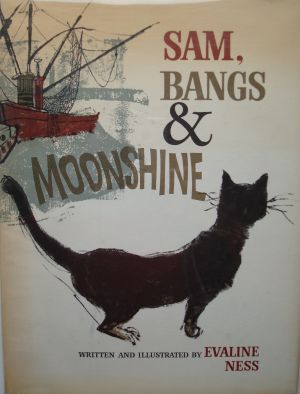 A couple of months ago we performed an internet search for the first editions of the first twenty Caldecott Medal booksto determine the number of books currently being offered for sale, and similar to past searches, calculate the average selling price. This past week we performed a search for first edition Caldecott Medal books for the period 1960-to-1979, the second twenty. The searches were performed across multiple book sites, ABE, ABAA, and Bookfinder, and were filtered for first edition books with dust jackets, in VG- condition or better. We excluded ex-library editions, first editions without dust jackets, and dust jackets in poor condition. For the results of this survey please see the table below.
For the years 1960-to-1979 we found fifty-one first edition books currently for sale, with ten copies of Maurice Sendak’s Where The Wild Things Are being offered, which greatly skewed the average asking price. With WTWTA included, the 51 books have an average asking price of $4,523. With WTWTA excluded the 41 books had a more modest average asking price of $353. In our survey the asking price was not adjusted to the condition of the book being offered, so use the average price judiciously, since the book and jacket’s condition has a major impact on valuation.
Five Books In Absentia
First editions for five of the twenty Caldecott Medal winners are not currently being offered for sale on the internet. Understandably it would be a seller’s market for pricing any of these in first edition issue with dust jacket. As was expected due to their scarcity Ezra Jack Keats’s The Snowy Day (1963) is not available nor Gail E. Haley’s A Story, A Story (1971). First editions in dust jacket for either book do not surface for sale very often.
In addition to the two above, three other books surprisingly are not currently offered; Nonny Hogrogian’s Always Room For One More (1966) Ed Emberley’s Drummer Hoff (1968), and Gerald McDermott’s Arrow To The Sun (1975). I don’t think the three books are scarce in first edition issue – time will tell – however I did elevate their Scarcity index to ’8′ in the following table. Obviously, should a single copy surface, the offering price will represent a seller’s market with no competing comparables.
Caldecott Medal Winners 1960-1979
| Award Year |
Collect ibility |
Scar city |
Title |
Illustrator |
Web |
Avg. $ |
| 1960 |
7 |
7 |
Nine Days To Christmas |
Marie Hall Ets |
4 |
$301 |
| 1961 |
7 |
7 |
Baboushka And The Three Kings |
Nicolas Sidjakov |
1 |
$880 |
| 1962 |
8 |
7 |
Once A Mouse |
Marcia Brown |
3 |
$953 |
| 1963 |
7 |
10 |
The Snowy
While eBay is not the bookselling venue it once was, I continue to regularly purchase collectible children’s books on the site. I’ve been a buyer of collectible children’s books on eBay since 1998 and perform about 50 saved searches weekly. Over the past five years the quality and quantity of collectible children’s books listed on eBay has declined dramatically, however on occasion I still find value.
One of my saved searches is completed books sold for over $300, to see what I might have missed, and to learn (there are some knowledgeable booksellers on eBay, and I often learn something from their descriptive listings). A couple of months ago, a very rare item turned up in the Completed search, the following is the entire listing, verbatim:
A Happy Pair by Frederic Weatherly Hildesheimer & Faulkner Mini Cord Bound Book
A Happy Pair by Frederic E. Weatherly
Illustrated by H. B. P (could this be Beatrix Potter)
Hildesheimer & Faulkner Publishers
Soft cover Miniature Book with corded Binding
14 pages with gold gilt edges Book is 4 inches by 5 inches.
Designed in England
Printed in Germany
Color illustrations of two bunnies throughout
Cover front and back shows some wear including edge wear and soling.
Book in acceptable condition. Binding is tight. Pages are clean
Innocuous enough, even sparse. Surprising when, at least to me, on January 21, 2012 this little booklet (Item 220933184464) sold for $4,396.
As mentioned earlier, I often learn something from eBay auctions. In this instance, I’m not going to learn from the seller’s descriptive listing, but rather from what the seller omitted, and what I can discover on my own accord. After a little bit of Google Search, I came upon this 2001 article from BBC News, “Beatrix Potter Drawings Fetch £23,000” (the following excerpt © BBC News):
The best-preserved copy of the first ever book containing Beatrix Potter’s work was sold for £23,250 when it went under the hammer on Thursday.
The book, called A Happy Pair, was Potter’s first break in publishing in 1893 and includes her Christmas card illustrations alongside poetry by a different author.
The Peter Rabbit books were self-published at first A Happy Pair was published nine years before the first Peter Rabbit tales appeared, and only a handful of copies exist.
The £23,000 would be equivalent to around $36,000 at today’s exchange rate. It is notable the eBay copy is comparable in condition to the Sotheby copy.
After a little more research, I came upon “a lesser copy offered for $30,000” by Bauman Rare Books, an ABAA member bookseller (the following excerpt © Bauman Rare Books):
THE VERY RARE FIRST BOOK ILLUSTRATED BY BEATRIX POTTER, A HAPPY PAIR, 1890, WITH SIX CHROMOLITHOGRAPHS BY POTTER
(POTTER, Beatrix) WEATHERLY, Frederic E. A Happy Pair. London: Hildesheimer & Faulkner, [1890]. 16mo, original pictorial wrappers, original cloth ties with tassels, all edges gilt; pp. 12. $30,000.
First and only edition of a true children’s rarity: the first book illustrated by Beatrix Potter, one of the most elusive of all her works, known in only a very few copies (estimated as few as ten, although to our knowledge no formal census exists). With six lovely chromolithographed illustrations, each signed H.B.P. in the stone, and cover designs, all by Potter. A charming copy and an inestimable addition to any collection of children’s literature.
By: Dr Seuss First Edition Books » Collecting Ch,
on 3/13/2012
Blog: Children's Picturebook Price Guide
( Login to Add to MyJacketFlap)
JacketFlap tags:
Add a tag
[...] If I Ran The Zoo 1950 [...]
By: If I Ran The Zoo (1950) » Collecting Childre,
on 3/12/2012
Blog: Children's Picturebook Price Guide
( Login to Add to MyJacketFlap)
JacketFlap tags:
Add a tag
[...] by collectors and booksellers. The Youngers have previously corrected the identification points to Horton Hears A Who as per our listing on their error page for the [...]
Experienced booksellers and book collectors have come upon the front flaps of dust jackets with the top or bottom corner clipped, yet, strangely the books’ price still evident on the uncut corner. Why is the DJ’s corner cut off and the price still evident? Why cut the book’s corner at all?
This mystery is explained by Dan Gregory at ILAB in his article “Why Are Some Dustjackets Clipped but Not Price-Clipped?“.
[...] this copy had four different prices on the front flap (clockwise from the top they were $3.95, $3.75, $4.50, and $4.95). By printing four prices in such a manner, the publisher, W.W. Norton, could leave the decision of the final retail price until later in the publication process.
After the books were printed, and just before the printed jackets were to be folded onto the bound books, two or three cuts to a stack of printed jacket sheets could quickly eliminate the unused prices. It also allowed the publisher, if he were so inclined, to market the book at different retail values in different areas.
 In over twenty years of collecting books, this is the first time I have ever seen a book – thank Dan for the photo – with four different prices on the front flap. There are many books in my library with two prices, one top and one bottom, with unclipped front flaps, but none with four prices. In over twenty years of collecting books, this is the first time I have ever seen a book – thank Dan for the photo – with four different prices on the front flap. There are many books in my library with two prices, one top and one bottom, with unclipped front flaps, but none with four prices.
Dan explains that the dust jacket corners are cut by machine which is understandable when dealing with thousands upon thousands of books.
For children’s book collectors, I suppose one of the rare unclipped first editions would be Maurice Sendak’s Where The Wild Things Are. In addition to the correct copy on the DJ flaps (i.e. no mention of the Caldecott Award), my copy has “$3.50″ on the top right of the front flap, which matches the description in the Hanrahan bibliography, and has the bottom right corner cut off. Hanrahan states:
It has a price of $3.50 (Horn Book mentions a library edition at $3.79) on the inside front flap [...]
I’ve never seen or heard of a copy of Where The Wild Things Are with an unclipped dust jacket, which includes the “$3.50″ trade price on the top right corner, and the “$3.79″ library edition price on the bottom right.
Experienced booksellers and book collectors have come upon the front flaps of dust jackets with the top or bottom corner clipped, yet, strangely the books’ price still evident on the uncut corner. Why is the DJ’s corner cut off and the price still evident? Why cut the book’s corner at all?
This mystery is explained by Dan Gregory at ILAB in his article “Why Are Some Dustjackets Clipped but Not Price-Clipped?“.
[...] this copy had four different prices on the front flap (clockwise from the top they were $3.95, $3.75, $4.50, and $4.95). By printing four prices in such a manner, the publisher, W.W. Norton, could leave the decision of the final retail price until later in the publication process.
After the books were printed, and just before the printed jackets were to be folded onto the bound books, two or three cuts to a stack of printed jacket sheets could quickly eliminate the unused prices. It also allowed the publisher, if he were so inclined, to market the book at different retail values in different areas.
In over twenty years of collecting books, this is the first time I have ever seen a book – thank Dan for the photo – with four different prices on the front flap. There are many books in my library with two prices, one top and one bottom, with unclipped front flaps, but none with four prices.
Dan explains that the dust jacket corners are cut by machine which is understandable when dealing with thousands upon thousands of books.
For children’s book collectors, I suppose one of the rare unclipped first editions would be Maurice Sendak’s Where The Wild Things Are. In addition to the correct copy on the DJ flaps (i.e. no mention of the Caldecott Award), my copy has “$3.50″ on the top right of the front flap, which matches the description in the Hanrahan bibliography, and has the bottom right corner cut off. Hanrahan states:
It has a price of $3.50 (Horn Book mentions a library edition at $3.79) on the inside front flap [...]
I’ve never seen or heard of a copy of Where The Wild Things Are with an unclipped dust jacket, which includes the “$3.50″ trade price on the top right corner, and the “$3.79″ library edition price on the bottom right.
A first edition The Little House is a scarce bird, rarely sighted in public. First edition copies of Virginia Lee Burton’s 1943 Caldecott Medal winning book are one of the scarcest contemporary children’s picturebook to find. One is currently being offered for sale on ABEBooks. It can be yours for $12,500.
[Caveat emptor: I have no affiliation to the bookseller, nor to sale of this particular book. The bookseller, Raptis Rare Books is a reputable member of the Antiquarian Booksellers Association of America.]
Here is the link to the item, The Little House, with the following description, courtesy Raptis Rare Books:
First edition of one of the rarest and most sought after children’s classics. Oblong quarto, original blue cloth. Light rubbing to the spine tips, a near fine copy in an excellent unrestored dust jacket that shows a small chip to the crown of the spine and some light wear. Small ink inscription opposite the title page. This book and dust jacket are usually seen with restoration, this copy is exceptionally clean and bright. “Once upon a time there was a Little House way out in the country. She was a pretty Little House and she was strong and well built.” So begins Virginia Lee Burton’s The Little House, winner of the prestigious Caldecott Medal in 1943. Housed in a custom clamshell box.
There is only one, perhaps two, first edition Caldecott books which are harder to find. This is one of the few first edition Caldecott Medal books not in my collection. Sigh. If only.
In 2007 a copy of The Little House sold at PBA Galleries auction for nearly $10,000.
The prices of first edition Caldecott Medal books have escalated in the past five years. Impressive in the face of the nation’s economy, this Great Recession. The escalated prices have not resulted in additional first editions hitting the market. If anything, the opposite is true – there is less supply of first edition Caldecott Medal books on the market today than five years ago. In general, I think this applies to collectible first edition picturebooks.
Ironically it is not just the scarce books which are scarce. Even some of the more common first edition Caldecott Medal books are not available in numbers, making it a seller’s market.
A first edition The Little House is a scarce bird, rarely sighted in public. First edition copies of Virginia Lee Burton’s 1943 Caldecott Medal winning book are one of the scarcest contemporary children’s picturebook to find. One is currently being offered for sale on ABEBooks. It can be yours for $12,500.
[Caveat emptor: I have no affiliation to the bookseller, nor to sale of this particular book. The bookseller, Raptis Rare Books is a reputable member of the Antiquarian Booksellers Association of America.]
Here is the link to the item, The Little House, with the following description, courtesy Raptis Rare Books:
First edition of one of the rarest and most sought after children’s classics. Oblong quarto, original blue cloth. Light rubbing to the spine tips, a near fine copy in an excellent unrestored dust jacket that shows a small chip to the crown of the spine and some light wear. Small ink inscription opposite the title page. This book and dust jacket are usually seen with restoration, this copy is exceptionally clean and bright. “Once upon a time there was a Little House way out in the country. She was a pretty Little House and she was strong and well built.” So begins Virginia Lee Burton’s The Little House, winner of the prestigious Caldecott Medal in 1943. Housed in a custom clamshell box.
There is only one, perhaps two, first edition Caldecott books which are harder to find. This is one of the few first edition Caldecott Medal books not in my collection. Sigh. If only.
In 2007 a copy of The Little House sold at PBA Galleries auction for nearly $10,000.
The prices of first edition Caldecott Medal books have escalated in the past five years. Impressive in the face of the nation’s economy, this Great Recession. The escalated prices have not resulted in additional first editions hitting the market. If anything, the opposite is true – there is less supply of first edition Caldecott Medal books on the market today than five years ago. In general, I think this applies to collectible first edition picturebooks.
Ironically it is not just the scarce books which are scarce. Even some of the more common first edition Caldecott Medal books are not available in numbers, making it a seller’s market.
 A first edition Curious George sold at Heritage Auctions for $26,290. This surpasses the $21,850 paid for the first edition Curious George sold at PBA Galleries in 2007. A first edition Curious George sold at Heritage Auctions for $26,290. This surpasses the $21,850 paid for the first edition Curious George sold at PBA Galleries in 2007.
The Heritage sale took place in the September 2011 Beverly Hills Signature Rare Books Auction. The link to the Curious George lot #37070 at Heritage (you will have to login to Heritage to see the final sale price).
Lest one thinks first edition Curious George’s are popping up hither and thither, the seller of the 2007 book at PBA Galleries assures me that the Heritage copy is the very same book. 1stedition.net promoted the 2007 item, see Curious George First Edition Identification for photos of the covers, spine, dust jacket, and DJ flaps. Comparing the tears on the dust jacket confirms the two books are one and the same.
The Heritage Auction description:
First Edition of the Children’s Classic, In the Exceedingly Rare Dust Jacket
H. A. Rey. Curious George. Boston: Houghton Mifflin, 1941. First edition. Quarto. Unpaginated. Illustrations by the author. Publisher’s brick red cloth with Curious George vignette in black on front board and lettering in black on spine. Illustrated endpapers. Original dust jacket with $1.75 price. A couple of faint scratches to cloth on rear board. Original unrestored dust jacket is rubbed, with a few chips to extremities and spine ends; also with a few short closed tears and shallow creases at edges. Rear flap with Bullock’s Wilshire price sticker ($1.75). A remarkably crisp, bright copy in near fine condition. We could locate only one other record of this title in dust jacket selling at auction in the past 35 years, and that was this very copy. Extremely scarce.
A classic children’s book, Curious George burst upon the scene in 1941, a year after H. A. Rey and his wife Margret (both German Jews) had escaped Paris only hours ahead of the Nazis. The Reys had fashioned makeshift bicycles from spare parts and fled Europe with possessions limited only to clothes, food, and five manuscripts, one of which was Curious George.
Featuring one of the most beloved characters in children’s literature, Curious George has never been out of print, and the story of the curious little monkey continues to delight and entertain children seventy years after its first publication. A superb copy, in the remarkably rare original dust jacket. Estimate: $15,000 – up.
Obviously this $26,000 sale will impact the other first edition books in the H.A. Rey Curious George series. In addition – guilty by association – there will likely be a ripple effect on the other scarce high-end contemporary children’s picturebooks, such as Make Way For Ducklings, Little House, and the scarcer Dr. Seuss and Caldecott Medal books. A very nice copy of the first edition Little House sold for nearly $10,000
A first edition Curious George sold at Heritage Auctions for $26,290. This surpasses the $21,850 paid for the first edition Curious George sold at PBA Galleries in 2007.
The Heritage sale took place in the September 2011 Beverly Hills Signature Rare Books Auction. The link to the Curious George lot #37070 at Heritage (you will have to login to Heritage to see the final sale price).
Lest one thinks first edition Curious George’s are popping up hither and thither, the seller of the 2007 book at PBA Galleries assures me that the Heritage copy is the very same book. 1stedition.net promoted the 2007 item, see Curious George First Edition Identification for photos of the covers, spine, dust jacket, and DJ flaps. Comparing the tears on the dust jacket confirms the two books are one and the same.
The Heritage Auction description:
First Edition of the Children’s Classic, In the Exceedingly Rare Dust Jacket
H. A. Rey. Curious George. Boston: Houghton Mifflin, 1941. First edition. Quarto. Unpaginated. Illustrations by the author. Publisher’s brick red cloth with Curious George vignette in black on front board and lettering in black on spine. Illustrated endpapers. Original dust jacket with $1.75 price. A couple of faint scratches to cloth on rear board. Original unrestored dust jacket is rubbed, with a few chips to extremities and spine ends; also with a few short closed tears and shallow creases at edges. Rear flap with Bullock’s Wilshire price sticker ($1.75). A remarkably crisp, bright copy in near fine condition. We could locate only one other record of this title in dust jacket selling at auction in the past 35 years, and that was this very copy. Extremely scarce.
A classic children’s book, Curious George burst upon the scene in 1941, a year after H. A. Rey and his wife Margret (both German Jews) had escaped Paris only hours ahead of the Nazis. The Reys had fashioned makeshift bicycles from spare parts and fled Europe with possessions limited only to clothes, food, and five manuscripts, one of which was Curious George.
Featuring one of the most beloved characters in children’s literature, Curious George has never been out of print, and the story of the curious little monkey continues to delight and entertain children seventy years after its first publication. A superb copy, in the remarkably rare original dust jacket. Estimate: $15,000 – up.
Obviously this $26,000 sale will impact the other first edition books in the H.A. Rey Curious George series. In addition – guilty by association – there will likely be a ripple effect on the other scarce high-end contemporary children’s picturebooks, such as Make Way For Ducklings, Little House, and the scarcer Dr. Seuss and Caldecott Medal books. A very nice copy of the first edition Little House sold for nearly $10,000
2012 Caldecott Medal Winner
The 2012 Caldecott Medal winner is A Ball For Daisy illustrated
by Chris Raschka (Schwartz and Wade). A Ball For Daisy is Raschka's
second Caldecott Medal, having won the 2006 award for The Hello, Goodbye Window.
A Ball For Daisy is a wordless picturebook.
From the American Library Association's website:
"In
a wordless book with huge children’s appeal, Chris Raschka gives us the story of
an irrepressible little dog whose most prized possession is accidently destroyed.
With brilliant economy of line and color, Raschka captures Daisy’s total (yet temporary)
devastation. A buoyant tale of loss, recovery and friendship.
“Chris Raschka’s deceptively simple paintings
of watercolor, gouache and ink explore universal themes of love and loss that permit
thousands of possible variants,” said Caldecott Medal Committee Chair Steven L.
Herb. ‘A Ball for Daisy’ holds as many unique stories as there will be young readers
and re-readers.
In addition to the two Caldecott Medals, Raschka won a Caldecott Honor award in
1994 for Yo!Yes? With three awards garnered, Raschka's other first
edition books will increase in collectibility.
A Ball For Daisy was published in May, 2011, some nine months ago,
so most of the first editions have already been absorbed by the general population.
Currently the first edition book is difficult to find in a retail book store. The
books are back ordered at Barnes & Noble, and as of a couple of days after the
announcement, were without a firm delivery date. One would assume a new print run,
therefore later printings.
I queried eBay's Completed Auction results, and found six first edition copies
sold for over $50 within a week of the award announcement. One autographed copy
sold for $150, and two other copies sold for $100. I'm unsure whether these
are indicative of the market, or just panic buying by passionate collectors. We
will know more about the supply-demand balance for first edition copies later in
the year once the market has stabilized. First editions are certain to surface,
but at what cost?
2012 Caldecott Honor Books
2012 Caldecott Medal Winner
The 2012 Caldecott Medal winner is A Ball For Daisy illustrated by Chris Raschka (Schwartz and Wade). A Ball For Daisy is Raschka's second Caldecott Medal, having won the 2006 award for The Hello, Goodbye Window. A Ball For Daisy is a wordless picturebook.
From the American Library Association's website:
"In a wordless book with huge children’s appeal, Chris Raschka gives us the story of an irrepressible little dog whose most prized possession is accidently destroyed. With brilliant economy of line and color, Raschka captures Daisy’s total (yet temporary) devastation. A buoyant tale of loss, recovery and friendship.
“Chris Raschka’s deceptively simple paintings of watercolor, gouache and ink explore universal themes of love and loss that permit thousands of possible variants,” said Caldecott Medal Committee Chair Steven L. Herb. ‘A Ball for Daisy’ holds as many unique stories as there will be young readers and re-readers.
In addition to the two Caldecott Medals, Raschka won a Caldecott Honor award in 1994 for Yo!Yes? With three awards garnered, Raschka's other first edition books will increase in collectibility.
A Ball For Daisy was published in May, 2011, some nine months ago, so most of the first editions have already been absorbed by the general population. Currently the first edition book is difficult to find in a retail book store. The books are back ordered at Barnes & Noble, and as of a couple of days after the announcement, were without a firm delivery date. One would assume a new print run, therefore later printings.
I queried eBay's Completed Auction results, and found six first edition copies sold for over $50 within a week of the award announcement. One autographed copy sold for $150, and two other copies sold for $100. I'm unsure whether these are indicative of the market, or just panic buying by passionate collectors. We will know more about the supply-demand balance for first edition copies later in the year once the market has stabilized. First editions are certain to surface, but at what cost?
2012 Caldecott Honor Books

Blackout written and illustrated by John Rocco, published by Hyperion Books, an imprint of Disney Book Group
“A summer’s power outage draws an urban family up to their building’s roof and then down to the street for an impromptu block party. Rocco illuminates details and characters with a playful use of light and shadow in his cartoon-style illustrations. He delivers a terrific camaraderie-filled adventure that continues even when the electricity returns.“
2012 Caldecott Medal Winner
The 2012 Caldecott Medal winner is A Ball For Daisy illustrated by Chris Raschka (Schwartz and Wade). A Ball For Daisy is Raschka's second Caldecott Medal, having won the 2006 award for The Hello, Goodbye Window. A Ball For Daisy is a wordless picturebook.
From the American Library Association's website:
"In a wordless book with huge children’s appeal, Chris Raschka gives us the story of an irrepressible little dog whose most prized possession is accidently destroyed. With brilliant economy of line and color, Raschka captures Daisy’s total (yet temporary) devastation. A buoyant tale of loss, recovery and friendship.
“Chris Raschka’s deceptively simple paintings of watercolor, gouache and ink explore universal themes of love and loss that permit thousands of possible variants,” said Caldecott Medal Committee Chair Steven L. Herb. ‘A Ball for Daisy’ holds as many unique stories as there will be young readers and re-readers.
In addition to the two Caldecott Medals, Raschka won a Caldecott Honor award in 1994 for Yo!Yes? With three awards garnered, Raschka's other first edition books will increase in collectibility.
A Ball For Daisy was published in May, 2011, some nine months ago, so most of the first editions have already been absorbed by the general population. Currently the first edition book is difficult to find in a retail book store. The books are back ordered at Barnes & Noble, and as of a couple of days after the announcement, were without a firm delivery date. One would assume a new print run, therefore later printings.
I queried eBay's Completed Auction results, and found six first edition copies sold for over $50 within a week of the award announcement. One autographed copy sold for $150, and two other copies sold for $100. I'm unsure whether these are indicative of the market, or just panic buying by passionate collectors. We will know more about the supply-demand balance for first edition copies later in the year once the market has stabilized. First editions are certain to surface, but at what cost?
2012 Caldecott Honor Books
Blackout written and illustrated by John Rocco, published by Hyperion Books, an imprint of Disney Book Group
“A summer’s power outage draws an urban family up to their building’s roof and then down to the street for an impromptu block party. Rocco illuminates details and characters with a playful use of light and shadow in his cartoon-style illustrations. He delivers a terrific camaraderie-filled adventure that continues even when the electricity returns.“
Searching For The First Twenty Caldecott Medal Books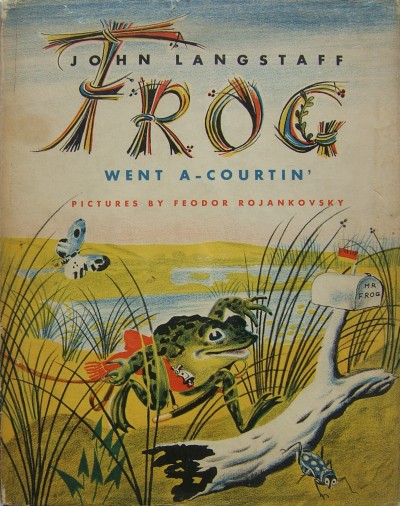 We recently performed an internet search for the first editions of the first twenty Caldecott Medal books, similar to past searches, to determine the number of book currently being offered for sale. The searches were performed across multiple book sites, ABE, ABAA, and Bookfinder, and were filtered for first edition books with dust jackets. See table, below. We recently performed an internet search for the first editions of the first twenty Caldecott Medal books, similar to past searches, to determine the number of book currently being offered for sale. The searches were performed across multiple book sites, ABE, ABAA, and Bookfinder, and were filtered for first edition books with dust jackets. See table, below.
Across the twenty Medal winning books, there are forty-five first edition books currently for sale, with an average asking price of $869. In our survey the asking price was not adjusted to the condition of the book being offered, so use the average price judiciously, since the book and jacket's condition has a major impact on valuation. Five Books In Absentia First editions for five of the twenty Caldecott Medal winners are not currently being offered for sale on the internet. Understandably it would be a seller's market for pricing any of these in first edition format with dust jacket. As was expected due to its scarcity Robert McCloskey’s Make Way For Ducklings (1942) is not available. Somewhat surprisingly, one copy of Virginia Lee Burton’s The Little House (1943) is currently being offered for $7,000. First editions in dust jacket for either book do not surface for sale very often. Similar to the last two years, there are no first edition copies of White Snow, Bright Snow (1948) and Cinderella (1955) currently for sale in the market. These two books are not as scarce as The Little House or Make Way For Ducklings so one would think the demand would eventually cause first edition copies to surface. In addition, there are no first edition copies of The Little Island (1947) or Leo Politi’s Song Of The Swallows (1950) on the market. The Little Island, illustrated by Leonard Weisgard, is another tough find, in part due to authorship by Margaret Wise Brown, under the pseudonym 'Golden Macdonald'. Books authored by Brown have an avid collectible following, with The Little Island being the eighth book she wrote under the Macdonald pseudonym. Brown passed away in 1952, and her final ninth and final 'Golden Macdonald' book was published posthumously in 1956, Whistle For The Train. While Weisgard illustrated hundreds of children's books, his work in The Little Island earned his only Caldecott Medal. |


