


Just lost when I was saved!
Just felt the world go by!
Just girt me for the onset with eternity,
When breath blew back,
And on the other side
I heard recede the disappointed tide!
Therefore, as one returned, I feel,
Odd secrets of the line to tell!
Some sailor, skirting foreign shores,
Some pale reporter from the awful doors
Before the seal!
Next time, to stay!
Next time, the things to see
By ear unheard,
Unscrutinized by eye.
Next time, to tarry,
While the ages steal,-
Slow tramp the centuries,
And the cycles wheel.
- Emily Dickinson
View all posts tagged as Poetry Friday at Bildungsroman.
View the roundup schedule at A Year of Reading.
Learn more about Poetry Friday.
new posts in all blogs
.jpg?picon=441) Posted on 5/27/2016
Posted on 5/27/2016
Blog: Little Willow - Bildungsroman (Login to Add to MyJacketFlap)
JacketFlap tags: poetry friday, emily dickinson, Add a tag
Filed under: Art, Books, Poetry, Reviews Tagged: Emily Dickinson, Tara Lilly
 Add a Comment
Filed under: Books, Reviews Tagged: Emily Dickinson
 Add a Comment
Posted on 7/3/2015
Add a Comment
Posted on 7/3/2015
Blog: Little Willow - Bildungsroman (Login to Add to MyJacketFlap)
JacketFlap tags: poetry friday, emily dickinson, Add a tag
Filed under: Books, In Progress Tagged: Andy Weir, Elif Shafak, Elizabeth Bishop, Emily Dickinson, Henry James, John Keats, Nuala O'Connor
 Add a Comment
Posted on 6/26/2015
Add a Comment
Posted on 6/26/2015
Blog: Little Willow - Bildungsroman (Login to Add to MyJacketFlap)
JacketFlap tags: poetry friday, emily dickinson, Add a tag
Posted on 2/20/2015
Blog: Little Willow - Bildungsroman (Login to Add to MyJacketFlap)
JacketFlap tags: poetry friday, emily dickinson, Add a tag
 By: Maryann Yin,
on 1/5/2015
By: Maryann Yin,
on 1/5/2015
Blog: Galley Cat (Mediabistro) (Login to Add to MyJacketFlap)
JacketFlap tags: Authors, Stephen King, Emily Dickinson, John Steinbeck, H.P. Lovecraft, Agatha Christie, Daniel Handler, Victor Hugo, Michael Crichton, Honoré de Balzac, Add a tag
Posted on 8/15/2014
Blog: Little Willow - Bildungsroman (Login to Add to MyJacketFlap)
JacketFlap tags: poetry friday, emily dickinson, Add a tag
.jpg?picon=1806) By: Joan Lennon,
on 7/19/2014
By: Joan Lennon,
on 7/19/2014
Blog: An Awfully Big Blog Adventure (Login to Add to MyJacketFlap)
JacketFlap tags: reading, poetry, Emily Dickinson, Joan Lennon, the Blitz, Add a tag

Posted on 7/11/2014
Blog: Little Willow - Bildungsroman (Login to Add to MyJacketFlap)
JacketFlap tags: emily dickinson, poetry friday, Add a tag
Posted on 3/7/2014
Blog: Little Willow - Bildungsroman (Login to Add to MyJacketFlap)
JacketFlap tags: poetry friday, emily dickinson, Add a tag
Filed under: Books, Poetry Tagged: Emily Dickinson
 Add a Comment
.jpg?picon=160) By: Matthew Cheney,
on 9/15/2013
By: Matthew Cheney,
on 9/15/2013
Blog: The Mumpsimus (Login to Add to MyJacketFlap)
JacketFlap tags: Writing, Quotes, novels, Emily Dickinson, James Baldwin, Add a tag
From "James Baldwin, The Art of Fiction No. 78" at The Paris Review:

 By: Jason Boog,
on 3/15/2013
By: Jason Boog,
on 3/15/2013
Blog: Galley Cat (Mediabistro) (Login to Add to MyJacketFlap)
JacketFlap tags: Friedrich Nietzsche, Fyodor Dostoyevsky, Edgar Allan Poe, William Shakespeare, Emily Dickinson, Charles Dickens, Writer Resources, Add a tag
.jpg?picon=590) By: Lorie Ann Grover,
on 1/31/2013
By: Lorie Ann Grover,
on 1/31/2013
Blog: readergirlz (Login to Add to MyJacketFlap)
JacketFlap tags: Lorie Ann Grover, Emily Dickinson, Chronicle, Michaela MacColl, Watch for It, Nobody's Secret, Add a tag
.jpeg?picon=2982) By: Caroline Starr Rose,
on 12/14/2012
By: Caroline Starr Rose,
on 12/14/2012
Blog: Caroline by line (Login to Add to MyJacketFlap)
JacketFlap tags: links, blogging, the writing life, editing, quotes, Emily Dickinson, blog stats, Add a tag
 Everyone Needs an Editor. Even You. :: C. J. Omololu
10 Ways to Build Long-Lasting Traffic to Your Author Website or Blog :: Jane Friedman
A Girl Who Reads :: Christina Lee
What Emily Dickinson Ate -- Coconut Cake :: The History Kitchen

 By: Heidi Mordhorst,
on 12/14/2012
By: Heidi Mordhorst,
on 12/14/2012
Blog: my juicy little universe (Login to Add to MyJacketFlap)
JacketFlap tags: Emily Dickinson, SPARK, e.e. cummings, my own work, Charles Waters, Add a tag
Many thanks to Jules for her wonderful Nebraska landscape and to Charles for his generous challenge!
The Round-Up today is with Jama at Jama's Alphabet Soup--always a tasty smorgasbord of treats. And next week I'll be your host right here; if you're planning to participate in my Solstice-themed edition of Poetry Friday, feel free to send me your links as early as you like!
 Posted on 8/10/2012
Blog: Little Willow - Bildungsroman (Login to Add to MyJacketFlap)
JacketFlap tags: poetry friday, emily dickinson, Add a tag


 By: Marfe Ferguson Delano,
on 3/29/2012
By: Marfe Ferguson Delano,
on 3/29/2012
Blog: I.N.K.: Interesting Non fiction for Kids (Login to Add to MyJacketFlap)
JacketFlap tags: Emily Dickinson, Marfe Ferguson Delano, Marty Rhodes Figley, Add a tag
 By: Caroline Starr Rose,
on 12/5/2011
By: Caroline Starr Rose,
on 12/5/2011
Blog: Caroline by line (Login to Add to MyJacketFlap)
JacketFlap tags: Barry Eva, A Book and a Chat, MAY B., class of 2k12, sod house, historical verse novel, interview, podcast, the writing life, Laura Ingalls Wilder, Emily Dickinson, verse novel, Add a tag

 By: Aline Pereira,
on 9/23/2011
By: Aline Pereira,
on 9/23/2011
Blog: PaperTigers (Login to Add to MyJacketFlap)
JacketFlap tags: Emily Dickinson, Poetry Books, United States, Jeanette Winter, Emily Dickinson's Letters to the World, Poetry Friday, Picture Books, Add a tag
View Next 24 Posts
Viewing: Blog Posts Tagged with: Emily Dickinson, Most Recent at Top [Help]
Results 1 - 25 of 50
Posted on 5/27/2016
Blog: Little Willow - Bildungsroman (Login to Add to MyJacketFlap)
JacketFlap tags: poetry friday, emily dickinson, Add a tag
By: Stefanie,
on 3/21/2016
Blog: So Many Books (Login to Add to MyJacketFlap)
JacketFlap tags: Tara Lilly, Books, Reviews, Poetry, Art, Emily Dickinson, Add a tag
Blog: So Many Books (Login to Add to MyJacketFlap)
JacketFlap tags: Tara Lilly, Books, Reviews, Poetry, Art, Emily Dickinson, Add a tag
 For better or worse I am a sucker for things Emily Dickinson. I love her poems so very much and she was such an interesting person — poet, gardener, baker of bread. So when offered the chance to review The Illustrated Emily Dickinson Nature Sketchbook I could not say no. Unlike past times I couldn’t say no, I was not disappointed this time around.
Just in time for National Poetry Month comes this gorgeous book that collects some of Dickinson’s poems about nature. But it isn’t just poetry. Illustrator Tara Lilly from Portland, Oregon, has created  visually enchanting artwork to go along with the poems. Birds and flowers and mushrooms, butterflies and bees, I love the colors and just sat looking at them and smiling. Together with Dickinson’s poems, the art creates an uplifting and pleasant experience.
But that is not all. Perhaps inspired by the popularity of adult coloring books, The Illustrated Emily Dickinson is also a sketchbook. Most of the poems have blank pages opposite on which the reader is encouraged to create her own art while under the influence of Emily. And maybe you believe you cannot draw anything worthwhile. You don’t have to draw if you don’t want to. Maybe you just have fun swirling some colors around the page. Or, the pages are thick and could support collage if that takes you fancy.
 There is no need to fear your own personal creations will be somehow lacking especially up next to Lilly’s art. Her illustrations are of the simple sort that look so easy anyone can do them. And even though we all know that is a difficult thing to pull off, it is comforting to the art-challenged because you feel like you can make a go of it. In other words, the illustrations are not intimidating but heartening. You could also use the book as a writing journal or even use the poems as writing prompts and the sketch pages as your writing area.
Even if you never find the confidence to add your own art, it is still a lovely book all on its own. It would also make a great gift for anyone with an artsy bent or who just plain loves Emily Dickinson.
Filed under: Art, Books, Poetry, Reviews Tagged: Emily Dickinson, Tara Lilly
Add a Comment
By: Stefanie,
on 8/17/2015
Blog: So Many Books (Login to Add to MyJacketFlap)
JacketFlap tags: Emily Dickinson, Books, Reviews, Add a tag
Blog: So Many Books (Login to Add to MyJacketFlap)
JacketFlap tags: Emily Dickinson, Books, Reviews, Add a tag
When the publisher offered me a review copy of Miss Emily by Nuala O’Connor I hesitated. It featured Emily Dickinson. I generally don’t accept books like this but Emily Dickinson is a favorite of mine and O’Connor is not a newbie author nor is she a nobody, so I thought I’d take a chance especially since the publisher offered a second book to give away.
I’ve been finished with the book for over a week and debating about what to say. You see, I didn’t care for it all that much. I wanted to be excited about the book, I really did. I spent time trying to convince myself to be excited about it, thinking about what I did like instead of what I didn’t. But I just couldn’t do it. So please forgive me if this review lacks enthusiasm. Miss Emily is not a bad book at all. It is well written and has some good things in it. I am just not the ideal reader for it. Maybe you are though so allow me to tell you a bit about it.
Miss Emily is one of those two narrator books with the story told in alternating chapters from the limited perspective of the two characters. The characters here are Emily Dickinson herself and the Dickinson family’s new maid-of-all-work. Fresh off the boat from Ireland, seventeen-year-old Ada Concannon is smart, skilled and spirited. It is her spiritedness that has gotten her sent to America to begin with. She lost a couple jobs in Dublin and word was getting out which would make it harder for her to get a good placement in another house. Her mother’s sister and brother-in-law are already in America, Amherst to be exact, and well established with good reputations. So off Ada goes on the boat. Just as she gets settled in at her aunt and uncle’s, word arrives that the Dickinson’s are looking for a new maid for cooking, cleaning and all the other household work that maids do.
Ada fits in well with the Dickinson household. She takes her work seriously, likes the family, and Emily takes a shine to her. The two become friends of a sort since Emily spends so much time in the kitchen baking bread and cakes. Ada starts seeing Daniel Byrne, local horse whisperer and it seems like life can’t get any better. Into paradise comes Patrick Crohan, lazy, mean and a drinker. He takes a shine to Ada who continually refuses his advances. So Crohan sneaks into the Dickinson’s house one night and rapes her. On this point turns the entire second part of the book.
Up until Ada’s rape I was mostly enjoying the book even though there was really nothing going on in terms of plot or anything particularly interesting at all. So when Ada is raped it serves solely as a plot point and a tired one at that. This frustrated me to no end because, while Ada does not get pregnant she does get gonorrhea. She tries to keep everything a secret because she is ashamed. Of course it doesn’t stay secret and we get the usual spectrum of it was Ada’s fault to Ada was the victim. And when Daniel finally finds out he decides to take justice into his own hands.
Emily herself portrayed so that at times she seems like she is a child and other times a grown woman. There is tension between her and her sister-in-law, Sue. It is a curious relationship with Sue married with children and treating Emily like a dear, intimate friend and Emily treating Sue at times like a lover. At one point Sue and Emily are in a close embrace and Ada walks in on them. Ada doesn’t find it odd even though she realizes she interrupted a private moment. Sue isn’t disturbed by it either. But Emily is. Emily gets a little angry and behaves as though she had been caught doing something she should not have.
There are some nice moments in the book with Emily thinking about her writing and what it means to her. It is these moments that kept me from completely disliking the book. In her solitude Emily thinks things like this:
Oh, chimerical, perplexing, beautiful words! I love to use the pretty ones like blades and the ugly ones to console. I use dark ones to illuminate and bright ones to mourn. And when I feel as if a tomahwak has scalped me, I know it is poetry then and I leave it be.
This echoes a real letter Dickinson wrote, and probably never sent, “I’ve got a Tomahawk in my side but that dont [sic] hurt me much.” In fact much of Dickinson’s portion of the narrative echoes of her words and poetry. That is probably why I liked her part better than Ada’s.
Nonetheless, I am not quite certain what the aim of the novel is. The events in the book are not based on any real events. Ada is entirely made up. I don’t feel like I have any better insight into Emily Dickinson the person. And Ada’s story feels terribly cliche to me. While I didn’t care for the story, as I said before, the writing itself is good. In fact, I think the writing is the only thing that kept me reading the book to the end.
If you think you may like the book more than I did and want your name tossed into a hat for a chance to win a copy from the publisher, do say so in the comments. Unfortunately, only folks with U.S. addresses are eligible. Sorry about that. I will draw a name Friday afternoon (August 21st).
Filed under: Books, Reviews Tagged: Emily Dickinson
Add a Comment
Posted on 7/3/2015
Blog: Little Willow - Bildungsroman (Login to Add to MyJacketFlap)
JacketFlap tags: poetry friday, emily dickinson, Add a tag
To love thee, year by year,
May less appear
Than sacrifice and cease.
However, Dear,
Forever might be short
I thought, to show,
And so I pieced it with a flower now.
- Emily Dickinson
View all posts tagged as Poetry Friday at Bildungsroman.
View the roundup schedule at A Year of Reading.
Learn more about Poetry Friday.
By: Stefanie,
on 7/1/2015
Blog: So Many Books (Login to Add to MyJacketFlap)
JacketFlap tags: Books, Emily Dickinson, Elif Shafak, Elizabeth Bishop, John Keats, Henry James, In Progress, Andy Weir, Nuala O'Connor, Add a tag
Blog: So Many Books (Login to Add to MyJacketFlap)
JacketFlap tags: Books, Emily Dickinson, Elif Shafak, Elizabeth Bishop, John Keats, Henry James, In Progress, Andy Weir, Nuala O'Connor, Add a tag
Can you believe it’s July already? I can’t. I was just getting used to June, just starting to feel like I was in the June groove, and now it’s time to move on. I am not ready. Can we turn the calendar back to June 15th please? That should be enough for me to get my fill of June and then when July 1st rolls around again I will be ready. Not going to happen you say? Where’s Marty McFly or the TARDIS when you need them?
Well, let’s barrel into July then. What will the month hold for reading? I get a 3-day holiday weekend coming up for Independence Day. Groovy, some extra reading time.
Even though I have been (mostly) good about keeping my library hold requests down to a manageable number, two books I have been looking forward to reading that have long waiting lines have, of course, both arrived for me at once. I now have to either a) rush through The Buried Giant and Get in Trouble in three weeks, or b) choose one to focus on and not worry about the other and get in line for it again if I run out of time. Choice “b” seems the most likely one I will go with which means Ishiguro’s Buried Giant will get my attention first. I am looking forward to it.
Carried over from last month, I am still reading Elif Shafak’s The Architect’s Apprentice. I am enjoying it much more than I was before even though I am making my way through it rather slowly.
In June I began reading Portrait of a Lady by Henry James and The Martian by Andy Weir. Two very different books and I am enjoying each of them quite a lot. James manages to be funny and ironic and ominous and can he ever write! I know people make fun of his long sentences but I get so involved in the reading I don’t even notice the length of the sentences. I do notice sometimes the paragraphs are very long, but that is only when I am nearing my train stop or the end of my lunch break and I am looking for a place to stop reading. And The Martian, is it ever a funny book. The book itself isn’t funny I guess, there is nothing very funny about being left for dead on Mars, the character, Mark Watney is funny; humor as survival tool. Weir, I must say, does a most excellent job of writing about complex science in such a way that is compelling and interesting and makes me feel smart.
I have a review copy of a new book called Miss Emily by Nuala O’Connor on its way to me. The Emily in question is Emily Dickinson. It’s a novel from Penguin Random House and they are kindly going to provide a second copy for a giveaway. Something to look forward to!
I will also begin reading Elizabeth Bishop this month. I’m still reading Keats letters and biography and poetry but he will get a bit less attention as I start to focus on Bishop. Much as I wanted to like Keats, it seems I like the idea of Keats more than the actuality; enjoy his letters more than his poetry. Not that his poetry isn’t very good, it is, at least some of it because there is quite a bit of mediocre stuff he wrote to/for friends that makes me wonder why I decided to read the collected rather than the selected. Hindsight and all that. But even the really good Keats poetry left me with mixed feelings. I mean, I appreciate it and sometimes I have a wow moment, but it generally doesn’t give me poetry stomach (the stomach flutters I get when I read a poem I really connect with). We’ll see how it goes with Bishop. I have her collected as well as her letters to work my way through over the coming months.
Without a doubt there will be other books that pop up through the month, there always are! The unexpected is all part of the fun.
Filed under: Books, In Progress Tagged: Andy Weir, Elif Shafak, Elizabeth Bishop, Emily Dickinson, Henry James, John Keats, Nuala O'Connor
Add a Comment
Posted on 6/26/2015
Blog: Little Willow - Bildungsroman (Login to Add to MyJacketFlap)
JacketFlap tags: poetry friday, emily dickinson, Add a tag
Much madness is divinest sense
To a discerning eye;
Much sense the starkest madness.
'T is the majority
In this, as all, prevails.
Assent, and you are sane;
Demur, - you're straightway dangerous,
And handled with a chain.
- Emily Dickinson
View all posts tagged as Poetry Friday at Bildungsroman.
View the roundup schedule at A Year of Reading.
Learn more about Poetry Friday.
Posted on 2/20/2015
Blog: Little Willow - Bildungsroman (Login to Add to MyJacketFlap)
JacketFlap tags: poetry friday, emily dickinson, Add a tag
The farthest thunder that I heard
Was nearer than the sky,
And rumbles still, though torrid noons
Have lain their missiles by.
The lightning that preceded it
Struck no one but myself,
But I would not exchange the bolt
For all the rest of life.
Indebtedness to oxygen
The chemist may repay,
But not the obligation
To electricity.
It founds the homes and decks the days,
And every clamor bright
Is but the gleam concomitant
Of that waylaying light.
The thought is quiet as a flake,-
A crash without a sound;
How life’s reverberation
Its explanation found!
- Emily Dickinson
View all posts tagged as Poetry Friday at Bildungsroman.
View the roundup schedule at A Year of Reading.
Learn more about Poetry Friday.
By: Maryann Yin,
on 1/5/2015
Blog: Galley Cat (Mediabistro) (Login to Add to MyJacketFlap)
JacketFlap tags: Authors, Stephen King, Emily Dickinson, John Steinbeck, H.P. Lovecraft, Agatha Christie, Daniel Handler, Victor Hugo, Michael Crichton, Honoré de Balzac, Add a tag
 At the beginning of a new year, many people often make resolutions to follow a healthy diet. mental_floss compiled a list of the “favorite workday snacks” of nine different authors. Jurassic Park novelist Michael Crichton enjoyed ham sandwiches while We Are Pirates author Daniel Handler enjoys raw carrots.
The other seven writers include Agatha Christie, Victor Hugo, Honoré de Balzac, John Steinbeck, Stephen King, Emily Dickinson, and H.P. Lovecraft. What do you think? Which snacks help you to stay focused while you’re writing?
New Career Opportunities Daily: The best jobs in media.
Add a Comment
Posted on 8/15/2014
Blog: Little Willow - Bildungsroman (Login to Add to MyJacketFlap)
JacketFlap tags: poetry friday, emily dickinson, Add a tag
Experiment escorts us last -
His pungent company
Will not allow an Axiom
An Opportunity -
- Emily Dickinson
View all posts tagged as Poetry Friday at Bildungsroman.
View the roundup schedule at A Year of Reading.
Learn more about Poetry Friday.
By: Joan Lennon,
on 7/19/2014
Blog: An Awfully Big Blog Adventure (Login to Add to MyJacketFlap)
JacketFlap tags: reading, poetry, Emily Dickinson, Joan Lennon, the Blitz, Add a tag
October 8, 1940, after an air raid on London
(AP photo)
There is no Frigate like a Book
There is no Frigate like a Book
To take us Lands away
Nor any Coursers like a Page
Of prancing Poetry –
This Traverse may the poorest take
Without oppress of Toll –
How frugal is the Chariot
That bears the Human Soul –
(This version of the poem is found on the Poetry Foundation website.)
Joan Lennon's website.
Joan Lennon's blog.
0 Comments on No Frigate like a Book - Joan Lennon as of 7/19/2014 11:51:00 PM
Add a Comment
Posted on 7/11/2014
Blog: Little Willow - Bildungsroman (Login to Add to MyJacketFlap)
JacketFlap tags: emily dickinson, poetry friday, Add a tag
If I can stop one heart from breaking,
I shall not live in vain;
If I can ease one life the aching,
Or cool one pain,
Or help one fainting robin
Unto his nest again,
I shall not live in vain.
- Emily Dickinson
View all posts tagged as Poetry Friday at Bildungsroman.
View the roundup schedule at A Year of Reading.
Learn more about Poetry Friday.
By: Guest Posts,
on 3/18/2014
Blog: The Children's Book Review (Login to Add to MyJacketFlap)
JacketFlap tags: Music, Writing Resources, Ages 9-12, Dance, Picture Books, Meg Rosoff, Writing, Toni Morrison, Author Interviews, John Green, Emily Dickinson, Dancing, Books for Girls, Dave Eggers, Christian Robinson, E. B. White, Jesmyn Ward, Cultural Wisdom, NoViolet Bulawayo, Josephine Baker, Patricia Hruby Powell, Jeanette Winterson. M.T. Anderson, My Writing and Reading Life, Uyen Nicole Duong, Add a tag
Blog: The Children's Book Review (Login to Add to MyJacketFlap)
JacketFlap tags: Music, Writing Resources, Ages 9-12, Dance, Picture Books, Meg Rosoff, Writing, Toni Morrison, Author Interviews, John Green, Emily Dickinson, Dancing, Books for Girls, Dave Eggers, Christian Robinson, E. B. White, Jesmyn Ward, Cultural Wisdom, NoViolet Bulawayo, Josephine Baker, Patricia Hruby Powell, Jeanette Winterson. M.T. Anderson, My Writing and Reading Life, Uyen Nicole Duong, Add a tag
Patricia Hruby Powell danced throughout the Americas and Europe with her dance company, One Plus One, before becoming a writer of children's books. She is the author of Josephine: The Dazzling Life of Josephine Baker, an extraordinary portrait of the passionate performer and civil rights advocate Josephine Baker written in exuberant verse. She lives in Champaign, Illinois. You can visit her online at talesforallages.com.
Add a Comment
Posted on 3/7/2014
Blog: Little Willow - Bildungsroman (Login to Add to MyJacketFlap)
JacketFlap tags: poetry friday, emily dickinson, Add a tag
Dear March, come in!
How glad I am!
I looked for you before.
Put down your hat-
You must have walked-
How out of breath you are!
Dear March, how are you?
And the rest?
Did you leave Nature well?
Oh, March, come right upstairs with me,
I have so much to tell!
I got your letter, and the bird's;
The maples never knew
That you were coming,-I declare,
How red their faces grew!
But, March, forgive me-
And all those hills
You left for me to hue;
There was no purple suitable,
You took it all with you.
Who knocks? That April!
Lock the door!
I will not be pursued!
He stayed away a year, to call
When I am occupied.
But trifles look so trivial
As soon as you have come,
That blame is just as dear as praise
And praise as mere as blame.
- Emily Dickinson
View all posts tagged as Poetry Friday at Bildungsroman.
View the roundup schedule at A Year of Reading.
Learn more about Poetry Friday.
By: Stefanie,
on 10/24/2013
Blog: So Many Books (Login to Add to MyJacketFlap)
JacketFlap tags: Books, Poetry, Emily Dickinson, Add a tag
Blog: So Many Books (Login to Add to MyJacketFlap)
JacketFlap tags: Books, Poetry, Emily Dickinson, Add a tag
I feel like I haven’t been reading much lately but I have. I have read all the books I had scheduled to read for October and will read my just in case choice, Hecuba by Euripides, this weekend. I’ve been reading lots of articles for my historical fiction MOOC and watching lectures. I am really impressed with the quality of the class. I started reading Year of Wonders by Geraldine Brooks for the class and have a few other books on hand. One of them, The Physick Book of Deliverance Dane by Katherine Howe, I will probably start reading tonight.
Last night I thought I’d take a break from all things historical fiction so I picked up Auden’s Dyer’s Hand, a book of essays I started long ago and then let languish. But this week seems to have gone on far too long and my brain is getting squishy. Perhaps I spent all my mental powers writing about Burke. Whatever it was, I read the first page of “The Dynamo and the Virgin” about four times and still had no idea what the heck he was talking about. It was not a good boost to my self esteem. I need a vacation. And I actually will be getting a little one. Bookman and I will be celebrating our wedding anniversary on Saturday so we decided to extend the celebration through Wednesday next week by taking a few days off. Woo! I can hardly wait.
What I really wanted to pass along tonight is a happy discovery I made today, the Emily Dickinson Archive. Dickinson’s papers are not all housed in the same place. What this digital archive does is creates a single place that gathers together online access to all of Dickinson’s digitized manuscripts. You can view the actual manuscripts and, even more amazing, is that you can do word searches on the texts if you are looking for something specific. There is also a lexicon of more than 9,000 words Dickson uses in her poems. It provides definitions when you click on a word. Neat, but what would be even more awesome is if it would also act as a concordance with links to the poems in which the word appears. Something for the Archive to work on for the future maybe!
For more details about the archive, there is a great article from the Sunday New York Times books pages. There is also an article in the Harvard Gazette.
Have fun playing!
Filed under: Books, Poetry Tagged: Emily Dickinson
Add a Comment
By: Matthew Cheney,
on 9/15/2013
Blog: The Mumpsimus (Login to Add to MyJacketFlap)
JacketFlap tags: Writing, Quotes, novels, Emily Dickinson, James Baldwin, Add a tag

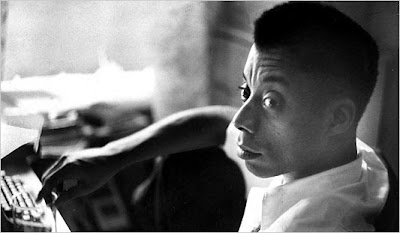
From "James Baldwin, The Art of Fiction No. 78" at The Paris Review:
INTERVIEWERYou read contemporary novels out of a sense of responsibility?BALDWINIn a way. At any rate, few novelists interest me—which has nothing to do with their values. I find most of them too remote for me. The world of John Updike, for instance, does not impinge on my world. On the other hand, the world of John Cheever did engage me. Obviously, I’m not making a very significant judgment about Updike. It’s entirely subjective, what I’m saying. In the main, the concerns of most white Americans (to use that phrase) are boring, and terribly, terribly self-centered. In the worst sense. Everything is contingent, of course, on what you take yourself to be.INTERVIEWERAre you suggesting they are less concerned, somehow, with social injustice?BALDWINNo, no, you see, I don’t want to make that kind of dichotomy. I’m not asking that anybody get on picket lines or take positions. That is entirely a private matter. What I’m saying has to do with the concept of the self, and the nature of self-indulgence which seems to me to be terribly strangling, and so limited it finally becomes sterile.INTERVIEWERAnd yet in your own writing you deal with personal experiences quite often.BALDWINYes, but—and here I’m in trouble with the language again—it depends upon how you conceive of yourself. It revolves, surely, around the multiplicity of your connections. Obviously you can only deal with your life and work from the vantage point of your self. There isn’t any other vantage point, there is no other point of view. I can’t say about any of my characters that they are utter fictions. I do have a sense of what nagged my attention where and when; even in the dimmest sense I know how a character impinged on me in reality, in what we call reality, the daily world. And then, of course, imagination has something to do with it. But it has got to be triggered by something, it cannot be triggered by itself.INTERVIEWERWhat is it about Emily Dickinson that moves you?BALDWINHer use of language, certainly. Her solitude, as well, and the style of that solitude. There is something very moving and in the best sense funny. She isn’t solemn. If you really want to know something about solitude, become famous. That is the turn of the screw. That solitude is practically insurmountable.
1 Comments on "Everything is contingent, of course, on what you take yourself to be.", last added: 9/17/2013
Display Comments
Add a Comment
By: Inderjit Deogun,
on 4/2/2013
Blog: The Pen Stroke | A Publishing Blog (Login to Add to MyJacketFlap)
JacketFlap tags: Poetry, Emily Dickinson, National Poetry Month, 50 Book Pledge, Clear Skies No Wind 100% Visibility, Hope is the thing with feathers, Théodora Armstrong, Add a tag
Blog: The Pen Stroke | A Publishing Blog (Login to Add to MyJacketFlap)
JacketFlap tags: Poetry, Emily Dickinson, National Poetry Month, 50 Book Pledge, Clear Skies No Wind 100% Visibility, Hope is the thing with feathers, Théodora Armstrong, Add a tag
| 50 Book Pledge | Book #19: Clear Skies, No Wind, 100% Visibility by Théodora Armstrong |
In honour of National Poetry Month, I present “Hope is the thing with feathers” by Emily Dickinson.
Hope is the thing with feathers
That perches in the soul,
And sings the tune without the words,
And never stops at all,And sweetest in the gale is heard;
And sore must be the storm
That could abash the little bird
That kept so many warm.I’ve heard it in the chillest land,
And on the strangest sea;
Yet, never, in extremity,
It asked a crumb of me.
0 Comments on “Hope is the thing with feathers” as of 4/2/2013 11:43:00 AM
Add a Comment
By: Jason Boog,
on 3/15/2013
Blog: Galley Cat (Mediabistro) (Login to Add to MyJacketFlap)
JacketFlap tags: Friedrich Nietzsche, Fyodor Dostoyevsky, Edgar Allan Poe, William Shakespeare, Emily Dickinson, Charles Dickens, Writer Resources, Add a tag

In a special Google Docs demonstration online, you can collaborate on a story with Charles Dickens, Friedrich Nietzsche, William Shakespeare, Fyodor Dostoyevsky, Emily Dickinson and Edgar Allan Poe.
As you type your text into the demo box, these writers will add little flourishes and quotes to your story.
We created a short story with the help of Dickens and Nietzsche, click on the image embedded above to see the collaboration in action. Who will you write with?
New Career Opportunities Daily: The best jobs in media.
Add a Comment
By: Lorie Ann Grover,
on 1/31/2013
Blog: readergirlz (Login to Add to MyJacketFlap)
JacketFlap tags: Lorie Ann Grover, Emily Dickinson, Chronicle, Michaela MacColl, Watch for It, Nobody's Secret, Add a tag

Coming from Chronicle, March, 2013, is Nobody's Secret. Do you like a mystery? Are you intrigued by Emily Dickinson. Find this work and enjoy!
At fifteen, Emily meets a handsome stranger, a Mr. Nobody, who only days later is discovered dead in her family's pond. With Emily's inquest, she moves through the mystery to understand and honor this man's life. Author Michaela MacColl begins each chapter with excerpts from Emily's own poems. The blending of fiction and fact is engaging in this fast page turner.
"I'm Nobody, Who are You?" Watch for it, rgz!
Nobody’s Secret
A Novel of Intrigue and Romance
by Michaela MacColl
Chronicle Books, March 2013
By: Caroline Starr Rose,
on 12/14/2012
Blog: Caroline by line (Login to Add to MyJacketFlap)
JacketFlap tags: links, blogging, the writing life, editing, quotes, Emily Dickinson, blog stats, Add a tag

10 Ways to Build Long-Lasting Traffic to Your Author Website or Blog :: Jane Friedman
A Girl Who Reads :: Christina Lee
What Emily Dickinson Ate -- Coconut Cake :: The History Kitchen
0 Comments on Writing Links as of 12/14/2012 9:48:00 AM
Add a Comment
By: Heidi Mordhorst,
on 12/14/2012
Blog: my juicy little universe (Login to Add to MyJacketFlap)
JacketFlap tags: Emily Dickinson, SPARK, e.e. cummings, my own work, Charles Waters, Add a tag
Once again I have participated in a round of SPARK, which randomly matches artists and writers who exchange inspiration pieces and then produce response pieces over a ten-day period. I always look forward to the challenge and to "meeting" a fellow artiste, and I've found that many of them are writers as well as painters or photographers or sculptors. Some people just gotta express themselves!
This time I was working from two inspirations, really. Recently my dear friend Charles Waters sent me perhaps the best compliment I will ever receive. Charles wrote that he liked my poems in The Poetry Friday Anthology (nice enough in itself!) and then, "I do believe if e.e. cummings and Emily Dickinson had a baby it would be you."
Oh my. If ever there was a compliment worth living up to, that's it. I even began to hope it might somehow actually be true (no offense to my actual earthly parents), and I went and double-checked birth and death dates to see if Emily and Edward might ever have met. (No. Emily died eight years before e.e. was born.) Still, I was wearing Charles's lovely speculation on my head like a crown (that's how good it made me feel) when I received this photo from Jules Rolfe, and so my response poem is all metaphysical and punctuated.
We Be
the grass is Always bluer—
the sky is Always greener—
the view of (Always) what’s to come
is better: finer: cleaner
@round the bend begins #the end—
We cannot hope to see her—
We set our sights, We claim our right
and many hopes to Be her—
Be all, end all #god and fate—
is she sky or grass or sand?
@round the bend We find the Light
if only Loose it from our hand
~Heidi Mordhorst 2012
The Round-Up today is with Jama at Jama's Alphabet Soup--always a tasty smorgasbord of treats. And next week I'll be your host right here; if you're planning to participate in my Solstice-themed edition of Poetry Friday, feel free to send me your links as early as you like!
8 Comments on SPARK 18, last added: 12/21/2012
Display Comments
Add a Comment
Posted on 8/10/2012
Blog: Little Willow - Bildungsroman (Login to Add to MyJacketFlap)
JacketFlap tags: poetry friday, emily dickinson, Add a tag
From cocoon forth a butterfly
As lady from her door
Emerged-a summer afternoon-
Repairing everywhere,
Without design, that I could trace,
Except to stray abroad
On miscellaneous enterprise
The clovers understood.
Her pretty parasol was seen
Contracting in a field
Where men made hay, then struggling hard
With an opposing cloud,
Where parties, phantom as herself,
To Nowhere seemed to go
In purposeless circumference,
As 't were a tropic show.
And notwithstanding bee that worked,
And flower that zealous blew,
This audience of idleness
Disdained them, from the sky,
Till sundown crept, a steady tide,
And men that made the hay,
And afternoon, and butterfly,
Extinguished in its sea.
- by Emily Dickinson
I posted this poem in the morning before venturing outside. Then I saw a butterfly. Then another. And another. By the end of the day, I had seen more butterflies in one day than I had seen all year. This is how my life works. Thank you, beautiful butterflies, for making me smile!
View all posts tagged as Poetry Friday at Bildungsroman.
View the roundup schedule at A Year of Reading.
Learn more about Poetry Friday.
By: Inderjit Deogun,
on 4/26/2012
Blog: The Pen Stroke | A Publishing Blog (Login to Add to MyJacketFlap)
JacketFlap tags: Candlewick Press, Emily Dickinson, Siobhan Dowd, Patrick Ness, A Monster Calls, Web of Words, 50 Book Pledge, The Selected Poems of Emily Dickinson, Add a tag
Blog: The Pen Stroke | A Publishing Blog (Login to Add to MyJacketFlap)
JacketFlap tags: Candlewick Press, Emily Dickinson, Siobhan Dowd, Patrick Ness, A Monster Calls, Web of Words, 50 Book Pledge, The Selected Poems of Emily Dickinson, Add a tag
| 50 Book Pledge | Book #23: The Selected Poems of Emily Dickinson by Emily Dickinson |
I present a passage from Candlewick Press‘s A Monster Calls by Patrick Ness. Inspired by an idea from Siobhan Dowd.
Nevertheless, the monster said, standing, the roof beams of his grandma’s office seeming to sigh with relief, that is what will happen after the third tale.
“Great,” Conor said. “Another story when there are more important things going on.”
Stories are important, the monster said. They can be more important than anything. If they carry the truth.
“Life writing,” Conor said, sourly, under his breath.
The monster looked surprised. Indeed, it said.
0 Comments on Web of Words: A Monster Calls as of 4/26/2012 7:47:00 AM
Add a Comment
By: Marfe Ferguson Delano,
on 3/29/2012
Blog: I.N.K.: Interesting Non fiction for Kids (Login to Add to MyJacketFlap)
JacketFlap tags: Emily Dickinson, Marfe Ferguson Delano, Marty Rhodes Figley, Add a tag

Almost midnight. I sit on the sofa, laptop on my lap. Beside me sprawls a big, beautiful, golden-haired dog. His name is Hucks and he is my best buddy. I catch his eye. "How did it get so late?" I ask him. "How could I leave my blog until the last minute?" I sigh. He sighs. He understands. He's been here with me before.
And then I get an idea. "Hey Hucks, maybe I could write about Emily and Carlo? Even though it's cataloged as fiction, it's still a true story, it's thoroughly researched and beautifully written and illustrated, and it's a wonderful introduction to Emily Dickinson's life and poetry, and it's only two days until National Poetry Month...and it's about a DOG!" He cocks his head at me. I can tell he thinks it's a great idea.
Written by Marty Rhodes Figley and illustrated by Catherine Stock in color-drenched watercolors, Emily and Carlo tells the story of the shy poet and her best friend for 16 years, her "shaggy ally," a huge, floppy, slobbery Newfoundland named Carlo. Featuring excerpts from Emily's poems and letters, it's a book about love and friendship ("I started early, took my dog, / And visited the Sea") and eventually, loss ("Carlo died...Would you instruct me now?). Kirkus Reviews called the book "a pleasing little window into Dickinson's life and an invitation to learn more about the fresh-breathed poet from Amherst."
My own shaggy ally is snoring now. I'll take that as a hint and wrap things up. Hucks and I recommend celebrating National Poetry Month by checking out Emily and Carlo. And we agree with Emily, by the way: The dog is the noblest work of Art.
0 Comments on "The dog is the noblest work of Art" as of 3/29/2012 3:52:00 AM
Add a Comment
By: Caroline Starr Rose,
on 12/5/2011
Blog: Caroline by line (Login to Add to MyJacketFlap)
JacketFlap tags: Barry Eva, A Book and a Chat, MAY B., class of 2k12, sod house, historical verse novel, interview, podcast, the writing life, Laura Ingalls Wilder, Emily Dickinson, verse novel, Add a tag
Consider passing the time by listening in on the recent interview I did with Barry Eva of A Book and a Chat. Download the podcast here.
Here are some highlights and where to find them in the interview:
2:00 -- Magic tricks with Caroline the Great
3:25 -- Laura Ingalls Wilder's influence on my writing
5:40 -- Deserts: Saudi Arabia and New Mexico
9:20 -- Marmite, Vegemite, and Promite

11:00 -- Poetry in the classroom
17:40 -- Reflections on the word "poet"
19:00 -- How MAY B. came to be a verse novel
20:30 -- Emily Dickinson's poems and Gilligan's Island

23:35 -- Books I wrote before MAY B.
24:20 -- Roald Dahl's writing advice
26:20 -- Inspiration behind MAY B.
29:30 -- MAY B. and dyslexia
34:15 -- Mail order brides
36:05 -- MAY B. overview
37:03 -- sod houses

41:05 -- more on MAY as a verse novel
43:40 -- A little secret about my exposure to verse novels
44:47 -- My publication journey
49:00 -- The amazing Karen Cushman
49:35 -- The Classes of 2k11 and 2k12

53:50 -- Future projects
5 Comments on Folding Laundry? Walking the Dog?, last added: 12/7/2011
Display Comments
Add a Comment
By: Aline Pereira,
on 9/23/2011
Blog: PaperTigers (Login to Add to MyJacketFlap)
JacketFlap tags: Emily Dickinson, Poetry Books, United States, Jeanette Winter, Emily Dickinson's Letters to the World, Poetry Friday, Picture Books, Add a tag
 With Jeanette Winter‘s Biblioburro selected as one of our new 2011 Spirit of PaperTigers Book Set, I have had a great time exploring more of her work. One little book that has delighted me is Emily Dickinson’s Letters to the World (Frances Foster Books/Farrar, Straus and Giroux, 2002)
It tells the story of the poet’s life through her sister, and begins with, “My sister Emily was buried today.” We are shown Emily’s room, and get a glimpse of her reclusive lifestyle – and then, in the course of the up to now rather sad narration, make the wonderful discovery alongside the sister, of the drawers full of poetry that nobody knew about while Emily was alive. Beginning with “This is my letter to the world”, it is a delightful way for young readers to be introduced to her poetry ,both for the poems themselves and their context.
The final two thirds of the book are given over to extracts from Dickinson’s poetry, ending with her sister’s avowal that “the world will read your letter – your poems.” And the whole book is a treat for anyone who loves Jeanette Winter’s illustrations. The poet’s voice is emphasised, with Emily Dickinson in her trademark white dress depicted in some way on almost every page.
Here’s the whole of one of those special poems:
Hope is the thing with feathers
That perches in the soul,
And sings the tune without the words,
And never stops at all,And sweetest in the gale is heard;
And sore must be the storm
That could abash the little bird
That kept so many warm.I’ve heard it in the chillest land,
And on the strangest sea;
Yet, never, in extremity,
It asked a crumb of me.
This week’s Poetry Friday is hosted by Anastasia Suen at Picture Book of the Day – head on over…
0 Comments on Poetry Friday: Emily Dickinson’s Letters to the World as of 1/1/1900
Add a Comment
View Next 24 Posts
Mr. Baldwin is fascinating, as always. It's been far too long since I've read him.