JacketFlap connects you to the work of more than 200,000 authors, illustrators, publishers and other creators of books for Children and Young Adults. The site is updated daily with information about every book, author, illustrator, and publisher in the children's / young adult book industry. Members include published authors and illustrators, librarians, agents, editors, publicists, booksellers, publishers and fans. Join now (it's free).
Login or Register for free to create your own customized page of blog posts from your favorite blogs. You can also add blogs by clicking the "Add to MyJacketFlap" links next to the blog name in each post.
Blog Posts by Tag
In the past 7 days
Blog Posts by Date
Click days in this calendar to see posts by day or month
Viewing: Blog Posts Tagged with: Genres, Most Recent at Top [Help]
Results 1 - 25 of 71
How to use this Page
You are viewing the most recent posts tagged with the words: Genres in the JacketFlap blog reader. What is a tag? Think of a tag as a keyword or category label. Tags can both help you find posts on JacketFlap.com as well as provide an easy way for you to "remember" and classify posts for later recall. Try adding a tag yourself by clicking "Add a tag" below a post's header. Scroll down through the list of Recent Posts in the left column and click on a post title that sounds interesting. You can view all posts from a specific blog by clicking the Blog name in the right column, or you can click a 'More Posts from this Blog' link in any individual post.
This week JJ and Kelly conclude their series on genres in publishing with ROMANCES. Also, we reveal the depth of our Harry Potter nerdery and our deep fandom past. TRIGGER WARNING: We discuss rape and consent in Old School romances.
Subscribe to us on iTunes, Stitcher, Soundcloud, or use this feed to subscribe through your podcast service of choice! If you like us, please, please, please leave a rating or review, as it helps other listeners find the podcast. We cherish each and every one of you who have taken the time to leave us feedback; you’re the stars in our sky!
Romance is the largest market of publishing in terms of sheer number of books being published, units being sold, as well as cash flow.
We discussed the hallmarks of other genres, but romance really only has the one: your main couple must end up in a relationship by the end of the book (the so-called HEA, or Happily Ever After, or the HFN, or Happily For Now).
Romance is a staple of publishing, and is a large part of what we now consider the literary “canon” but the modern romance novel as we knew it first came into existence in the 1970s. According to the Smart Bitches, the “first” modern romance novel is The Flame and the Flower by Kathleen E. Woodiwiss.
Romance novels are divided into Old School and New School romance: Old School are the books published pre-1990s.
Old School romances may be partially responsible for the “trashy” reputation around romance novels because there were forceful, rapist male romantic leads, but for other reasons, not the least because the stories were centered around female leads and female pleasure.
Old School romances were also about awakening the female lead, sexually, emotionally, etc. so some hangups about “virginity” (actual or metaphorical) linger.
Romance publishing is divided into two segments: category and single-title.
Category romances are specific lines from a publisher focusing on specific tropes and storylines. As a romance writer, it may be easier to break into publishing by starting to write for categories.
Single-title romances are focused more on the author’s name than the tropes, e.g. Nora Roberts. The stories and tropes are created wholesale by the author and is more similar to other trade publishing genres.
In terms of content, romances can literally contain anything. Anything! That’s the greatest thing about romance; it’s like Mad Libs: put in what you want and you’ll pretty much guaranteed to find a romance novel that fits that criteria. Romances span every genre: mystery, thriller, science-fiction, fantasy, contemporary, et al. What constitutes a ROMANCE as opposed to another genre is the centrality of the love story.
Romances can have series, either where friends or different family members get their own romances in separate books, or else it’s one central couple throughout multiple books.
That’s all for this week! We will be on hiatus for the next two weeks as both JJ and Kelly will be on vacation (not together, alas!). When we return, we will be starting a new series, wherein we break down stories to see what makes them successful or not. As always, sound off in the comments if you have any questions and we’ll see you in two weeks!
In order for an author to be successful, he or she must have a successful author brand. Your brand is your name. It’s what people connect you with or think about when your name is mentioned. For example, Stephen King = horror, Rick Riordan = young adult myths and legends, JRR Tolkien = epic fantasy, Kelly Armstrong = paranormal romance, and Diana Gabaldon = time travel romance. I could go on, but you get the picture. Each name evokes a genre or a series, and each brand is high concept.
So how do you develop your author brand (name) into a household word that conjures creepy clowns or teen demigods or hobbits or sexy werewolves or time traveling standing stones and kilts? You need to hit your readers in the heart. Create a positive emotional experience so that they’ll become loyal readers and word of mouth heralds for each book you publish.
This strategy is the basis of social media. You connect with others because of what they say, pictures they post, or the experiences they share. Somehow, an emotional cord is struck, and you want to reach out to people and give them your support or a kind word or thank them for making you laugh your ass off for posting a cute dog or kitten video. Emotion connects us all, makes us human. And depending what you share or post, if people like what they read or see or hear, they begin to trust you. If you’re an author who writes books with animals as main characters, you can bet you’ll grab the interest of animal lovers all over the world.
One way to help figure out your ‘brand’ is to create a tagline for yourself, just as you would for a book. I did a lot of soul searching on this and decided that I wanted to conjure feelings of nostalgia with each book I write—give my books that ‘good old days’ spin. Who doesn’t like happy memories of their childhood? So I came up with: Escape to the past and have a blast. Simple and direct. I want my readers to escape from the mundane and be drawn into a familiar world where they’ll have a pleasurable and exciting experience. At least that’s my hope!
When you find out what makes your audience tick, you’ve hit their sweet spot. You give them more of what they want. They need it. They crave it. Write it for them. Make them feel throughyour words. It’s what authors do. It’s what we crave.
So what about you? When it comes to reading, what hits your heart? What do you crave? Would love to hear your comments! Cheers and thank you for reading my blog!
0 Comments on Hit your Readers in the Heart… as of 11/16/2015 4:38:00 AM
The last few weeks have seen me getting back into writing full-time again, hence my long blog hiatus. And with writing comes, of course, editing and revising, and then revising again, and well, you know how it goes. An endless cycle of chop, change, doubt, re-organization, and finally having to say, "That's it! This book is FINISHED. No more edits until a copy editor tells me what to do." It wasn't easy to settle back into a writing routine. Most days I just wanted to go through my photos from Taiwan and play with watercolors. Fun ways to make the hours fly, but nothing that was going to get my WIP ready for a potential agent or publisher. In order to instill some discipline into my writing life, I desperately needed to remind myself of all the things I've ever taught and encouraged my own writing students to do. (Sometimes you have to be your own teacher!) Grabbing a new dry erase board and pen, I made myself a flow chart listing the top 12 ways to get me and my manuscript back into the writing zone. Here's what I came up with:
Focus. Boy, did I need this one. After Taiwan, my mind was a mess: I wanted to work on my novel, only to then want to write poetry, or work on a screenplay, or hey, what about that Young Adult thing in my filing cabinet, or no, a picture book might be even better. . . . After several false starts, I knew this had to stop. I had to narrow my vision, forget about the other projects (they're all lined up in boxes ready to be tackled one at a time), and concentrate solely on the most important manuscript, the one I was working on before I went on my trip. That's it. Just one manuscript at a time.
Mindfulness. Because I so desperately wanted that manuscript finished, I started to slash words, sentences, and paragraphs without thinking about how much work had gone into creating them. It seemed easier to toss phrases and pages that were bothering me rather than try to improve or rewrite them. After several hours of draconian "ruthless revising" I went back and retrieved all those toss-outs, learning that it was far better to savor each unwanted word, sentence, and paragraph until I knew how I could either fix or use them elsewhere in the story to their advantage.
Brevity. That said, sometimes my choices were right. Less is better in a manuscript. Focusing with mindfulness, I looked for all the ways I could say what I wanted to say without having to say it twice or with too much description.
Let go. It was imperative that I let go of everything that was blocking my way forward or eating my time: unrealistic expectations that I could be finished in a few days (leading to speed-editing); unnecessary shopping trips; housework that was simply routine and not because the house was dirty; and especially social media sites, including, unfortunately, my blog. It was hard, but I got so much done. And I'm back now!
Ritual. For some people it's lighting a candle before they start work, or choosing a favorite pen. My writing ritual, at least for this current book, was to make myself a cup of jasmine green tea, go out of my office and upstairs to my breakfast nook, and read a Chinese poem (translated into English!) from The White Pony before I began freewriting or editing. It was a great system, and one I intend to continue with my next project.
Music. I've always loved the idea of writing to music, and have enjoyed doing so when I've been in workshops or seminars, but it's often something I forget to do on my own. Recently I bought a small portable radio that I can use in both my office and the breakfast nook (or anywhere else for that matter). I've found it very helpful to put on what I used to call "elevator" or "waiting for the dentist" music to calm me down and set the tone of my writing session.
Magazine or artwork prompts. Using cut-out images from magazines, old books, and catalogs has always been my go-to story starter. Whether the pictures are of fashion models or reproductions of famous artworks, I couldn't live without my image library. For my current WIP I thought I had more than enough pictures to keep the story flowing, but I also realized many of the images had become somewhat stale--I had looked at them so often I had stopped seeing them. Starting a new collection solely for the last stage of the book seemed to revive all my interest in the story again, and gave me a fresh perspective on the older pictures when I paired them up with the new ones.
Meditation. I've never been a "good meditator" (whatever that means), having hopeless monkey mind and a tendency to squirm when I have to sit still without a book or a pen in my hand. That said, I have always appreciated the need to be quiet for a bit before I start my day or any creative work. The secret I've learned is to not set a time: "I will meditate for twenty minutes straight or else!" but just to give myself permission to stop and not be so busy-busy from the minute I get up or the second I sit down to write. Take a breath, take a minute, relax. Let go.
Choose a path/theme/genre/medium. My usual working style when starting anything new is to just let it happen. More times than not, genre or theme is something I choose for my work after my first draft. This time, though, and following through with #1: Focus, I decided to study and develop my genre/theme before I did anything else. It was a good decision--I found myself taking less side trips and getting right to the heart of my story a whole lot faster than in the past.
"How can I help?" It's nice to help other people, wonderful, in fact, but how often do we stop to help ourselves? I once read a quote that has always stayed with me about how the writer would never work for a boss as mean as she was to herself. Me neither--nothing but constant criticism, impossible deadlines, food and drink deprivation, and definitely no bathroom breaks allowed! When I'm writing, I can be horrible to myself. To break this tyranny, I wrote a "Letter to Me" asking what kind of help I needed to change the pattern. Some of my reply includes writing in 25-minute increments, followed by 15 minutes of anything non-writing related; rewarding myself with something special at the end of each day (can be as simple and inexpensive as a new library book); and making sure I put my writing, rather than the laundry, first.
Find a problem, brainstorm a solution. Halfway through my manuscript I realized I was being far too darn nice to my characters. I hated it when anything bad happened to them, so I'd hurriedly make it all better so they wouldn't suffer. Bad idea. Characters crave suffering--it's what makes them whole in the end! My solution was to make lists of terrible things that could go wrong for each of them, and then brainstorm several dozen ways to prolong the trouble. The lists also gave me ways to solve the problems without relying on coincidence or magic wands.
Write a gratitude or daily achievement list (especially after a rejection or a bad writing day). Not every writing day is a good day. In fact, a lot of them can be downright horrible, or at least they can seem to be until you really examine how the day went. Writing a gratitude list at the end of every day is an amazing practice. I like to go for a list of twelve. Even if the best I can do is write, "I have enough ink in my printer to send my manuscript out again." Or, "I got rid of four typos in Chapter 3," it's a win. (It's also positive proof that you're making progress, a good thing to remember and remind yourself when you don't even have ink in the printer.)
Tip of the Day: My absolute all-time favorite writing tip ever: Take a nap. Yes! Seriously! Napping can be a real creativity-saver, and it doesn't have to take up a lot of time. Whether it's in the middle of a hot Saturday afternoon, or as soon as you come home from work, don't fight the need to snooze--use it. To turn naps into real productivity, always have pen and paper right by your side so that as soon as you wake up, you can start writing. The results can be miraculous--new insights, new characters, new energy. I love it. So what works for you? Drop a line in the comments section and let me know some of your favorite tips, too. Thanks for visiting!
0 Comments on Return to Writing: Twelve Ways to Get Back on Track as of 8/19/2015 11:38:00 AM
There is a new genre emerging..."New Adult" fiction for older teens aka college-aged readers. You never stop growing up, but little in the market seems to address the coming-of-age that also happens between the ages ofNineteen to Twenty-six. Life changes drastically once high school is over, you have college, first jobs, first internships, first adult relationships…
Part of the appeal of NA is that the storylines are about characters who are taking on adult responsibilities for the first time without guidance from their parents. And the storylines generally have a heavy romance element. Keep this in mind as you revise your wonderful story, New Adult books are mostly about that specific time in every person's life—the time when the apron strings are cut from your parents, you no longer have a curfew, you're experiencing the world for the very first time, in most cases, with innocent eyes. New Adult is this section of your life where you discover who you want to be, what you want to be, and what type of person you will become. This time defines you. This is the time of firsts, the time where you can't blame your parents for your own bad choices.
An NA character has to take responsibility for their own choices and live with the consequences. Most storylines are about twenty-something (18 to 26) characters living their own lives without any parents breathing down their necks, and learning to solve things on their own as they would in real life. New Adult fiction focuses on switching gears, from depending on our parents to becoming full-fledged, independent adults. I am a firm believer that if you’re going to write a certain genre that you should read it, too.So I’m going to recommend that you start devouring NA novels to get a real sense and understanding of the genre before you write one. Here are some great recommendations: https://www.goodreads.com/genres/new-adult-romance and http://www.goodreads.com/genres/new-adult and https://www.goodreads.com/shelf/show/new-adult-romance
Just as YA is fiction about teens discovering who they are as a person,New Adult (NA) is fiction about building your own life as an actual adult. As older teen readers discover the joy of the Young Adult genres, the New Adult—demand may increase. This, in turn, would give writers the chance to explore the freedom of a slightly older protagonist (over the age of 18 and out of high school, like the brilliant novel, "BEAUTIFUL DISASTER" by the amazing talents of author, Jamie McGuire) while addressing more adult issues that early 20-year-olds must face.
Older protagonists (basically, college students) are surprisingly rare; in a panel on YA literature at Harvard’s 2008 Vericon, City of Bones author talked about pitching her novel, then about twenty-somethings, as adult fiction. After several conversations, Clare realized she had to choose between adults and teens. She went with teens.
Quote from the publisher, St. Martin’s Press: We are actively looking for great, new, cutting edge fiction with protagonists who are slightly older than YA and can appeal to an adult audience. Since twenty-somethings are devouring YA, St. Martin’s Press is seeking fiction similar to YA that can be published and marketed as adult—a sort of an “older YA” or “new adult.” In this category, they are looking for spunky but not stupid, serious but not dull, cutting-edge, supernatural stories.
Quote fromGeorgia McBride, author (Praefatio) and founder of #YALitChat and publisher at Month9Books: "New Adult is a fabulous idea in theory, and authors seem to be excited about it. But in a world where bookstores shelf by category, to them, it is either Adult or Young Adult. Some booksellers even call their YA section “teen.” And when you have a character who is over a certain age (19 seems to be the age most consider the start of New Adult), it is received as Adult. In some cases, the designation by publishers causes more confusion than not. Let’s face it, YA is associated with teens, and at 19, most no longer consider themselves teens. So, it would support the theory of placing these “New Adult” titles in the Adult section. However, with the prevalence of eBook content, it would seem that the powers that be could easily create a New Adult category if they really wanted to...."
There’s also a list on goodreads of New Adult book titles. These books focus on college age characters, late teens to early twenties, transitioning into the adult world.
You would think that after 20+ years in this business I would have all the answers. Well there are days when I definitely still feel like I have more questions than answers. One of those questions is how do you define the difference between thrillers and suspense. I tend to think that I like suspense more than I like thrillers and I think I know what the difference is, but when asked by writers to define them I'm not sure I know exactly how to do that. I guess I'm not sure the answer is always cut and dry.
So today I'm asking you. How do you define the two?
--jhf
0 Comments on Thrillers v. Suspense as of 11/19/2014 10:48:00 AM
I confess that I have been known to say that many, many books are my absolute favorites, to the extent that sometimes people roll their eyes and avert their attention. And I think that as a reader, this is true — I fall in love a little with story after story. But it is not true that as a teacher, I fall in love with every book that passes by. I read with different eyes for my classroom, and given limited time and resources, I get to choose fewer books on that front.
So recently Mitali Perkins released an edited volume called Open Mic: Riffs on Life Between Cultures in Ten Voices, a collection of pieces about being bicultural, and I fell in love twice. As a multiethnic person who loves thinking about these issues, I was on board immediately with the poignant, wry, and funny accounts about being in-between. Those are feelings I know well.
But I didn’t just fall in love with Open Mic as a reader — I feel in love with it as a teacher. The Common Core Standards (if your state is into those) push us to teach across genres more, to use multiple texts to work on synthesis skills, and to expand our text repertoires in ways I think could be important and useful. But in practice, I have found that my repertoire of texts is going to need some shoring up if I am going to shift my teaching that way.
In addition to having an exciting theme that I absolutely love for my classroom, the texts in Open Mic vary in genre. There is a poem, a personal account, a graphic opinion piece, and so on. Those different genres give me a whole new window into how we can build the skills to synthesize and analyze, because crossing genres necessitates that work. I can see the great usefulness of a collection like this, and I hope lots of other cross-genre collections around themes are on my near horizon. I can hardly wait to get started.
In my last two posts I covered a variety of alternative plots that deviate from traditional arch plot. In this post I want to address what is known as a plot genre.
You’ve probably stumbled across craft books that told you there are x-number of plot types and the story you are writing probably falls into one of these catagories. For example Blake Snyder’s Save the Cat offers the following list:
Monster in the House
Golden Fleece
Out of the Bottle
Dude with a Problem
Rites of Passage
Buddy Love
Whydunit
The Fool Triumphant
Institutionalized
Superhero
Or maybe you’ve stumbled across Ronald Tobias’ 20 Master Plots and How to Build Them, which offers these as plot variations:
Coming of Age Plot
Atonement Plot
Love Plot
Forbidden Love Plot
Revenge Plot
Mystery Plot
Adventure Plot
Rescue Plot
Escape Plot
Temptation Plot
You get the picture…
So, why aren’t these alternative plots? Why didn’t I include them in my alternative plot list?
Great question.
This is the difference between what I call a plot type and a plot genre. The list above is a category: romance, mystery, superhero, buddy flick, etc. They all come with conventions and audience expectations. And yes, they sometime even come with what one might call “obligatory scenes” (i.e. a scene you would expect from that genre of story). In my book, however, these are all still variations of the hero’s journey/goal-oriented plot. They don’t push the envelope of plot in a new way. Instead they use the conventions of arch plot to tell this variation of the goal-oriented story. Instead of a quest, it’s the goal to “get the girl” or “seek revenge” or “solve the mystery.” The reason we often hear that there is only “one type of story” is because we often lump everything (including all these genre variations) under the umbrella of a goal-oriented story.
Of course you can take any one of these genres and decide to use an alternative plot! Of course you can! And I’d love to see you do that.
But let’s not get confused. A plot-type is defined by the type of action and it’s cause-and-effect relationships. Whereas a plot-genre is defined by the category of the story-type and the expectations and conventions of that category.
0 Comments on Plot Genres as of 6/26/2013 4:43:00 AM
In my last two posts I covered a variety of alternative plots that deviate from traditional arch plot. In this post I want to address what is known as a plot genre.
You’ve probably stumbled across craft books that told you there are x-number of plot types and the story you are writing probably falls into one of these catagories. For example Blake Snyder’s Save the Cat offers the following list:
Monster in the House
Golden Fleece
Out of the Bottle
Dude with a Problem
Rites of Passage
Buddy Love
Whydunit
The Fool Triumphant
Institutionalized
Superhero
Or maybe you’ve stumbled across Ronald Tobias’ 20 Master Plots and How to Build Them, which offers these as plot variations:
Coming of Age Plot
Atonement Plot
Love Plot
Forbidden Love Plot
Revenge Plot
Mystery Plot
Adventure Plot
Rescue Plot
Escape Plot
Temptation Plot
You get the picture…
So, why aren’t these alternative plots? Why didn’t I include them in my alternative plot list?
Great question.
This is the difference between what I call a plot type and a plot genre. The list above is a category: romance, mystery, superhero, buddy flick, etc. They all come with conventions and audience expectations. And yes, they sometime even come with what one might call “obligatory scenes” (i.e. a scene you would expect from that genre of story). In my book, however, these are all still variations of the hero’s journey/goal-oriented plot. They don’t push the envelope of plot in a new way. Instead they use the conventions of arch plot to tell this variation of the goal-oriented story. Instead of a quest, it’s the goal to “get the girl” or “seek revenge” or “solve the mystery.” The reason we often hear that there is only “one type of story” is because we often lump everything (including all these genre variations) under the umbrella of a goal-oriented story.
Of course you can take any one of these genres and decide to use an alternative plot! Of course you can! And I’d love to see you do that.
But let’s not get confused. A plot-type is defined by the type of action and it’s cause-and-effect relationships. Whereas a plot-genre is defined by the category of the story-type and the expectations and conventions of that category.
Ingrid – I have to thank you for your marvelous plot posts. I have learned so much! Your descriptions have helped me think more clearly about my writing, and I refer to them often!
Saul Bottcher said, on 6/26/2013 5:18:00 AM
These posts on plot have been great. Thank you for encouraging people to break out of the goal-oriented plot and think about other ways of constructing their book.
L. Marie said, on 6/26/2013 6:44:00 AM
I need to bookmark this post, because this is GREAT info!!! I have a question though: are alternative plots better for certain age levels? For example, have you seen a MG book with an alternative plot?
ingridsundberg said, on 6/26/2013 10:22:00 AM
L. Marie – some might argue that alternative plots could be better received by younger audiences because they have had less exposure to arch plot and don’t find it as “uncomfortable” when they are presented with an alternative plot.
And, yes, there are MG books with alternative plots. The first that comes to mind is “Criss Cross” by Lynne Rae Perkins (which also won the Newbery).
When I first started taking art classes and learning how to draw and paint, I made a mistake common to most new artists: I painted everything in the middle of my paper and without any kind of background. Everything I drew just kind of hung in mid-air without a context to keep it anchored within the (nonexistent) setting. Over and over I'd have to go back into my pictures and add my backgrounds, if I could be bothered to do so at all, and that wasn't always an easy thing to do.
It was the same with my writing: I'd freewrite an exciting conflict scene out of the blue, add some troubled characters, and then have to figure out where they all came from. I'd have to travel back in fictional time and ask my characters questions straight out of a Henry James or Edith Wharton novel: "You want to marry whom? Where's he from? What's his background? Not one of those dreadful Van der Leeden Hoopsie-Kopecky boys is he??" A quick and easy fix to both these problems has been to tackle my backgrounds first. The benefits of this have been practically endless, not the least being "No More Blank Paper Staring Me in the Face," and "No More Wondering What to Write or Paint."
This is especially helpful when I find myself with a limited amount of time to work on a project, for instance a spare half hour or two when I know I could do something creative, but I'm not sure where to start. Working on the background for a future painting or story is the perfect solution. For some well-spent art time, I try:
Gessoing art journal pages or full-size paper or canvases. (Admittedly not the most exciting item on my list, but getting it done ahead of time is a huge step forward.)
Adding some color to the gesso--or simply using color on its own, perhaps mixed with a clear acrylic medium for texture and durability--is a great way to step up the excitement factor.
As is experimenting with brushstrokes: swirls, linear patterned grids, stippled dots.
Or doodling into wet gesso with a stick or the end of a paintbrush. A dry sponge or any other kind of imprint-making object is effective too.
Abstract collage: old newspapers, junk mail, decorative art papers--tear them up, paste them down, paint over with either a thin coat of gesso or a clear acrylic medium.
Sprinkle sand or seeds, confetti or even dirt into the damp medium for a super textural effect.
If you want to go beyond an abstract design, try drawing or painting a background of a more structured surface such as stone, brick, or wood. Or practice painting or drawing drapery of different kinds of fabric: seersucker, silk, cotton, terry cloth.
While I'm working on these visual backgrounds, I find it's helpful to not think about what I might place in the foreground. My job at this stage is to build up a good collection of styles, colors, and textures that I can easily turn to when I've got the time and inspiration for a longer painting session.
The same is true for writing. Having a collection of pre-written back stories on hand guarantees that I'll always have something and someone to write about in the future. You can do this too:
Without referring to any physical references such as a photograph or actual person, start by choosing a name at random, any name: Bunny McPherson; Lucky Holmes; Wendell Marlow. This is your new character. Now write about his or her early life: where have they come from?
The ancestors--who are they? What's their story?
Write about your character's childhood through the POV of a best friend--or a worst enemy.
Write about the various settings in which you could place this person: e.g., home, work, vacation/travel spot.
Write about a severe emotional trauma this person experienced as a child.
What's this person's biggest secret?
Place this character in a setting: restaurant, bus, city sidewalk, farmyard. Now envision the other people in the background: what are they doing? Who are they? How does your character interact with this background? Could any of them become secondary characters in a longer work?
I promise if you do this often enough and on a regular basis, a short story or novel will emerge without you even trying. Goal, conflict, and motivation--the big three essentials to plot and page-turning--are all in that background somewhere, just waiting to be uncovered.
The best part of having all my backgrounds--written and visual--in place before I start any new work is that often the finished background will determine what my next piece will be. Two weekends ago I took out a large piece of paper I had pre-painted in various shades of yellow and green. It turned into a scene I titled "Sunday Lunch." The green leafiness of the background brushstrokes lent itself to framing a shady outdoor terrace set for a lunch party. And because I always think art and writing are but two sides of the one story-telling coin, I was next inspired to write about the people who were going to eat their lunch there--more background grist for the writing wheel!
Tip of the Day: Shake it up: writers, try some painting! Artists--get our your pens and journals! Everybody: practice some backgrounds--ideally it would be fun to put both disciplines together into one lovely piece. How about writing a story or poem onto a painted background?
0 Comments on The Importance of Background as of 3/27/2013 1:15:00 PM
With my recent down time, I’ve been doing some thinking since I am not doing too much else. I’m thinking writing is a lot like cooking. Now for those of you who know me well, this may seem like a strange comparison considering that I dislike cooking and am rather fond of writing. Allow me to explain.
My husband and I have a blended family of six. Our mixture of his and hers children creates a unique schedule for many meal times. Some nights it’s just the two of us and other nights, we are feeding six. Over the years, meal time caused a certain level of angst for me. Trying to make sure I created meals that were healthy, that pleased everyone, and that were within budget were a challenge. I have never enjoyed cooking but trying to tackle this task made it more daunting. I fretted over meal planning, shopping, preparation, all of it.
As time as passed, I have started to worry less about covering all these bases. I began to focus on creating meals that were a little more fun and different and thought less about trying to please the masses.
And this is why I think cooking is like writing. So often, we are encouraged to write in a genre or style that we are not passionate about or simply have no interest in. As writers, we are sometimes pushed to try a new category because it is what’s “new” and “popular” but when it comes down to it, we may not care a bit about it.
I love writing children’s stories and short stories. I am also working on my memoir about my battle with heart disease. My focus is narrow and I am okay with that. I could try to write paranormal or horror but I promise, it would not worth anyone’s time. I think it is better to stick with what makes you happy. In my case, I write because I enjoy it rather than it being my job. Since I have that luxury, I can be picky. And as for the cooking, I fortunately married a fantastic chef!
* * * * *
Karen Guccione-Englert fell in love with words at an early age and now shares her love of reading with students at Orchard Farm Elementary. Outside of the classroom, she primarily writes children’s stories and short stories. Karen enjoys entering a variety of writing competitions to practice and refine her craft. In addition, she is an active member of Go Red for Women with the St. Louis chapter of the American Heart Association. Karen resides in St. Peters, Missouri with her husband, four children, and loveable pug.
~~~~~~~~~~~~~~~~~~~~~~~~~~~~~~~~~~~~~~~~~~~~ Would you like to participate in Friday "Speak Out!"? Email your short posts (under 500 words) about women and writing to: marcia[at]wow-womenonwriting[dot]com for consideration. We look forward to hearing from you!
~~~~~~~~~~~~~~~~~~~~~~~~~~~~~~~~~~~~~~~~~~~~
5 Comments on Friday Speak Out!: Why Cooking is Like Writing, Only Better!, Guest Post by Karen Guccione-Englert, last added: 3/9/2013
I learned this lesson last year after completing a manuscript for a novel I would never even pick up and read! After a couple of months off to regroup and look inward, I'm back on a writing track that suits my interests and gifts much better. Thanks for the affirmation.
Thanks for the comments ladies! I know that I hit the wall fairly early when trying to write when my heart isn't in it. I think it is important to try new things but at the same time, I know where my passion is and what drives me.
Hi Karen: I think you are write about not being able to finish a project if our heart isn't in it. So maybe it's okay to start new things or try new things, but give yourself permission to not finish it if you don't think it fits you. :) Love the photo of you in red, by the way! :)
I know writing is a business, but I still think we need to have passion in our projects to create truly masterful work. So I agree with you, Karen! And how wonderful you're married to a chef. :)
When people find out I'm a writer, sometimes they ask straight out: "What do you write?" Other times, I get a response that makes me fight the urge to snarl and froth at the mouth.
"Oh, you write children's books?"
It's not that I have anything against children's books. I love them to pieces and have hundreds on shelves throughout my house. As I grew up, Stan and Jan Berenstain, Laura Ingalls Wilder, and C. W. Anderson were demi-gods of literature. The thing that drives me bonkers is the assumption that because, 1) I'm a woman, and 2) I'm a mother, therefore I must write children's books.
There were several years there, when I first started writing, and I was afraid to tell anyone. If asked about my job, I said I was a stay-at-home mom. I always felt like a liar when I said that, though, because I wasn't happy with that role alone. Now, I'm honest.
I love being a mom, I love my kid, but I'm also more than that.
I may be home all day, but my brain is not confined to these walls. I'm on Wikipedia, looking up poisons and how to resuscitate people who fall into icy ponds. My mind travels to steampunk fantasy worlds, flits across the universe faster-than-light, and reads paranormal western novels before bed. I'm googling how to set up trip wire bombs and make meth labs, and probably flagged on more than one FBI watch list. I write dark stories about grandmothers who morph into cockroaches, or light tales about toilet gnomes who use magic to keep plumbing in good order; I also write feel-good Chicken Soup stories about beloved cats, or raising my autistic son.
I'm complicated, and proud of it.
When people assume I write for children, I politely correct them. "Oh, no. I write science fiction and fantasy, mostly, but I've also had stories in a number of Chicken Soup anthologies."
I get a lot of funny looks when I mention I write fantasy and science fiction. It confuses them. That's okay. I confuse myself sometimes.
Even if they shift awkwardly and change the subject after that, I know I have broken their concept of me, and broken the assumption they established for all writers who are also mothers. And most importantly, I've been honest with them and with myself.
Maybe, just maybe, I will write children's books someday, but I won't be confined by any genre or age group. I'm a mother and a writer, and my imagination is too big for any cage.
***
Beth Cato is an active member of the Science Fiction & Fantasy Writers of America, with stories in Flash Fiction Online, Daily Science Fiction, Stupefying Stories, and many other publications. She's originally from Hanford, California, but now resides in Buckeye, Arizona, with her husband and son. Despite how often her husband's co-workers beg, she will not quit writing to bake cookies all day long. Information regarding current projects can always be found at http://www.bethcato.com. Sometimes those projects do include cookies.~~~~~~~~~~~~~~~~~~~~~~~~~~~~~~~~~~~~~~~~~~~~
Would you like to participate in Friday "Speak Out!"? Email your short posts (under 500 words) about women and writing to: marcia[at]wow-womenonwriting[dot]com for consideration. We look forward to hearing from you!
~~~~~~~~~~~~~~~~~~~~~~~~~~~~~~~~~~~~~~~~~~~~
13 Comments on Friday Speak Out!: Defying Stereotypes, Guest Post by Beth Cato, last added: 2/11/2013
Nicely done! I had a comment once, from a parent of one of my daughter's classmate, that really struck a nerve. She asked, "what do you do?" and I responded that I wrote a little poetry, a little creative nonfiction. Her response was, "Oh, you don't really work, then." GRR.
I'm a woman and mommy but never been asked that one. I do get the usual questions: what do you write, where have you been published, do you make a living at it? It's easy to let the questions offend. After all, we hear them over and over or they hit a raw nerve (living?). But I try to remember most people are just curious, or asking a simple question. They don't know how common a question it is. I think most occupations probably have their set of stereotypical questions and I've probably been guilty of asking a few of them!
Beth: This is a great post. :) I love how you write about balancing the mommy act with the writer hat!
As for questions, my friend's husband is always saying, "So you write any books lately?" As if you just sit down to your computer and write a book in a day. . .
I really try hard not to ask annoying questions, but as Julie said, I'm sure I do.
On a side note, my husband is an air traffic controller and the response he usually gets is, "Oh, did you see Pushing Tin?" As if a movie shows truly how a career is--that would be like asking a doctor, "Oh, did you see Grey's Anatomy?"
@Jkathleencheney--I can't believe when you say you write fantasy, that people ask, "Like 50 Shades of Grey!" Egads--I thought everyone at least knew what fantasy was--the genre that is. :)
No offense, but it might do you some good to chill. I don't know why anyone would give you funny looks or get confused when you say you write SF/F, unless they sense they've touched a sore spot.
Every profession has its stereotypes. "Oh, you're a doctor? I've had this pain in my back..." "A lawyer, huh? Have you heard the one about the lawyer in the hot air balloon?" In high school I had a history teacher who was six foot plus and shaved his head. When he told people he was a teacher, they always said, "Oh, you teach PE?" So he would respond, "No. Interpretive Dance."
Whenever I see my FIL, he greets me with, "So when are they turning your book into a movie?" When I contact old acquaintances, they say, "Last we talked you were doing some writing. You still at it?" They're just trying to make conversation; there's nothing offensive about it. Writers are much too sensitive about "being taken seriously."
It's like there's a genre stereotype for every kind of writer. As a young-ish writer, I get the, "Oh, like Twilight?" a lot. Or worse, "Oh, like Twilight fanfic?" I do look a lot younger than I am, but that doesn't mean I write Twilight fanfic about my fantasy boyfriend. :P
I've never been asked if I write children's books but I have been asked what I do write, where I've published and when is my book coming out. I'm not published anywhere--yet--so those questions can be a little annoying but I figure non-writers don't know any better.
Publishers seem to prefer to keep their authors focused on a particular genre after they've achieved at least some initial success. No doubt there are business and marketing principles at work, and there are undoubtedly payoffs for both parties, but it might also be like fitting the author with a pair of horse blinders (remember those side flap goggles worn by the horse pulling the junkman's cart, to keep the horse's attention on the road ahead?).
The publisher may feel it has money invested in the author's name--the brand--and has hopes of building a faithful, ever larger consumer base for the brand. Our author meanwhile may be pleased by the past commercial success, but he's an artist for god's sake and may want to give free rein to new creative energies. So what if a venture into the new genre doesn't sell as well? Well, life is hard, money is tight, shareholders have expectations, and authors might be a little crazy. Still, if an author has a day job to meet subsistence needs, riding a new bull at the rodeo might be exhilarating.
Famous authors are more likely to get a nod from their publishers when submitting cross-genre work. Some whom I have read with good crossover adult, young adult, and middle grade novels within their individual collections include Louise Erdrich, Carl Hiaasen, and Neil Gaiman, to name just a few. So it can be, and is, done. It's just less of a financial risk for the publisher, or career risk for the author, if the author already has a following.
Of course it's also less of a risk if the author is still inhabiting the same moral and physical universe of his other genres. Neil Gaiman might not reverberate in romance genre as well as in his more typical fantasy genre. It could be interesting to see what happens though.
Another way to potentially upset your hardworking publisher is to run your next piece of work past him with a pseudonym on it. "Some famous authors publish under pseudonyms so that they can get a fresh reading of their work," says an article in the NY Times (2/23/2012). "In 1987 Joyce Carol Oates released a book under the name Rosamond Smith but apologized and swore off pseudonyms when her publisher discovered what she had done." Apparently they didn't think it was a very good decision in her case, but authors might resort to using pseudonyms for various reasons. In earlier times women authors sometimes adopted men's names in hopes of being taken more seriously as writers. Joanne Kathleen Rowling took the neutral gender J. K. Rowling in hopes of better attracting more boy readers.
The same Times article discusses an author, Patricia O'Brien, who had published several books including a novel, but whose most recent novel had been submitted to 13 publishers by her agent without finding a home. An Internet check on BookScan showed it had sold only 4000 copies, which was considered a flop. However, her agent, who had a lot of confidence in the book, said "I realized that the book was not being judged on its merits. It was being judged on how many books she has sold. I needed somebody who couldn't look on BookScan." When the book reached another publisher under Ms. O'Brien's new pseudonym, Kate Alcott, there were no adverse digital footprints found on Internet searches, and it received an enthusiastic reading, and was accepted. In time Ms. O'Brien came clean with the publisher, everyone remained friends, and the same publisher later bought another novel from Ms. O'Brien. A fortuitous outcome in this case.
I have written a novel where the main POV character is around 18 years old. There’s also a secondary POV character who’s 45 years old. This secondary character takes up almost as much page space as the younger character. It’s maybe a 60-40 split. There’s a mystery involved, and while the younger character gets involved in the mystery, his story is really a coming of age. The secondary protagonist’s job is to solve the mystery.
My beta readers all say I have written a young adult novel.
Based on the younger protagonist’s POV then yes, I can see what they’re saying. Also, my writing style fits YA quite well. However, almost half the book is from an older woman’s point-of-view.
I might add that the book was not written as YA. It’s just that the protagonist was young.
If I take the basic rules of query writing – stick with the character you start the story with and follow their arc – then when I query it’s going to be about the kid. Sample pages will be from the kid’s point-of-view, because the first couple of chapters are his.
Does it matter if I say it’s a young adult novel and then have a major secondary character who is a lot older?
If I say it’s an adult novel – or rather, don’t say it’s YA – how will an agent feel when they read the query and the sample pages? This author has no idea of her own market?
Do I need to explain about the two different protagonists in the query?
Does the very thought of a combination like this make you, as an agent, throw up your hands in horror?
This is one of those situations where I would have to read the book to know which genre it fits into. Honestly, based on your plot description, it doesn't necessarily sound like a young adult though. It sounds like for one character you have a coming of age, but the book overall is a mystery.
Ever since YA became "the thing" there's this assumption that just because you've written a great young adult character in a book the book has to be characterized as young adult. Not true. There are many fabulous works of fiction that have included well-written young adults, but would not be classified as young adult. One that pops into my head at the moment, or an author that pops into my head, is Jodi Picoult. Jodi regularly includes a character arc for a young adult character and often that character arc plays as strong of a role as the adult's arc, but never (to the best of my knowledge) have her books been classified as young adult. Part of that is that she doesn't have a young adult voice.
I think what matters is knowing who your audience truly is. Is this a book that would fit in today's young adult market, that would sell on those shelves to those readers? if so, it's definitely young adult. Or would you say this is a book that would appeal more to mystery readers because the mystery is truly the element that's the strongest? What about fiction, is this maybe a piece that's better classified as women's fiction or literary fiction? Who do your readers otherwise commonly read? Where is that author placed on the shelves? Maybe that will help you have a better understanding of where you should classify it.
I don't think you need to explain the two different protagonists per se, but I do think it's important that you explain the story as a whole. If the older woman plays as strong of a role in the book as the younger character, are you misrepresenting the book by only talking about the story arc of the one character? In other words, is it the story of "two very different people..." instead of focusing on individual characters?
A lot to think about, I know, but without reading your query and knowing your book I'm afraid I don't have any specific answers.
This post is actually inspired by a series of tweets agent Deidre Knight (@DeidreKnight) did a while back.
What book or author do we wish we had discovered?
When I first read her tweet there was one person who immediately popped into my mind and that's Sarah Addison Allen. I've read all of her books and I can say I have loved almost all of them, the other one I just liked. I love the way she weaves mysticism into women's fiction, creating almost a genre of her own. This is someone I would love to have found in a slush pile somewhere. —Jessica Faust
Just one? Of course, I wish I had discovered J. K. Rowling and Harry Potter and the Sorcerer's Stone. Other dream books are Megan Hart's Dirty and Mary Roach's Stiff. Three very different books, but three I never get tired of rereading. —Jessica Alvarez
R. L. Stine. I know that sounds weird, since I don't represent horror for any age group, but I admire Stine (and his 350 million books sold) because he's been writing for decades, has churned out one fun, cool title after another, created a middle-grade series (Goosebumps) that became a television series and selection of movies, and most intriguing and valuable to me, he writes in several age groups from middle-grade to adult—and he shifts with changes in publishing. Aside from all that, I still read his books . . . and I'm still scared. If R. L. Stine suddenly queried me, I'd represent horror. —Lauren
While it may seem like too obvious or easy an answer, I have to say Suzanne Collins. Honestly, even though I first read The Hunger Games as a book and not a submission—and even though millions of readers had already found her before me—when I was turning those pages I felt like I had made an amazing discovery. That trilogy—especially the first book—really is the whole package: characters we care about, edge-of-the-seat suspense, and an always-keep-us-guessing romantic triangle. When I finished it, I really felt like I'd just ridden a roller coaster and experienced a true classic at the same time. —Kim
7 Comments on The Book/Author I Wish I Had Discovered, last added: 2/5/2012
From a writer's perspective (especially one who is querying their novel), this is a very interesting and useful, exercise. I think every agent website should have a list of authors/books each agent wishes s/he had represented.
Thanks!
Anonymous said, on 2/2/2012 9:11:00 AM
ummmm...me! You just don't know it yet because I've not queried! ;) PLJ
The job not taken, the one never offered, the lover turned down, the one who didn’t stay, the unborn child. Sometimes we are given the choice and sometimes not. Chance not offered is a slush-pile of what-ifs.
I was discovered forty-years ago through no effort of my own. They said I was going to be famous. That I am still unknown tells the end of that sad tale. If I had a do-over, would I change anything? No I would not.
Ladies…if any of you had those writers in your stable you would not be doing what you are doing right now. You make right the path for all of us. That’s worth all the Allens, Rowlings, Stines and Collins of the writing world...ah...maybe not Rowling, I mean jeez she’s bigger than big. And the others...well...I’m about to slice me a piece a pie. It’s called humble, bitter with just a hint of sweet.
Would you really have liked to discover J.K. Rowling as your primary choice? I understand the fame and fortune aspect, but I couldn't see myself sitting down with her over a nice cocktail and talking about anything other than wizarding and quidditch! I want a soulful, deep writer with a rather strange history,
And (drum roll, please...) I am so thrilled and honored to tell you that I have been included in this collection. My article "Deep Motivation: Characters Have Feelings, Too" starts on Page 267.
Edited by Sherry Ellis and Laurie Lamson, Now Write! Mysteries is the fourth volume in a series that includes Now Write! Fiction and Now Write! Screenwriting. Right now I'm totally enthralled with this book (and not just because I'm in it...) and I'm happy to report I'm also doing each and every one of the exercises as per my recent post on staying creative every day. I'm up to page 20 and, people, I am inspired. This is an amazing book full of great advice. I think it's going to keep me happy and writing for the rest of the year and beyond.
If you'd like a free copy, there's still some time to follow my blog today and be included in the random drawing tonight via Random.org. Note: Anyone who has signed up to follow my blog through my page at JacketFlap.com is considered a "follower" too and will be included in the drawing.
Prizes in the drawing will include:
1st Prize: The Essential Guide for New Writers
Now Write! Mysteries
Unleashed, of Poltergeists and Murder
Better Than Perfect
The Great Scarab Scam
Journal
Pens
Tote Bag
And a Surprise Gift!
2nd Place: The Essential Guide for New Writers
Now Write! Mysteries
2 Comments on Now Write! Mysteries and My Blog Giveaway, last added: 2/2/2012
Re: Your article "DEEP MOTIVATION: Characters Have Feelings Too" -- What an interesting point! This is something we often overlook, and yet the very thing we need to keep the story alive!
It's a thrill to be one of the winners of your contest. Thanks, again!
I've been trying to wrap the basic marketing language around the book I'm close to finishing, and am having a tough time classifying it. My main character is a tough, no-nonsense, middle-aged woman who kidnaps her granddaughter, and the story takes place in large part on the road in rural Alaska. It's edgy and stark, a little frightening in places, though it isn't horror/crime/mystery, and while the heart-warming moments are few and far between, it DOES revolve around this woman's relationship with her son and daughter-in-law and the tough choices we make as parents.
As I get ready to query, would calling this women's fiction, since the primary market would most likely be women, throw an agent off since it seems to depart from the loose definitions of women's fiction I'm seeing? Is there a better way to wrap it?
As I often say, it's all about the voice. Women's fiction is not simply a book whose target audience is women. It's also a book about a woman's personal growth and change and it tends to be strongly emotional. It sounds like your book is women's fiction, but without reading it I have a hard time judging.
Jessica
6 Comments on Understanding Women's Fiction, last added: 11/18/2011
Would the same themes, etc., hold if it were a grandfather kidnapping the grandchild? If so, it's probably not women's fiction, and would probably just fall into the regular literary or commercial categories.
I have the same problem with The Disappointment Room. It is an historical, suspense, a little romance, multi-cultural (Gullah)and family saga. Having a hard time classifying this novel. Any suggestions?
I believe that it still would follow under Women's Fiction. I look forward to reading your book. Although it isn't how books are handled, sometimes books should be set with categories after one has read the book.
My novel is about a collage age student on a journey of self discovery. There are paranormal events, some sci fi components, romance, but ultimately it is about the main character finding herself and accepting all that she is. So here's my question, where would my story fit? I have tried representing it in different ways, but some agents suggest different catagories. I even had it classified as New Adult, but is that the best place? Any resources or help would be greatly appriciated. :-)My goal is to reach a larger audience, but if I classify my novel as New Adult, would these other components be okay as cross genres?
It's really hard for me to tell you where your story will fit without reading it. My question to you would be who will read your book? What else are they reading? Personally, I'm not a fan of the term "new adult." I think it's silly and, yes, I could easily be proven wrong and it could become a new genre, but in my mind it's a trendy term that's going to be gone tomorrow. Besides that, at what point do people go to the bookstore or log into their ereaders and ask for the "new adult" section. There's YA, there's mystery, there's SF (not Sci Fi, by the way), there's romance, etc., but I've never seen new adult. When all else fails, label it fiction, but it sounds like you're writing a genre that needs a genre home. You need to find which home.
One thought, the one authors hate most to hear, is maybe it doesn't fit anywhere. Maybe you've tried to make your book into something it can't be and you need to go back in and strengthen certain areas of your book so that it is something.
Now, before someone named "anonymous" jumps in to tell me that this is the problem with publishing and all of us who work in it, that we have no imagination and need everything to be the same, let me point out that in the advent of ereaders we're seeing a real strength in proper categorization. Generally labeled books are not doing as well as genre labeled books. People are finding it easier to go into a section in their ereader bookstore to buy a book than they are sifting through a fiction section where some books might fit their interests while a lot do not. That does not mean that you slap any label on a book. Your label needs to fit the expectations of the readers.
Jessica
16 Comments on Classifying Your Novel, last added: 10/25/2011
I'm still trying to learn the proper use of tag lines, but you've made a neat point IMHO (not necessarily the one I should have been looking at, but...)--as more readers move away from the traditional brick and mortar stores (mainly because so many of the stores have "moved away" from readers)those tag lines become more important. They open our books to entirely new audiences as long as we tag them properly, something that couldn't be done in brick and mortar stores.
My Wolf Tales series (erotic paranormal romance) were often shelved under "women's studies" because of their eroticism, or in the "erotic literature" part of the store, when they are essentially just very explicit romances. It was not always easy for readers to find them. The use of proper tags means our books can reach the readers they're intended for.
What do you have to say about the much-remarked-upon recent trend of literary writers (like Jonathan Lethem, Lev Grossman, Tom Perrotta, George Saunders, Cormac McCarthy, Kelly Link, and Colson Whitehead, among many others) using elements of genre to create work that defies easy classification? Their books have been attracting a lot of critical attention and enthusiasm. And what about popular novels like The Time Traveler's Wife, The Dogs of Babel, and The Lovely Bones that attract an audience of primarily non-genre readers but nevertheless use paranormal or SF elements? These books "don't fit anywhere" -- except on the NY Times bestseller list?
That's one thing I've done in my writing - ensured that my novels fit into pretty specific genres so that when/if I pitch them, there is no question where they belong.
Chawmonger-- you find those in the literature section, I believe (a lot of stores just label it 'fiction' or sometimes 'literary fiction'). Beloved, by Toni Morrison-- full of ghosts, but the overriding factor is the literary style, so it's in literature and not horror. I used to find Christopher Moore in fantasy, but now he's graduated to literature, too, I suppose because every novel is a different genre and just linked by his humorous style.
It's not that one genre and only one genre can be informing the work-- but something has to be dominant enough for readers to recognize it as something they like.
I think the key is labeling the genre based on who will be interested in reading the book. If your book takes off and sells a millions copies, it won't matter as much. But until then, market so that the best potential readers can find it.
This reminds me a bit of discussions about titles, specifically painting titles. (I used to manage a couple of co-operative galleries for myself and fellow artists). It turns out that a painting with a descriptive title, such as "Reflections in Blue", will sell faster than "Untitled #12". This holds especially true for nonrepresentational works. Those artists who didn't want their art "categorized" and refused to provide titles or any description about their work, rarely sold anything.
A viewer can observe a painting in its entirety within moments (though great art makes us linger), and yet titles make a huge impact on sales. A novel can only be absorbed page by page. You can't "see" if a novel will interest you with a glance. This makes me think that proper labeling is even more important for novels than we writers may think.
The comparison I'm making isn't perfect, but the point is, buyers really do want to know what they're buying, and most of them need to be told. Putting a label on your work doesn't diminish it. Rather, it's like holding a door open and inviting people inside.
My book "Redemption for the Hypnotist" doesn't exact fit neatly into any genre either. It's a romance from a man's point of view, and it's a story of personal growth. But I ultimately settled on classifying it as an erotic novel because of the explicit sexual descriptions. I might not reach all of my potential audience, but I won't shock anyone with the content.
Ah--positioning! Those who try to sell a product must "position" it, i.e. tell the audience what to expect so the audience can decide whether that sounds like something they'd enjoy.
Positioning probably made Margaret Atwood's career. If The Handmaid's Tale had been shelved in science fiction, she'd still be adulated by her fans, but there'd be fewer of them, and would she still be recognized as one of the best writers in the world?
She was positioned to appeal to the largest group of people who would "get" her writing--those who read literary fiction. Audrey Niffenegger and Christopher Moore are benefiting from similar positioning.
I am an SFF writer, and I hate that my genre is a ghetto, but I have to admit it was a smart decision for Ms. Atwood to resist being classified as a science fiction writer.
Anonymous said, on 10/24/2011 1:04:00 PM
I think multiple tag lines are more important that specific genres with e-books. No one knows what genres are anymore. At least not the readers. They type in broad tag lines, do a search, and look until they find something they like.
What’s playing on the XM or iPod right now? MY HEART BELONGS TO ME by Barbara Streisand
Holy cow! Can't believe I missed this article yesterday. I'm so glad an agent friend forwarded to me. Take a moment to read it and tweet it on but in short, it's an appeal to support literature with gay and lesbian characters and the fact that there are some appalling agents and editors out there who are making requests that the writers make a gay character straight.
Seriously? What year are we in?
I cannot tell you how delighted I was to see a link to a list of YA literature that features gay/lesbian characters and my author Sarah Rees Brennan's THE DEMON'S LEXICON series was on it.
This author of mine is brilliant. It's a wonderful series and her new trilogy that I just sold to Random House also has an absolute kick-a** gay/lesbian main character. The first book UNSPOKEN publishes in fall 2012.
Not to mention, I have a Monica Trasandes' debut adult literary novel coming out in spring 2012 from Thomas Dunne Books/St. Martin's Press. It's called BROKEN LIKE THIS and features three main protagonists: a bisexual character, a gay/lesbian character and a straight male character (had to throw that last one in there-LOL).
A multicultural author to boot. I'll tell you right now it was a tough sell but I loved the novel and I sold it.
So add these to your wish lists if you want to show support via your buying dollars. If I had cover art or anything yet for these two titles, I'd post it here but we are in the middle of the cover design and the buy links aren't available online yet.
And let's not forget the incredibly brilliant, witty, impeccably dressed and extremely powerful Lord Akeldama from Gail Carriger's The Parasol Protectorate series.
I must admit it never occurred to me to add to my agency's submission page that we are open to accepting material with LGBTQ characters because I kind of thought it went without saying but I'm rethinking it now.
Feel free to link to this blog post that it's a-okay with us and I have NEVER asked an author to change a character's ethnic background or orientation.
And because we are talking about multicultural too, check out my author Kimberly Reid's debut YA novel MY OWN WORST FRENEMY. It's an African-American urban Nancy Drew series. I mean, just how cool is that?
Note: LGBTQ stands for Lesbian, Gay, Bisexual, Transgender, Queer/Questioning.
Though I’ve only been with BookEnds since April, I’ve already made some shifts in what kinds of projects I’m looking to represent. Some of this has to do with changes in market trends, but a lot really has to do with my personal reading preferences. I want to be enthusiastic about each and every book I work on, and if I’m just not getting excited about submissions in a particular genre, I think it’s better for everyone if I concentrate my energies elsewhere. With that said, my focus is absolutely still on a wide variety of full-length, adult romance and women’s fiction. I’m not actively looking for YA, novellas, or nonfiction.
To help give you a better idea of what I’m looking for, maybe I should tell you about some of the clients I’ve taken on. I have a bit of a spread. So far, I have clients who write historical romance, historical erotica, paranormal erotica, category romance, romantic suspense, women’s fiction, and African literary fiction.
That last one may have surprised you, right? It’s actually not quite as outside of my stated interests as you might think. While I am looking to focus on commercial fiction, I absolutely love women’s fiction set in exotic locations, and would love to receive more projects set abroad. I have a special interest in books set in Iran, India, and Southeast Asia, but would also welcome more submissions set in African or European countries, or set in the US but with a focus on immigrant communities.
I’m looking for a wide variety of contemporary romance, but I’d particularly like to see more small-town books in which the town and community are richly developed. Southern settings and New England settings work particularly well for me. Overall, I tend to gravitate toward darker voices and storylines, but quirky, comedic stories can be great, too.
With historicals, I have a strong preference for very sexy Regencies and Victorians. Also, it’s probably worth noting that I tend not to enjoy historical fiction as much as I do historical romance. As with contemporaries, I tend to like darker voices in historicals, and I like books with seemingly insurmountable obstacles to the protagonists’ relationship—like a story about a duke and a fishmonger’s widow.
While I still am looking for paranormal romances, I’m no longer looking for urban fantasy. I love kick-ass heroines, but I prefer to see them falling in love. What I really want in paranormal is something so different and original that I’m incapable of even coming close to now imagining what that might be. I enjoy a good vampire or werewolf tale, but the market (and my in-box) has been so saturated with them that it’s difficult for me to find something I get excited about.
For erotica, I’m mostly looking for books in which the central storyline is m/f. These can be contemporary, historical, and/or suspenseful or paranormal, but I’m probably not the right agent for anything futuristic or sci-fi. A few things that are absolutely necessary to me in erotica are emotional depth, rich characterization, and an actual plot. I may live to regret saying this, but it’s pretty darn hard to shock me with erotica. Graphic, kinky novels are welcome.
The above doesn’t encompass everything I’m looking to represent, but I hope it gives you more insight into my preferences. As always, I look forward to reading your queries!
Jessica A
16 Comments on What I’m Looking For, last added: 9/14/2011
This was very insightful. I appreciate you taking the time to show us what you're most interested in! It's always great to see an agent take a few moments to share a tidbit about their current interests!
I write YA but read everything. I'd love to hear any titles for "very sexy Regencies and Victorians" that you've enjoyed and recommend (but no pressure, of course). Good luck building your list!
Anonymous said, on 9/12/2011 7:49:00 AM
Jessica, this is very helpful.
I've read the submission info on BookEnds' site, but I wondered if in addition to the query you would also look at, say, the first ten pages of a manuscript in order to make your decision? I've noticed many agents asking for the first 10 or 20 pages of a novel to get a better feel for the writing and story.
Very interesting, thank you for taking the time to share it with us. I have a question, actually. My critique partner, beta, and myself all feel like my novel is romantic suspense that would fall in the guidelines of Mira's romantic suspense books. But I've got a proofer/editor suggesting that it's really women's fiction, because we have a sense of who the bad guy is. She says editors are so inundated with romantic suspense queries that it's better to query as women's fic. What are your thoughts? Thanks!
That definitely sounds interesting and helpful. Most agents, I think, have a tendency to shy away from erotica (I could be wrong on this so if I am, feel free to correct me), which is why I've been concetrating on small to medium sized publishers with my work.
But now knowing this, it will definitely give me something to think about.
Thanks for sharing your interests, it's so important to know what each agent is seeking. This list makes me smile, such variety. I am all smiles today, my book trailer came out today for A Marked Past. http://vimeo.com/28443440
Interesting that you only list South East Asia. If you like to expand to China, my contemporary commercial (with erotica) fiction might capture your interest. It's improving every month. Best wishes in finding great books to represent.
When I host #askagent sessions on Twitter I get a lot of questions about genre. People ask about the use of the genre term "new adult" or "romantic adventure," for example. I've also been in discussions with authors about the term "romantic thriller." Now, some agents might disagree with me, but I think using all of these is fine.
The point of genre is to find the reader. In other words, readers who read mystery want to know that a book is a mystery. That's the genre they read, so knowing ahead of time will help them place the book before seeing if it's something they'd like to buy. In addition to finding a place in the bookstore, the genre is also, more important, a description. When I say mystery you all know exactly what I'm talking about. The same holds true for romance, fantasy, paranormal romance, memoir, business book, etc. Now, technically romantic thriller isn't a genre, but I guess you could say that there's no romantic suspense section in the bookstore either. That's okay. When I hear "romantic thriller" I know exactly what you're talking about. The description works. If you tell me, however, that your book is a mystery, romance, and fantasy, I have no idea what you're talking about. Where would that go in the bookstore? It's a little of everything, which probably leads to a lot of nothing.
The term "new adult" keeps popping up over and over. I hear it from writers a lot. Oddly I haven't heard it from any of the editors I've been talking to. That being said, it is a term that's being tossed around so you're unlikely to shoot yourself in the foot by using it. Unless of course it becomes a trendy term like "chick lit" and one day it's in, the next is out and you've missed the day it left.
So when thinking genre think description, just make sure it's a description that makes sense and, with anything, if you doubt the term you're using, then don't use it.
Jessica
20 Comments on Creating Genres, last added: 7/29/2011
Jessica, have you ever heard of Fratire? Wikipedia quote if you haven't
Fratire - A term used to denote a type of 21st century non-fiction literature written for and marketed to young men in a politically incorrect and overtly masculine fashion.
I'm just wondering how many agents out there have ever even heard of this new genre.
I think "new adult" is a necessary distinction these days. Especially with the recent WSJ hubub about the darkness of books for young adults. Apparently 12 and 13 year olds are considerd 'young adults.'
It seems gratuitous on the surface, but the term does separate the Less Than Zero's from the Sweet Valley High's.
I first heard "new adult" I want to say two years ago. St. Martin's Press announced they were launching an imprint that would tailor to this age range. My understanding was that it was specifically focused (as a category of literature) on people post-college or post high school (could be wrong on the latter) who are attempting to establish their own self-reliance.
I seem to remember encountering it a couple months ago when I was researching agents and putting together my query list for when I got to that point with my book that's in its final proofread before that stage.
"New adult"? I suppose I could google that to find out what it means. But it sounds pretentious so I'll just continue using the genre descriptions that make sense.
With due respect, I think you're giving bad advice. In fact, this advice is inconsistent with everything I've been hearing on every other Agent Blog that I can recall addressing the issue. What I'm hearing instead is that you need to use established genre terms to define your novel, whether or not it fits 100% into those terms.
Frankly, this makes a lot more sense to me. Writing is supposed to be communicative, and if you throw an agent or editor a term with which he's not familiar, he won't know what on earth you're talking about. If he doesn't know what you're talking about, he doesn't know if he can sell the book. And since he's got a hundred other queries in the pile and more coming in tommorrow, he'll just toss off a form rejection and move on to the next.
If what you're trying to say is "don't be afraid to use 'New Adult'", or more broadly, "Don't be afraid to use emerging terms", that makes a little more sense, but encouraging writers to make up their own genre terms is encouraging them to fail repeatedly.
And the multi-hyphenated approach, which a number turn to, is even worse. Books defined with more than two genres -- in some cases, even just two genres -- set off warning klaxons in the heads of experienced readers. I know because they set them off in my head. When I read a dustjacket that describes a book as a hybrid of three different genres, my thought is that the author doesn't know how to describe his work, and that the work itself is probably a jumbled mess.
^ I think the distinction was made in the OP about not just lumping together a bunch of genres (mystery romance fantasy); you need to choose what best fits. But I think add-ons don't always hurt - like paranormal romance, you could have paranormal mystery. You get the idea.
Anonymous said, on 7/26/2011 10:06:00 AM
I think it's pretty clear from yesterday that these guys are grasping at straws. Let's run "new adult" by Mort Janklow or Esther Newberg and see what real non-fee charging agents think.
Kim Lionetti said, on 7/26/2011 10:11:00 AM
For the record, I have heard the "New Adult" term used by more than one editor at a major publishing house.
Anonymous said, on 7/26/2011 10:12:00 AM
A 24 year old Vassar BFA who's been on the job 18 months?
"Urban fantasy" is old news, but it was new to me when I started looking into it.
The right answer is that *someone* has to coin "paranormal romance" or "new adult" or whatever. Although I do wonder if these terms tend to pop up on the critical side of things, first: readers and critics start to notice a cluster, say "aha! these all share conventions, let's call them DARK YA" or whatever.
By the time that debut authors feel comfortable using them as terms, they've already passed into the vernacular.
What are they calling "chick lit" nowadays? My daughter's friend just stepped off a plane with one she bought in the airport to read en route. I have heard the term contemporary women's fiction,but that sounds like one of those books that will show you a good example. I am not into good examples. I write love stories. What are we calling them? Besides "Kindled"?
Technically my novels are YA fantasy, but I prefer to call them medieval dystopian. Why? Everyone associates fantasy with wolves & vamps these days. Whatever happened to good old castles & magic? :)
Now that we're seeing more and more brick-and-mortar stores overshadowed by the e-revolution, I think New Adult has a great chance of catching on. Actually, as I said in my own blog post today, with ample categorical room online, we should see plenty of genre terms surface. Just a thought. :)
I have a question that I asked on writers.net forum and was reamed by other writers. Can a book be marketed as a "Fake Memoir" ?
This term seems to raise the hair on people's backs, thought it has been around for over 10 years. Class actions have been taken against writers that were 'discovered.'
But if it is clearly stated at the beginning of the book that the events are true, though the names are changed and the timeline is reduced...
Graffiti Grandma is out to three agents. Wednesday Club, the script, is entered in a contest and is sent to two producers, and Solarium just got its twentieth rejection, one more to go. I don't know where Mom, my hockey novel, is. Its cards have escaped my card file. Marshall, the miniature horse, has not made it into the card file yet. He's romping around in SASE land. I've thrown all of my literary children to the winds. Likely, they'll never return. "Just not right for me," their epitaphs will read somewhere out there in the ether.
The only thing for me to do now is write something new. Margaret is shuffling in the wings of this computer. She's seventy-six, straight bodied, aching in only several non-essential parts, and she doesn't know what she's in for. This old lady is going to be manipulated, mulled, cut into pieces, disdained, wept over, and then, if she's like the rest of my literary offspring, laid to rest in my Zip for someone to find when I myself lie in the same sort of quiet place.
I sometimes think how angry I will be if my human children, posthumously for me, discover my Zip storage system, send out its quiet occupants, and make a million dollars in movie rights, and at just the right time for their retirements. I'll really be pissed. If one can be in that condition sans bodily components.
My timing has always been off. I wrote of sad divorces in the early 80's, a few years after most of the debris from the free love decade infiltrated stolid 50's marriages. Then Umarried Woman and Jill Clayburgh took all the wind out of my muse's sails.
I described of the travails of being single with children just after Jane Smileys Ordinary Love came out and said it all for me. Elizabeth Berg covered the drives of singleness: sex, loneliness, missteps in choosing while very needy, even as I was being driven all over the map and not writing. One of my novels dealt with foundering young sons when my own sons headed out into the world. Research into the genre revealed that not only Salinger but Brad Easton Ellis and Jay McInerney, even if I disliked their books, got into a young mans psyche a lot better than a mother could. Remarriage, oh god, with children, led to six unpublished articles, right about the time Joanne Trollope Viking wrote Other Peoples Children and dissected a stepmother role as precisely as it can be done.
I can write as well as a few of these authors. I just need to find my niche before someone else does. What will sell three years from now? What will be at the front edge of the next wave? I don't do vampires and I get too depressed with dystopic scenes. Who wants to eat a friend's finger? Or sacrifice a person you've just had sex with?
Wait! I can imagine that, sort of. Perhaps I can create a new genre, a hybrid combination of romance, mystery, fantasy, dystopia, and chick lit.
I Googled "genres" and found one that might be work, slightly adjusted: Bildungsroman, a coming-of-age story. The modus operandi seems to be the use of a normal story to simply explain difficult and/or dark parts of human life.
I will call my new genre Geriatric Bildungsroman. Coming-of-old-age stories. I know its been done, but not by me yet, not the way I'm thinking about Margaret.
* * *
Jo Barney is a retired educator who is delighted to have time to write even when it means rejections every once in a while, or more often. S
I've been going through, not kidding, years of blog questions submitted by readers. I go through them regularly and pick and choose those I want to answer. Some I store away because I don't know how to answer, others wait because the answer is more complicated, and so many wait because I feel I've touched on the subject before. That being said, there are a lot of questions in there that are important, but don't get enough of an answer for a full blog post. The answers are short and sweet. Here are some of those.
I have a quick question, if that's all right. So many different agencies state that they are not excepting "science fiction", but fantasy is often classified with Science Fiction. If I've written a fantasy novel and I'm looking for an agent, should I assume that the agent won't accept my genre simply because they don't accept science fiction, or vise versa?
Fantasy and Science Fiction, while often shelved in the same place in bookstores, are two different genres. Therefore, an agent could easily represent one and not the other.
My novel just happens to be christian fantasy, but is that considered a cross-over genre? Because there are those out there who want fantasy but not christian, or christian but not fantasy . . . or who will except either but not if the two are combined. It gets really confusing.
It can get confusing, but don't overthink it. Submit to both Christian and Fantasy agents, especially those who do both. Some might feel it's too Christian, others too Fantasy, but you won't know, and won't find the right agent, until you try.
Are published authors required to make public appearances and give interviews or is that optional or does it vary per publisher?
It is typically in the publisher's contract that the author will be available when needed. If there's a specific reason you can't or won't, that should be negotiated up front.
A lot of agents prefer to receive email queries (definitely easier). I've noticed that some agents will tell you to mail in your query, synopsis and first 3 chapters with SASE. Then they will tell you that if you prefer to e-query to just send the query. My question is which is better? Do I want to package and mail out the hard copy (they are asking for more that way) or is it better to just do the e-query and let that be all they see?
I guess what's better depends on the agent. I think that anytime you can get your work in front of an agent, your actual writing, that's better. That being said, sending a query via email is definitely cheaper, and if the agent isn't interested in your genre you haven't wasted the postage.
Jessica
15 Comments on Random Questions, last added: 7/19/2011
Sending just a query, email or otherwise...hopeful,doubtful,oh my.
Sending a query, and the dreaded synopsis, scary. I just wrote my first synopsis I don’t think it’s that bad but then again, egads, I had to look up how to spell synopsis.
Sending, query, synopsis and actual parts of my manuscript, sigh. Maybe just maybe my writing and the story will shine through.
Getting it where it has to go, cyber or stamp, is the thing.
Anonymous said, on 7/18/2011 7:30:00 AM
I haven't queried in a long time. But I thought most agents wanted the first few pages in the body of the e-mail.
I'm not querying right now, either, but the few agents I did query wanted the first few pages right in the e-mail with the query letter. I only sent physical work to one agent.
I wonder if maybe I sent in that last question because I often wonder that myself, haha!
I always want to get my work in front of an agent when I can, but now I'm to the point where I just don't want to spend the extra money shipping out 50 pages of material if it's going to get rejected - especially since you never really know if the agent is going to look at the pages. For all I know, the agent may read the query letter and think, "Nah," right on the spot.
I'll save that $3, thanks. That stuff can add up fast.
I would think doing the public appearances would be a great part of being a published author. What's better than showing the passion for your work in person. :)
I have queried a few agents who all wanted email submissions in the body of the email. When they requested a full submission, then they wanted it attached.
I always love hearing your responses to questions, so I'm going to add one that pertains to the query bit...for whenever you have the time to consider it.
I write Fantasy, most of the time, but a conflict point in my plot involves the appearance of aliens. I'm concerned that in querying agents might discard the novel believing it to be Sci-Fi. I won't query both genres because then it'll seem like I don't know what I'm writing...definitely too fantastic to be Sci-fi. I guess I'm just asking for you POV as an agent. You represent Fantasy. Would a tinge of Sci-Fi turn you off? Thanks. :)
I want to add something that i think could be relevant in line with the questions Jessica answered. Some writers create a list of agents to query and the agents who take e-queries often get put at the top of the list not because they're the best agent for the project, but because e-queries are cheaper and faster. I think it's important to evaluate the reasons you choose the agents on your submission list. It could be that the one who takes snail-mail queries only is the best agent for you, but you might miss that boat if you accept an offer from one of the agents you e-queried first. Just food for thought.
I'll have to ask my agent why she doesn't accept electronic submissions. Now that I'm her client, we do everything through email and phone. Hmm... Interesting.
I would probably opt for sending the query, synopsis, and chapters in mail just to get my writing out there to an agent. I don't mind paying the postage just yet. After fifty shots, maybe I'll turn to emailing.
This post was really enlightening. I think it's all about choosing what's right for you.
Many agents state that if you're unsure to query. They'd rather read something they aren't a fan of versus missing something incredible.
I've lately seen a few agents who still give you both mailing and emailing options. At the beginning I think I'll send them the information through the mail. I think it shows more professional and how willing you are to seek out representation. Sometimes the extra added touch goes a long way.
May I ask an additional question (that may seem very obvious): How does one send out their pages? Is it best in a manila folder? Do you send another manial folder for the pages to be sent back or just a small white envelope?
What if you have been published anonymously in an anthology, or under a pseudonym? Is there a way to include these credits in query, or is it best to leave them off?
STATUS: This is a first for me. CBS films has a dedicated FB page for LEGEND the Movie. And you get first peek at the just released cover. Sweet.
What’s playing on the XM or iPod right now? MISSIONARY MAN by Eurythmics
This is actually a good question. A quick look shows that we have 8 full manuscripts in the queue to be read. And here’s where they fall:
6 titles are Young Adult (breakdown by genre, 3 fantasies, 2 paranormals, 1 contemporary)
1 title is adult literary fiction
1 title is adult women’s fiction
We just sent responses to an adult fantasy that we passed on as well as a middle grade title that had several agents interested but ended up not being quite right for us.
Of the 3 clients Sara just signed: adult SF novel, adult Historical Romance, and Paranormal YA.
And as a bonus, here is Kristin as a talking head yet again. This time I’m reading a short excerpt from the Philip K Dick nominee SF novel SONG OF SCARABAEUS for the awards ceremony last Friday. The sound is not the best so you’ll probably have to turn up your volume all the way up to remotely hear me. Warning, this scene will probably hook you in!
The author Sara Creasy thought I looked quite spiffy!
17 Comments on What’s In Our Full Manuscript Queue, last added: 5/1/2011
I'm surprised by the Paranormal YA, as I've been hearing a lot of agents are quite picky with accepting a book in that genre, but I'm sure it's really good and that never goes out of style. But other than that, I'm not really surprised. Fantasy always seems to be hot. And I'm not complaining about that.
Thanks for the information! It's always nice to hear what's getting accepted.
Anonymous said, on 4/27/2011 5:11:00 PM
You recently sent me a form rejection. It was one of only two I got. I had an offer by the end of the week.
Unfortunately, the volume on my computer wouldn't go high enough to hear you, but you did look spiffy. :)
I noticed none of those fulls were YA apocalyptic, so I'm hoping that's still an area of interest for editors. Thanks for the list--it's always interesting to see what agents are signing.
Thanks for sharing this. It's helpful to see. I'm working on a MG fantasy that I hope you or Sarah will like. You or Sarah gave me great help on my query letter as part of your Web class.
So it looks like fantasies are in, but I hope you remain interested in YA contemporary and paranormal. My two stories are in that genre. I just hope I can get my revisions done in time. Even if I don't, your blog is a definite encouragement to all us aspiring writers. Thanks.
Like several others, I'm glad to see SF getting requested. I know some people who would feel threatened by that, as if one of their "slots" was taken, but it makes me happy to know it's being repped, because then it might still be saleable!
I must be somewhat naïve; I did not find the question about what type of manuscripts were in your queue to be that important, curious yes, important no. Does it really matter what is being read right now? Write what is in your heart, what you feel, what is natural to you. Why worry about what everyone else is writing, what agents are reading. Worry about your own words, not the subject matter of someone else’s. A great book is simply that, a great book. It does not matter what genre it is if your story demands attention it will be read. Yes in reality, it may not be published this year or next, but time has a way of identifying the truly wonderful works.
More years ago than I would like to admit, when I was a freshman in college, every paper I wrote was returned with a magnitude of red lines. There was never any positive feedback written, only negative. Nothing I wrote met with my professor’s approval. Her constant complaint, I wrote ‘like I spoke’. Searching to find some redeeming qualities in my writing, I would allow my compositions to be read by other professors, they loved my papers. After receiving a C on my midterm, I called my grandmother to vent my frustrations. I have always remembered her words of wisdom; never change your own voice, it’s what makes every writer unique. The words and style in which you write should always reflect who you are, not who someone would like you to be. I survived freshman English composition with a B. My sophomore year, I laughed when I read the comments written across the top of my first paper, “What a wonderful breath of fresh air in a sea of mediocrity.” Unlike my freshman professor, my new professor loved my writing style.
What we write may not be loved or appreciated by every agent we submit it to but eventually great writing finds an audience. Beautiful words, a well written story will always find a home.
FYI what's playing on my iPod right now, "Thunder Road" by Bruce Springsteen.
I had fun collecting stats on my sidebar polls last week. Thanks to all 1,453 of you who answered the questions!
Turns out:
→ 93% of you are writers → 85% of you are writing fiction → 73% of you are not yet published → 77% of you are writing for the general (not Christian) market
By far the most interesting info I gathered was the genres my blog readers are writing (or at least those who chose to vote). Here's how it stacked up:
26% Fantasy or sci-fi 21% General/other (non-genre fiction) 12% Women’s fiction 12% Mystery/suspense 10% Supernatural or paranormal 9% Romance 7% Historical (romance or not)
I was particularly interested in the fact that the largest percentage was fantasy and sci-fi. I don't typically rep fantasy or sci-fi, so I really appreciate all of you reading my blog!
When the numbers first started coming in, I immediately noticed the large percentage who checked fantasy/sci-fi, and I wondered whether there might be a disproportionate number of writers in that genre vs. readers (hence the difficulty many of you are having getting published). I set out to try and run the numbers, but it's ridiculously hard to find accurate data on book sales by genre. So I went about it a different way. I decided to look at recent book deals as listed on Publishers Marketplace.
I chose two months: April, 2011, and October, 2010, and looked at all the fiction deals reported. There were 309 total deals. Here is how they stacked up by genre:
I realize this isn't scientific, it's strictly anecdotal. But the anecdotal evidence supports the initial instinct I had when I saw the numbers. While 26% of those voting report writing fantasy or sci-fi, sampling from two recent months suggests only 6% of book deals were done in those genres. That's not a minor discrepancy...it's a significant difference.
What do you make of this?
What other conclusions might you draw from these two lists of (unscientific) statistics?
Hi Rachelle -- interesting data! Out of curiousity, why did you choose April and October as the months you sampled? Are those particularly big months for making offers in trade publishing?
Do book deals reflect the number of readers in this genre? And how many sci-fi/fantasy novels come out as self published and/or e-books that don't turn up in book deal stats but do have significant sales to readers? Just wondering :)
I conclude that fantasy is a lot of fun to write--after all, you don't have to do research or worry about verisimilitude--but is possibly even more difficult than other genres to write really well. It's especially difficult to be truly original.
I think there may be a fair number of unagented, unreported sales of fantasy as well. It's kind of its own world, is it not (pun intended)?
This isn’t quite scientific, but I do have a hypothesis: during times of economic hardship, the general tendency of the population is to seek entertainment that’s far removed from real life (look at Marquez’s magic realism, for example). This is actually backed by studies. Sci-fi and fantasy take readers, literally, out of this particular world – a world that they might find threatening, uncertain or just plain depressing. And it could be that writers, experiencing the same financial uncertainty, also feel the lure of this particular genre -- or way of writing.
Look at the popularity of “Game of Thrones.” Would you have thunk it? Movies that deal with high fantasy – with few exceptions, such as LoTR – have a history of tanking or floundering at the box office.
I write contemporary romance and don’t intend on making changes anytime soon. So this is all theoretical, of course. ☺
Two things: If you broke out non-romance historical into its own category, it would, sadly, be much smaller than 7%. Second, in those two months you examined, historicals didn't appear at all. Considering the amount of people I hear griping that historicals take up a lot of shelf space, this is very interesting.
Lauren B. said, on 4/24/2011 9:51:00 PM
I'm one of those sci-fi writers who answered your poll. I'd be curious to see how that splits between fantasy and sci fi--I'd bet the majority is fantasy.
I think those particular genres inspire their readers to try their hand at writing more than others. Look at the preponderance of fanfiction for books/tv/movies in those genres.
All that said, though, I always get the impression that the vast majority of other writers I encounter online are female YA writers. I don't know if that's the case, but that's what it feels like.
I have only my life experience to go on, but I believe there is a vast audience for fantasy, and publishers are not doing a great job of fulfilling our wants. They do get a few great books out there each year, but we really want more of certain areas and they are not providing. I really believe that this is one area of publishing that someone could come along and do much better at.
@Melissa - Fantasy shows and movies have a history of getting low budgets and terrible effects/acting/directing. Peter Jackson did it right, for a change, so it was no surprise that it got huge audiences. Game of Thrones is getting some decent money/acting/effects, so it is again no surprise that it does well.
You’re right about the bad acting, bad sets, etc. in past fantasy movies (except that “Excalibur” was pretty awesome). I guess my question would be: why would so much money be thrown at this fantasy show, given that this has not been a trend in the past? Could you see a network station airing something like GoT ten years ago? There have always been truly good fantasy/sci-fi books on which to base a series/movie. I suspect that there’s a growing audience for it.
I'm not a fan of sci-fi or high fantasy, but I wonder how many writers are writing it to accommodate the perceived market. It would be interesting to poll the writers here, asking only two questions: (1.) what they are currently writing, and (2.) what they would be writing if they weren't trying to sell a manuscript.
Interesting statistics, Rachelle. Thanks for doing the analysis and sharing.
@Melissa, I think Martin's A Song of Ice and Fire series has a much larger audience of passionate fans than most other fantasy works. That doesn't mean we shouldn't also be seeing movies based off of other great books, such as The Name of the Wind or The Lies of Locke Lamora.
@Carol and Anonymous, I think it is precisely the huge gaming audience that publishers are overlooking. They don't understand just how huge and passionate it is, so the only books they provide for this audience are the low-quality official shared-world novels. I write fantasy because I know exactly what I want to read, only the publishers aren't providing it anymore.
I am one of the Fantasy/Sci-fi writers that follows Rachelle's blog. I follow several agents, even those that don't represent Fantasy, because you guys give such great information on honing our skills, and on what the market looks like out there.
@Carol 1) I am currently writing a Science-fantasy 2) I would be writing fantasy or science fantasy regardless of if I was trying to get a manuscript published. I have a lot of fun building logical yet fantastic environments and breaking away from the mundane. I love reading fantasy, but I don't like reading (mostly) fiction taking place in the real world. Though, I like movies that do. Go figure.
I think all the other comments are valid reasons for the discrepancy. But I think there is something else too.
Stereotypically speaking, the fantasy/sci-fi people (like me) are the ones that are more indoorsy. They're on more blogs and websites. They spend a lot more time in the online world. Therefore the number of followers from that group would be high in a lot of situations like this.
Also, I imagine that there are more people who fancy themselves writers when the whole rest of their world is so strongly based in the mind, instead of being social or outdoorsy. (again, like me.)
I mean, how many people who are really into snowboarding are going to think "gee, I could really make it as a snowboarding author"?
Or "wow. I love playing the guitar so much. I could be a famous author!" The connection between loving fantasy and wanting to write is a lot more direct.
I'd be interested to know how many of the sci-fi / fantasy writers were also YA. SF/F percentages of sales are SIGNIFICANTLY higher if you're only looking at YA sales.
Interesting statistics. I think sci fi/fantasy is probably more popular with the smaller, independent publishers - some of them are requesting this type of book now.
that was very interesting. I have found that every man/woman/and his/her dog seem to be writing fantasy/scifi around me. But not many are reading that around me - excpet those who write it. (information via my head - without polls or technical research)
I'm one of those YA fantasy writers what do I make of these statistics? Nothing much I already know its a slim chance that I be publish even a slimmer chance that it be a best seller. Or that it will ever turn into a movie but does that bother me? No, why should it? I'm at my happiest state when I write, isn't that how its suppose to be? You write because it makes you happy not because you want to get rich. Well at least that's how I see it, actually Sra I'm pretty outdoorsy and I like hanging out with my friends they have given me ideas for great scenes. Only at night I do my best work so being coop up inside has nothing to do with it. For me I read all types of agents some don't represent YA some do. I read it because who better than agents know the industry? And I want to approach the right agent, the right way.
1) What am I current working on? A comic called the Glitch its going to be an online comic. With a fellow artist and close friend of mine. Decided to take a three best characters and put them together to see what happens.
2) What would I be writing if I wasn't writing trying to sell a manuscript? The same thing I've been writing since as long as I could remember and not trying to sell a manuscript days. YA fantasy its something about showing the outside world. The world inside your head its just an amazing feeling! Its even better if you could draw.
I'm another who writes SF/Fantasy. I think that the type of person who writes (and readers) in this genre tends to be an early adopter of technology anyway, hence they're more likely to be on the web.
I think this trend is also noticeable in online publishers. Outside of romance (and erotica) ePublishers appear to be picking up SFF next.
Certainly in my critique groups, the vast majority of authors are writing sci-fi/fantasy/paranormal stuff. I couldn't say why... Personally, I don't enjoy it, but in the last two years, I've read a lot of it as a result of that being what's brought to the groups.
I don't have any conclusions as to why there is so much being written, just that it is...
Certainly in my critique groups, the vast majority of authors are writing sci-fi/fantasy/paranormal stuff. I couldn't say why... Personally, I don't enjoy it, but in the last two years, I've read a lot of it as a result of that being what's brought to the groups.
I don't have any conclusions as to why there is so much being written, just that it is...
I wasn't surprised at the high percentage of sci-fi and fantasy folks. Just from my own unscientific observation, I've noticed that many of the people who tell me they would like to write a novel intend to write in that genre. If I had to guess why this is, I think it is because it is that genre that more than any other allows people to escape from whatever is happening around them. Who wouldn't want to slay dragons or travel through space?
I do query crits on my blog, and the majority of queries I receive are for speculative fiction.
But it's been disproportionate like that for a long, long time. Just take a peek at Evil Editor or Miss Snark's archives from 5 or 6 years ago. More spec fiction than anything there, too.
SFF does represent a smaller percentage of the print market, but some deals go unreported because there are a number of publishers in those genres who will consider unagented material.
@Lauren B: One Big 6 imprint ran an open submissions month in March and received 990 subs. Of those, 46% were fantasy and 41% were science fiction.
I'm more surprised that only 9% of the respondents are writing romance since that's the biggest genre seller.
Carol J. Garvin, That isn’t an easy question to answer. The first manuscript that crossed over the 60,000 word mark for me was a Fantasy. I might have finished it, if my hard drive hadn’t crashed, but I don’t think the people I would like to read my work would’ve read it. That is the most important thing. Forget about getting a manuscript published—who are your readers and what do you have to say to them? I find that I am drawn to write about people who live in a world much like our own because the characters I create look much like my reader. It there’s one message I would like for readers to get out of my books it is that yes, this world stinks but you can make a difference. So, my stories don’t take place in the grand arena of politics or the global stage, but they take place in the homes, schools, churches, and businesses, where the individual has the greatest power to change the world. I thought about writing sci-fi or fantasy. And I thought I would try my hand at writing a cozy mystery, since I enjoy that genre and it would be easier to fit it in a genre than my other work. I even started one, but I find that my heart is drawn to another story that puts me right back in the same stuff I’ve been writing all along.
Sharon A. Lavy, It may be just my impression, but it seems like a lot of people think that their lives are so unique that the rest of us want to read about it, even though they don’t want to read about anyone else’s life.
Phoenix Sullivan, Something to consider with the 9% romance number is that romance follows a different model than most genres. The books are short, cheap and the individual readers purchase a lot of books. With that model, a smaller number of readers could actually push the number of books sold to a higher ranking in comparison to the other genres.
I'm one of the fantasy writers in the poll. I agree with what Sra said above, in that sf/f writers are more likely to be online, and that the worlds we create in our heads are more easily transferred onto the page than other activities.
Someone else said that more people write fantasy because there's no research involved. This is a fallacy that might indeed draw people to the genre, and another reason why there's a discrepancy between the number of unpubbed and pubbed writers. The people who don't take it seriously don't do it well, and therefore don't get published.
I agree there might be a lot more unagented & unreported sales of SFF vs. other genres, so that could be skewing the data. There also could be more SFF writers online in the first place.
Rachel Stark: I chose April and October because I wanted my sampling to be recent, and I also wanted to do more than one month. So I chose the most recent full month, and six months ago. Kind of random.
Melissa: Yes, it's true about the "escape" factor, but I see this applied just as often to the romance genre, i.e. people are wanting to read it for escape during times of hardship. In fact, sales of romance are very, very strong the last few years. Across most of the industry, fantasy also seems to be trending upwards in consumer sales while Sci-fi is down.
BK: Publishers Marketplace doesn't have a separate genre category for historicals so there's no way to know where the historicals are being placed in the PM listings.
Ted: Yours is a popular viewpoint, but I can't help repeating the refrain that if publishers had evidence they could be making more money, I think they'd be doing it. Almost every good sized publisher has given just about every genre a try, including SFF. For the most part, I think they always come back to "stick with what's working." If those SFF readers are out there in as big a numbers as many writers are always telling me, then I'm not sure why they've never proven it by buying the books offered. At the same time, there's merit to your statement that "someone could come along and do much better" at publishing and marketing fantasy.
Also, Ted, I think you have a good point about the gaming audience, but I think it proves exactly the opposite of what you're intending. It may be that the bulk of the gaming audience is basically too busy gaming to spend much time reading. The fact that gaming has grown so much has been very bad for books. When they read, they seem more likely to veer towards graphic novels. (This is just my perception.)
Carol: I don't get the sense that SFF writers are the "cater to the market" types. If they were, they'd probably have been writing paranormal romance instead, preferably YA. I feel like this group of writers is committed to their genre regardless of what the market ever does. And when was the last time anybody came out and said "fantasy is selling great!" If your name doesn't start with JK and end in Rowling, it's unlikely this is the case.
Erastes: Yes, writers are also readers. But writers are a tiny fraction of the general population - so the genre numbers can easily be disproportionate.
Anonymous said, on 4/25/2011 5:59:00 AM
I checked I was writing historical fiction, because that's what I write that sells.
But I also write fantasy that doesn't. Now I see why.
Interesting statistics regardless of the science. Considering, most "stories" have elements of several categories in them, exactly how do you classify the "readers". So much of the Sci-Fi/Fantasy does also include: Womens/Romance, Thriller, Mystery/Crime and Paranormal. Adding those categories up it totals 56% and if you include the Sci-Fi/Fantasy it's a total of 62%, now that's a whole 'nother ball game.
There was a time when I completely shied away from anything mildly suggesting Sci-Fi, then I read "Enders Game" and realized it was so much more. Once again, I learned the hard way; "you can't judge a book by its cover".
While I do understand that publishing is that other ball game, the one that holds the purse strings, and they need a solid basis on which to perform. We the writers, fortunately, march to a different drummer and if we get out of step with our hearts it's crash and burn time. In actuality, it's all Fantasy/Fiction, isn't it?
If everyone who answered your poll writes what they would want to read - which they may not - it would seem that a lot of people want to read fantasy and sci fi.
I'd like to think that publishers are just ignoring this audience, but it could be that spec fic writers have more of an online presence.
I'm not surprised at the fantasy/sci fi stat. I think people enjoy sci fi/fantasy in video games, movies etc and then want to create their own worlds. I'm surprised at the low paranormal stat because it seems as if every deal in Publishers Weekly these days has a paranormal twist. I just proofread one of these for a major publisher and it was Buffy the Vampire Slayer revisited (with a zombie/ faerie slant). Sort of discouraging to me because I have no Faeries in my novel. sigh.
Another one of those odd-ball sci-fi/fantasy writers chiming in: I sincerely think that the market is going to to change a little, at least in the Christian market. I grew up without a lot of Christian fantasy available--now, there's quite a bit of it for YA.
What's going to happen when all those teens steeped in Donita K. Paul and Wayne Thomas Batson (not to mention classics like LotR and the Narnia Chronicles) grow up? They're certainly not going to switch to reading Amish romance! ;)
The market probably won't grow into a huge one like romance, but I'm pretty certain it'll grow.
I think I'll change the genre of my manuscript to women's romance. So if you happen to read it and see the slaying of a dragon or the shooting of fireballs please disregard and pay no mind to those actions they are just filler. ;)
My own anecdotal experience bears out your conclusion about the sff genre. A very large proportion of aspiring authors I have interacted with on the internet are sff authors. I noticed that so few agents rep sff, which agrees with the data on few book deals.
When you look at the proportion of other media and entertainment that is now sff at least to some degree, I can't imagine that books won't catch up, and there's certainly a push for that already with sff authors self-publishing and going straight to the e-readers.
But I see, too, why it would take much longer for books to more heavily represent the sff genres than primarily visual media and that targeted to the video-game generation.
I know what you are saying about the gamers, but I think you'd be surprised at how many of them read. I know I can only say so anecdotally, but I sure know a lot of gamers and I don't know a single one of them that doesn't also love reading and watching fantasy.
If the publishers had truly already tried publishing the books I am talking about, I would have found them. I have spent the past four decades searching hard (much easier now that Amazon allows me to search specific subsets) for the kinds of books I want. Other than some rare exceptions, like the Iron Tower trilogy, they just aren't publishing them.
What a fun peek into what's selling. I love fiddling with numbers like that. All I can say is I'm glad to be writing women's fiction at the moment.
I did find it interesting to see how many of your readers are writing for the general market. I somehow had the idea there would be a higher percentage writing CBA books. I love that someone who reps Christian writers has such a large general market following. Maybe one of these days we won't have to draw such a distinct line between the two markets.
I also checked the fantasy box. It's not a choice, so much as what comes out when I sit down to write. I tried to do a short story about small-town Kansas and a chupacabra ran across the page. Everything I write seems to be contemporary fantasy -- regular people, extraordinary experiences. Worrying about publishing stats is like only buying a lottery ticket when sales are low. Just because your odds are better, doesn't mean you have that much of a chance to win. It's still a long shot.
I also wanted to mention why a fantasy writer would read the blog of an agent who doesn't rep her genre. While I do follow several agents, you're a peaceful place where I can soak in advice without the added pressure of weighing your words against my every move. I'm not "stalking" you in the hope of getting that one golden piece of information that will make you like my work. Good advice from a friend, no strings or pressure attached.
What might help explain why publishers can’t make money at fantasy: I find myself in the position that I would like to read fantasy, but the fantasy I find doesn’t match what I want to read. Of course, the solution to that is to go write the book I would like to read, but that doesn’t mean that anyone else wants to read it.
I write YA, and my last novel (not my WIP) was light sci-fi. I follow your blog simply because it's extremely informative!
Very interesting, the statistics. Ideas: 1. Perhaps sci-fi/fantasy is difficult to write and the majority of writers aren't doing it well? (ouch). 2. I've heard (somewhere, not sure where) interest is on the rise--for sci-fi at least; maybe enough new books haven't been released yet to change those statistics. 3. Writers are writing what they love despite the odds. Which may be how it should be. ;o)
Anonymous said, on 4/25/2011 7:42:00 AM
I don't understand how any of the data listed can be used to draw the conclusions being made, even when proposed as personal opinion or anecdotal results.
Poll results through a single blog are representative only of people who come to the blog and not the larger writing base.
Two months of deals on PM does not in any way equate the number of publications or sales of any genre, as it ignores authors already under contract and does not reflect by any degree whether the books sold.
SFF is an established genre that can yield success (which is why Pat Rothfuss' A WISE MAN'S FEAR debuted at #1 on the NYT bestseller list) and more importantly offers consistency in its readership. While other genres took serious hits during the recession, SFF grew its market.
The only anecdotal claim you can truly make from your poll is that the majority of your readers write SFF and even that is unsubstantiated.
Michelle Miller said, on 4/25/2011 7:44:00 AM
In my experience, people who enjoy sci fi and fantasy the most have a certain kind of imagination. They can put themselves in the worlds they read about and easily imagine worlds of their own. And many of them end up writing them down. This may account for at least some of the high percentage.
For some reason, my friends who enjoy other kinds of reading, romance for instance, or mystery, don't feel the same compulsion to write down their own imaginary wanderings. By and large, they just want to read it, not write it.
I also suspect that if you took out all the Stephanie Meyer wannabees and zombie-fad riders out of the mix, that 26% would be a lot smaller.
Also, several people have pointed out that fantasy and sci fi are much more popular in the YA market, and it'll be interesting to see if those reading habits follow them into adulthood with a corresponding increase in adult sales.
I think these stats show why so many are going the self-publishing route these days. I've followed a lot of sci-fi and horror writers who have given up on traditional publishing all together after seeing the success of other indie writers on Kindle and Smashwords. Self-publishing may not pay all the bills in most cases, but most of these authors just want a chance to get their work out there and have it appreciated by someone.
Different generations perhaps, Leah? Or maybe I just have a lot of unusual friends.
I disagree with Michelle's idea that YA fantasy sells a lot more than adult. I think that may be the perception for publishers these days, but I don't think it is accurate. There is a starving audience for good adult fantasy, which you can see from looking at the sales of Martin, Rothfuss, Lynch, etc.
Yeah, the gamers I meet who are readers are almost always the "older" ones (by which I mean late 20s+.) Which, I'd assume is due to the fact that--to paraphrase--'when I was your age MMORPG was called books' effect.
The fact that it's the younger generation not reading bodes ill for the future of sff books, I'd think.
Well, that probably means my writing genre is one of the harder ones to sell to an agent then. Regardless, fantasy is fun to write. That's probably why so many people do it.
Regardless, though, it seems like a lot of fantasy/scifi authors are pursuing the self publishing route as well. If this anecdotal evidence is any reflection of the actual figures (wherever they may be) then that might be why that's happening.
Just a random thought...maybe sci-fi and fantasy are written so prevalently lately because the human collective conscience has subconsciously picked up on signs of something big coming. Something fantastical or space-related. As a result, those of us who are creators (writers) are filtering it through our art and inundating the market.
I don't read or write fantasy, but at a recent conference most everyone writing fiction there declared they were writing fantasy. It appears that somewhere people are reading it (of all ages) and want to read it--regardless of what publishers might want.
Thank you for this poll. Clearly, we have to find a way to flip these stats around. I write fantasy as well as paranormal romance. I don't do it to accomodate anyone but because it is a pleasure. Fantasy isn't something you write to escape, although that may be the end result. It takes a rich imagination and plenty of soul to pour life onto pages and produce amazing new worlds, wild untapped concepts. It's easy to touch someone with everyday stuff, but much more fun to look outside the box and wow their socks off.
If all else fails, just label your book a romance. I could see an elf version of Pride and Prejudice. Mr. Darcy could be a snooty, taciturn elf with a jolly sidekick--Elizabeth the gutsy female elf: "If you want me, come and claim me!" "Frodo, don't wear the ring. Mr. Darcy will find you."
Rachelle, I agree with what Sarah said. I was surprised, as well, that there were more folks writing for the general market vs. the Christian market. The advice/encouragement you give in your blog obviously resonates with EVERYONE, not just those of us who are focusing on writing for the CBA.
I doubt most of us who checked the SFF box write Tolkienesque tomes or Star Trek space odysseys. Those markets are quite small. I have a YA dystopian with a sci-fi element and a YA historical romance with a fantasy element. Those types of books are highly marketable.
Yes, I would write them if I weren't tying to sell a manuscript and yes, I read them too.
Interesting stats. Thanks for conducting this survey. I don't read nor do I write sci-fi or fantasy.
I do write women's fiction, contemporary romance and romantic suspense because I love to read (and write) those particular genres--not to follow any trend. So...it's a bonus that these are in demand. Yea!
I'm new to your blog (a writer friend passed it along last week), but I also am a SFF writer. Fascinating that so many who responded to your poll are in that genre of reader/writer.
The overall trends in entertainment over the past three decades (just from my own observation) seem to contain a LOT more SFF than it used to (counting books, TV, movies). When I was growing up, Star Trek was about the only Sci-Fi show and Fantasy was maybe in cartoons if you looked hard enough and in the random movie (Labyrinth, etc). King Arthur and Robin Hood hardly count as Fantasy, but they were there.
I agree with a lot of the comments here about SFF and the industry. I think it's sad that there aren't many being published. I think it's because the money is so risky -- you never know if the story will resonate with a large number of people. The SFF genre (including all its offshoots) is so rich and so varied -- and so is its audience. Although you might find that more than half the entertainment consumers enjoy a "good SFF story", I imagine it's VERY difficult to get a story that ALL of them like.
That leaves MOST people like myself extremely unsatisfied. There's very little out there, and only some of what's there hits my "sweet spot" of favorite type of SFF.
Happily, there IS more than there used to be. There's even a whole cable TV channel (SyFy) that specializes in the stuff. And nearly every major channel or network has at least one SFF show somewhere in its lineup. Again, there's only a few shows that I really like, but it's better than it used to be.
With new technologies and a huge revolution in the use of social media and online consumption, the publishing industry is going through major throes of change. I hope and expect (and am determined to do everything within my own sphere and scope to ensure) that we will see some new ways for GOOD stories to get published and effectively categorized so that they reach their niche audiences.
@Rondi, I wonder why you believe the audience for such fantasy is so small? Certainly there is much venom these days against any sort of Tolkienesque fantasy, but the numbers are actually very much against your assertion. On the rare occasions where publishers have dares to print a Tolkienesque fantasy (Sword of Shannara, Iron Tower trilogy) they sell very well indeed. Any time a decent Tolkienesque fantasy gets published it does very well. Makes me wonder just how well a really good one would do!
I write sci-fi, and I follow this blog because of its excellent advice and perspectives, regardless of genre.
I, too, would have been interested to see sci-fi and fantasy split off. In the critique group I belong to, these genres have separate queues and the fantasy queue is thriving while sci-fi one is sometimes like a ghost town.
I agree that these stats are probably related more to who's online than to an actual cross section of writers. And the numbers are way too anecdotal to be used for any major assumptions.
But it seems likely that the large SF/F stat could also be related to changes in what types of stories are now considered part of the genre. I'm still a young writer, and when I was growing up, SF/F was mostly high fantasy and old-school SF. Now, readers are more open to speculative elements in stories that would otherwise be far outside classic SF/F. Those stories can be labeled spec fiction, even though they may be marketed in other genres if they are picked up by a publisher. It's more fluid than it used to be.
I read SFF almost exclusively when I was in junior high and high school - a time when I read library books because I couldn't afford to buy books.
Now years later I read no SF and some fantasy, but I buy many books, more than 50 a year.
Maybe the age of the buyer is a significant factor.
Thank you for a thought-provoking post, Rachelle!
Anonymous said, on 4/25/2011 10:18:00 AM
While I think a few factors are at work skewing the results, I believe that Mr. Cross is onto something. I participate in a moderate sized online community of fantasy gamers, and a major complaint I hear is the lack of quality fantasy and science fiction being published.
I think some prejudice exists in the publishing community concerning the quality of fantasy. Is it industry culture? A broader bias of the community? I'm not sure, but it exists. The bias is self-reinforcing. When a poorly written fantasy fails to perform, it can be used as a justification for why the genre as a whole fails to perform. If fantasy and sci-fi gamers don't read, in part it is because traditional publishing has failed to serve them.
The publishing industry is bound by inertia and such self-reinforcing prejudices. Of course, the neophyte fantasy / sci-fi writer doesn't know this yet. They love their genre and pursue publication of the sorts of stories they would like to read.
That isn't to say there isn't intelligent, high quality fiction in these genres. There is. But once someone's read Martin, Rothfuss, Mieville and looking for more, there's not so much to recommend (That isn't an exhaustive list, I know there are some other great writers in the genre.) I think it's a market that's being underserved. I know I would buy more books in a year than I do...if they were being published. But that doesn't mean that I, or other genre readers, will settle for second rate and ask for more of the same.
I write Christian YA sci-fi and I've dabbled in fantasy. After looking at these statistics, I wonder if writing for the Christian market makes me more or less likely to be published. I think the reason sci-fi/fantasy might be more appealing for writers is because they can "fix" the things that are wrong with the world, something they can't do when they're writing more realistic stories. Perhaps the reason women's fiction is selling better than sci-fi/fantasy might not be the amount of readers, but how the readers get their material. When I go the libraries, I see a fair amount of sci-fi/fantasy on the shelves and lots of people seem to read it. When I look at the bestseller list on Amazon, I notice fantasy does seem to be reasonably popular. However, at used bookstores, the statistics you showed ring true. There are a lot of paperback romances and mystery/thrillers. I assume these books originally came from the supermarket. I find very few fantasy books in the used bookstores and many of the ones I do find are hardbacks. My theory is that readers of sci-fi/fantasy either check their books out at the library, or they buy a few hardbacks while the romance and thriller readers buy lots of grocery store paperbacks instead of borrowing them from the library.
Chris Morrow said, on 4/25/2011 10:30:00 AM
I think it's worth noting that there is a large a number of small publishers specializing in horror and I'm guessing their numbers are not reflected in Publishers Marketplace. I think horror is still a very viable genre.
An example would be - Cemetery Dance, Arkham, Dilirium Books, Permuted Press, etc.
@Ted Cross, I stand corrected. I agree high fantasy/science fiction done right has a huge market. I personally think most SFF falls short in the area of world building. It's a very difficult skill few have mastered but when it's done right the rewards are tremendous. I saw an unscientific pie chart that showed romance as the highest number of manuscripts sold to publishers but the biggest advances going to SFF.
Lauren B. said, on 4/25/2011 10:53:00 AM
@Phoenix Sullivan - are you referring to Angry Robot? They are primarily a SFF imprint, are they not? Isn't that what they openly asked for?
I didn't mean to imply there weren't a lot of SFF writers out there, just that when I see the entries on blogs that do first page or query critiques, or read forums, I feel like I encounter a lot of YA writers.
Though in my head, however improperly, I also tend to loop a lot of Adult Paranormal into YA since they have similar voices.
Personally, I have noticed that fantasy gets placed in other genres. It seems like romance, YA, and general fiction all have fantasy type books that are quite popular. I had always thought of myself as a fantasy writer because I use a lot of fantasy elements but since becoming serious I have been told that it's not the genre my stories would be marketed in. That may be true for many other authors.
@Lauren: Yes, it was Angry Robot (and sorry, meant to say former imprint of a Big 6 - HarperCollins; they're an indie imprint under Osprey now).
They publish only SF, Fantasy and Horror (hence the term 'imprint'). So when they opened to subs, they asked for SFF and H and got 990 subs: 41% SF, 46% Fantasy and 13% Horror.
BUT, they were soliciting only Adult books, not YA, in these genres.
However, YA is a category, not a genre. So I'm sure a lot of YA authors had to choose between fantasy and paranormal when they answered Rachelle's poll.
Lauren B. said, on 4/25/2011 12:17:00 PM
@Phoenix Sullivan. Ok, I get what you're saying :)
It is really interesting to me whether Paranormal and things like Dystopian are expanding the appeal of the 'SFF' umbrella, or splintering it.
Yes, Angels and Vampires and Faeries are fantastical, but do they appeal to the same readers as Tolkien and belong on the same shelf? Probably not.
Similarly, for how long did Margaret Atwood resist the SF label for 'The Handmaid's Tale'? Did she win that battle? 'Oryx and Crake' is clearly fiction-about-science, but it's not hard sci fi, space opera, etc.
And I'm starting to see more and more agents asking for Steampunk who may not otherwise represent a lot of SF subgenres.
Anon 10:42: Your points are correct, which I why I resisted drawing any conclusions, but simply pondered my stats' significance and opened it up to discussion. I don't think the stats add up to any particular truth; but perhaps they might point us in the direction of some truths if we try to surmise what they could mean. Or not. :-)
Anonymous said, on 4/25/2011 2:31:00 PM
My thoughts on science fantasy - there are hardly any good, true to type fantasy novels being published. Remove all the urban fantasy - and look at only epic or high fantasy, then think about it for the moment. Where is it on the shelves? A lot of it is the new 'transformative' fantasy, (GRR Martin, Abercrombie, Weeks etc) which means it's very bloodthirsty. I don't want to read about people's heads being squeezed like pimples, but thanks publishers, for the thought. I want to read traditional fantasy, but I want it delivered with interesting concepts, beautiful writing, and engaging characters. And just to note, traditional, high or epic fantasy is NOT about elves and dwarves and so on, but it is high on concepts, and should be delivered with a rich, deep immersing story.
So that eliminates just about everything else and leaves us with Pat Rothfuss, and his 'The Name of the Wind' and his latest, 'The Wise Man's Fear.' Publishers wonder why his book is doing so well. It's pretty simple. It's good, it's beautifully written, and it truly is one of the only traditionally styled fantasy novels available in most bookstores.
So, so people people are writing fantasy because that is what they read, but they can't buy it. Not how they want to buy it, anyway. This actually is a case of publishers producing what they think readers want - urban fantasy ten ways to Sunday and depressing epic fantasy.
It's one of the reasons Eragon did so well, even though in many ways it's so derivative of Tolkien. Readers are getting desperate.
But you only have to look at the list of top ten selling books to see how many are fantasy novels and get a clear idea of the types of fantasy people want to read; we want uplifting fantasy, not depressing fantasy. (Lord of the Rings, Harry Potter, Eragon etc) and think likewise of the top ten list of movies (Pirates, Harry Potter, Avatar, LOTR, Narnia, Eragon).
To answer the question as to why fantasy writers come here for information, well a good blog is a good blog and the information is fairly useful across genres. You're obviously a great agent, and perhaps many of the writers here wish you could be converted. ;-)
Before I answer your question, Rachelle, I just had to make a comment about Katherine's statement that when you write speculative fiction "you don't have to do research or worry about verisimilitude."
I understand where that comes from. Certainly the "research" a fantasy writer does is completely different than what a historical, crime, or even contemporary writer does. But I'll say, I made a trip to see a particular place, have drawn maps, made timelines, researched typography, even written basic "new language" grammar. It's not quite like we don't do research.
And the realism we must maintain is on two levels. First we must be consistent on the story world level, and then we must be true to life when it comes to how people act and react, what motivates and what causes them to change and grow.
In short, speculative fiction isn't fluff pulled out of thin air. ;-)
I echo what was said about YA, which is full of fantasy and paranormal. And YA as a genre is getting more attention, too.
The other points made about the gaming world are valid. Gaming is considered "low" art, even though the amount of money Microsoft has made off of Xbox is astounding. Something people outside the game industry are so slow to get is that gaming is not just for kids. Some of the top games out there are fantasy and sci-fi: of course World of Warcraft for the PC is HUGE. The Halo franchise is a space opera (with lots of fast fighting, but there is a storyline behind it), Dragon Age, Final Fantasy (still going strong) and tons of other games that have dynamic characters and rich stories.
I'm a 30 year old wife with a mortgage, and I gave up gaming for lent. And it was HARD. Thankfully, I wrote and edited more of my book in the meantime :)
Rachelle, you said If those SFF readers are out there in as big a numbers as many writers are always telling me, then I'm not sure why they've never proven it by buying the books offered.
Maybe I'm being naive here, but what do publishers and agents make of the millions of books Harry Potter sold, and Twilight, and Hunger Games. Is it because they are YA that they don't count?
Finally, Rachelle, Anonymous said it better than I could: To answer the question as to why fantasy writers come here for information, well a good blog is a good blog and the information is fairly useful across genres. You're obviously a great agent, and perhaps many of the writers here wish you could be converted. ;-)
I think Dungeons & Dragons is to blame. Kids played the rpg and made characters and they all think they have a story worth telling because they fell in love with their own characters. They grew up, created worlds for their characters to live in beyond the rpg and then decided they should write about them and others should read it. Hence, the prevalance of fantasy novelists.
Wow. All the sci-fi/fantasy love! By the number of comments, it is interesting fantasy doesn't sell better.
Look, I am probably the biggest geek alive today. I have played D & D when I was younger and still DM for my teen boys and their friends on occasion. I like writing fantasy from time-to-time, but I am all over the map. I think this is true for most fantasy writers.
I am a genre-less writer. I write Christian general market/literary/thriller/Action/Adventure/historical/mainstream/fantasy/science fiction/romance. How about that?
The point is: I am a writer. The genre only defines the market in which my stories will find a place on a shelf in a store (be it online or a in a old-fashioned and dying breed brick-and-mortar book store).
As a marketing strategy for a writer, it wouldn't be a bad idea I would think, to seek an agent for most of the markets above. Then, either self-publish (epublish) or solicit editors directly for fantasy or science fiction.
I'm one of your historical fiction writers in your subscription base. I appreciate you spending the time to come up with that data, but I don't believe it to be a good measurement of what's selling, who's reading what kind of writing, or what kind of writer is online most. I do find it interesting to see who is reading your blog, however. Data and opinions notwithstanding, I read your blog because you write on topics i'm interested in. I would likely read your blog no matter what genre I wrote in, simply because you ahve something useful to offer.
Interestingly, not long ago I did my own personal pole. By visiting bookstores - Barnes and Noble, Borders, and one locally owned store - I inquired as to what readers were seeking. I also let the people I spoke with know I am an author and write romantic suspense/with a home and hearth theme. To my surprise, a great deal of interest was expressed when I explained the 'home and hearth' slant. Each store revealed they lacked classic romance stories with mystery and intrigue. There is a market for gritty RS- ala Lisa Jackson, Alison Brennan -that as a writer, I enjoy, but everyday crime fighters and plain old murders - minus the 'serial killer' - are in short supply. Just my humble input. And, by the way, I expanded my pole to friends, family, coworkers, etc. and guess what? Same answers, same gaps in reading material. Thanks for letting me contribute. Nancy Kay
Esther said, on 4/25/2011 8:21:00 PM
According to a recent Harris Interactive poll (2010): Of Americans who read at least one book in the last year, 48% read in the Mystery, Thriller, Crime category. The next biggest category with 26% was science fiction. Next was literature (literary?) at 24% and then Romance at %21. I'm guessing that the Science Fiction category includes Fantasy because that is not a separate category.
While it is an unscientific set of data, it can be considered a sample that's fairly close to accurate. There are a lot of science fiction/fantasy writers out there, most likely because it's a lot more fun to write. It certainly isn't easier. It's sobering to have your study confirm it's a big swarm for a small pot.
You bring up an interesting point and not just about the sci-fi/fantasy genre. The market fluctuates; readers tastes change. It took me four years to find an agent. When I first started querying, a lot of deals for books in my genre (i.e. mystery/thrillers) seemed to be happening--a lot of books similar to mine seemed to be selling. Then it dried up. I had agents tell me no one was buying in my genre. A couple even said fiction was dead which I never believed. Anyway, then last year I noticed there were a lot more deals being reported on PM involving books similar to mine. Now that I have an agent of course the only deals that I see being reported are either by established writers in my genre or cozy mysteries which is not something I write. I really wonder if I had been ready and agented five years ago, if I might have found a publisher quickly. I don't think the fluctuation or the disparity has to do with a specific genre. Sometimes sci-fi/fantasy is "hot", sometimes mysteries are, sometimes literary fiction is the new greatest thing ever. I think it's all about timing. You have to catch the genre you're writing in on an upswing.
:-)As one of those sales records (I have 13 sf/fantasy books published, 2 in press and and another 5 on contract) I found this intresting... but misleading. My other hat, before I blundered into writing was a fisheries scientist, which means stats with a little biology and a lot of fantasy. Look, the first trouble is your sample is self-selected and small. It's more likely that wanna-be writers within a genre will link (and thus advertise) your blog to others within the same genre. There are a bunch of other factors that I could explain, but really, this is not something you reach any conclusion on. It's of the level of validity of an editor using bookscan to decide if a book is worth buying fom an author (GIGO). So there is a substantial chance that what you're seeing is sampling error. Secondly: to make a valid comparison of genre by genre sales you need a far bigger sample set, and establish whether 1) this is consistant, 2)you are actually comparing noob sales with noob sales. I could go on but seriously, this is not a survey you should base your assessments on :-).
I write historical romance and no it's not regency. I'm in love with the old west. I had people a few years back almost laugh and say no one was reading that stuff. Today they're interested. So I say Si-fi/fantasy keep writing. The more you write the better you get. If you're interested enough to write it there are people out there who are interested to read it.
Like many of the others, I am here for the great insight and advice.
I wonder if the discrepancy has something to do with personalities of romance readers vs sci fi readers.
A romance reader doesn't usually care that the book is a slight variation of a story they've already heard. They are in it for the temporal distraction.
Sci-fi readers seem to want to study their books and pseudo-occupy the world. (How many people have learned the Star Trek or LOTR Elf languages) I had a ten year old that complained about the fact that it was impossible to have a purple light saber because the blah blah cave only had blue and green...
Sci-fi/fantasy people seem to be more technical and analytical and therefore more critical of books they read.
Wow, I had no idea. I'm so used to be surrounded by fantasy-loving and writing young authors, I guess I assumed that it was what is selling...that's encouraging, because I can't write fantasy to save my life. Well, maybe for that. But I can't write GOOD fantasy.
Very interesting stats. Thanks for doing all that, Rachelle! I was an avid reader of spec-fic long before I was a writer of it. It seems spec-fic has always had a bit of a "back seat" in the pub world. That's life. ;) I considered writing "normal" books during a desperate time when I was sure I'd never be published...lol. But monsters and faeries kept popping up in the stories...very annoying.





.jpeg?picon=3015)
.png.jpg?picon=4238)



.jpg?picon=418)

 I confess that I have been known to say that many, many books are my absolute favorites, to the extent that sometimes people roll their eyes and avert their attention. And I think that as a reader, this is true — I fall in love a little with story after story. But it is not true that as a teacher, I fall in love with every book that passes by. I read with different eyes for my classroom, and given limited time and resources, I get to choose fewer books on that front.


.jpeg?picon=893)



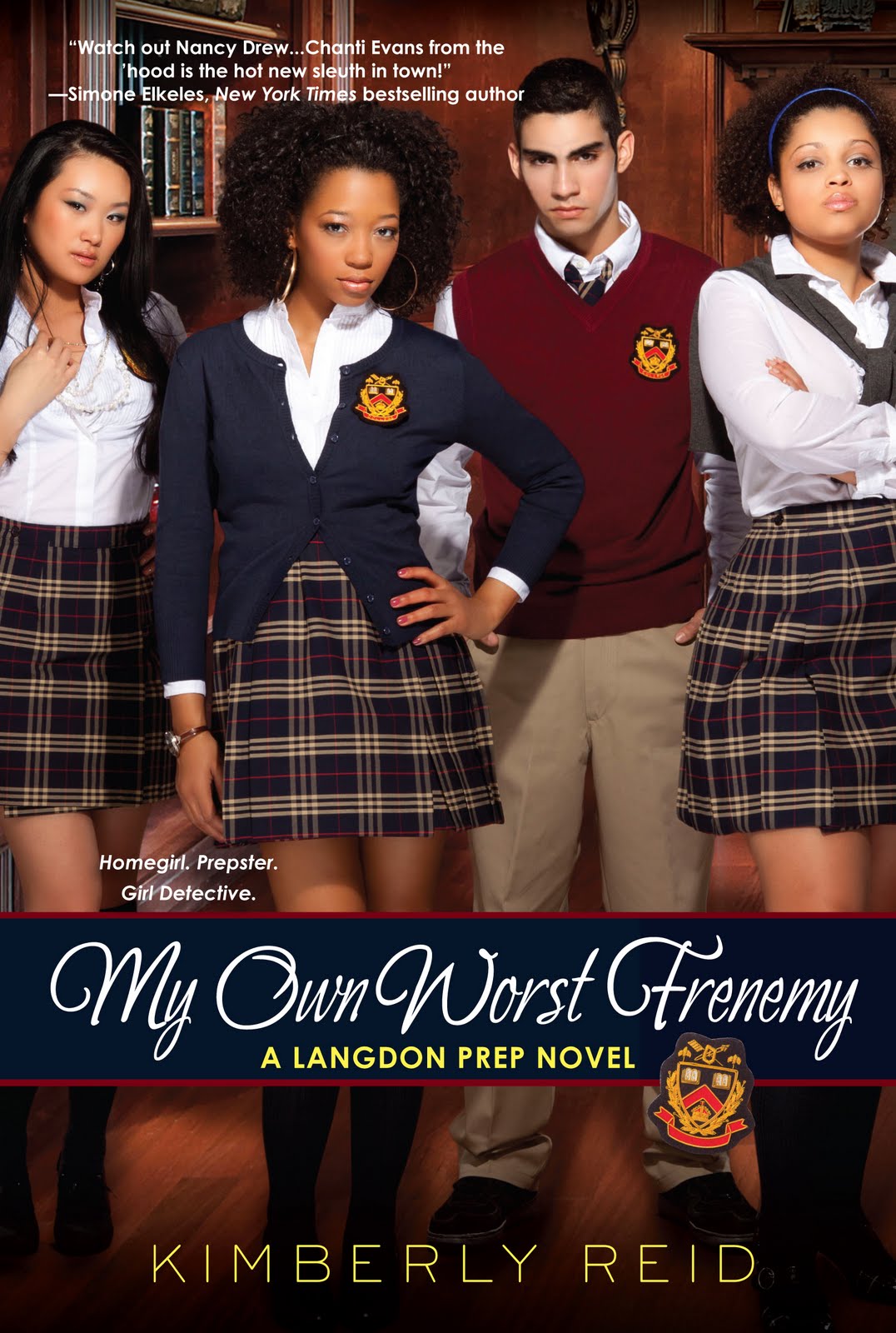
 Display Comments



Ingrid – I have to thank you for your marvelous plot posts. I have learned so much! Your descriptions have helped me think more clearly about my writing, and I refer to them often!
These posts on plot have been great. Thank you for encouraging people to break out of the goal-oriented plot and think about other ways of constructing their book.
I need to bookmark this post, because this is GREAT info!!! I have a question though: are alternative plots better for certain age levels? For example, have you seen a MG book with an alternative plot?
L. Marie – some might argue that alternative plots could be better received by younger audiences because they have had less exposure to arch plot and don’t find it as “uncomfortable” when they are presented with an alternative plot.
And, yes, there are MG books with alternative plots. The first that comes to mind is “Criss Cross” by Lynne Rae Perkins (which also won the Newbery).
I’m so glad to hear they’ve been helpful!