new posts in all blogs
Viewing Blog: Margo Dill's Read These Books and Use Them!, Most Recent at Top
Results 1 - 25 of 587
.jpeg)
By Margo Dill, who made this for teachers, parents, and anyone else who loves kid and teen books
Statistics for Margo Dill's Read These Books and Use Them!
Number of Readers that added this blog to their MyJacketFlap: 3
By:
Margo Dill,
on 5/18/2014
Blog:
Margo Dill's Read These Books and Use Them!
(
Login to Add to MyJacketFlap)
JacketFlap tags:
News-Gazette Reviews,
Caught Between Two Curses,
Chicago Cubs Curse,
Children's and YA Writers,
young adult books,
science fiction,
Young Adult Novels,
Parenting tips,
High School Teachers,
The News-Gazette,
Book Club Possibility,
Half the Sky,
Helping Girls and Women Around the World,
Add a tag

Busy spring!
Lots going on lately in our household with birthdays, Mother’s Day, spring winery trips and the end of the first year of preschool. So, I have also had a lot of web happenings that I’m late on reporting. Here’s a round-up:
- Caught Between Two Curses (CBTC) news: I’m so excited that YA author Brian Katcher reviewed CBTC over at Foreveryoungadult.com and he said, “There’s a lot of creepy stuff going on in the wings, with baseballs flying out of nowhere and the grim specter of death hanging over Julie’s family. But they’re Cubs fans. They’re used to living in hell.” He also said, “Dill does a great job of linking Julie’s family curse to the cursed Chicago team. Can Julie and Matt stop the curse that is destroying her family? Will the Cubs go all the way this year? Keep in mind, this is a work of pure fiction.”
- I was also lucky enough to be featured as the Indie Spotlight on Reading Teen, writing about how I got my idea for CBTC and how I wanted to explore the question of destiny and why some people survive accidents and others don’t, as well as the Cubs Curse. You can read about that at the link above. I also was lucky enough to answer some questions about writing fiction on the St. Louis Writers’ Guild blog, The Writers’ Lens.
- News-Gazette Book Reviews: As many of you know, I write a Sunday Book Review column for the News-Gazette. I recently reviewed two very interesting books, one science fiction and one non-fiction parenting book. To check these out, both written by strong and interesting women, click on the titles: The Self-Esteem Trap (parenting) and Zero Time (science fiction).
- Over at WOW! Women On Writing, I posted about writing in multiple points of view, how to do it well, books that do it well, and why authors may consider using more than one character’s point of view to tell the story. We have an interesting conversation going on The Muffin and on our Facebook page!
-

At Lit Ladies critique group on May 5
Lit Ladies blog: On the Lit Ladies blog, I am blogging about strong women and girls (GIRL POWER!) on Tuesdays now, and I talked about a book that changed my life, Half the Sky! Put it on your summer reading list. Find out how you can help women and girls find their voices around the world. I also blogged about my friend Kelly who exemplifies the Margaret Mead quote about never doubting what a small group of citizens can do.
And last but not least, I am currently organizing a blog tour for myself and my YA, Caught Between Two Curses. If you have a blog and want to participate, I have some dates in July! I am writing guest posts about young adult topics, writing, strong girls and women, baseball, curses, adult illiteracy and more. Please email me at margo (at) margodill.com if you would like to participate. You get a free ecopy of CBTC for your participation!
I was approached by Matt Cubberly, author of Charlotte, Wander On through e-mail to review his wonderful project which I believe in wholeheartedly. Here’s what he said, “It’s a slightly dark, yet inspiring, children’s book with beautiful illustrations.” Then he gave me this You Tube link:
And I was hooked. When he sent me the PDF, I was even more pleasantly surprised. The story is told in rhyme with absolutely beautiful illustrations (by Irina Kovalova) as you can see in the You Tube video. What I love about this book, besides these illustrations, is the message that it is promoting: A young girl must use her inner strength and discover who she is in order to save her brother. Sure, she has to avoid physical danger, too, but it’s the inner struggle that really plays out. And the best part–you can discuss this with your child after you are finished reading it! Although they may not have a dangerous journey like in the book, they still face fears and struggles every day, and so you can use this book as a discussion starter. It’s sometimes easier to get an important discussion started with a book and a character, instead of personal examples.
 Told in rhyming four-line stanzas, Charlotte starts her journey with a book from her grandma, and she tells the reader that she promised Grandma she would follow the instructions in the book. She has one place left to go and still hasn’t found what she seeks to save her brother. She almost gives up and could become lunch for some creatures, but she finds strength and “wanders on.”
IF you like books with strong female characters for our children, then you will love Charlotte, Wander On. Currently the author and illustrator are trying to raise enough money to get it printed. They have a Kickstarter campaign that ends in four days, and they are so close to their goal! Consider visiting their page and adding to the donation: https://www.kickstarter.com/projects/685642408/charlotte-wander-on.
Also if you like to read humorous novels for adults, on my Lit Ladies blog, we have a contest for the novel, The Opposite of Everything by David Kalish. We just found out that he won first place in a prestigious contest for this book, and you could win it here: http://www.thelitladies.com/humor-novel-the-opposite-of-everything-review-and-giveaway/

My daughter at princess tea
On the Lit Ladies blog, I am starting a series of posts about girls, strength, gender identity, uniqueness, strong females and more. I started with a topic currently near and dear to my heart–princesses. I think they are currently getting a bad rap from many, and so I’m sticking up for them here. Here’s my take on the obsession with princesses and why it’s not so bad: http://www.thelitladies.com/the-truth-about-princesses/
Besides this, if you are a writer, I also blogged on WOW! Women On Writing about coming up with a marketing plan for your book that makes sense. If you are in the throes of marketing or even thinking about marketing, here’s what I had to say here: http://muffin.wow-womenonwriting.com/2014/04/coming-up-with-marketing-plan-that.html
I also reviewed two funny books that would be perfect for gift books for Mother’s Day, Father’s Day, or graduation here: http://www.news-gazette.com/arts-entertainment/local/2014-04-20/give-gift-laughter.html
If you are a children’s writer and live near St. Louis/St. Charles or within driving distance (or you have frequent flier miles), consider coming to the Fall SCBWI Missouri Conference on September 6 and 7. It is going to be awesome. I can’t wait! In attendance will be agents, editors, art directors, published authors, and published illustrators. You can pay for critiques and pitch sessions, too. The Saturday non-member rate is $175 and you get so much stuff for that, you don’t even need to add more on to get a good value. Check out all registration information starting on this page: https://missouri.scbwi.org/events/2014-fall-conference/
Finally, I am participating in the Arthritis Foundation Walk on May 16 in St. Louis, and I am so close to my fundraising goal! I am walking in honor of my mom and my friend’s elementary school aged son! Please consider donating to this amazing foundation that helps people from ages 0 to 100. Here’s my page: http://stl.walktocurearthritis.kintera.org/faf/donorReg/donorPledge.asp?ievent=1095770&lis=0&kntae1095770=2DA0A7A304F64CE1B2E178573D47321A
 Thanks, everyone! If you haven’t had a chance to buy Caught Between Two Curses yet, check it out here: http://www.amazon.com/Caught-Between-Curses-Margo-Dill-ebook/dp/B00J8UWR4K
 Abayomi: The Brazilian Puma, The True Story of an Orphaned Cub is a second picture book from the team, author Darcy Pattison and illustrator Kitty Harvill. (The first was Wisdom: The Midway Albatross.) In Abayomi, Pattison explores what happens when civilization takes over wildlife’s home, and a mother puma is hungry and desperate to feed her cubs. She goes to a farmer’s chickens, which, of course, does not make the farmer happy. In this true story, the mother puma is killed accidentally during a struggle, leaving her cubs. One cub is rescued, Abayomi, and scientists are trying to nurse it back to health, without touching or taming it, so they can return him back to the wild. The paintings by Kitty Harvill are beautiful and add to this touching story, which doesn’t actually have an ending yet, because Abayomi is not ready to go back to the wild as of the writing. This story may be heartbreaking for younger children; heck–it’s heartbreaking for me. But it’s important for children to understand how our growth and civilization affect wild animals. Pattison and Harvill treat the subject with gentleness–there’s no preaching here!
Pattison also includes some wonderful resources in the back of the book to find out more about this subject and how scientists are trying to help wild animals.
 If you are using this book in the classroom, you could do a KWL chart–what do kids know about pumas before they start reading the book? Then ask them what do they wonder. Finally after reading this, what have they learned?
Students may also feel motivated to brainstorm ways to help wild animals in their own neighborhoods or to visit some of the resources listed in the back of the book!
Great news! I have a copy of the book to giveaway! Use the Rafflecopter form below to enter.
a Rafflecopter giveaway
Enter to win a print copy of my YA novel, Caught Between Two Curses, on Goodreads by clicking below.
Here’s what it’s about: Seventeen-year-old Julie Nigelson is cursed. So is her entire family. And it’s not just any-old-regular curse, either-it’s strangely connected to the famous “Curse of the Billy Goat” on the Chicago Cubs. Julie must figure out this mystery while her uncle lies in a coma and her entire love life is in ruins: her boyfriend Gus is pressuring her to have sex, while her best friend Matt is growing more attractive to her all the time. Somehow, Julie must figure out how to save her uncle, her family’s future, and her own love life-and time is running out!
 Reaper: YA urban fantasy written by St. Louis area author, L.S. Murphy, is the story of sixteen year old Quincy Amarante who will become the fifth grim reaper. Quincy is concerned about one thing before Death enters into her life–being popular and going out with a gorgeous guy. But Death won’t leave her alone and neither does her childhood best friend, Ben–whom all readers will be swooning for by the end of the book. Here’s what I think: I really enjoyed this book from the beginning until the end–it’s one that I found myself anxious to read and getting in the way of the things that I should have been doing, such as work. I know Quin is self-centered at the beginning and mostly concerned with being popular. But I liked her–she had some endearing qualities and was pretty funny actually. I loved the love triangle, the grim reaper aspect, the main character learning about what is actually important in life, and the ending. WOW! no spoilers here, but I was not expecting that ending, and I love it! I would read another YA by LS Murphy in a heartbeat.
 Five Famous Mice Meet Winston Churchill: This is a picture book by Jean Davies Okimoto and illustrated by Jeremiah Trammell. It’s a sequel to Winston of Churchill. In this book, five mice go on a quest across Canada to let people know about climate change and how it affects everyone. Here’s what I think: The illustrations in this book are great, and the mice are cute. I like how determined the mice are to get noticed, and the ends they go to–to see the polar bears–to have their voices heard. I think this is better suited for K-2. My 3-year-old loved the mice but had a little trouble understanding why people weren’t listening to them and why they had to go to the polar bears. If I taught K-2, I would definitely use this in my classroom for Earth Day.
 Time and Forever: This is Susan B. James’s first romance novel, and it is great. It’s a time travel romance, full of twists and turns. I wrote an entire review for it for The News-Gazette. You can find that here at this link.
 Excelsior: This is a new YA book by George Sirois, who is published by the same publisher as me (Rocking Horse Publishing). In George’s book, high school senior Matthew Peters, Excelsior – savior of faraway planet Denab IV – is becoming an Internet sensation as the main character of a popular online comic strip. But before Matthew can enjoy his burgeoning success, a beautiful older woman arrives at his school and tells him that not only is she from the planet Denab IV, but that Excelsior’s lifeforce lives within him. Here’s what I think: I love books that start in the real world and then go into the fantasy world–and Excelsior delivers on this promise. I also love that Matthew is an everyday hero who turns into the best hero ever! I did feel a little sorry for him that the comics he created were actually memories—but you’ll have to read the book to figure out how. I also like that the author did not steer away from modern technology in a fantasy book. Since he sets it in the real world in the beginning and teens are into technology, it was a must he include it and he did not disappoint. (Plus of course, new gadgets were created!) FINALLY, I liked that the adult in Matthew’s life also had to get involved and didn’t just disappear. I think there really are some teenagers who don’t mind an adult or two around every once in a while. . .I’m excited that the author is planning a series.
Join me at the Lit Ladies blog for my online book party with prizes. Details on the flyer below or on The Lit Ladies blog here: (http://www.thelitladies.com)
 I’m lucky enough to be on the web in three different places this week.
First, I reviewed a really interesting book, for adults but teens could read it too, titled, The President’s Hat. It was translated in English from French, and is a modern-day fable about a man who finds President Mitterand’s hat in the 1980s at a restaurant, and it brings him good luck and confidence. To read more about the plot and my thoughts on the book, go here: http://www.news-gazette.com/arts-entertainment/local/2014-03-23/top-notch-book-about-special-hat.html
Next, I revealed my book trailer for my new YA book, Caught Between Two Curses, on my critique group’s blog, The Lit Ladies. I feel so lucky because I WON THE BOOK TRAILER from Castlelane, Inc., and I would recommend them to anyone who needs help with marketing, covers, and more. Check out my awesome book trailer (it’s only one minute long) and more info about Castlelane here: http://www.thelitladies.com/winning-a-book-trailer-for-caught-between-two-curses-and-announcement/
And finally, I was interviewed by Hannah, a college student who is pursuing a degree in the publishing industry. She asked me about working for WOW! Women On Writing and other publishing related questions. Here’s what I had to say about working in publishing and where it might be going in the next five years: littlemissbookie.blogspot.com/2014/03/interview-with-margo-dill_7293.html
Until next time!
Happy Reading!
 Coming in June from FIRST STREET: Sleep Tight, Anna Banana!
*Picture book, contemporary for preschool through second grade
*Young girl as main character
*Rating: This is such a great picture book–my daughter who is 3 absolutely loved it. We read it several nights in a row. She is big into her stuffed animals. And so is Anna Banana, so I think she saw a lot of herself in the book .I love it when authors/illustrators capture childhood moments in a book–this one is bedtime and imagination rolled into one!
Short, short summary: In Sleep Tight, Anna Banana, Anna is reading a funny book in bed with her stuffed animals arranged around her, and they want her to turn off the light and go to bed. They try to escape one by one, but Anna is too fast for them and makes them stay in their spots until she’s ready to turn the light out and go to bed. But once this happens, the stuffed animals decide to give her a taste of her own medicine and make a lot of noise. She tries to get them to settle down, to no avail. Eventually, they work out their differences and settle down to sleep.
The book will be available online everywhere June 17, 2014.
So, what do I do with this book?
- Problem/solution: What’s Anna’s problem? How does she solve it? What’s the major problem in the book? Solution?
- Emotions: Do you ever feel like Anna–like you aren’t ready to go to sleep? How do you settle down? Do you read? Sleep with animals?
- Discussion: Why do the animals keep Anna up at night? What are they trying to show her?
- Fun with books: What do you think of the stuffed animals’ names on the title page? Do these names fit? Why or why not?
- Sequence: What order do the events happen in the book?
Happy birthday to my new young adult, light paranormal, baseball, romance novel titled, Caught Between Two Curses. I AM EXCITED! YAY! YAY! YAY! YAY! YAY! Rocking Horse Publishing did an amazing job with the cover, and they have been super to work with. Thank you! I hope that you will order a copy from them today for a teen in your life or for yourself. You can do so here: http://www.rockinghorsepublishing.com/new-release.html. OR if you live in St. Louis, come to the book launch party on Friday evening. Those details are right here: https://www.smore.com/v4a3
Some of you are over here because you read my post at the Lit Ladies and you are looking for the actors whom I think could play Julie, Gus, and Matt. So, I won’t keep you wondering any longer. . .
 This would be Gus, played by Matt Lanter. (This photo is courtesy of GreginHollywood on Flickr.com.) If you check out Julie’s list I revealed on the Lit Ladies site today, you can see that this actor here fits many of the qualities of Gus. So, you can see why Julie is a bit torn between the two guys in her life, if this is what Gus looks like.
 Julie and Matt are on the cover of my book above, but if I had to choose actors, I would choose.. .Chord
  Overstreet, who plays Sam on Glee. He would be my first choice for Matt. (Photo is courtesy of vagueonthehow at flickr.com) And for Julie, I would love Ellen Page, but she’s probably a bit too old now, so we’ll have to go with. . .India Eisley who plays on the show, The Secret Life of The American Teenager. (photo from abcfamily.com)
So, what do you think?
To read a short excerpt and a back cover book summary, check out the Lit Ladies post!
 This morning, I am so honored to be on Meg Miller’s website, talking about revising the beginnings of novels and picture books. My “thesis statement” (WHAT? BLOG POSTS HAVE THESIS STATEMENTS?) is that “Yes, your beginning really is that important.” Hopefully, I convince you if you are a writer to pay attention to your beginning, and I offer tips to help you. We all know revision is a beast. But it’s crucial.
I revised the beginning of Caught Between Two Curses more times than I can count, but then I finally got a publishing contract. And if you’ve been in a closet, it will be out on March 18 from Rocking Horse Publishing. You can preorder here: http://www.rockinghorsepublishing.com/new-release.html
Plus, take some time to check out Meg’s site and the other useful revision tips she has posted. This winter, Meg sponsored a ReviMO, and she gave away prizes. I was lucky enough to participate as Editor 911 and give away a free critique. So, really, check her out!
Here’s the link: http://megmillerwrites.blogspot.com/2014/03/margo-dill-guest-post-petite-revimo.html
Here’s the cover for Caught Between Two Curses, a young adult-light paranormal-baseball novel, out from Rocking Horse Publishing on March 18!
I’m also blogging about my writing process and what goes on in my mind over at The Lit Ladies. I was lucky enough to be tagged on a writing process blog tour by Julia Platt Leonard, author of Cold Case.
Check all that out here: http://www.thelitladies.com/margos-new-book-release-and-her-writing-process/
 I am so excited to announce that I have a new young adult novel coming out on March 18. The title is Caught Between Two Curses, and it is from Rocking Horse Publishing.
My first interview for the book is now published on a great author and blogger’s website, Debbie Manber Kupfer, (author of the great YA novel, P.A.W.S.). In the interview, I reveal the plot, what the Chicago Cubs curse has to do with the book, my favorite authors, my hobbies and more. I would love you to check it out and leave us a comment or question! Here’s the link: debbiemanberkupfer.wordpress.com/2014/03/05/get-to-know-margo-dill/
The cover and book launch information will be revealed soon. . .Stay tuned!
 I am blogging at the Lit Ladies today as part of a WOW! Women On Writing blogging day about sisterhood. So, I’m an only child, but I managed to write a ton about sisters because God has blessed me with sisterhood, even though it’s not with biological sisters. I am so lucky! Read more about my journey with special women and enter to win this book at: http://www.thelitladies.com/everybodys-talking-about-sisterhood-with-author-therese-walsh-giveaway/
 Inside These Walls by Rebecca Coleman is a book I stayed up all night reading! I recently reviewed it for the News-Gazette and for WOW! Women On Writing. I also was lucky enough to interview Rebecca for my WOW! post. You can also win a copy of the book on WOW! Check it all out here:
http://muffin.wow-womenonwriting.com/2014/02/inside-these-walls-by-rebecca-coleman.html
 *Picture book for preschoolers to Kindergartners
*Peter Panda as main character
*Rating: Peter Panda Melts Down! is another cute and funny book by Artie Bennett with wonderful illustrations by John Nez. I did have to explain to my 3-year-old what meltdown actually means–she thought he was just getting down. It’s funny because she has meltdowns ALL THE TIME, but we don’t tell her that’s what they are called, so at first she was confused. She still loved the book!
Short, short summary: Peter Panda is a toddler. He has meltdowns–ALL THE TIME! If you have ever lived with a toddler, you will see how realistic this book is, and yes, it is possible to have this many meltdowns in one day. But my favorite part of this book and one that is OH-SO-TRUE–when Mama Panda melts down because she’s had enough!
Check out Artie Bennett’s website for places where you can purchase this book: http://www.artiebennett.com/panda.html
So, what do I do with this book?
1. My daughter and I discussed the problems Peter was having and the way he was reacting. This is a great book to use with her age group because kids can see what is going on with Peter Panda and that he is reacting in a sad way each time. Children at this age have such a hard time understanding their feelings, and so this book helps them to see feelings and in a non-threatening way–with a cute, loveable panda bear. So, use this book to discuss meltdowns with your child or preschool classroom!
2. Ask children: Why does Mama Panda have a meltdown? Why is she sad and frustrated? Then discuss with them other ways that both Peter and Mama could have solved their problems.
3. The repetition in this book is great for read-alouds and for children who are starting to read on their own. Children can also echo read the repeatable portion: “Uh-oh. Here it comes. Here comes that frown. Peter Panda melts dowwwwwnn!”
This prequel novella will be FREE and available on Goodreads, Amazon, and Barnes & Noble on March 25, 2014!
Every sacrifice has consequences.
Sixteen-year-old Rowan has spent most of his life living among the mortals—learning to control the element of fire, impatiently awaiting the day his vengeful mother, Queen Prisma, will abdicate her throne. When he finally returns to Avalon for his coronation, his mother insists he must first prove his loyalty to the court by completing a secret mission:
Kill Kalin, the half-human, half-elemental daughter of the air court king.
Willing to do anything to remove his mother from power, he agrees to sacrifice the halfling. He returns to the mortal world with his best friend, Marcus, determined to kill the princess. But as he devises a plan, he starts to question whether or not he’s capable of completing such a heinous task. And what price he will pay if he refuses?
Mortal Enchantment (Book 1)
ebook, 262 pages
Expected publication: May 20th 2014 by Phoenix Reign Publishing
≥GoodReads≤

a Rafflecopter giveaway
Stacey O’Neale started her career in publishing as a blogger turned publicist for two successful small publishers. She loves to write stories with swoony paranormal heroes, snarky heroines, and lots of kissing.
When she’s not writing, she loves blogging and fangirling about books on twitter. Occasionally, she leaves her computer to go outside.
Website | Blog | Facebook | Twitter | Pinterest
 Please welcome author and cyber friend, Melissa Ann Goodwin, who is the author of The Christmas Village and the new sequel, Return to Canterbury.
In Return to Canterbury, things have settled down for thirteen-year-old Jamie Reynolds since last Christmas. That’s when he time-traveled to 1932 and wound up in the town of Canterbury, Vermont. There, he met Kelly and Christopher Pennysworth, who quickly became his best friends. Back in his own time again, he misses them every day. But as the July 4th, 2008 holiday approaches, the biggest black cloud still hovering over Jamie’s life is the mystery of what happened to his dad, who has been missing for almost a year. Little does Jamie know that he will soon reunite with Kelly and Christopher for an adventure even bigger than their last. Together, they’ll uncover a secret plot that threatens to destroy Canterbury. But will they be able to stop it before it’s too late? And will Jamie finally solve the mystery of his father’s disappearance? Return to Canterbury with us and find out!
Here’s the interesting thing about Melissa–she never planned to write this sequel. And actually, this seems to happen quite a bit to authors. So, here’s Melissa’s take on why she finally gave in and wrote this wonderful sequel. When you finish her post, please fill out the Rafflecopter form to be entered to win: Return to Canterbury for a young reader (or yourself!) in your life!
 In Which I Swear I Will Not Write a Sequel and Then Turn Around and Do So
By Melissa Ann Goodwin
When I wrote The Christmas Village, the idea of a sequel was a tickle of a possibility but not an intention. The story captured so much of what I always hoped to put into a book someday: cherished memories of holidays in New England and themes that revolve around longing for home and family and friends. The ending, I felt – and readers agreed – was satisfying, despite one thread that I left dangling. After all, in real life, not everything is tied up with a bow; in real life, all of our questions are not always answered.
Still, readers begged for a sequel. I was thrilled that they wanted to spend more time with Jamie, Kelly, Christopher, and all the characters in the village of Canterbury. And I understood their longing because I felt it too. But I kept shaking my head NO. Why?
BECAUSE:
• I was terrified that a sequel wouldn’t do justice to the first book and that readers would be disappointed.
• A story set at Christmas has a certain emotional tug. I had no idea how to match that feeling without repeating myself.
• There are a lot of surprises in The Christmas Village, and I didn’t know how I would catch up new readers in the second book without giving too much of the first book away.
• I had absolutely NO IDEA WHATSOEVER what the plot of the second book would be.
Yet, there was that thread. Looking back now, I think I let it dangle on purpose. Somewhere down deep, I guess I always knew that I too, wanted to visit more with these characters who seem like dear friends in a place that feels like home. One day, a story idea came to me. I picked up that dangling thread and Return to Canterbury was born. And once I had the story idea, I figured out the rest. To my huge relief, reviewers are saying they like this book as much – in some cases even more than – the first.
 When people ask if there will be another sequel, I answer, “No, I’m not planning to write one.” But I, too, love and miss these characters and this special place. So while I am moving on to new (different) projects, if I’ve learned anything at all from this, it’s to Never Say Never.
About Melissa:
Melissa Ann Goodwin grew up in Andover, Massachusetts, where she spent a happy childhood living in her imagination and writing stories in her head. It was only a matter of time before those stories spilled out onto the written page. She has been published extensively in children’s and national magazines and won a Writer’s Digest Annual Poetry Competition Award in 2010. The Christmas Village won the 2013 Blogger Book Fair Readers’ Choice Award for action/adventure. She is also a yoga teacher, and now lives with her husband, artist J.R. Secor, in Punta Gorda, Florida.
Contact Melissa or Buy a Book!
My blogs:
http://writeryogini.blogspot.com (not just about my books)
http://authormelissaanngoodwin.blogspot.com (just about the books)
Melissa’s books are available in print and ebook from Amazon, Barnes and Noble online, and in all digital formats from Smashwords.
My author page on Amazon: http://www.amazon.com/s/ref=ntt_athr_dp_sr_1?ie=UTF8&field-author=Melissa+Ann+Goodwin&search-alias=books&text=Melissa+Ann+Goodwin&sort=relevancerank
a Rafflecopter giveaway
 Michael Selden is on a virtual book tour for the National Writing for Children Center. His book is The Boy Who Ran. Here’s a summary: The boy was the sole survivor when his village was massacred. He spends his days alone in the woods, feeling more of a kinship with animals than with the people who took him in but never really accepted him. THE BOY WHO RAN is a middle-grade novel about a Native American orphan who’s life was shaped by its trauma, trying to find his place with The People. The story is set six thousand years ago in the mid-archaic period of North American history.
Here is what Michael says about connecting with him:
I generally put things related directly to the works I am creating on my web site: http://michaelselden.com, but I also post frequently on Facebook under https://www.facebook.com/michaelseldenbooks . There is also an Amazon author’s page http://www.amazon.com/Michael-Selden/e/B00GSEBBDC and a twitter account under Michael_Selden. I am still learning exactly how to use Twitter. I also started a GoodReads account, but haven’t put much there yet. Again, I’m still learning.
I’m currently traveling in Italy, and I’ve been posting photos of where I am and describing things about the towns I visit on Facebook (see link above) and on Twitter in a more brief (as in 140 character) way. The social media thing is relatively new for me, but it seems to be a useful way to connect with people.
 To see a book trailer for The Boy Who Ran, please visit the National Writing for Children Center at http://writingforchildrencenter.com/category/about-the-authors/
THE BOY WHO RAN – Available now in both paperback and Kindle formats, published by Woodland Park Press LLC
© Michael Selden 2013
To read an excerpt of the book, please visit the author’s website: michaelselden.com and click on the book title!
 Please welcome my friend and writer, Becky Povich, who recently released her memoir, From Pigtails to Chin Hairs. I was lucky enough to edit this book for her, and it is a delight–funny and poignant and wise! You can enter to win her book with the Rafflecopter form below her delightful guest post: “How I Wrote My Memoir in Only 12 Short Years.”
Here’s Becky:
I’d like to thank Margo for being my host today. She’s not only a talented blogger and author, but I’m proud to say she is also a friend of mine. She encouraged and complimented me all the way, and also did a lot of the editing on this memoir. I couldn’t have completed it without her.
 How I Wrote My Memoir in Only 12 Short Years
By Becky Lewellen Povich
I didn’t realize I was a writer until I was almost 50 years old.
As a young girl in the 1960s, I loved to write letters and had pen-pals all over the country, but it never crossed my mind that I was “writing.” At that age I only knew about fictional books and couldn’t imagine ever being talented enough to write an epic novel. Any aspirations I might have had were shot down one year when I was about 11 years old. I’d written a short story called, “An Exciting Summer,” and asked one of my favorite teachers, a nun, to read it. When she gave it back to me about a week later, she’d marked all over it with a red pencil, correcting all of my grammatical errors. Can you say, “Deflated”?
I haven’t shared that little incident with anyone for many years. I don’t know why really, but I believe it shows how a misunderstanding between a shy student who’s looking for praise, and a teacher who thought she was doing the right thing, could possibly affect that child’s future.
Fast forward to May of 2001 when my brother, Mike, called to tell me our dad was gravely ill and might not live through the night. Dad and I had been estranged for many years, mostly because he divorced Mother when Mike and I were young kids. He barely played any part in our lives after that. I’d told myself for many years that when Dad did pass away, it wouldn’t bother me one bit. I discovered that was not the case, though. I went to see my dad, and I once again felt a love for him I hadn’t felt, or allowed myself to feel, in so many years. It hit me so unexpectedly that when I got back home, I just had to write about it. I went to my computer and the words just flowed. It was incredible. That is when I decided I wanted to write my memoir.
I soon discovered that it really wasn’t that easy. The words hardly ever “flowed.” It was hard work. I had so many memories and stories I wanted to share, but having them in my mind and turning them into sentences worth reading were miles apart. I dealt with so much self-doubt and self-sabotage; and yet at the same time, I believed I had writing talent and wouldn’t allow myself to quit. That confidence, along with the encouragement from many friends, family members, bloggers, and writers near and far, is how I got through it.
Yes, I did complete my memoir, From Pigtails to Chin Hairs: A Memoir & More, this past November 2013. It’s still hard to believe, even when I hold the print copy in my hands, but I’m proof that dreams can come true!
It’s never too late to be who you might have been. – George Eliot
We did not change as we grew older; we just became more clearly ourselves. – Lynn Hall
Becky has a website & blog: www.beckypovich.com or www.beckypovich.blogspot.com. If anyone would like to contact Becky, her e-mail is: Writergal53 (at) gmail.com
Her memoir can be purchased directly from her website, or from either www.stlbooks.com, Amazon, Barnes and Noble online, and other various online sites. If ordered directly from Becky, she’ll happily sign the book if requested.
Don’t forget to enter to win a copy here:
a Rafflecopter giveaway
 Hello readers! I have another WOW! Women On Writing blog tour to participate in today. If you missed yesterday’s review and giveaway of BEYOND BELIEF: The Secret Lives of Women in Extreme Religions, go to it now!
Today, I am hosting Elaine Drennon Little, and her novel from WiDo Publishing, A Southern Place. This is a terrific, heart-wrenching novel–it’s being billed as a southern saga.
Read my review and then enter to win a copy of the book through the Rafflecopter form below! This is the last stop of the tour AND the last chance to win. Plus, check on the entry form for a special FRIDAY THE 13th entry!! (Insert scary music here. . .)
Elaine Drennon Little introduces readers to a dysfunctional family full of misunderstood souls in her debut novel, A Southern Place. The pages of Little’s novel are filled with characters readers will feel like they could reach out and hug—that’s how much detail and work this talented author put into her first book. It’s a character-driven ride, mostly through the late 1950’s South, focusing on hard-working, proud individuals who can’t catch a break.
Little chose to tell the story through the eyes of five characters, and this is where the strength in the book lies. When the novel opens with Mojo, the youngest of the cast, beaten almost to death and in the hospital in the late 1980s, the sheriff reveals how awful her background is and how she really hasn’t got anybody left in the world. Readers will be forming an opinion on Mojo’s family before finishing that beginning section; but as the author spends the majority of the book in the point of view of Mojo’s mother, uncle, and father (whom she doesn’t know), opinions will soon change. That’s the beauty of Little’s first novel—she drives home the point that appearances are not always the truth; life is seldom what it seems. No one knows what happens behind closed doors.
Once Little flashes back to the past to the late 1950s, readers meet Phil (Mojo’s daddy, even though it’s a huge secret), a rich kid whose learning disabilities are an embarrassment to his successful and powerful father. Calvin, Mojo’s uncle, works on Phil’s daddy’s plantation, and is well-respected—that is until a farming accident leaves him with a hook instead of a hand. Then, there’s Delores, Calvin’s younger sister and Mojo’s mama. She, like Mojo, is a good, kind woman who just wants to take care of her family and do the right thing. She’s willing to take just about any job she can and lend an ear to any poor soul. This is how she gets together with Phil, starting a short and passionate affair. 
Once all the pieces of the plot are in motion, Little alternates point of view between the three main characters, showing readers how one choice can lead to a life full of heartache. Sometimes, though, the characters’ misfortune isn’t a result of their own choices, like when Cal is involved in the farming accident. If readers are a fan of Les Miserables, they may be reminded a bit of this classic novel while reading A Southern Place. Not because it takes place in 19th century France, but because these Georgian 20th century characters are down on their luck and often wind up in poverty and sickness.
Little grew up on a farm in southern Georgia, where much of her novel is set. She taught music for 27 years in public school and graduated with an MFA in 2008. She currently lives in northern Georgia with her husband, and she blogs at http:// elainedrennonlittle.wordpress.com/.
When the novel ends, readers have a real understanding of how the beginning could happen—just how did young, innocent Mojo wind up beaten to a pulp in the hospital? Little brings the plot full circle and even ends with a bit of hope. This Southern saga is sure to leave readers wanting more from Little soon.
Fill out the Rafflecopter form below for your chance to win!
a Rafflecopter giveaway
 As part of the WOW! Women On Writing blog tour, I am reviewing Beyond Belief: The Secret Lives of Women of Extreme Religion. I have a print copy to giveaway to U. S. mailing addresses. Please see the rafflecopter form at the end of the review to enter!
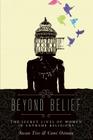
Beyond Belief: The Secret Lives of Women in Extreme Religions is an anthology edited by Susan Tive and Cami Ostman, who both chose to enter religious communities they weren’t born into. They met in a memoir writing class—Ostman has written a book about running a marathon on every continent, and Tive was working on writings about her years spent in Orthodox Judaism.
After discussing their lives over coffee and wine outside of class, they realized that their journeys were similar: both experienced a faith that asked them to shun personal freedoms many women in the United States take for granted. Both were expected to view men as the head of their married and religious lives. The more they talked, the more they began to question: “Why did we choose to join such restrictive religious practices? Why did we stay so long? Why was it so hard to leave?”
Then they wondered if other women had experienced the same thing in their lives. Since Ostman and Tive were writers, they developed the idea for the anthology, and Beyond Belief was born.
In the introduction, the editors explain that they had many ideas for how this anthology should look when they first got the idea. They were only going to allow women who had chosen to enter an “extreme religion,” although they were not going to define extreme. But they received many pieces from women born into their religion and the struggles as children and teens, and so the editors changed their minds. They ask readers of the anthology not to judge the true stories in the book on whether or not they are “extreme enough.”
Buy Beyond Belief on Indiebound.org!
The bottom line is this book is filled with heartfelt and well-written essays that readers will find interesting and which often read as fiction, but they are not. Maybe these narratives seem like they could be fiction because readers who grew up in a “non-extreme” religious household will be filled with wonder and disbelief when reading what some of these women have been through in their lives, all in the name of religion.

Cami Ostman
Many different religions are covered from Evangelical to Catholic to Baptist, from Mormon to Muslim to the Church of Jesus Christ of Latter-day Saints. The stories are divided into three sections: “In the Beginning,” where authors write stories about getting IN to these religions; “Burnt Offerings,” a very interesting section on the practices and beliefs of people IN extreme religions; and finally “Exodus,” about women who got out of an unhealthy religious situation for them.
Depending on readers’ own religious beliefs, they may see themselves in the pages of the essays—parents trying to raise their children according to their beliefs, or young mothers lost and struggling who need support and aren’t finding it in church, or even women going through divorce and leaving a particular religion.
Many of the authors in this book are brave for sharing their most personal stories and inner beliefs. This book is not

Susan Tive
“preaching” that anyone should leave a certain religion or that there’s even anything wrong with being religious. It’s an honest look at the lives of these women authors. Readers can learn from their stories—understanding religious customs, finding their own freedom, living life to the fullest, respecting elders, and loving family members for whom they are.
If you are interested in religion, have been exploring different churches, or even questioning where your beliefs lie, then you will appreciate the thought-provoking and touching essays in Beyond Belief.
Enter below to win Beyond Belief!
a Rafflecopter giveaway
By:
Margo Dill,
on 9/9/2013
Blog:
Margo Dill's Read These Books and Use Them!
(
Login to Add to MyJacketFlap)
JacketFlap tags:
middle grade books for boys,
Whyte J. C.,
novel for boys,
bullying,
Karma,
Journal Writing,
Middle Grade Novel,
Reading Skills,
Middle School Teachers,
Elementary Educators,
Making Personal Connections,
Book Club Possibility,
MuseItUp Publishing,
Add a tag
 *Middle-grade fantasy novel
*5th-grade boy as the main character
*Rating: Karmack by J. C. Whyte (MuseItUp Publishing) is a good novel about a bully who learns a bit about karma through the creature pictured here. Filled with humor, interesting characters, plenty of pranks, adventure, and a subtle lesson, children will enjoy this book immensely.
Short, short summary: Sully is the Big Cheese of the 5th grade. He got that way by being tough (a bully) and playing pranks on everyone from classmates to his teachers. He has a gang, and he has enemies. . .until one day, when he sees a little creature, Karmack (stands for Karma) playing pranks on him and his friends. He’s able to catch Karmack and question him about what he’s doing. Karmack’s basically there to even out all the bad things that Sully and his friends are doing. If Karmack doesn’t do his job, all of their bad deeds will add up, and some doom will happen to them. In the end, Sully figures out how to beat bad Karma, and he changes as a result of it. Although it sounds like this novel could be preachy, I don’t feel like it is. The lesson is there, but the characters and situations are interesting enough to get kids into the novel and discuss the lesson afterwards.
Buy this book from the publisher: MUSEITUP Publishing: http://museituppublishing.com/bookstore/index.php/museityoung/karmack-detail
So, what do I do with this book?
1. This is a great book to work on reading skills, such as character arc, character emotions, and character motivation. Sully goes through amazing changes in the book–you can discuss why with kids–and also list characteristics he has BEFORE he meets Karmack that might have led to him being able to make these changes.
2. Give students a journal writing prompt: If you could have a conversation with Karmack about your good and bad deeds, what would you say? Write a one-page conversation between you and Karmack OR a letter to Karmack. Are you “balanced”? Could you get “balanced”? What if you are leaning in a good way–more good than bad?
3. Before you read the end of the book with children, stop at the part where Sully says he put the mustache on the photo. Ask: Do you think he really did it? Why or why not? How did it get there? Why is it there? What’s going to happen now that Sully admitted it, but maybe didn’t do it? Ask students to use their knowledge of the story world to make some predictions. Then after reading the ending, see who predicted correctly. (As long as a prediction is logical, even if not correct, it works for this activity.)
By:
Margo Dill,
on 9/6/2013
Blog:
Margo Dill's Read These Books and Use Them!
(
Login to Add to MyJacketFlap)
JacketFlap tags:
Picture Book,
individuality,
Elementary Educators,
Personal Connections,
Preschool to 1st grade teachers,
Shared Writing,
Art activities,
Sequencing,
Sequence Practice,
silly picture books,
jungle animals,
Brown Peter,
Add a tag
 *Picture book for preschoolers through 2nd graders
*Mr. Tiger as the main character
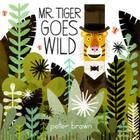
*Rating: Mr. Tiger Goes Wild is a super, cute picture book that sends the message to children that they need to listen to their heart and become individuals. It’s also okay to miss your friends and love them for whom they are! I was lucky enough to see Peter Brown in person in St. Peters, MO, at a library presentation. He is a very funny speaker and a talented artist. It was a great night. Although my husband said to him at the book signing: “Now my daughter is going to want to take her clothes off and run wild in the jungle.” Oh, so not true–but Peter did apologize. My daughter is now in love with this very cute book.
Short, short summary: Mr. Tiger is bored and grumpy in his regular outfit and acting prim and proper in his village all the time. He decides to go WILD one day and walk on all four legs instead of on two legs. Then he decides to go swimming and shed the clothes–now he’s like a real tiger! So Mrs. Elephant tells him to go be wild in the wilderness, and off to the jungle he goes. At first, he is having a marvelous time, but he misses his friends-even the prim and proper ones. So, he goes back to his village, and he realizes that he can be an individual there, too, and his friends will still love him. And his uniqueness might just have worn off on an elephant or two.
Buy Mr. Tiger Goes Wild!
So, what do I do with this book?
1. What do children think about what Mr. Tiger did? Do they think he acted in the right way? How do they feel about Mr. Tiger’s friends? Why do they think he got lonely? These are the types of discussion questions you can have with young children when you are reading this book with them.
2. You can do an easy sequencing activity with this book. You or even children can draw Mr. Tiger at different stages of the book–each on a separate sheet of 8 1/2 “ x 11 ” paper. So, you would have a drawing of him at the beginning grumpy and bored, then on all fours with his clothes on, then swimming, then no clothes, then in the jungle, etc. As a whole group activity, mix up the order and have children come up and put the drawings in the right order to retell the story.
3. Ask children to draw an illustration of themselves “going wild” and write a sentence about it. You should probably discuss this first–so you don’t get too many naked pictures. HA! But you can make a list like: they could dress up in funny costumes, do a silly dance, wear clown makeup, etc.
View Next 25 Posts